Drumboe Castle: A Lowland Fortification in County Donegal
Site at a Glance
- Rating
- 3.8
- Popularity
- Very Low
- Country
- Ireland
- Primary era
- Early Modern
- Eras represented
- Early Modern
- Civilizations
- English
- Site type
- Military
- Remains
- Castle
On this page5 sections
History
Origins and ownership
Drumboe Castle is a lowland fortification on the outskirts of Stranorlar in County Donegal, Ireland. During the Plantation of Ulster, the English-led settlement and colonization of the province, Robert Redington sold an estate at Ballybofey to Sir Ralph Bingley in 1622. Bingley then built the original castle.
After Bingley’s death, his widow, Lady Jane, and Robert Harrington took charge of the castle. In 1641 it passed to Sir William Bazil, who served as Ireland’s attorney-general, the government’s senior legal officer. Bazil died in 1693.
The Hayes family
A descendant of Sir William, William Basil, was born William Ball and adopted the surname Basil through a private Act of Parliament in 1724. Around 1736, he married Frances Dowdeswell. Their daughter, Mary Basil, married Sir Samuel Hayes, 1st Baronet. Through this marriage, Drumboe became the home of the Hayes baronets, holders of a hereditary British and Irish title, from 1789 to 1912.
Civil War and demolition
During the Irish Civil War of 1922–23, fought between supporters and opponents of the Anglo-Irish Treaty, the castle served as the headquarters of Irish Free State forces in County Donegal. The Free State was the self-governing state established in 1922 after the treaty.
On 14 March 1923, four anti-Treaty Irish Republican Army fighters, who opposed the treaty, were shot at the castle in retaliation for the death of a National Army soldier in an ambush. Charles Daly, Sean Larkin, Daniel Enwright and Timothy O’Sullivan had been captured in January and held at the castle for about three months. The Georgian-style house was demolished in 1945.
Remains
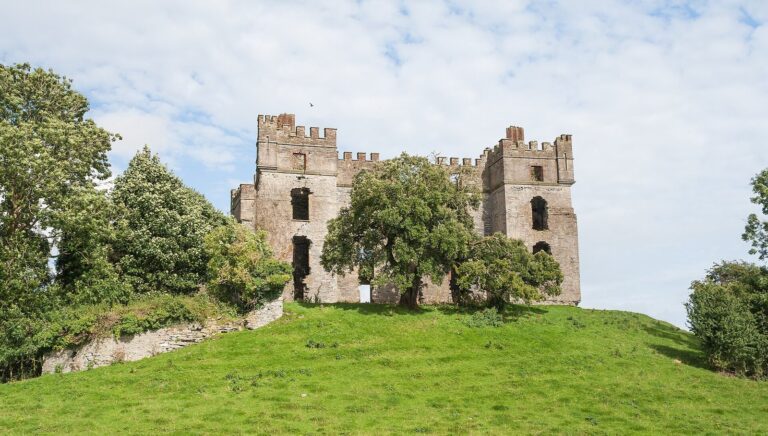
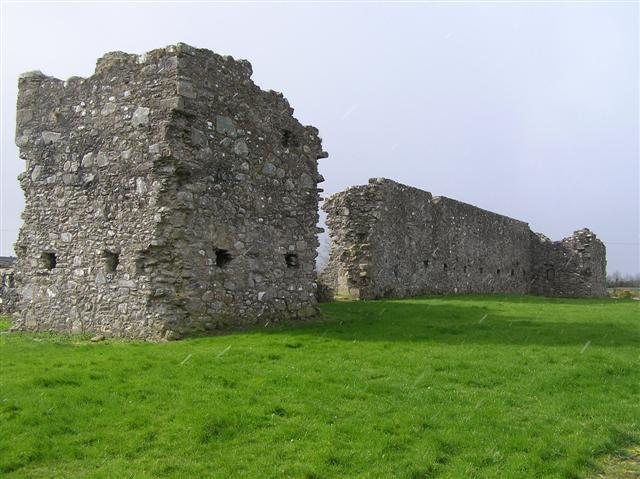
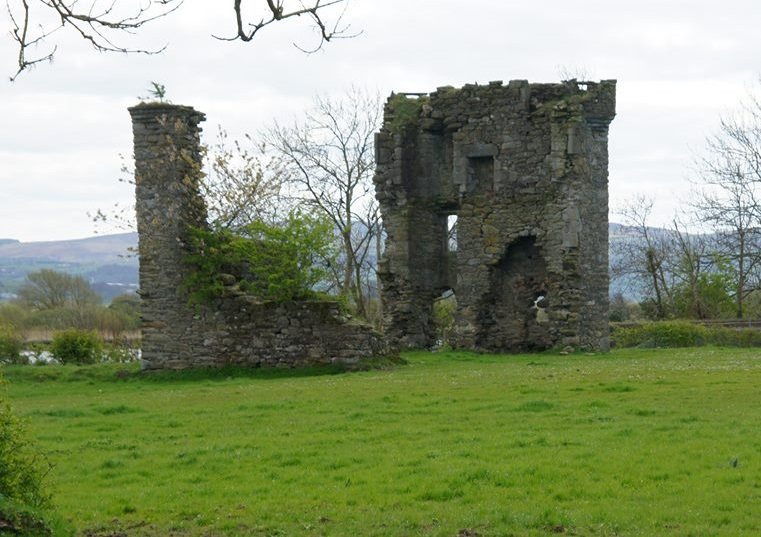
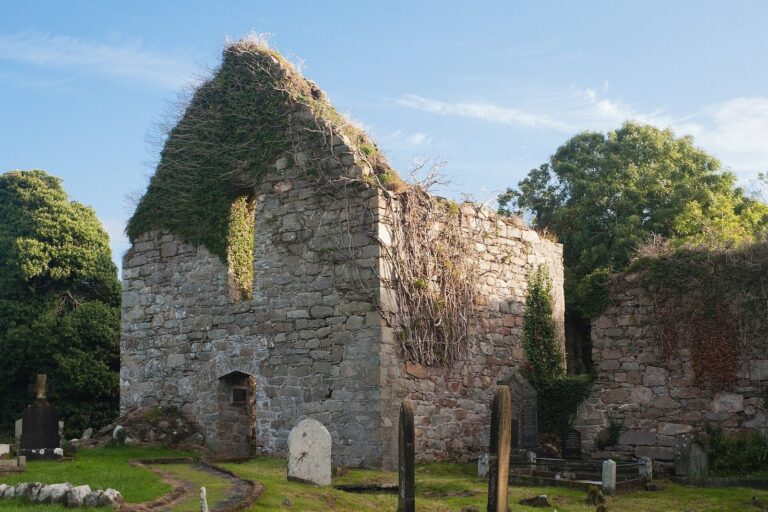
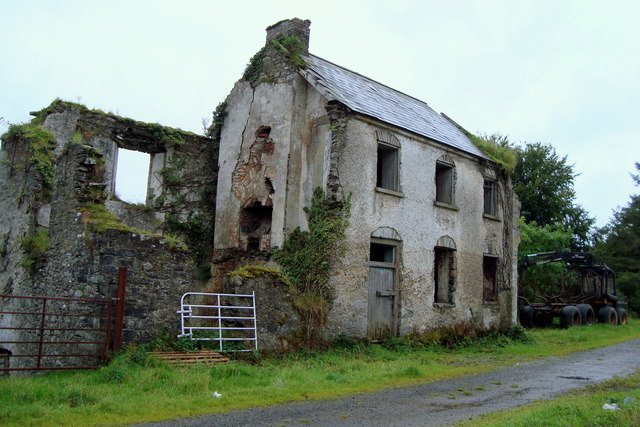
The castle stands in low-lying terrain and was built of rubble stone, using rough, irregular stones rather than finely cut blocks. Its original form included four large towers. The site protected a ford across the River Finn. The castle now survives in ruins.