Bismarckhäuschen: Göttingen’s Medieval Defensive Tower and Bismarck Memorial
Site at a Glance
- Popularity
- Medium
- Country
- Germany
- Primary era
- Medieval
- Eras represented
- Medieval, Early Modern, Modern
- Civilizations
- German, Holy Roman Empire, Kingdom of Hanover, Kingdom of Prussia
- Site type
- Military
- Remains
- Tower
On this page8 sections
History
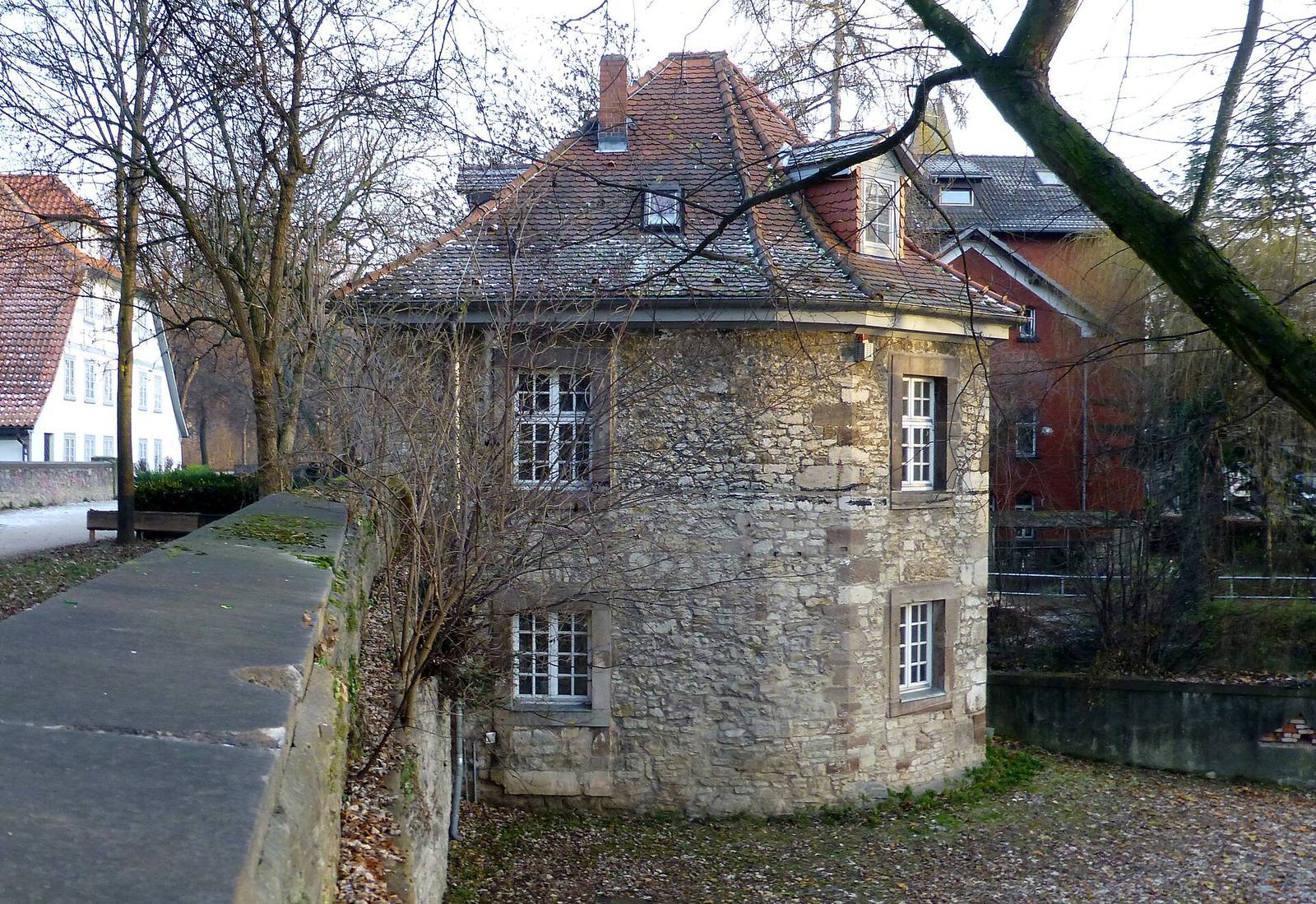
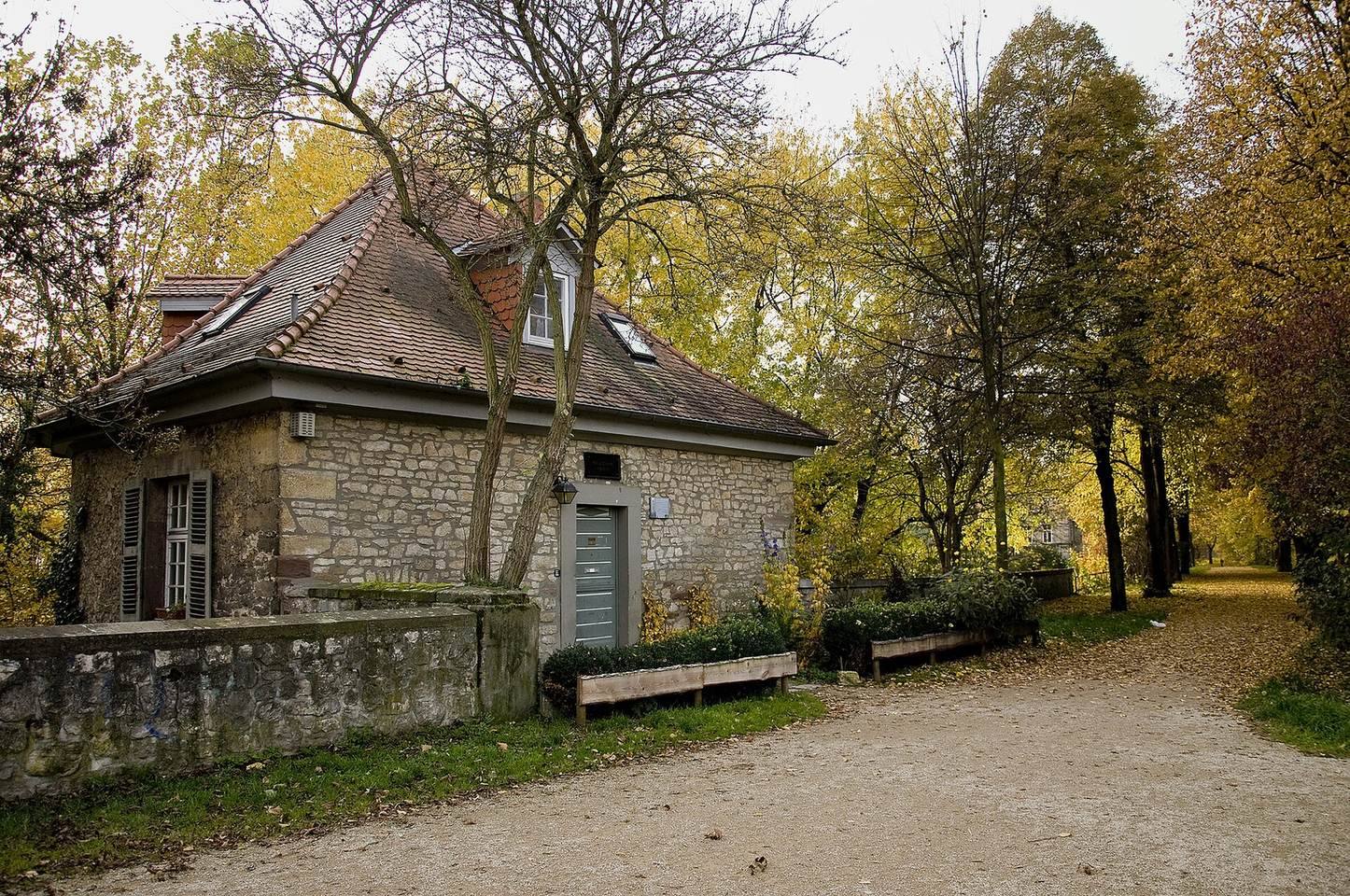
Bismarckhäuschen is a polygonal medieval defensive tower in Göttingen, Germany, built in 1447 as part of the city’s outer fortification ring. It guarded the Leine Canal where it entered the city, helping protect water access important to the mills and urban supplies. The last surviving tower of the ring, it is also associated with Otto von Bismarck, the German statesman who became the German Empire’s first chancellor. He lived there briefly as a student in 1833, and the building took its name from that stay.
Defense and conversion, 1447–1815
The tower’s position beyond the wall allowed its guns to fire along the fortification, covering its side against attack. After the Seven Years’ War, the major European and global conflict of 1756–63, Göttingen began dismantling or adapting its defenses in 1762–63. Work to drain the moat started in 1792 at the initiative of Ludwig Gerhard Wagemann, pastor of St. Mary’s Church and founder of the Göttingen Industrial School, a school for practical instruction.
In 1797 Wagemann took the garden west of the canal entrance, including the tower, under a hereditary lease, a continuing leasehold interest that could pass to heirs. He cleared rubble, repaired the roof and made openings that adapted the structure for use as a gardener’s home. In 1815 the city magistrate approved an entrance on the north side to make the summer residence easier to reach from the wall promenade. It rejected Wagemann’s proposal to add another storey, judging that this would make the garden house look too much like a tower.
Student residence and industrial use
Legal scholar Karl Friedrich Eichhorn acquired the garden lease at auction in 1819 and sold it in 1828 to university gardener Heinrich Justus Voß, who rented the garden house to students. Bismarck studied law at the University of Göttingen for a year and a half from 1832. After living at 27 Rote Straße, he stayed in the tower for about five months, from spring to autumn 1833, then left Göttingen in September to continue his studies in Berlin. A legend claims that the 17-year-old was forced out of the city centre after repeated disorderly conduct, including drinking, brawling, duelling and smoking in the street.
The garden’s use changed to industry in 1839, when merchant Alfred Heintze established a textile-finishing and dyeing works there. In 1861 leatherworker August Stöckicht converted it into a leather factory. The tower served first as a production space, then as accommodation for employees and a tool shed.
Commemoration and memorial use
Bismarck’s growing public reputation brought new attention to his former residence. After the German Empire was founded in 1871, the building gained added commemorative value. In 1874 Mayor Georg Merkel proposed a plaque above the entrance; the Hanover Iron Foundry donated it. Göttingen made Bismarck an honorary citizen in 1877.
In 1921 the Colonial Goods Wholesale Company of Göttingen, later known as EDEKA, acquired the tower. In early 1932 the city took it over, initially by lease, to create a Bismarck memorial. The centenary of Bismarck’s enrollment at Göttingen and the university’s approaching 200th anniversary in 1937 provided the occasion. The memorial’s furnishings included Biedermeier pieces, associated with Central European culture from about 1815 to 1848. They presented an ideal of a representative study rather than the conditions of Bismarck’s student residence. The company built a wholesale warehouse around the tower in 1933–35.
Changing uses and interpretation
The warehouse buildings were demolished in 1964, ending the tower’s factory and commercial uses. In 1985–86 the roof was altered, the memorial furnishings were removed and the city installed a small display about Bismarck. The city later began using a six-square-metre office in the building as the base of the Göttingen History Workshop, a local organization that researches and communicates the city’s past. It also provides two small apartments rent-free as scholarships for students whose final projects address Göttingen’s cultural, social or political life.
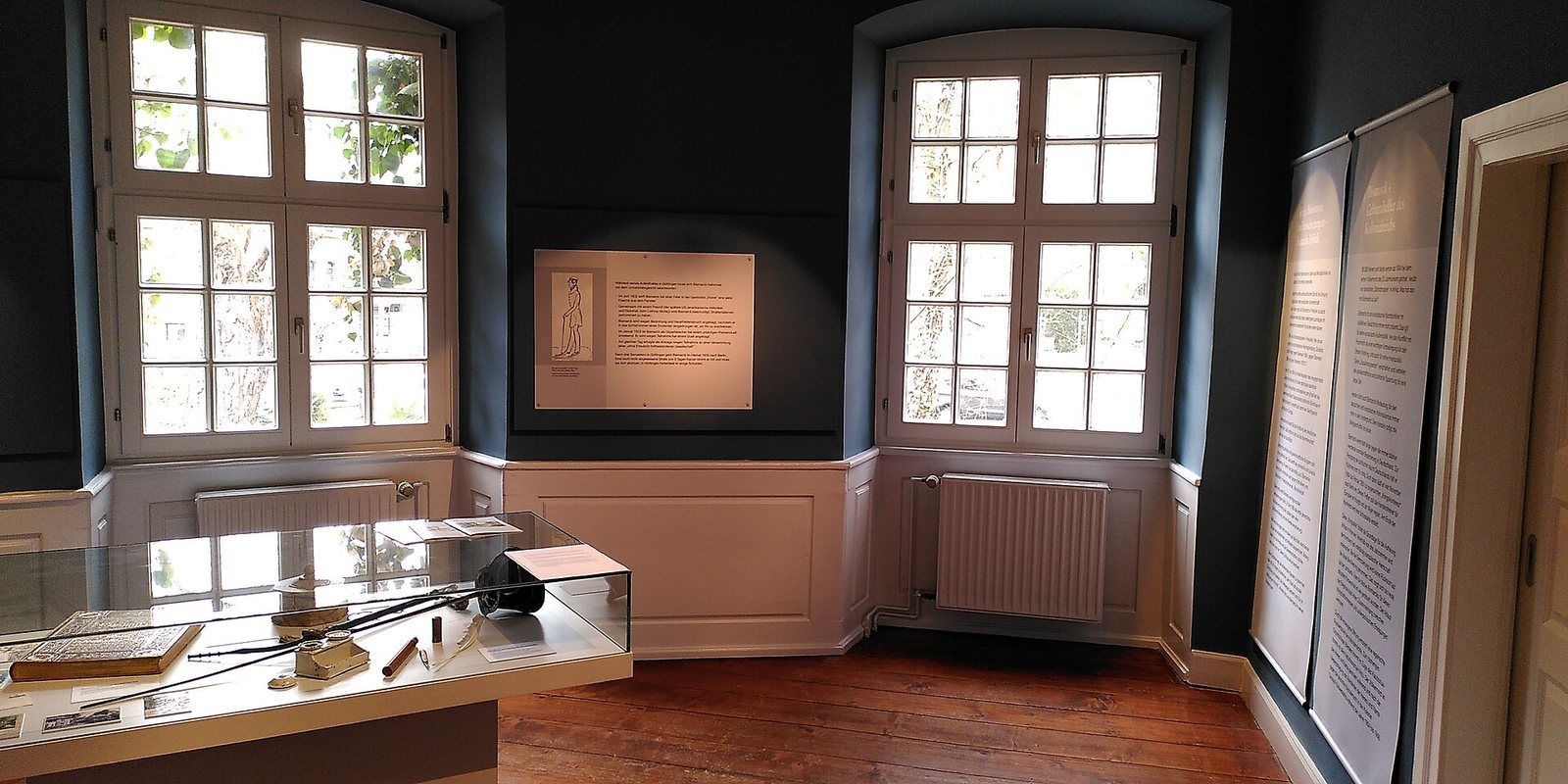
The city renovated the interior in 2022–23, and the Municipal Museum redesigned the upper-floor exhibition. The revised display, opened in March 2023, considers Bismarck’s life and the colonial policy he shaped, twentieth-century veneration of him, and the question of why a tower associated with him for only a few months bears his name. A proposal to rename it “Tower at the Little Mill,” reflecting a historical designation, was dropped after the municipal cultural office intervened.
Remains
The tower stands immediately outside Göttingen’s southern city wall, on the former field-facing side beside the Leine Canal. The Lohmühle and Odilienmühle lie on the city side of the wall near the canal. The surviving building brings together its medieval defensive form and changes made when it became a garden house and later underwent roof alterations.
Tower fabric
Eight large windows with sandstone surrounds were probably added to the former field-facing side during the conversion to a garden house, giving that face a more domestic appearance. The north entrance also dates to the garden-house period, while an opening onto the garden was made during Wagemann’s conversion. Bismarck’s commemorative plaque remains above the entrance. The roof conversion of 1985–86 added dormer windows.
Canal and former moat
Once enclosed by the wholesale warehouse, the tower’s south side became exposed after the surrounding buildings were removed. The former moat is perceptible as a hollow in the ground, and the area is now a public car park. A 1641 view of Göttingen by engraver and publisher Matthäus Merian depicts the tower beside a water-filled moat. Christian Andreas Besemann’s 1812 copper engraving, viewed from the south, shows the garden house with two people at a window and the Odilienmühle in the background.