Bijaći: An Early Croatian Ducal Estate and Medieval Village
Site at a Glance
- Popularity
- Medium
- Country
- Croatia
- Primary era
- Medieval
- Eras represented
- Classical, Medieval
- Civilizations
- Kingdom of Croatia
- Site type
- Settlement
- Remains
- Village
On this page10 sections
History
Bijaći is a medieval Croatian village site at Stombrate in the western Kaštela plain of Croatia, and an early seat of Croatian rulers.
Roman estate and early church
Bijaći occupies the site of a Roman rural estate dating to the first century CE. The estate was renovated in late antiquity, when part of the complex became an early Christian church that developed between the fifth and seventh centuries.
An older identification placed the Roman veterans’ settlement of Siculi at Bijaći. That theory linked it to Emperor Claudius’s supposed settlement of veterans from Legions VII and IX, rewarding their loyalty during the Scribonian revolt, an uprising in AD 42. Siculi is now located on the coast at Kaštel Štafilić, where the shoreline has subsided by about two metres over the millennia.
Ducal seat and Christianization
After the Croats arrived, the villa complex is believed to have become the center of a Croatian ducal estate extending to the coast and including the Divulje area and the church of St. Vital. The early church was repaired and dedicated anew to St. Martha. It may have served as a court church for the first Croatian dukes. Bijaći was an early seat of Croatian rulers and belonged to Klis County.
A late-eighth-century inscription refers to a Croatian ruler and a Croatian nobleman holding the office of župan, a regional county official. It is the earliest known reference to the Croatian name after the Croats’ migration. An early-ninth-century inscription on a stone canopy, kept in the baptistery during Duke Mislav’s reign, and a reference to a priest named Gumpertus point to a Frankish missionary station on the ducal estate. This mission formed part of the final phase of Christianization among Croats in their Adriatic settlements, with support from the papacy in Rome and the Carolingian Empire, the realm of Charlemagne and his successors.
Royal estate and medieval settlement
Bijaći’s earliest written references concern a grant by Duke Trpimir, dated either 852 or 859, and a document from Duke Muncimir in 892 confirming it. Both survive only in later copies. A judgment issued by King Zvonimir also names Bijaći. One proposed explanation for the place-name derives it from Viatius, an owner of the Roman estate. Croatian rulers are thought to have kept the name when they continued to live on the former owner’s land and made it a royal estate.
In 1207, Andrew II, king of Hungary and Croatia, described Bijaći as a royal estate reaching the sea and covering the whole of Podmorje, the coastal territory. Over time, private owners, church institutions, and the municipality of Trogir acquired parts of the estate, and the name Bijaći came to refer to a smaller area. The settlement’s full extent remains uncertain.
During the 1378 war between Genoa and Venice, a watchtower at Bijaći was assigned to warn residents of Podmorje if an enemy appeared. Those residents were required to reach Trogir within six hours.
Abandonment and archaeological rediscovery
Burial finds indicate settlement continuity from the tenth to the sixteenth century. Warfare repeatedly depopulated the village, although residents returned during peaceful periods. Fear of Ottoman attacks led to its final abandonment in the sixteenth century. Refugees from Bijaći moved to nearby Kaštel Štafilić and took their privileges with them. Ottoman raids had also damaged the medieval church.
In 1849, Frane Bulić founded Croatia’s first archaeological society at the urging of Franjo Rački. Initially called Bihač and later renamed Bihać, the society held its first meeting at the excavated remains of St. Martha’s church. Its name reflected the expectation that the Kaštela plain at Bijaći would yield impressive buildings from the Croatian ruling dynasty. Excavations near the church from 1902 to 1905 uncovered graves and other remains.
Remains
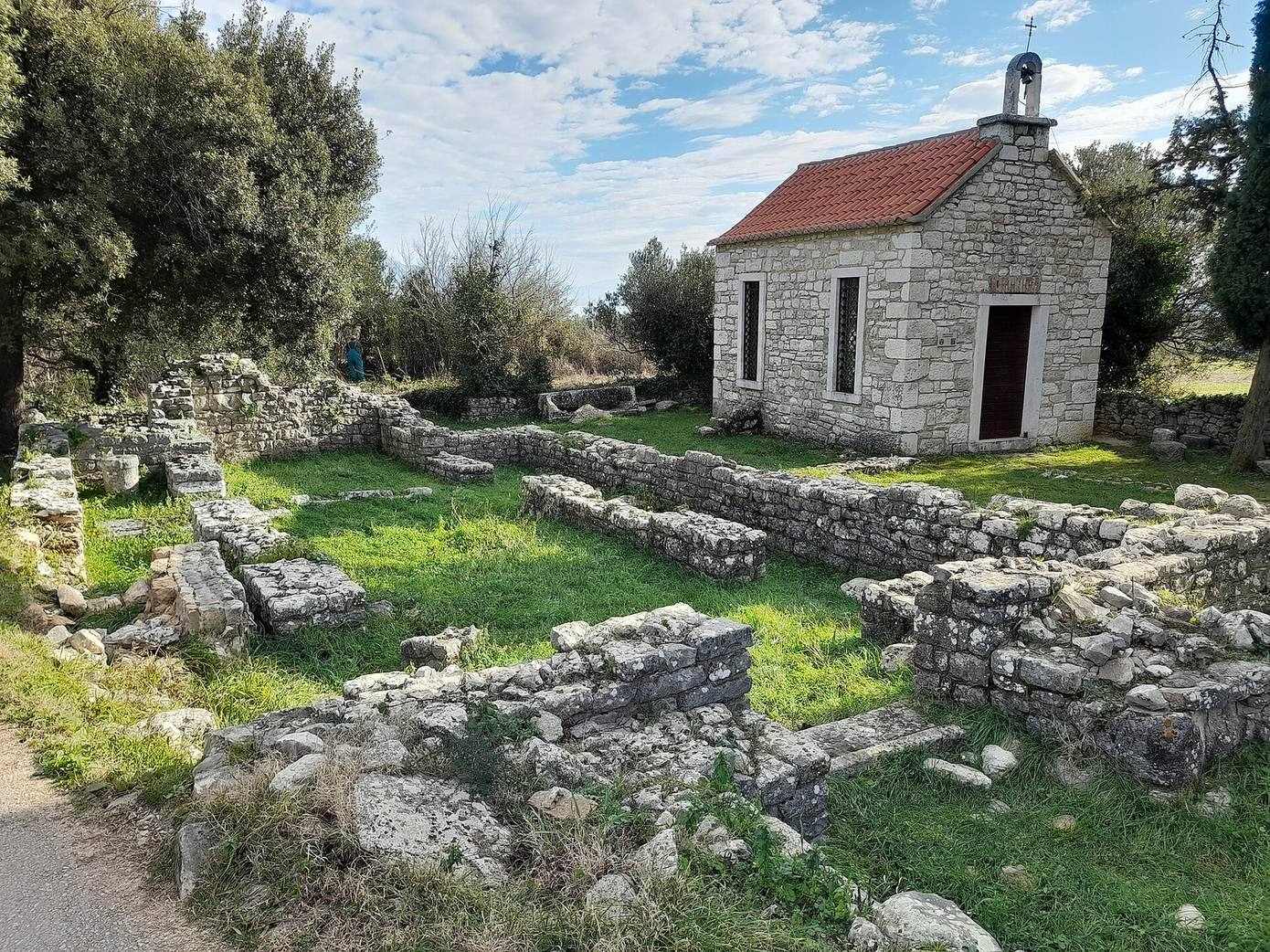
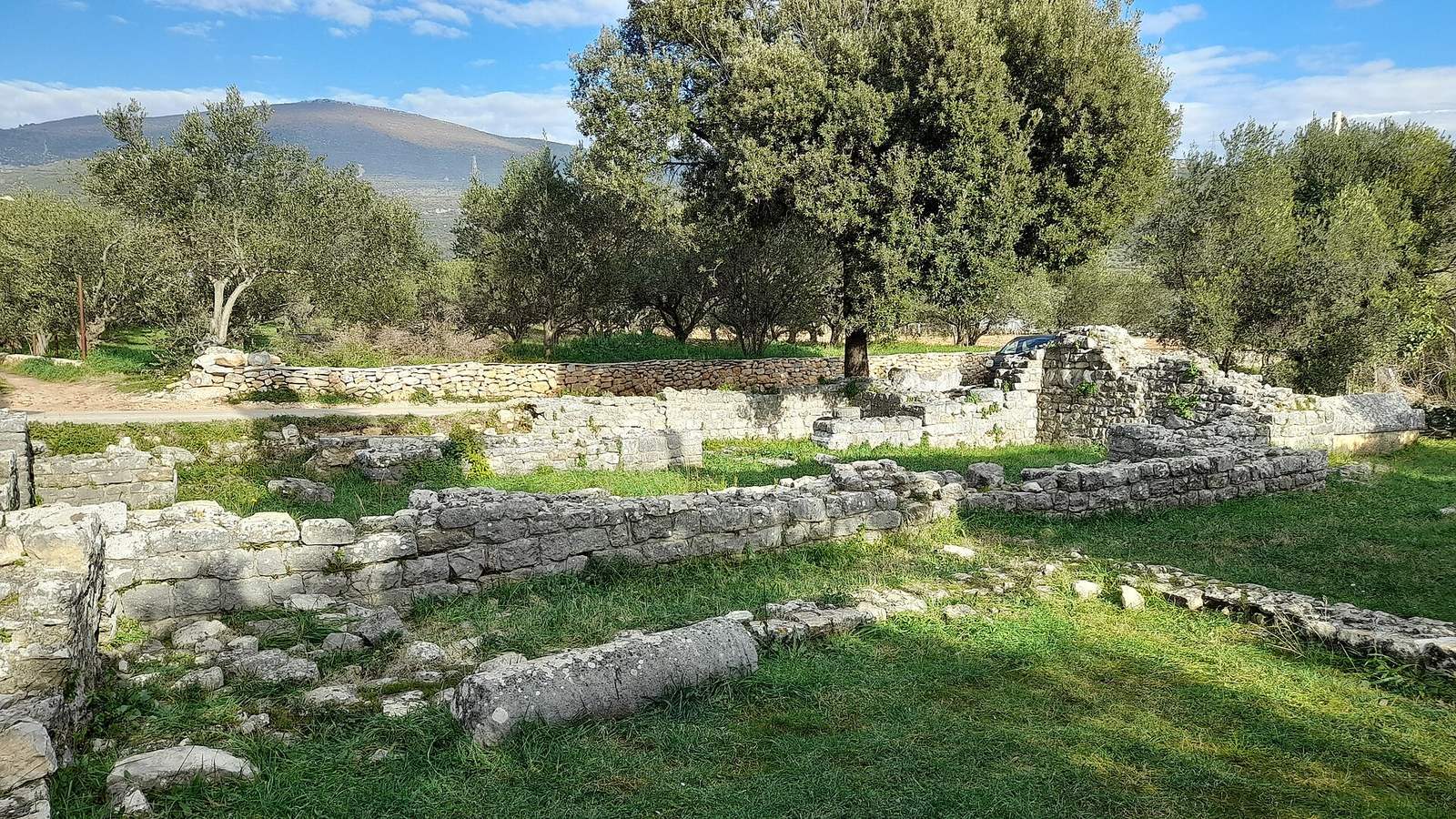
The site is centered on the church complex, with enclosing walls still visible around the ruins. It lies below Trećanica Hill and Veli Bijać, near the boundary between the Trogir and Lower Kaštela fields. Bijaći is roughly midway between Tragurium and Salona, in the hinterland of the coastal settlement of Siculi.
St. Martha’s church and enclosure
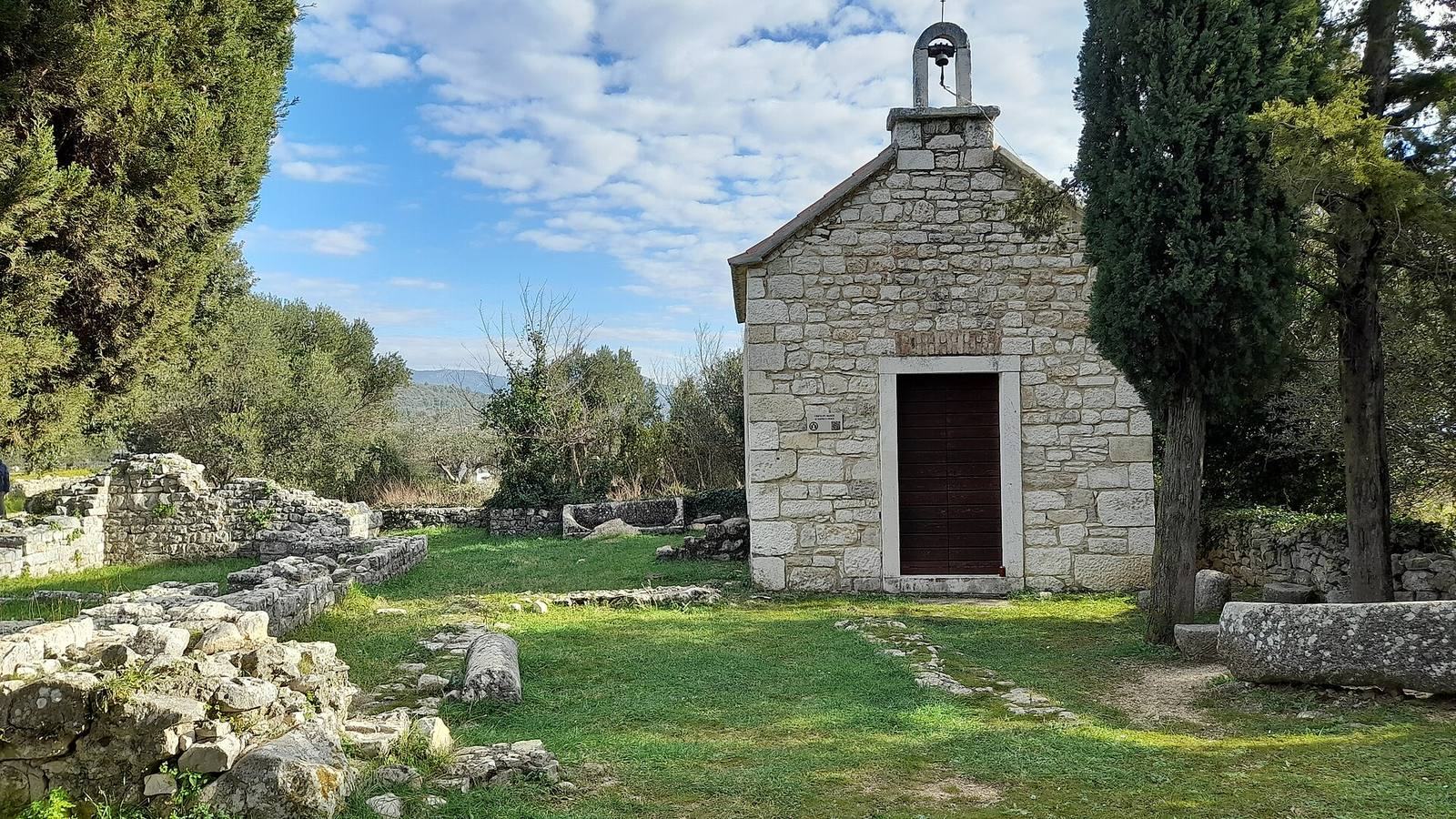
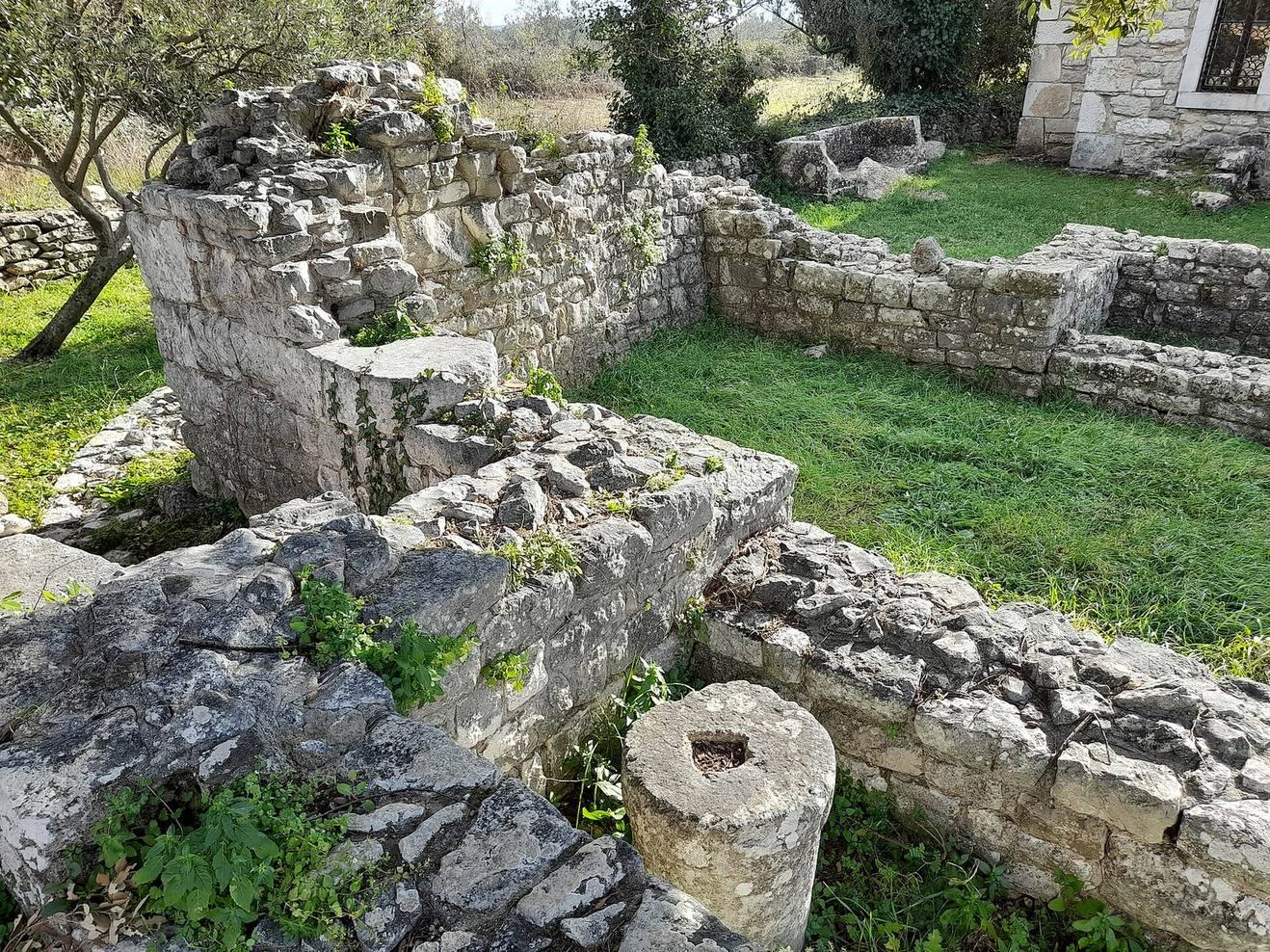
The early Croatian church was built over an earlier Christian church with three aisles. It too had three aisles, measured 14.8 by 8 metres, and ended in an angular apse, the projecting end of the church. A Romanesque bell tower was added in 1197. Walls that enclosed the church complex remain visible around the ruins. In the seventeenth century, a smaller church was built above the baptistery, the area used for Christian baptism, reusing stone from earlier buildings. Excavations in the early twentieth century led to its demolition and rebuilding elsewhere.
Burials
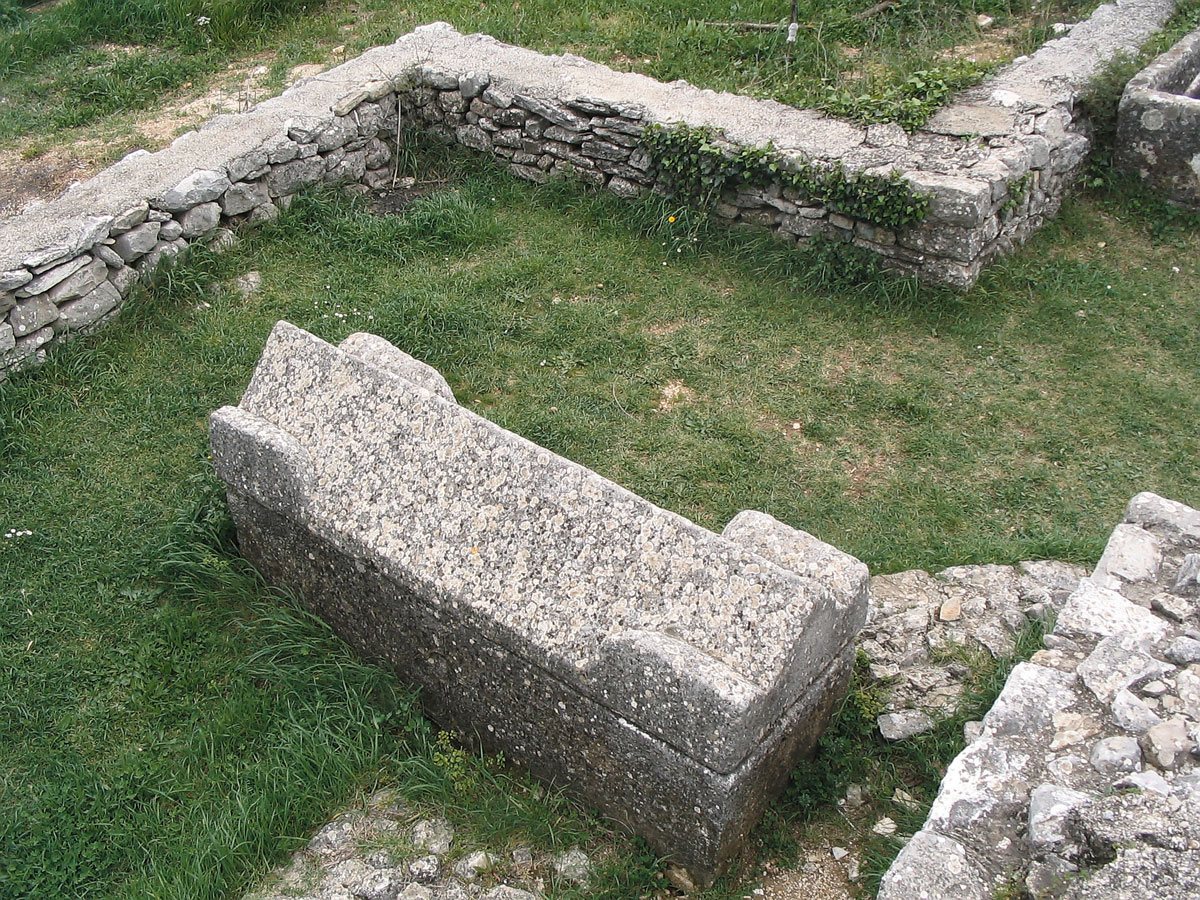
Excavations near the church uncovered a late-antique Christian cemetery with 15 graves and 13 early medieval Croatian graves, most dating to the tenth and eleventh centuries. A ninth-century Christian sarcophagus contained a pair of earrings and an iron knife.
Carved stonework
Numerous stone fragments carry ninth- and tenth-century interlace ornament, made from interwoven bands. A quadrilateral stone canopy supported by columns was found in fragments and reconstructed; it is now held by the Museum of Croatian Archaeological Monuments in Split. Six stone blocks that spanned openings were also found near the church and may have belonged to buildings in the ducal palace.
Hilltop church
The name Bijaći also applies to two hills. Veli Bijać, 208 metres high, lies west of the smaller Mali Bijać. The church of St. Onofrio, also called St. Nofar, stands on Veli Bijać’s summit and was built in 1475.