Bieberstein Castle: A Castle Complex in Saxony, Germany
Site at a Glance
- Popularity
- Medium
- Country
- Germany
- Primary era
- Early Modern
- Eras represented
- Medieval, Early Modern
- Civilizations
- Electorate of Saxony, Holy Roman Empire, Margraviate of Meissen
- Site type
- Domestic
- Remains
- Castle
On this page9 sections
History
The Bieberstein lineage
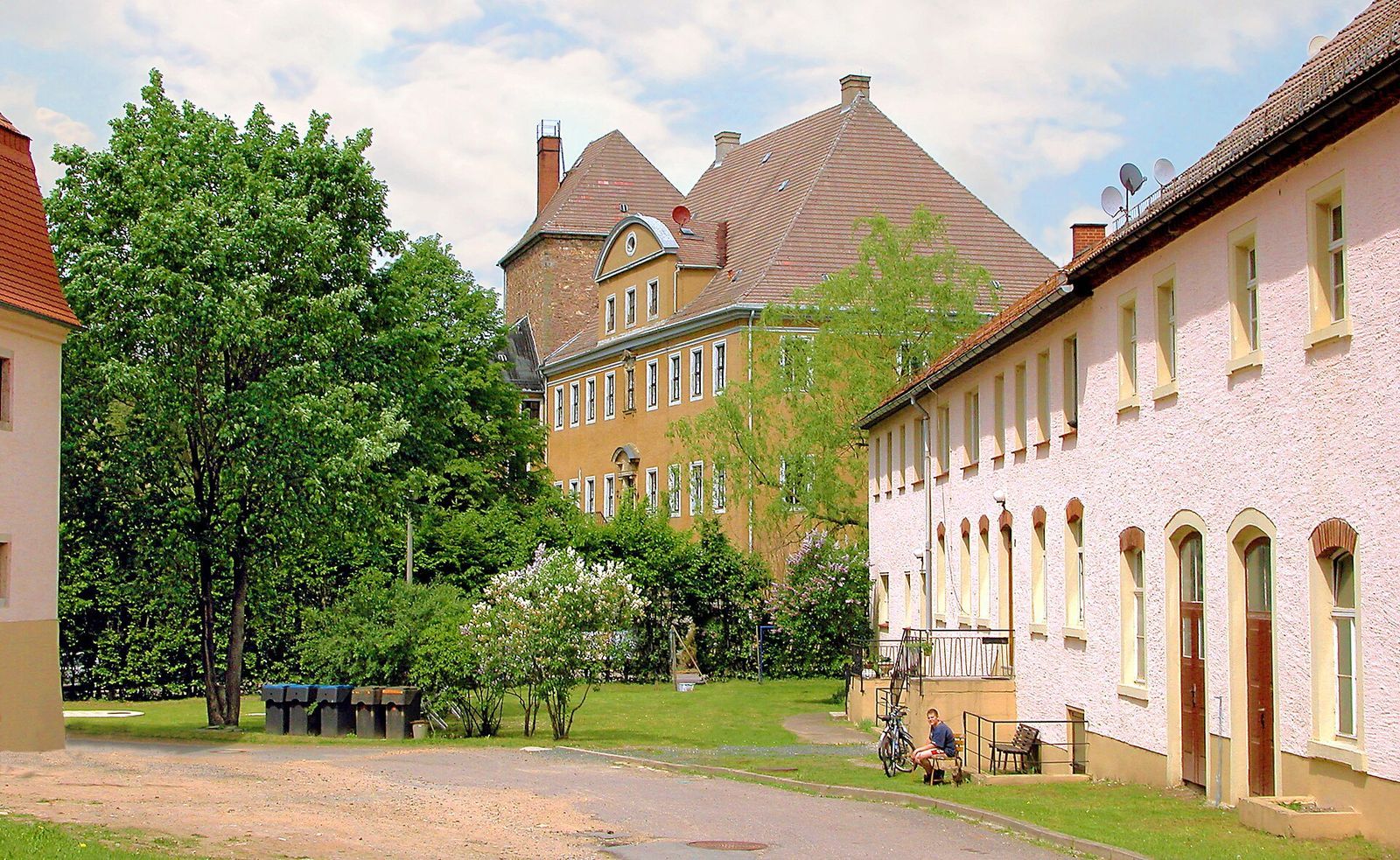
Bieberstein Castle is a castle complex in Bieberstein, within the municipality of Reinsberg in Saxony, Germany. A nobleman named Günther von Bieberstein, who took his name from the castle, was recorded in 1218. The Lords, later Barons, of Bieberstein played important roles in Bohemia, Silesia, and Lusatia, a historic region now divided between Germany and Poland. Their lineage ended in the seventeenth century.
Marschall ownership
During the fourteenth and fifteenth centuries, the castle, settlement, and lordship belonged to the Marschalls von Bieberstein, a family unrelated to the earlier Biebersteins. Heinrich Marschall, the first member of this family recorded with the Bieberstein name, appears in a document dated 15 June 1399. The family held the castle until 1602 and continued as the Barons Marschall von Bieberstein. The castle originally comprised upper and lower sections. Around 1600, the newer castle was joined to the medieval keep to form a connected group.
Rebuilding under the von Schönbergs
The von Schönberg family held Bieberstein Castle from 1630 to 1807 and also owned neighboring Reinsberg Castle. In 1656, Gotthelf Friedrich von Schönberg, a counsellor to the Saxon prince-elector (a ruler entitled to vote in choosing the Holy Roman Emperor), bought Bieberstein. In 1666, he had most of the building taken down to its foundations and rebuilt in its present basic form. Parts of the lower castle were dismantled after 1650.
The lordship and later use
Until the mid-nineteenth century, the lordship, the territory governed by a local lord, formed the southwesternmost part of the Meissen district office, an administrative unit under Electoral and later Royal Saxon government. It included Bieberstein, Burkersdorf, Gotthelffriedrichsgrund, Hohentanne, Rothenfurth, and the western part of Krummenhennersdorf. The Freiberger Mulde marked its western boundary and the Bobritzsch its eastern one.
Bieberstein Castle served as a youth hostel until 1992 and is now used as a conference center.
Remains
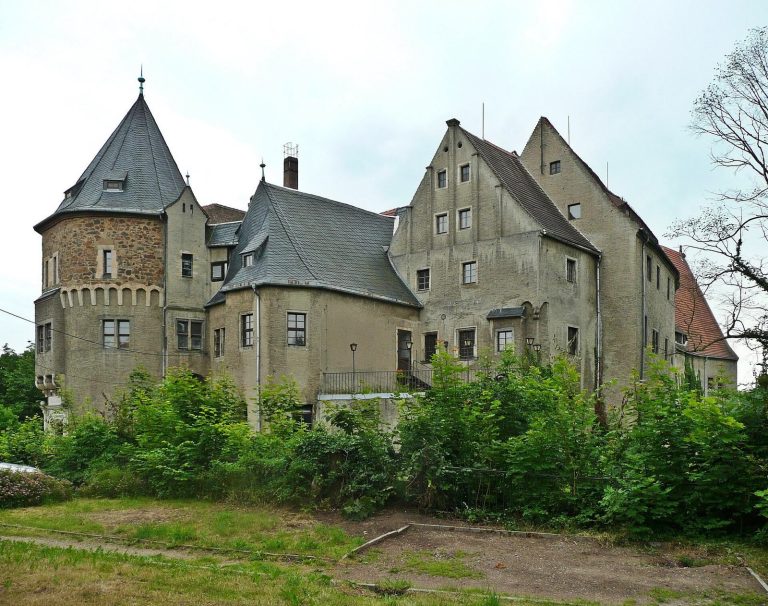
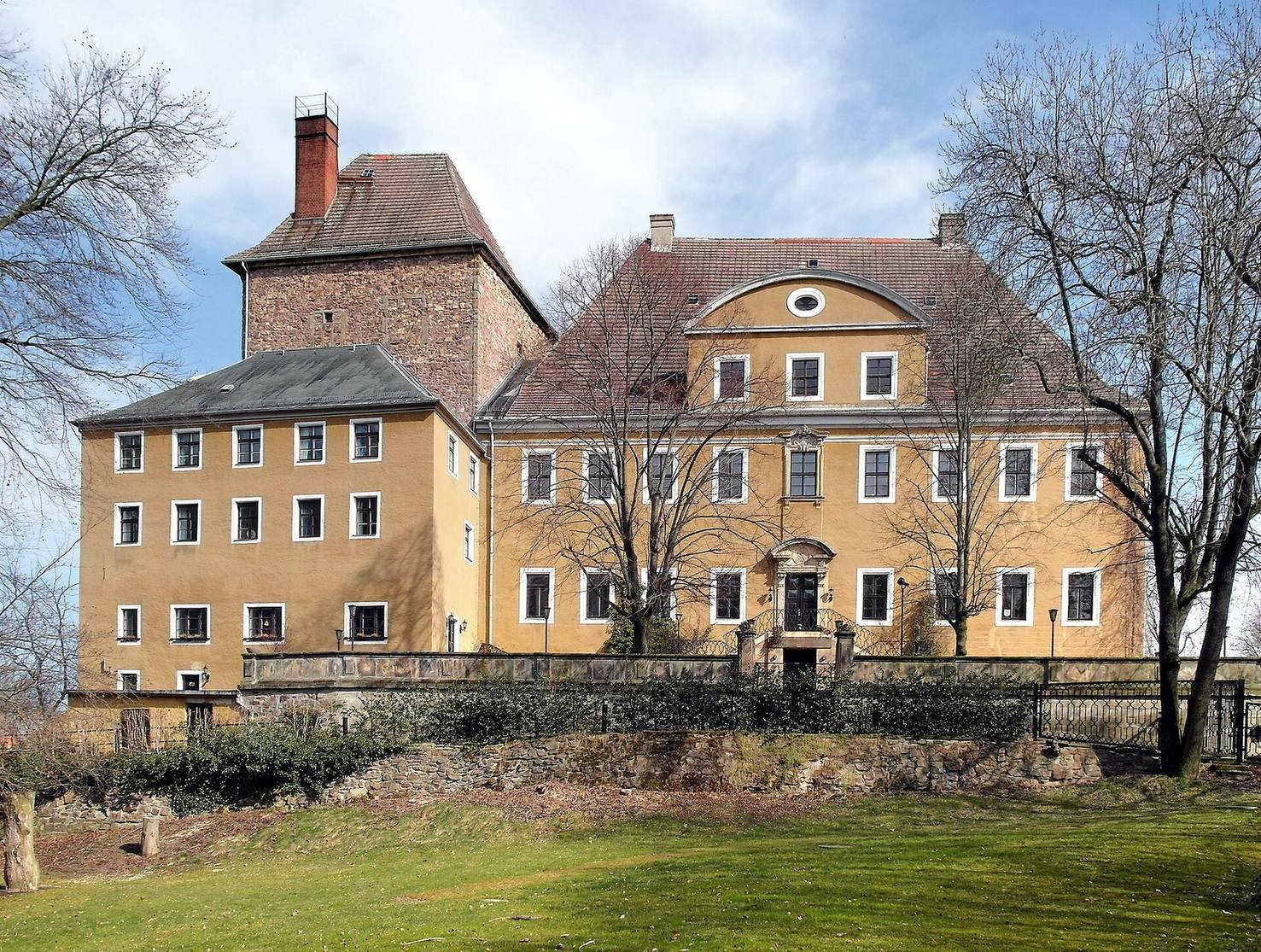
The castle complex stands on the left bank of the Bobritzsch, a tributary of the Freiberger Mulde. It consists of two spatially separate groups: the larger New Castle and the smaller Old Castle.
New Castle
The New Castle occupies the site of a former medieval fortress. Its square-plan principal defensive tower survives as part of the connected building group. A western exterior staircase and an interior staircase with four flights were built between 1710 and 1720.
Old Castle
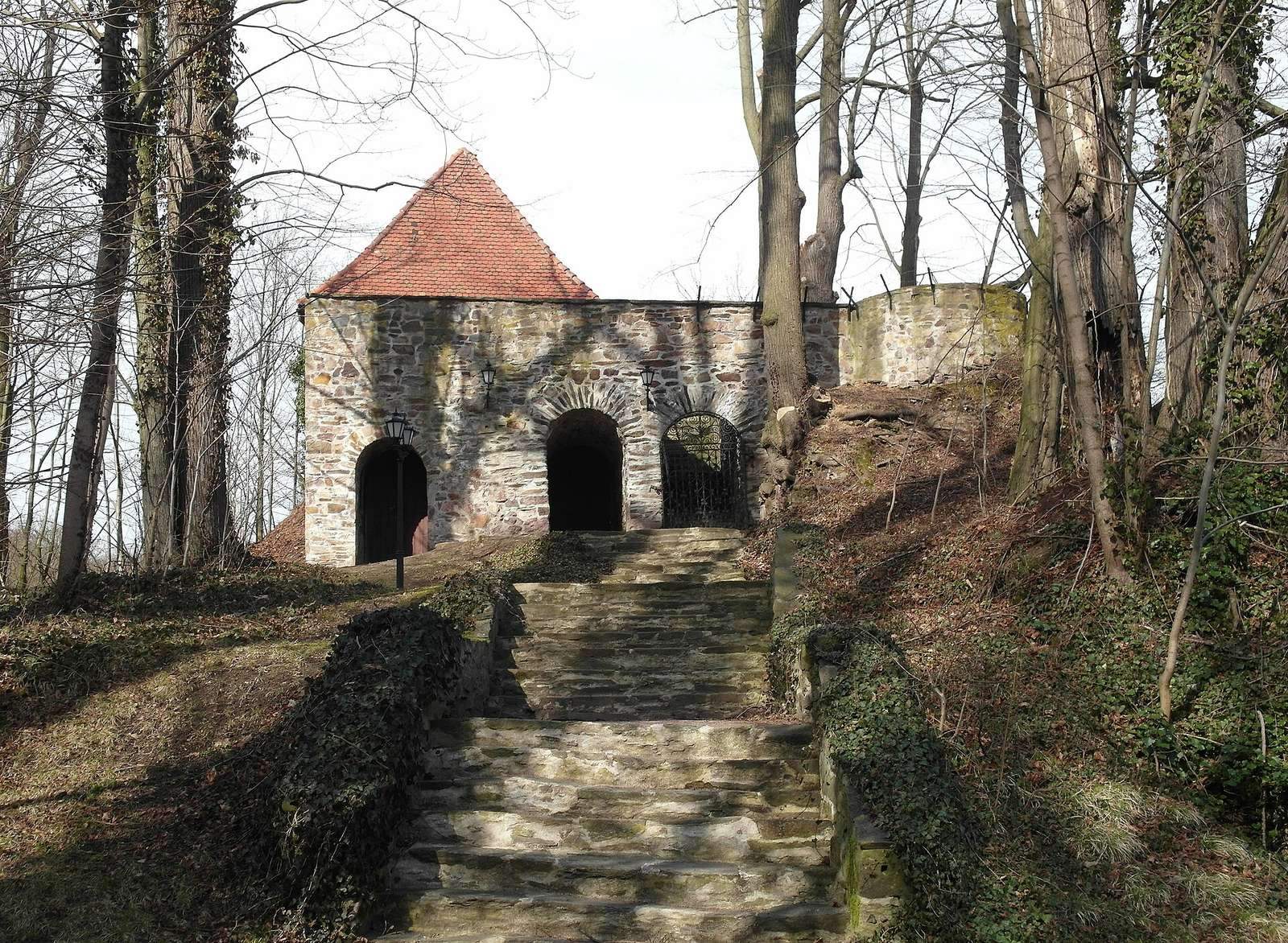
The smaller Old Castle probably occupies the site of a second former fortress. A small manor house now stands over it.
Chapel and park
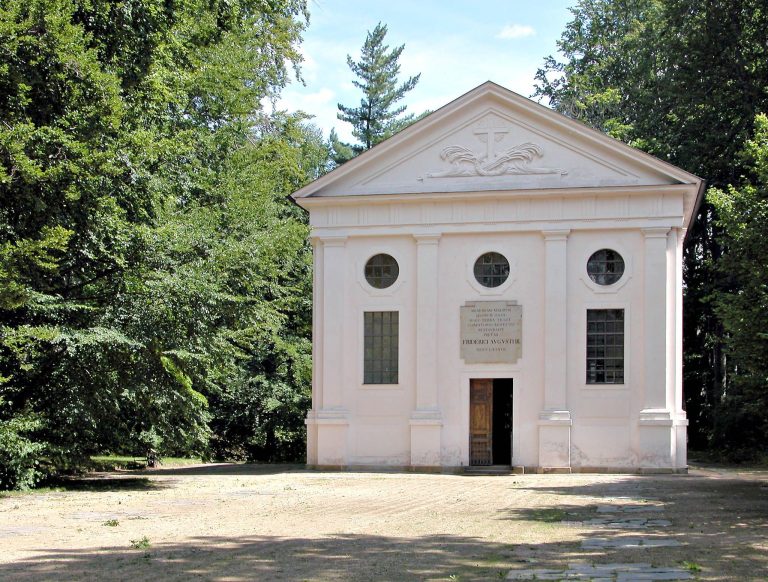
An adjacent chapel bears the von Schroeter family coat of arms, which depicts a stag beetle. Members of the family lived in the castle from the early nineteenth century. The castle park contains old trees.