Benton Castle: A Medieval Fortification on the Cleddau River
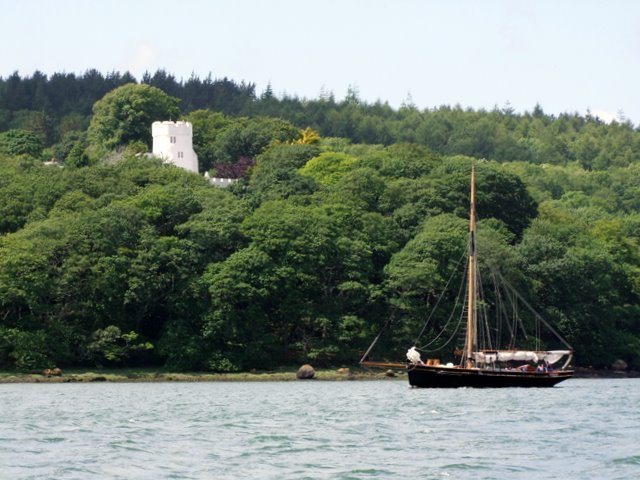
Site at a Glance
- Popularity
- Medium
- Country
- United Kingdom
- Primary era
- Medieval
- Eras represented
- Medieval, Modern
- Civilizations
- Unclassified
- Site type
- Military
- Remains
- Castle
On this page7 sections
History
Medieval origins
Benton Castle is a medieval fortification overlooking the Cleddau River in Pembrokeshire, Wales, United Kingdom. It was probably built in the 13th century to help defend the boundaries of the Hundred of Rhos, a historic administrative district. Its origins are uncertain; another possibility is that the Normans, who established rule in parts of Britain after 1066, built it as a border fortress. The castle formed part of a defensive chain intended to protect south Pembrokeshire, particularly Milford Haven, from invasion during the 12th and 13th centuries.
Later medieval and early modern history
In the 14th century, the castle was held by Thomas de Roche, Lord of Llangwm. A map made in 1583 places it on the western bank of the Eastern Cleddau, and the Welsh antiquary George Owen mentioned it in 1603. The river continued to carry busy water traffic until relatively recent times.
The castle may have been held and damaged during the English Civil War, the mid-17th-century conflict between supporters of King Charles I and Parliament. It fell into ruin after this period.
Repair and reuse
The ruins were stabilised in the early 20th century. The castle remained uninhabited until 1930, when renovation began; by 1954, the courtyard had been roofed. After its sale in the 1960s, further restoration took place, and the castle is now a private house. It was listed as a Grade II* building in 1951, a category for buildings judged to be of more than special interest.
Remains
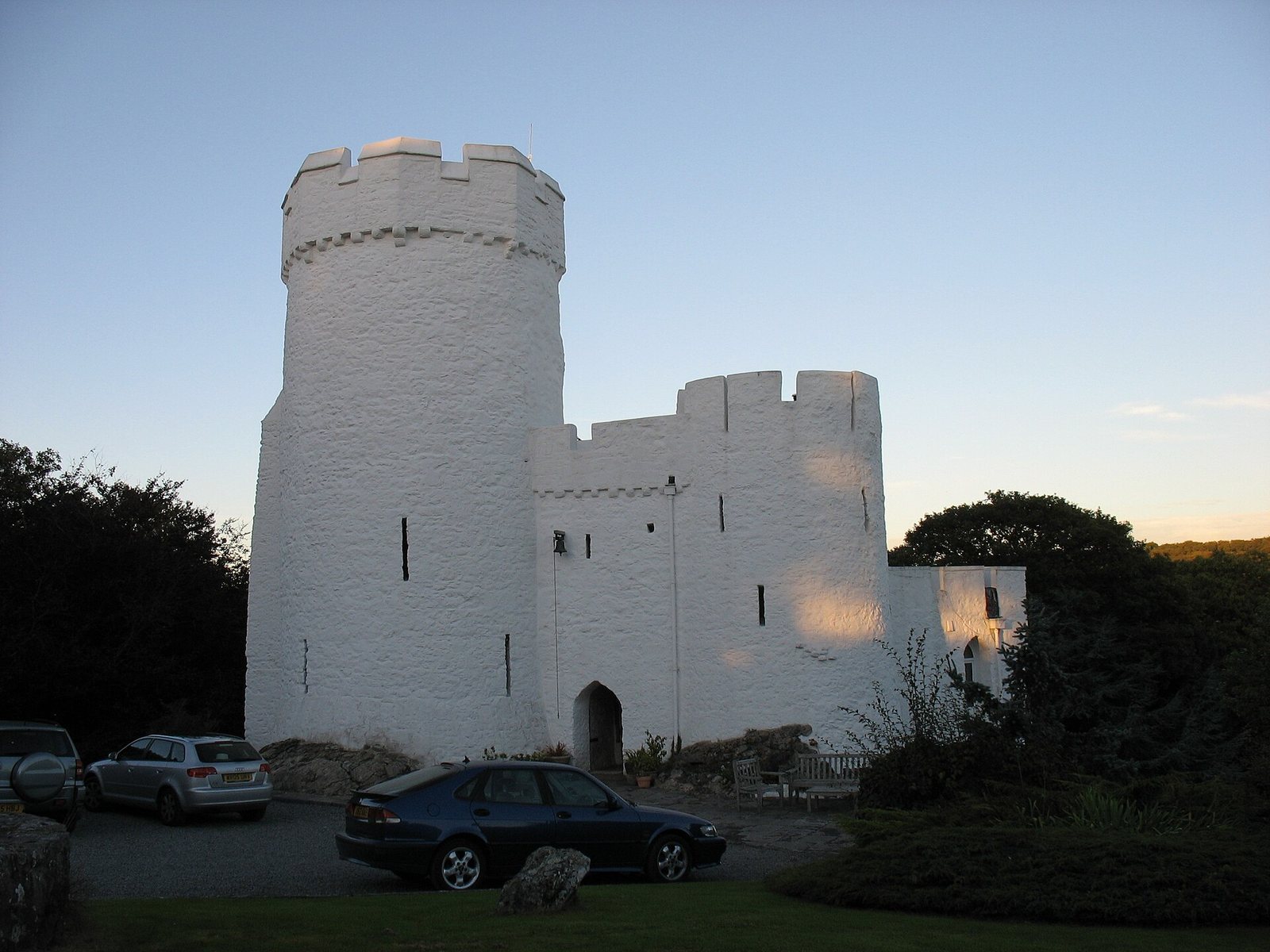
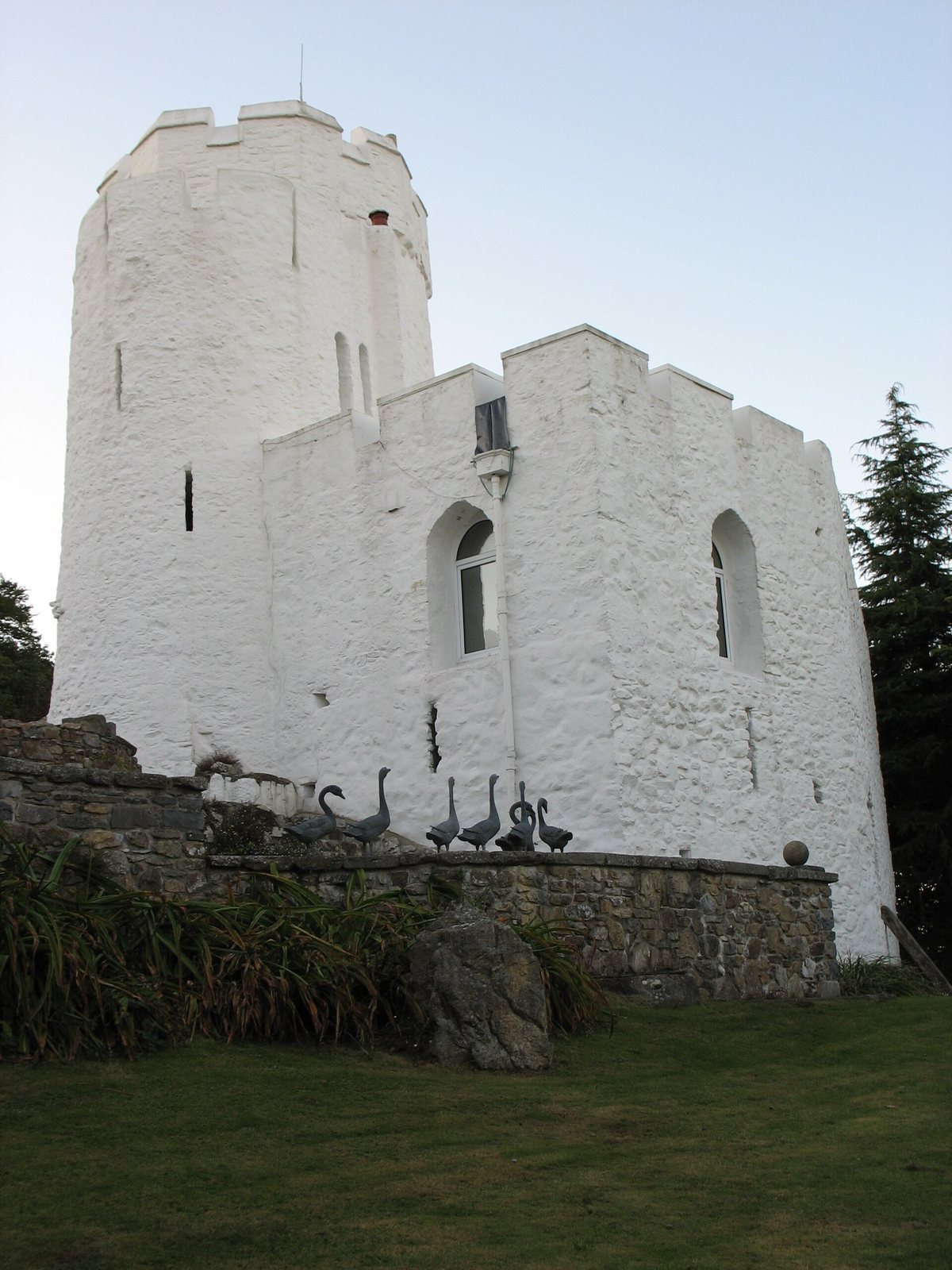
The small, whitewashed castle stands in woodland overlooking the Cleddau River, at 29.4 metres above sea level. Two round towers of unequal height flank the main entrance, with a courtyard behind them. The layout has been described as an enclosure castle, a fortified site organized around an enclosed area such as a courtyard, and claimed to be the smallest of its kind in Britain.
Main tower
A description from 1811 characterized the main tower as almost circular, with its upper section ending in an octagonal form. By 1844, the remains were described chiefly as a tall round tower on the western shore of the estuary. An 1888 description noted an octagonal battlement around the tower, probably added later, and a division into three storeys. The chambers were thought to have been reached by ladder. Fragments point to substantial buildings once attached to the tower on its northeast side.
Earthworks
The tower stood within a plot enclosed by earthworks. This arrangement was described in 1888 as part of the castle’s setting.