Bédeilhac Cave: A Prehistoric Decorated Cave in France
Site at a Glance
- Popularity
- Medium
- Country
- France
- Primary era
- Stone Age
- Eras represented
- Stone Age, Modern
- Civilizations
- French, German
- Site type
- Civic
- Remains
- Rock Art
On this page12 sections
History
Bédeilhac Cave, near Tarascon-sur-Ariège in France, is a natural cave with human use extending back at least 15,000 years. Its prehistoric record includes the Magdalenian, a late Upper Paleolithic culture of western Europe associated with hunter-gatherers and prehistoric art. The cave belongs to the decorated-cave network of the Pyrenees-Cantabrian mountain chain.
Prehistoric and later use
Magdalenian hunters used the cave as a refuge and may also have held rituals there. Later activity included Bronze Age burials and use during the Metal Ages and Antiquity. Naturalists had visited the cave by at least the sixteenth century.
Exploration and recognition
The first known description of the cave dates to 1773 and is attributed to the naturalist Jean-François Marcorelle. Archaeological investigations by Filhol, Noulet, and Garrigou followed in 1866; later explorations by Cartailhac, Vidal, and Mandement also brought discoveries.
In July 1906, a Paleolithic wall painting was found and authenticated by Henri Breuil, the first discovery of its kind in the Ariège department. Edward Harle made the first record of the cave paintings that year. Breuil, Hugo Obermaier, and Cartailhac later studied them. Research continued between the world wars and resumed after the Second World War.
Bédeilhac Cave received France’s Historic Monument status, a legal heritage-protection designation, in 1929. A further classification date is 1992.
Wartime occupation
During the Second World War, the cave was used for storage and industrial work. From 1 June 1940, it was requisitioned for the Dewoitine aircraft factories. Preparations began to make workshops for aircraft-parts production, but the French defeat ended the project, and the factory was dismantled in early July.
German occupation forces took control of the cave from May 1944 to repair Junkers aircraft. They continued work at the entrance to install machine tools, then abandoned the site on 15 August 1944, leaving eight wrecked aircraft, tools, and personnel barracks. Earthworks near the entrance destroyed archaeological layers. The German forces’ purpose was aircraft repair, not the construction of an airfield inside the cave.
Remains
Cave system
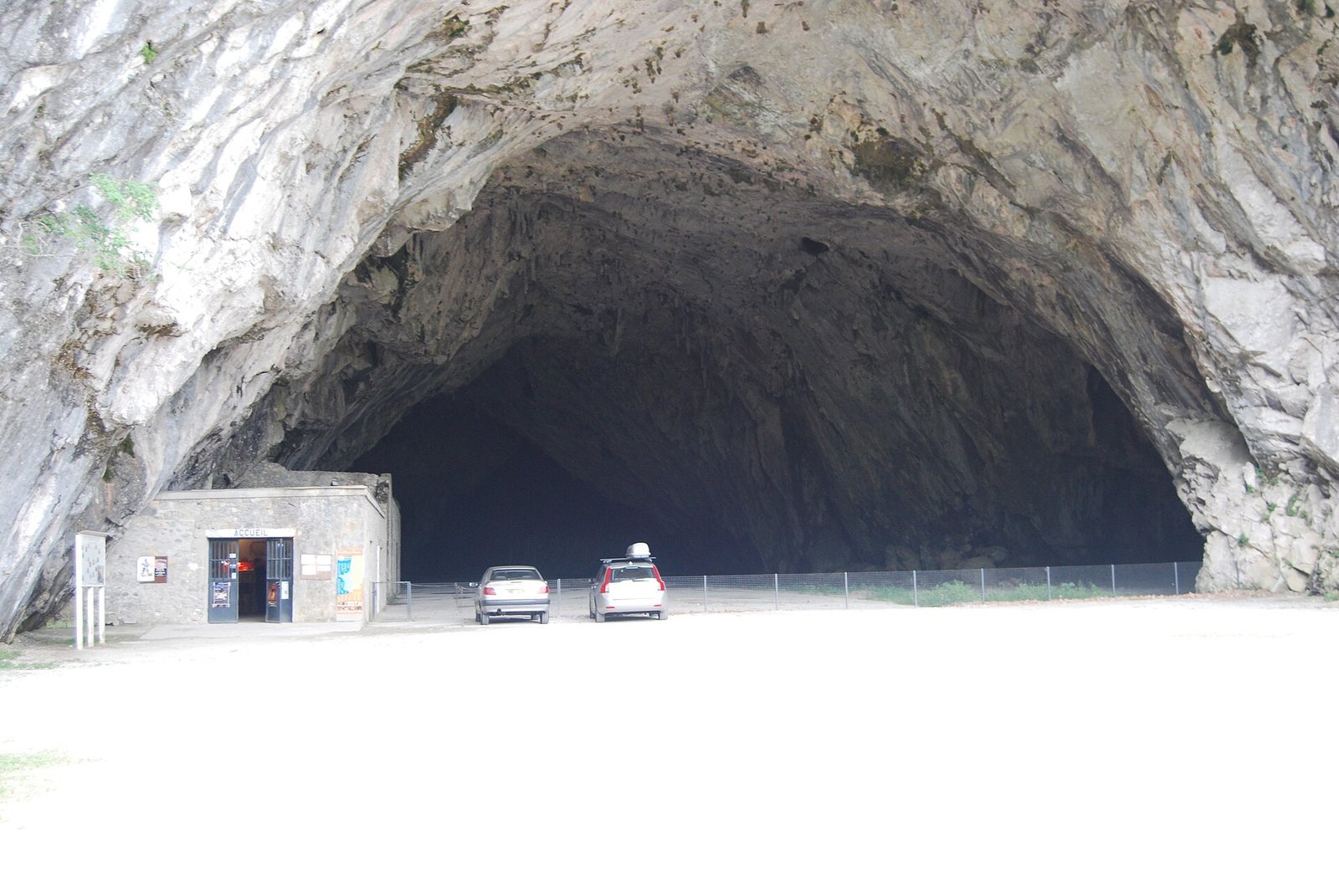
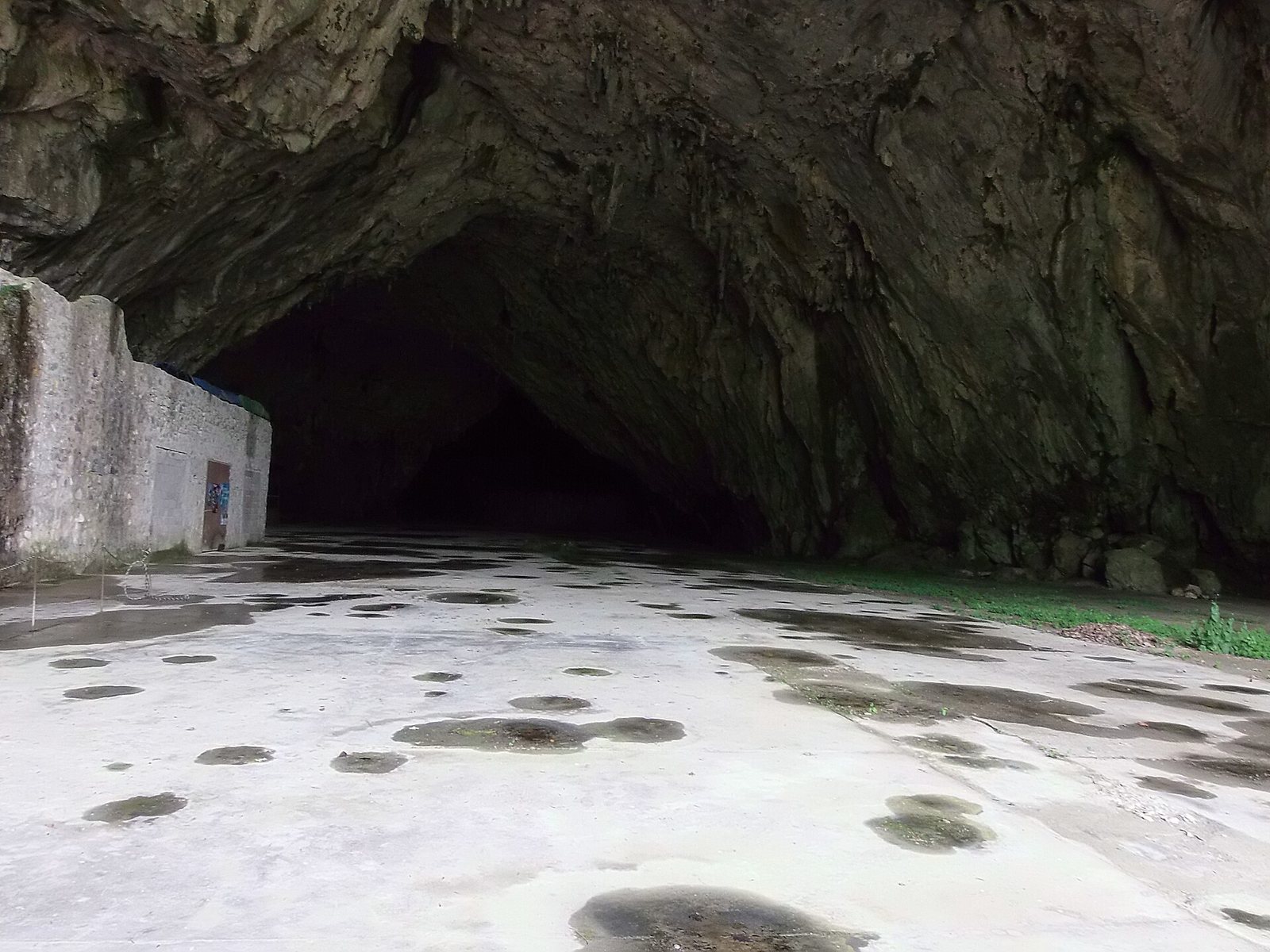
The cave lies on the flank of the Soudour massif in the Saurat Valley, at an elevation of 690 m, and is cut into Lower Cretaceous limestone, the earlier part of the Cretaceous Period. It penetrates about 750 m into the massif, while its interconnected galleries total 2,240 m. The opening is 40 m wide and extends for more than 1 km. The entrance rises 57 m, and parts of the ceiling reach as much as 80 m above the floor. Wartime work levelled about 350 m of the entrance area and partly covered it with concrete.
Decorated chambers and archaeological evidence
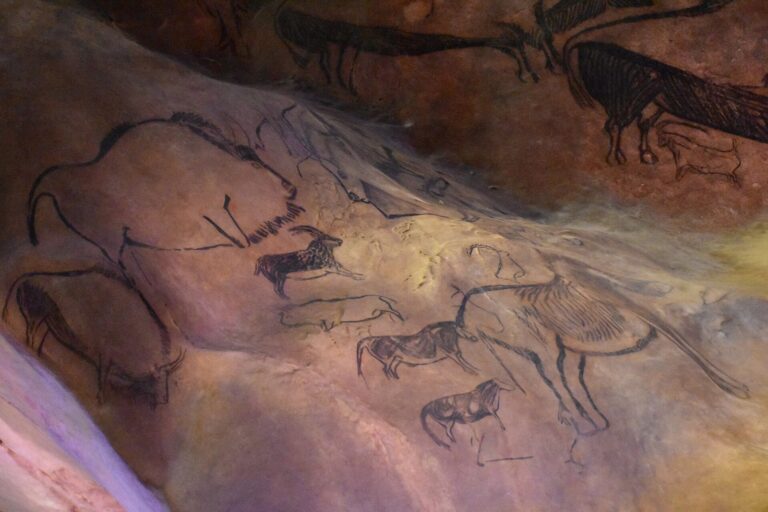
The cave’s Magdalenian art includes images of horses and reindeer, as well as abstract geometric signs. Animal reliefs were formed on rock, mineral fragments, and clay. A hearth and a perforated disc-shaped object are also among the archaeological remains.
Large gallery
The large gallery, the cave’s greatest chamber by dimensions, contains a mineral formation known as the holy-water stoup and a large pillar formed from cave deposits. Its Magdalenian art includes a painted bison and positive handprints.
Labyrinth
A group of pillars formed from cave deposits stands in the labyrinth.
Clay-modelling gallery
The clay-modelling gallery contains Magdalenian clay models and raised clay images, including a headless horse.
Vidal gallery
A Magdalenian bison head is found in the Vidal gallery.
Terminal room
The terminal room has Magdalenian engravings made on clay, depicting a bison, a horse, and a vulva traced with a finger. A bison rendered in charcoal is also present.