Cave of Niaux: A Magdalenian Cave-Art Site in France
Site at a Glance
- Popularity
- High
- Country
- France
- Primary era
- Stone Age
- Eras represented
- Stone Age
- Civilizations
- Unclassified
- Site type
- Civic
- Remains
- Rock Art
On this page9 sections
History
The Cave of Niaux is a decorated Upper Paleolithic cave in Niaux, France, with wall paintings associated with the Magdalenian, a later Upper Paleolithic culture of western Europe. The paintings are placed between 11,500 and 10,500 BC, while charcoal-bearing images in the Salon Noir have a radiocarbon estimate of about 13,000 years ago. Radiocarbon dating estimates the age of organic material by measuring its remaining carbon-14.
Magdalenian activity and interpretations
In the wider region, seasonal Upper Paleolithic camps were associated with hunting ibex, reindeer, and other animals. Some groups were semi-nomadic, spending about nine months in the Pyrenean foothills before moving into valleys for winter. Their work included processing animal hides, antlers, and reindeer bones.
The purpose of Niaux’s paintings remains open to interpretation. An early proposal saw hunting scenes and ceremonies intended to help secure successful hunts, pointing to apparent arrows and the focus on large herbivores. A shamanistic interpretation, first advanced in the late nineteenth century and later notably revived by Jean Clottes, understands decorated caves as places where people encountered spirits of nature. In 2022, Jean-Loïc Le Quellec proposed that the images relate to a myth about the first emergence of living beings on Earth, which he argued spread as Homo sapiens entered new territories.
Visits and archaeological investigation
Visitors entered the cave from the seventeenth century onward, leaving inscriptions on its walls. By the early eighteenth century, they were also making numerous notches. Félix Garrigou visited in 1864 and was shown some of the paintings. In 1906, Captain Molar and his sons mapped the cave and identified the paintings in the Salon Noir, drawing wider archaeological attention. Henri Breuil and Emile Cartailhac investigated the site in 1907. France classified the cave as a historic monument on 13 July 1911.
In 1925, J. Mandeman found a gallery with black paintings and named it the Cartailhac Gallery. The Clastres network was recognized as a distinct area after its discovery in 1970. Jean Clottes and Robert Simonnet carried out a major scientific examination in 1971, and a team inventoried the cave’s images in 1980 and 1981.
Remains
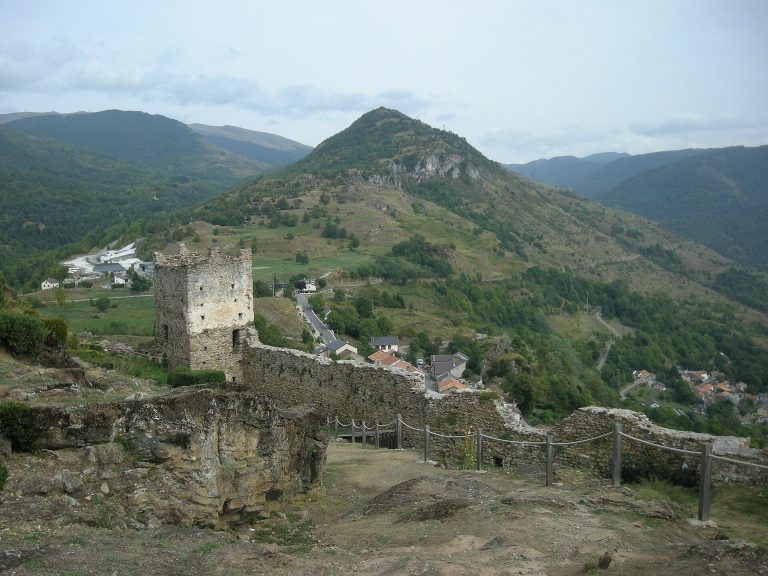
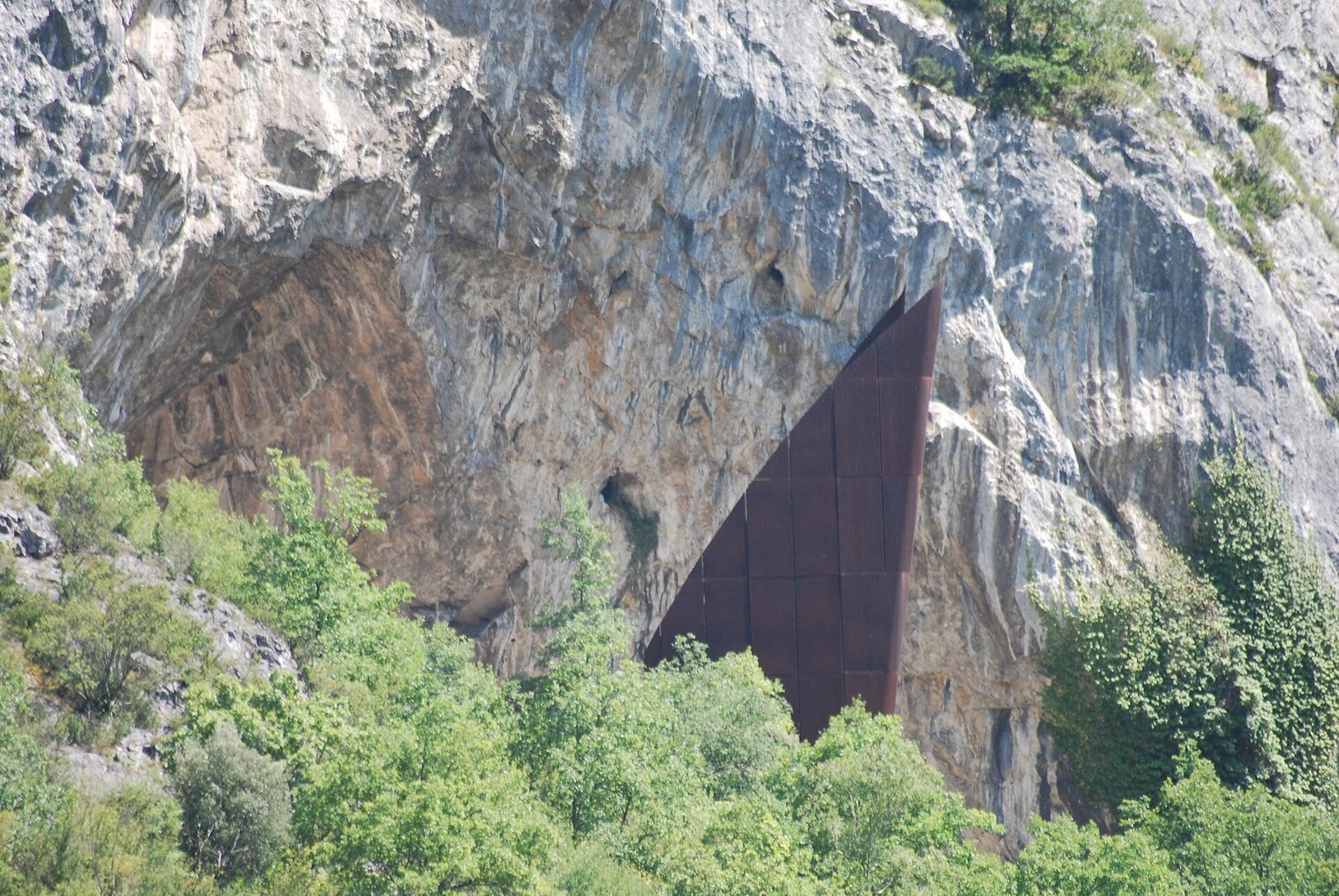
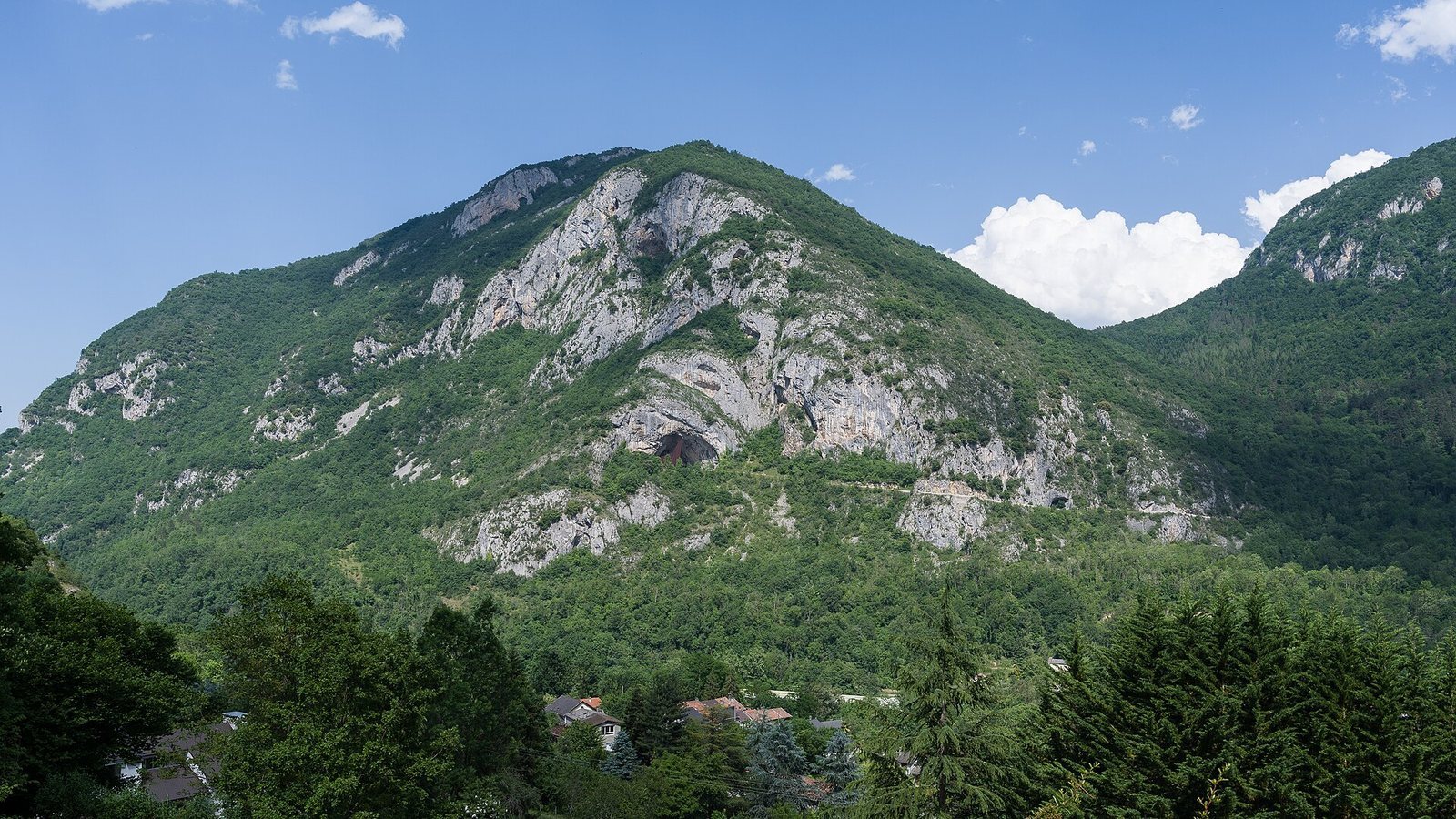
The cave runs through Jurassic and Early Cretaceous limestone. Its entrance sits on a slope above the Vicdessos valley, about 700 metres above sea level. Across the valley is the Magdalenian habitation cave of La Vache, while Tarascon-sur-Ariège lies about seven kilometres away. Niaux has roughly 4,000 metres of known passages. The Niaux-Lombrives system extends for 11,100 metres and has a vertical range of 417 metres; a broader underground complex of about 14 kilometres also includes Lombrives and the separate Sabart cave. At the entrance, an interpretation centre takes the form of a pavilion-sculpture made of Corten steel, a weathering steel that develops a protective rust-coloured surface. Its shape evokes a large prehistoric animal emerging from the cave with its wings spread.
Decorated chambers and imagery
Salon Noir
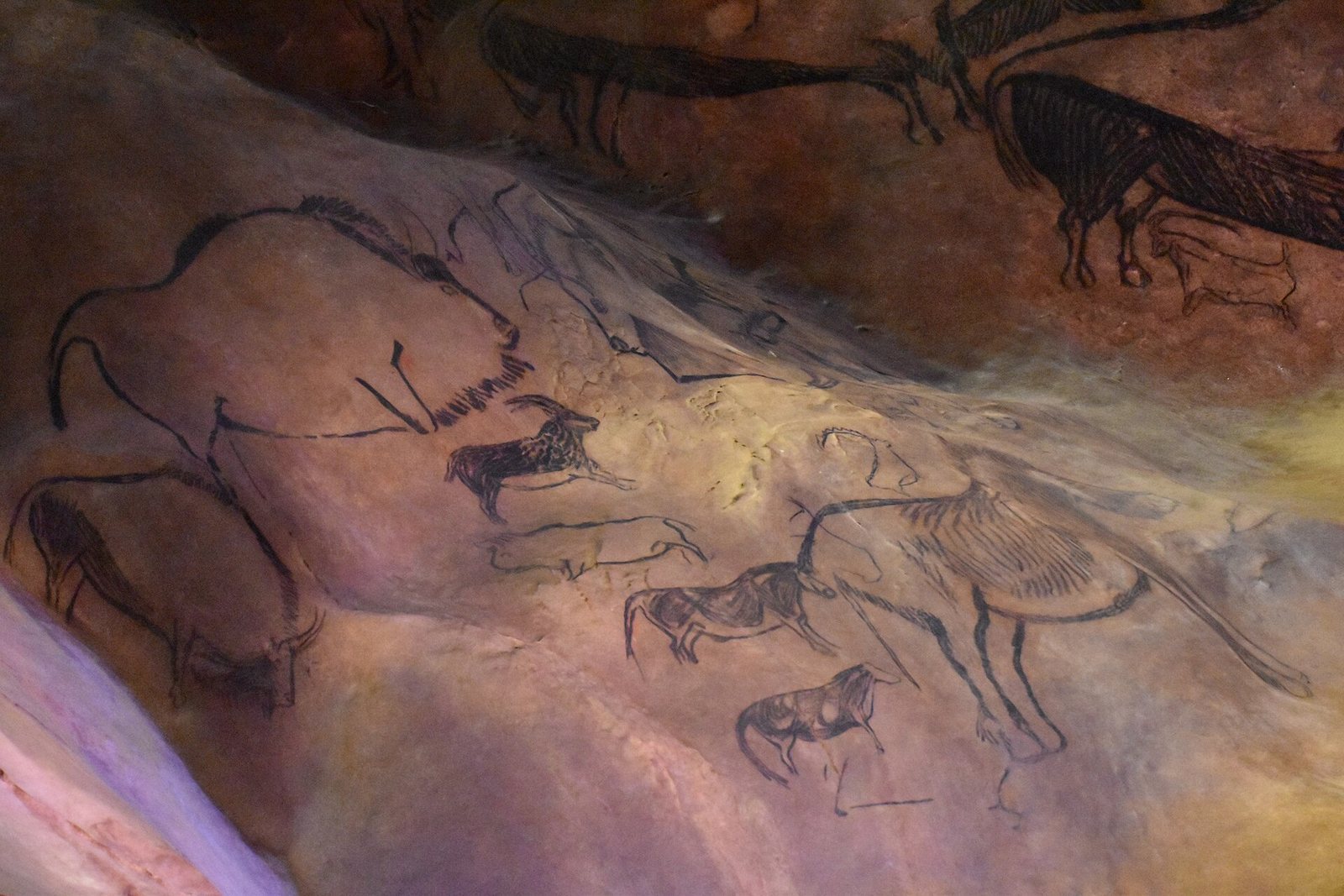
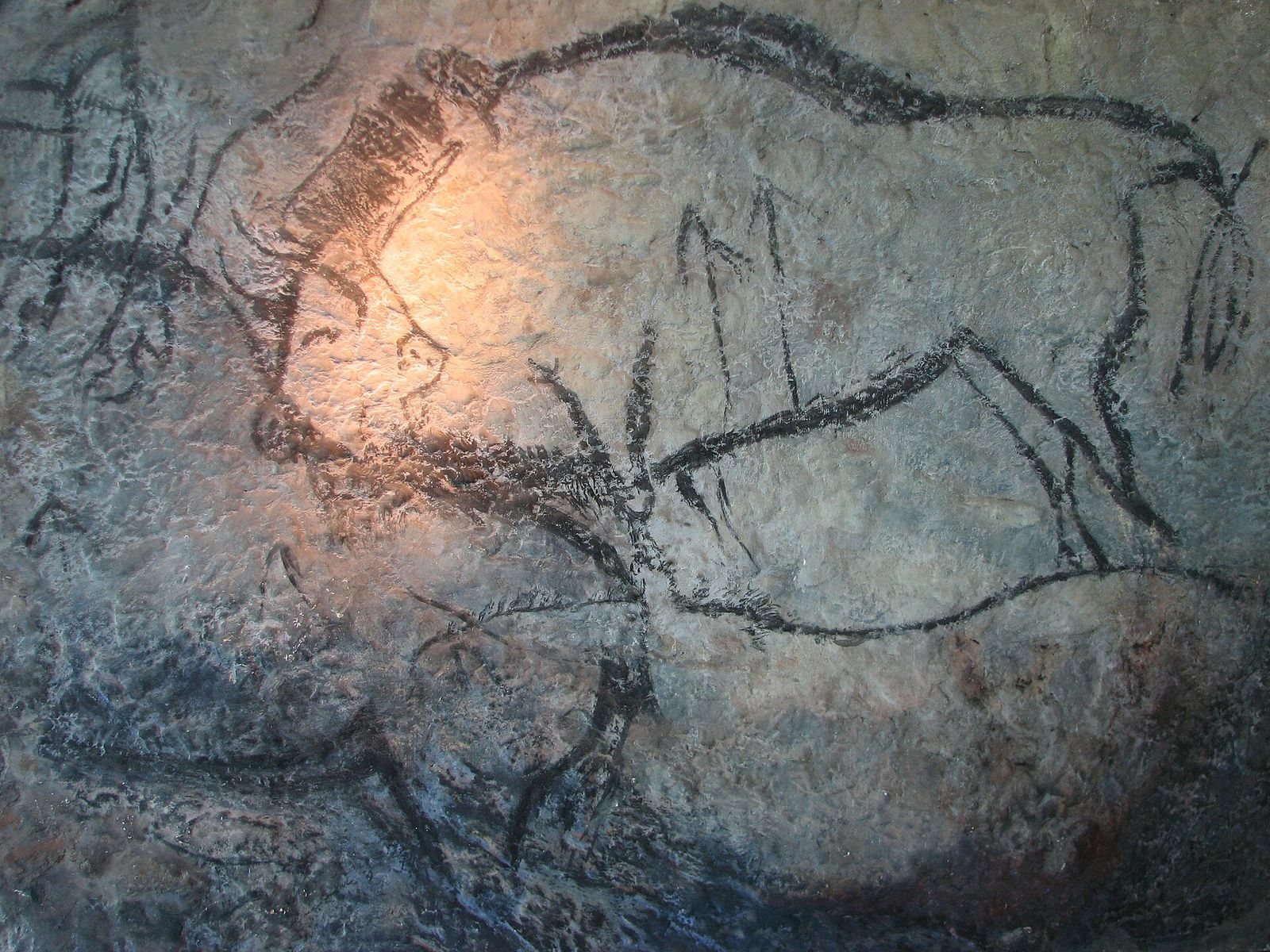
The cave’s principal decorated chamber is a natural rotunda more than 700 metres from the presumed prehistoric entrance. Its walls carry roughly a hundred animal figures. Most were painted in black using charcoal or manganese dioxide, while ground hematite provided red pigment. Black and red dots and lines appear both on their own and beside animal images.
Animal panel
The main panel includes 54 bison, 29 horses, and 15 ibex, as well as deer and fish. Bison occupy its upper area, above the horses. A bison left of centre, with a less pronounced hump, is usually identified as female; a more strongly humped figure to the right is commonly identified as male. Two goats complete the panel, one rendered naturalistically and the other schematically. Some horses have been compared with the Pottok, a small breed native to the Pyrenees and Basque region. The long-haired horses have also been interpreted as resembling Przewalski’s horse, a distinct wild species. Most animals follow the contours of the rock without a clear ground beneath them. One small ibex appears to brace its front legs against a fissure, which may have served as a ground line.
Clastres network
The separately decorated Clastres network lies beyond an underground passage with several flooded low points that now block the way between the areas. Magdalenian visitors probably reached them through different entrances. The Clastres images include a rare charcoal sketch outlining a weasel.
Footprints and cave floor
Human footprints survive in about ten areas of the cave floor, and their sizes indicate that children entered. The natural floor is wet and uneven, with slippery sections. For most of the cave’s length, the surface is the same ground walked by Magdalenian visitors.