Bassenheimer Hof: A Baroque Palace in Mainz
Site at a Glance
- Popularity
- Medium
- Country
- Germany
- Primary era
- Early Modern
- Eras represented
- Early Modern
- Civilizations
- Electorate of Mainz, Holy Roman Empire
- Site type
- Domestic
- Remains
- Elite Residence
On this page8 sections
History
Construction and intended residence
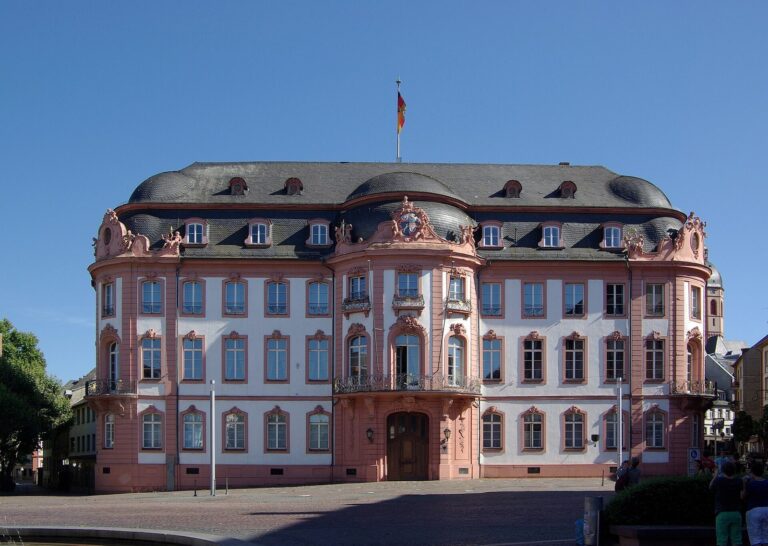
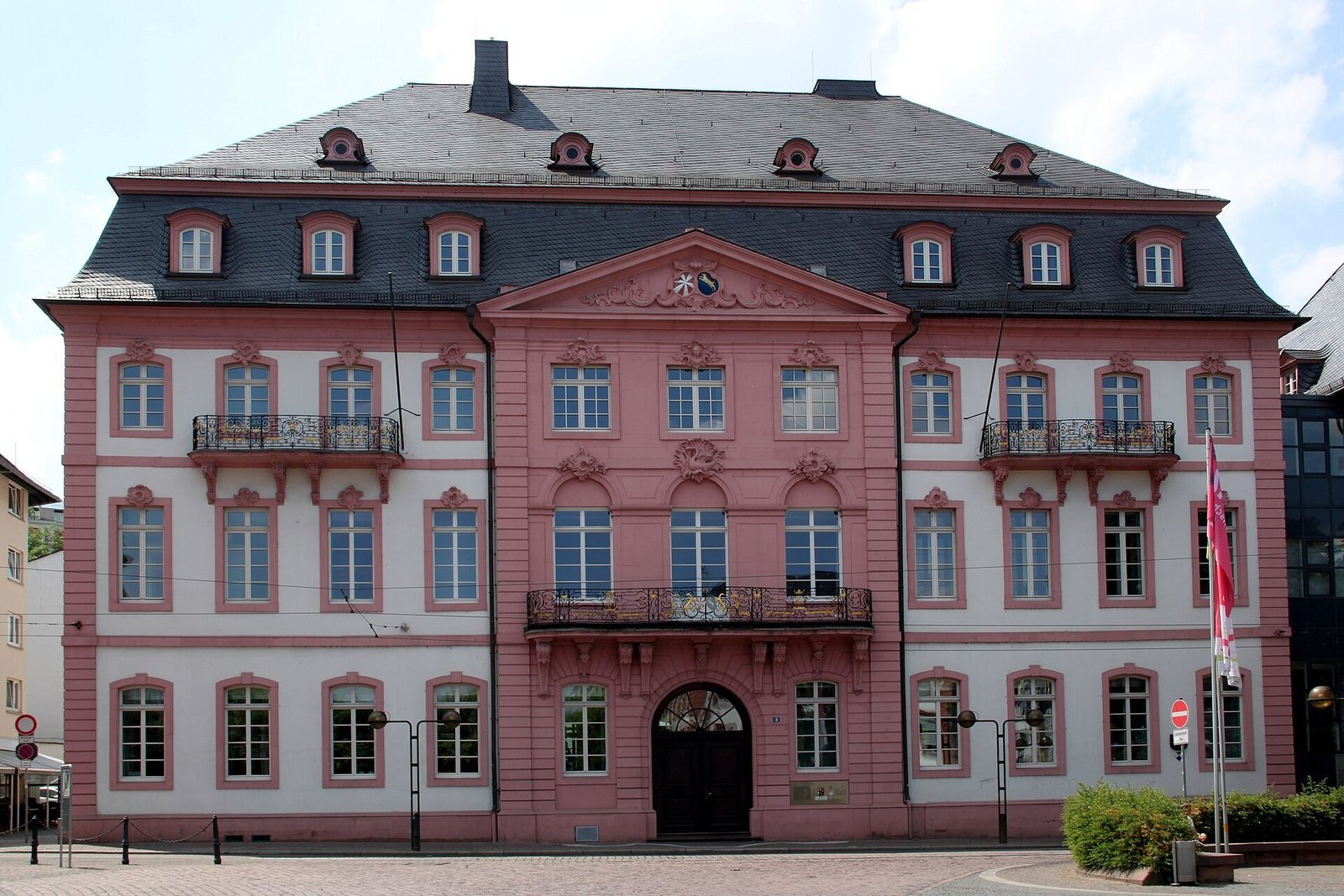
Bassenheimer Hof is a Baroque urban palace in Mainz, Germany, commissioned in 1743 by Johann Friedrich Karl von Ostein, Mainz’s prince-elector and archbishop. A prince-elector was entitled to choose the Holy Roman Emperor. The palace, completed in 1750, used the restrained classical forms of French Baroque architecture, a European style that flourished in the seventeenth and eighteenth centuries.
Von Ostein intended the residence for his younger sister, Maria Antonetta, Countess Waldbott von Bassenheim, née Countess von Ostein. She had married Rudolf Johann, Count Waldbott von Bassenheim, in 1726. After his sudden death in 1731, she was left to raise their five children, and the new residence was meant to be her home during widowhood.
Revolution and military occupation
In 1792, French general Adam-Philippe de Custine occupied Mainz during the French Revolutionary Wars. The occupation prompted the flight of the city’s nobility and clergy, including the Waldbott family. From 13 March 1798, François Joseph Lefebvre, governor of the Mainz fortress and later a marshal of France, made the palace his residence.
Military authorities of the Federal Fortress of Mainz, a stronghold maintained by the German Confederation, bought the building in 1835. It served as barracks until 1889. Later uses included a Viennese café and a workshop for embroidering flags.
Fire, restoration, and state use
Bombing of Mainz set the palace ablaze in 1942, destroying it completely. At the direction of the French occupying authorities, it was restored in 1947–48. For a time, the building housed the Minister-President of Rhineland-Palatinate, the head of the state government. In 1960, the state’s interior ministry moved in.
Remains
Design and architectural influences
Palace and setting
Bassenheimer Hof belonged to the group of Baroque aristocratic residences around Schillerplatz, near Osteiner Hof and alongside Schönborner Hof, Stadioner Hof, and Erthaler Hof. Its design combined restrained, elegant classical forms associated with French Baroque architecture. It had no courtyard of honor, following a layout typical of private mansions in Paris.
Parisian precedents
Anselm Franz von Ritter zu Grünstein’s studies in Paris shaped his response to the façades of Place Vendôme and the Hôtel de Torcy. French architect Germain Boffrand designed the Hôtel de Torcy in 1713 as a retirement residence for statesman and diplomat Jean-Baptiste Colbert, marquis de Torcy. Now called the Hôtel de Beauharnais, it serves as the German ambassador’s residence in Paris.