Barton Manor, Whippingham: A Jacobean Manor House on the Isle of Wight
Site at a Glance
- Popularity
- Medium
- Country
- United Kingdom
- Primary era
- Early Modern
- Eras represented
- Medieval, Early Modern, Modern
- Civilizations
- British, English
- Site type
- Domestic
- Remains
- Manor House
On this page7 sections
History
Barton Manor is a manor house in Whippingham on the Isle of Wight, United Kingdom, and is the island’s northernmost manor house. Its Jacobean style is associated with the period of James VI and I, while its domestic architectural character also recalls the era of the Tudor monarchs. A manor house was built here shortly after an Augustinian religious foundation was suppressed in the mid-fifteenth century.
Medieval estate and religious foundation
The manor’s name derives from the Old English form burc-tun; historical forms include Burton, Burtone, and Berton. The Domesday Book, a survey of English landholding ordered by William the Conqueror in 1086, names Bolla as holding Barton from King Edward the Confessor. After the Norman Conquest, the manor passed to Fitz Stur and remained with that family until the reign of Henry III (1216–1272), when it passed by marriage to Walter de Insula.
Around 1282, John de Insula, parish priest of Shaltteet, and Peter de Winter, parish priest of Godshill, founded and endowed an Augustinian oratory, a place for prayer maintained by a Christian community following the Rule of St Augustine. It served six priests and a clerk, was dedicated to the Holy Trinity, the Christian belief in one God as three persons, and was under the patronage of the Bishop of Winchester, the senior church official overseeing the diocese. After the foundation was suppressed, Bishop William Waynflete granted its lands to Winchester College, a boys’ boarding school in Winchester, Hampshire. Barton lands were also given to the College by Walter Trengof, a senior priest at Barton. The College held the estate until its sale to Queen Victoria in 1845, leasing the land to tenant farmers in the meantime.
Royal ownership
Queen Victoria rented Barton for a year from 1844 to consider it as a possible family home, but found it too small and instead bought nearby Osborne House as her principal residence on the island. She nevertheless purchased Barton in 1845 for £18,000, intending it to house royal household officers and visiting European royalty. The estate remained hers until her death in 1901.
Edward VII inherited Barton and kept it for his own use after giving Osborne House to the nation in 1902. Barton was one of his favourite summer retreats. Alterations and refurnishing began in 1903, and the enlarged house was still being prepared for royal guests in 1904. George V inherited the estate from Edward VII and sold it in 1922, bringing royal ownership to an end.
Later ownership and use
The Tillett family bought Barton in 1922 and farmed the estate for about 30 years. By 1952, Ivor Tillett owned it in his own right. He and his wife moved to Devon, and the vacant manor was offered for sale. Gerald Joynson bought it in 1954. Brookfield School, a boarding school founded in 1953 by Tony Williams, moved to the manor shortly afterward. It had about 30 pupils aged from 9 to 16 and closed in 1955.
In 1962, J. V. Figgins bought the manor with the intention of modernizing it as his private residence. Anthony Goddard acquired the estate in 1976. Robert Stigwood bought it in 1991 and sold it in 2006.
Remains
The physical estate combines the manor house with other estate structures and cultivated grounds.
The manor house
Two elevations of the house date to the seventeenth century; other frontages and the interior were renovated in the nineteenth century. The building also contains two medieval lancet windows, tall, narrow openings with pointed arches, which came from a former Augustinian priory, or religious house.
Estate features and grounds
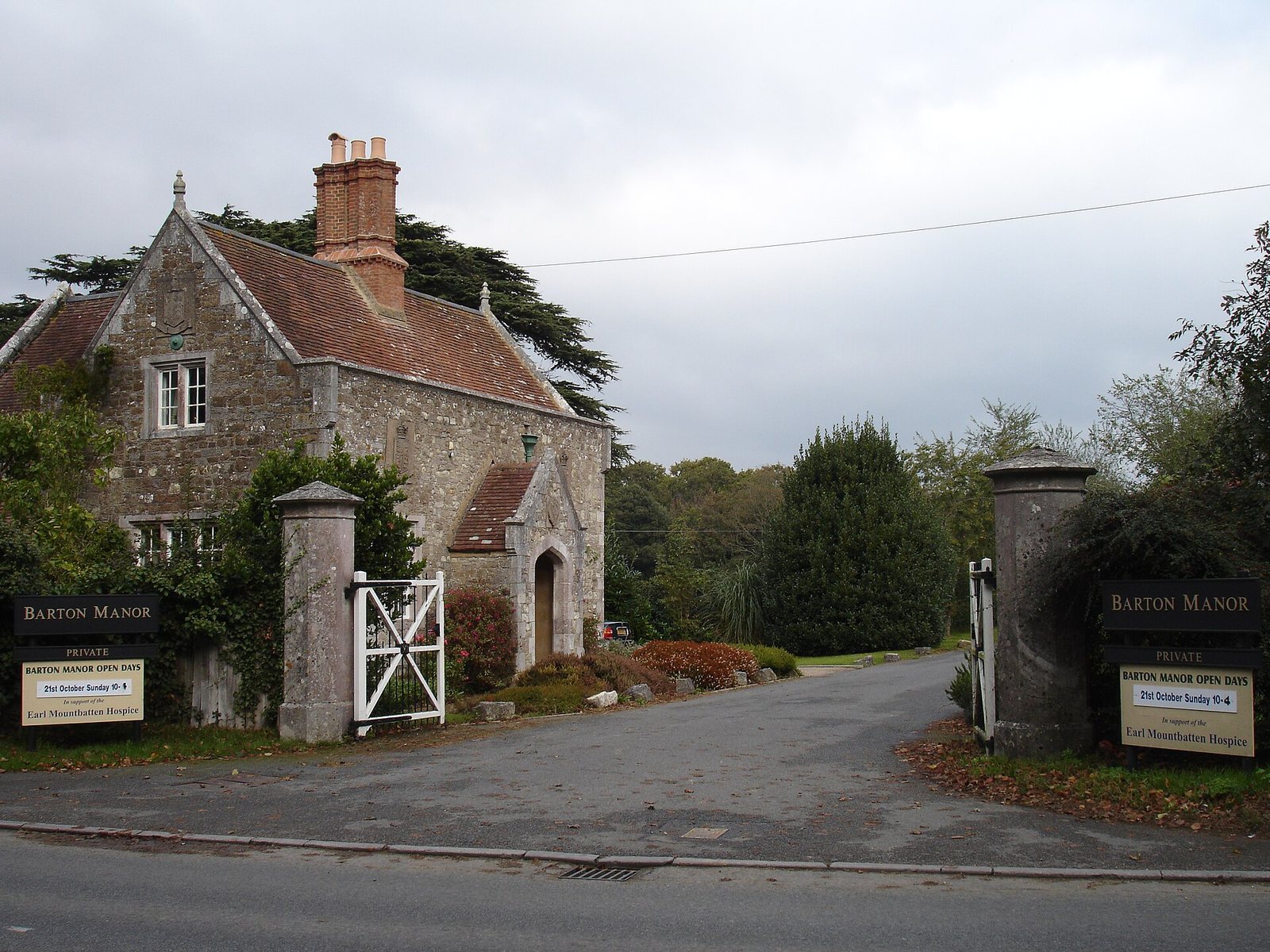
A gateway and North Lodge are features of the estate. During the Tillett family’s ownership, it covered about 725 acres. Its grounds include gardens and a vineyard, which Anthony Goddard added after acquiring the property in 1976. The vineyard produced about 30,000 bottles of wine annually.