Barm-e Delak: A Sasanian Rock-Relief Site in Iran
Site at a Glance
- Rating
- 5
- Popularity
- Very Low
- Country
- Iran
- Primary era
- Classical
- Eras represented
- Classical
- Civilizations
- Sassanid
- Site type
- Civic
- Remains
- Rock Art
On this page8 sections
History
Barm-e Delak is a Sasanian rock-relief site about 10 km southeast of Shiraz, Iran, created during the Sasanian period. The Sasanian Empire was an Iranian empire that ruled from 224 to 651 CE. The carvings portray King Bahram II and his wife, Shapurdukhtak, whose image is the only known rock carving of her.
Sasanian Reliefs
Shapurdukhtak was the granddaughter of Shapur I, an earlier Sasanian king. The name Barm-e Delak has been interpreted as deriving from the Middle Persian expression Bahram-e Dundalk, translated as “Bahram’s heart” and associated with the imagery at the site.
Heritage and Damage
Barm-e Delak was registered as an Iranian National Heritage site in 1932. In 1390 in the Iranian calendar, a mechanical excavator damaged the carvings and destroyed part of one. Graffiti has also been scratched or written on the stone, and spray paint has harmed the reliefs. A factory was authorized for construction opposite the monument, and wastewater from it flows into the site’s spring. The site has lacked maintenance and protection from the national cultural heritage organization.
Remains
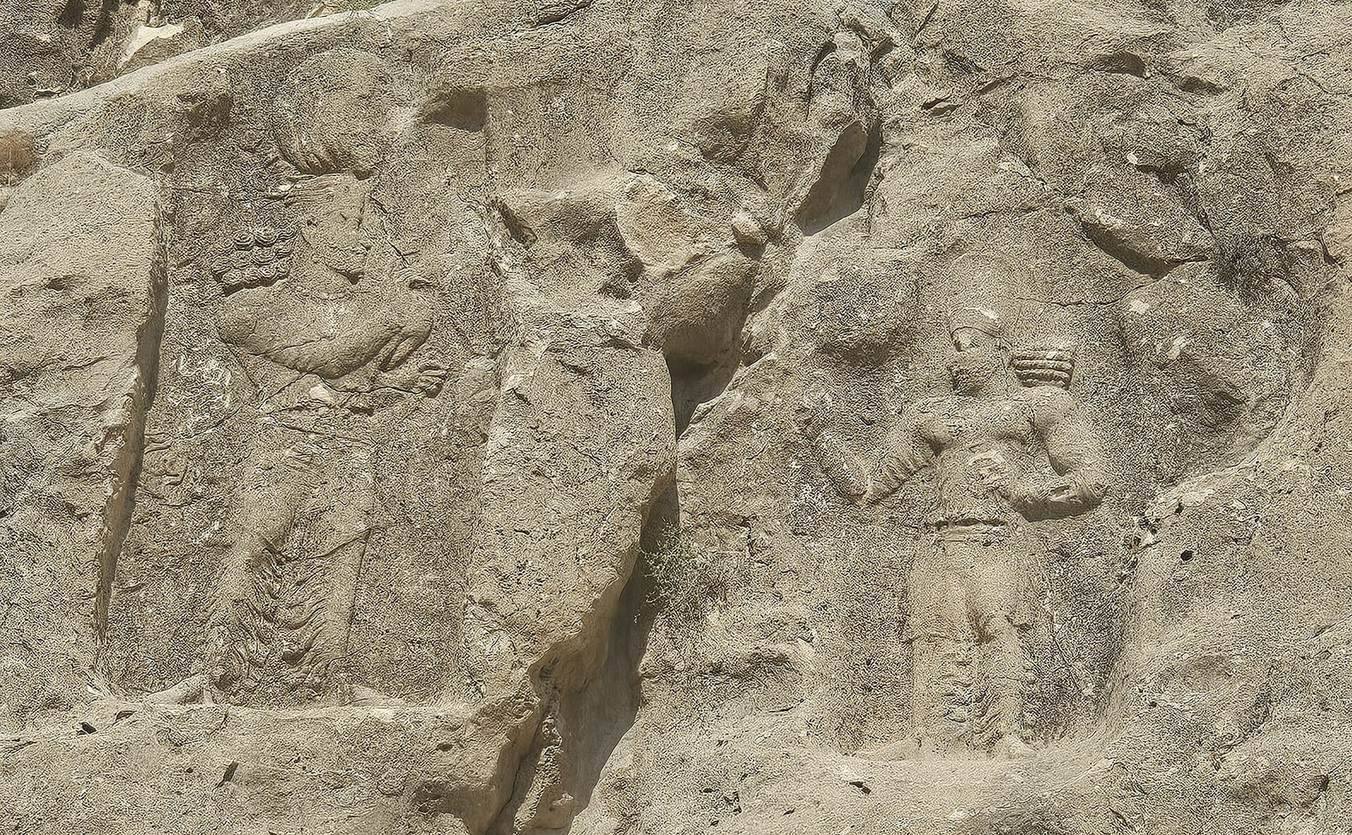
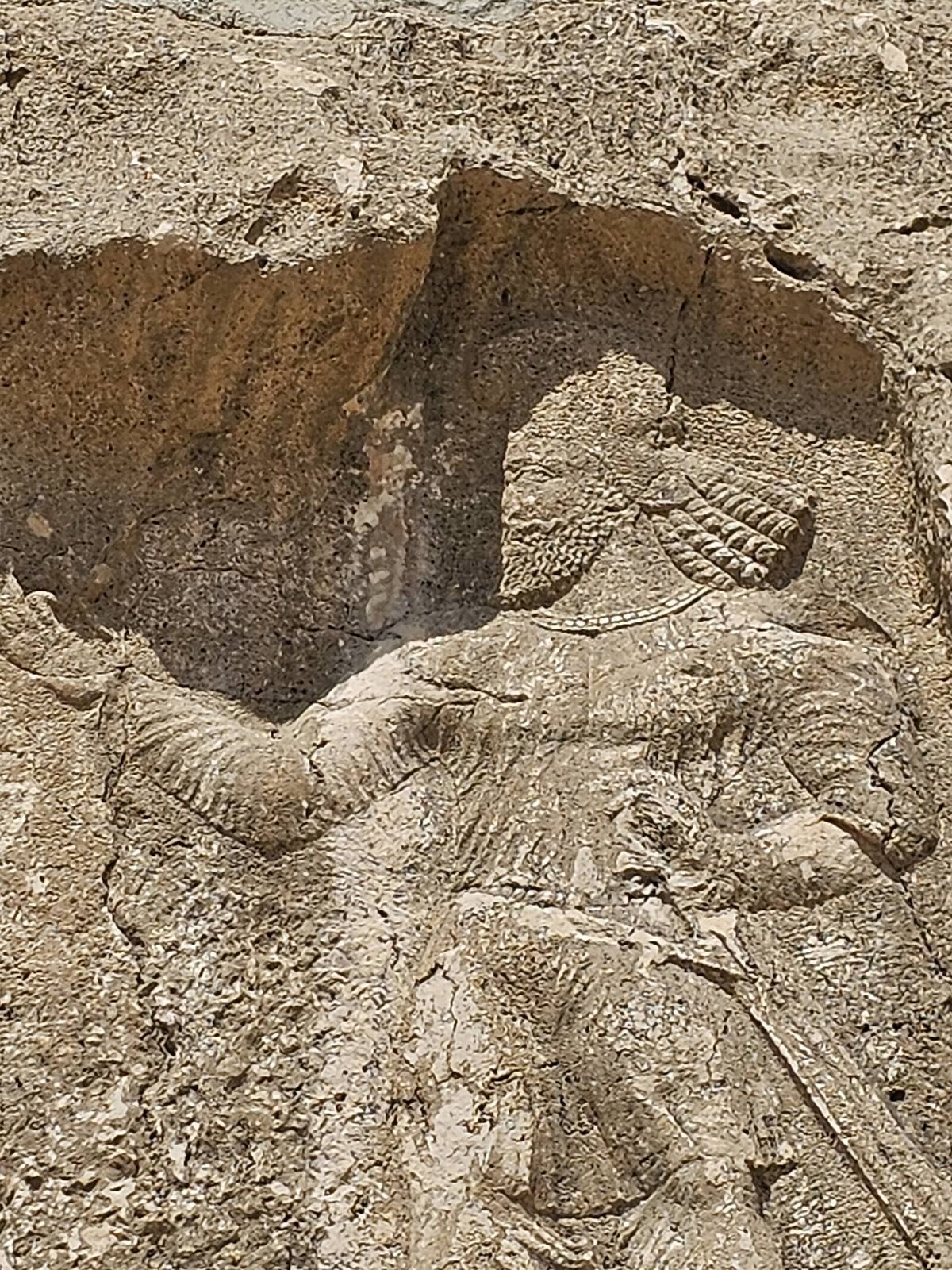
The site covers about two hectares on the eastern side of a rocky spur near a river. Four panels are cut into a small rock face above a spring, combining carved figures with carefully rendered clothing and details.
Spring and Wetland
The spring lies in a fissure in the mountain. A wetland edged with reeds occupies the foot of the slope, about 4 km from Qasr Abu Nasr.
Rock Reliefs
Bahram II and Shapurdukhtak
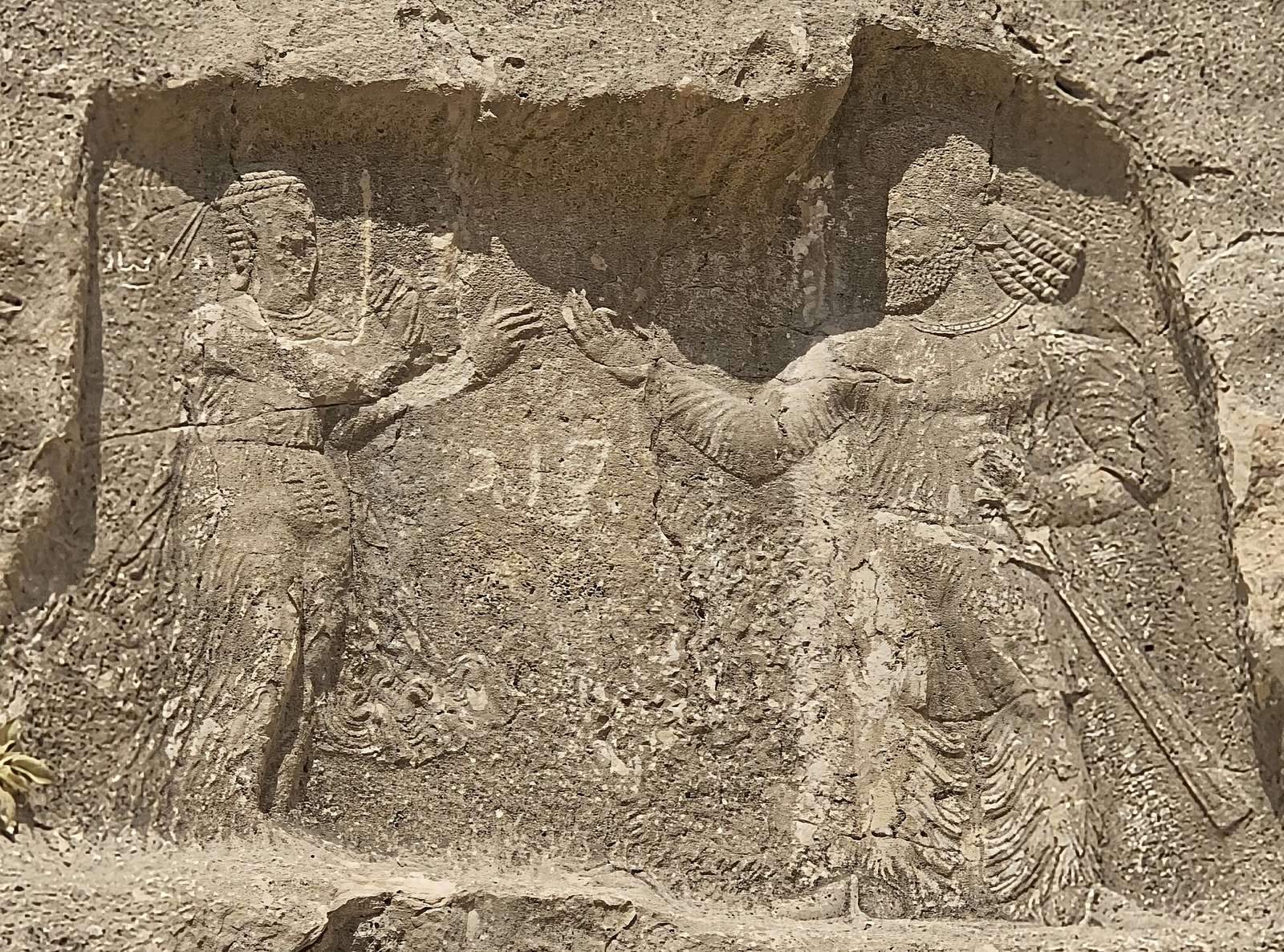
In the first panel, Bahram II offers a lotus flower to Shapurdukhtak. The figures face one another in poses with shifted hips, suggesting ease and intimacy, while the folds of their garments are carefully carved. The panel’s frame is irregular: the king’s korymbos, a ball-shaped royal hair ornament, projects beyond its upper-right edge, and the queen’s robe extends past the lower-left edge. Bahram rests his left hand on his sword hilt, with a shoulder strap supporting the weapon. The scene resembles a relief from the same reign at Sarab-e Qandil, where the queen presents a lotus to the king.
A small inscription in Pahlavi, the writing system used for Middle Persian, is carved beneath Bahram’s arm. Four or five lines long, it is heavily eroded and mostly illegible. Its purpose and reading remain uncertain. It has been understood as an introduction identifying Bahram, while a few deciphered words have also been interpreted as “a man named Ardashir.”
Second Scene and Rock Fissure
A few metres from the first panel, another carving shows a king facing a dignitary. Both make a gesture of respect, bending an index finger forward. The scene has been interpreted as an audience, though that reading is uncertain. An unworked strip of rock and a fissure divide the panels. The blank area may mark a carving left unfinished after the rock split, or may separate two distinct scenes. The second carving may be related to an unfinished relief at Guyum.