Baindt Abbey: A Cistercian Nunnery and Imperial Abbey in Germany

Site at a Glance
- Popularity
- Medium
- Country
- Germany
- Primary era
- Early Modern
- Eras represented
- Early Modern
- Civilizations
- Holy Roman Empire
- Site type
- Religious
- Remains
- Church
On this page6 sections
History
Foundation and imperial status
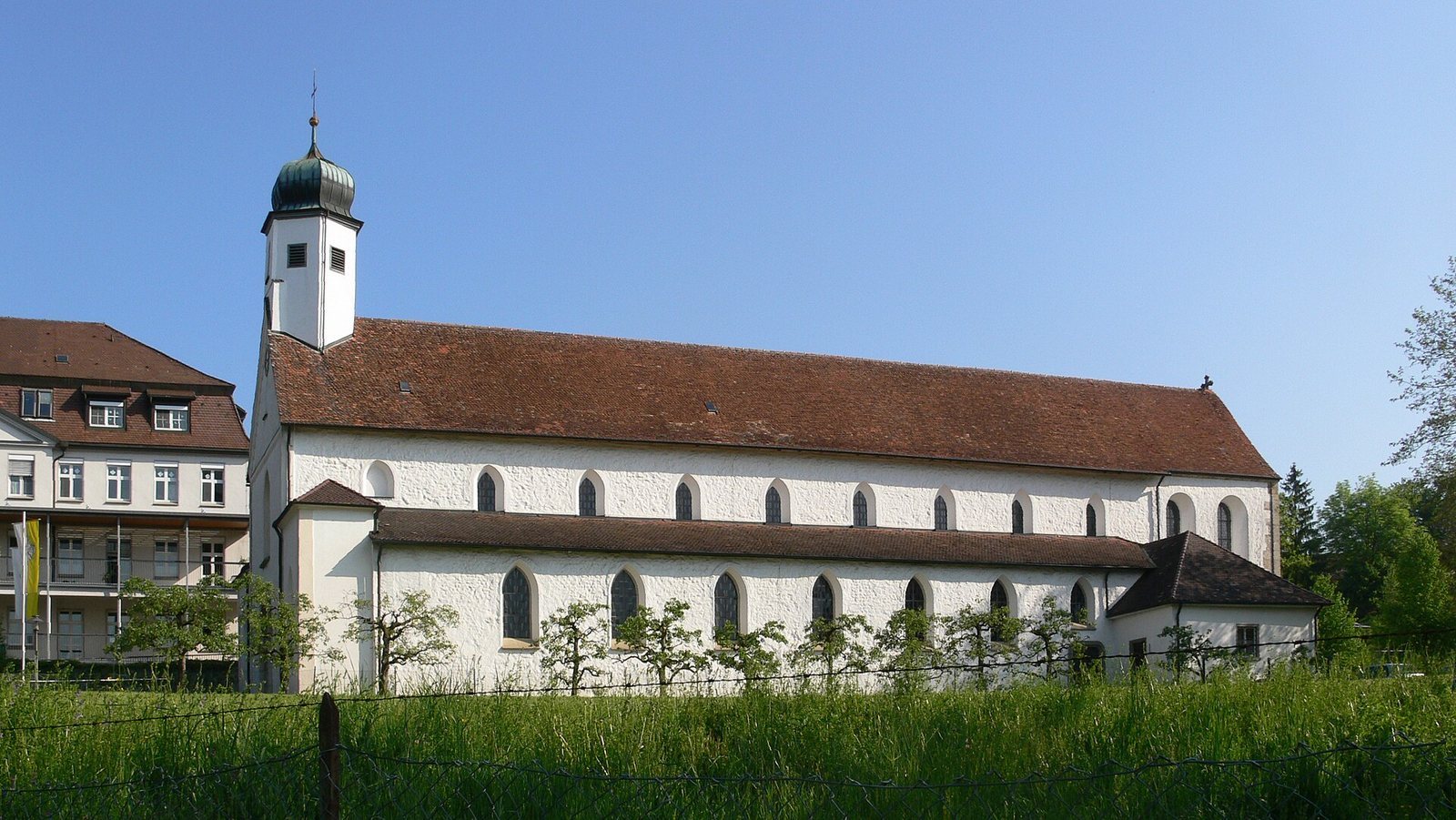
Baindt Abbey was a Cistercian nunnery founded in 1240 at Baindt, Germany, after its community moved from Boos. The Cistercians were a Catholic monastic order whose communities followed the Rule of Saint Benedict. The nuns first formed a community at Boos in 1231, and Pope Gregory IX confirmed it as a Cistercian house in 1236 with the support of Eberhard von Rohrdorf, abbot of Salem. After the community found little acceptance among local nobles, Conrad of Winterstetten acquired the hamlet of Baindt and the patronage rights to its parish church from Counts Bertold and Konrad of Heiligenberg, enabling the move.
The first completed convent wing was consecrated in 1241. Emperor Frederick II placed the abbey under imperial protection in 1240 and renewed that protection the following year. In 1241, King Conrad IV freed it from the authority of a lay advocate, a secular official with legal or protective powers over a religious institution.
In 1376 the abbey gained imperial immediacy, answering directly to the emperor rather than to an intermediate territorial lord. It became an Imperial Abbey, although the abbots of Salem continued to oversee its spiritual affairs. Its abbess, chosen by election, governed the small territory, which extended little beyond Baindt itself. The abbess exercised lower jurisdiction over about 200 people, a privilege confirmed in the first half of the eighteenth century.
As an Imperial Estate, the abbess held a seat and vote in the Imperial Diet, the empire’s assembly of estates, on the Swabian bench of prelates. She also had a seat and vote in the diet of the Swabian Circle, a regional administrative grouping. Baindt first appears in the Imperial Register in 1521, with an obligation to provide five foot soldiers. A Swabian Circle register assigned it ten in 1532. In 1663, its stated contribution was three foot soldiers or 12 gulden; in the eighteenth century, the same obligation was accompanied by five gulden for the Imperial Chamber Court.
War, rebuilding, and community
The Black Death, the major fourteenth-century plague pandemic, severely reduced the nunnery’s community. During the German Peasants’ War, a widespread uprising in 1524–1525, the abbey was burned in 1525. It was destroyed again in 1643 during the Thirty Years’ War, a major European conflict that lasted from 1618 to 1648. Religious life resumed in 1649, and the abbey was rebuilt and refurbished in Baroque style during the eighteenth century.
The community generally numbered about 25 nuns. Its highest recorded total was 37, in 1797.
Dissolution and later use
The abbey was dissolved and secularized in 1802, when religious institutions or their property were transferred to nonreligious authority. Its territory became an immediate principality and was granted as a fief to the Count of Leyden. It passed to the Count of Aspremont-Lynden in 1803, and Johan Nepomuk Gobert II held the title of Prince of Baindt from 1803 to 1806. In 1806, mediatization absorbed the Aspremont-Lynden territory into the larger state of Württemberg. The former abbey’s property was sold to private owners in 1812.
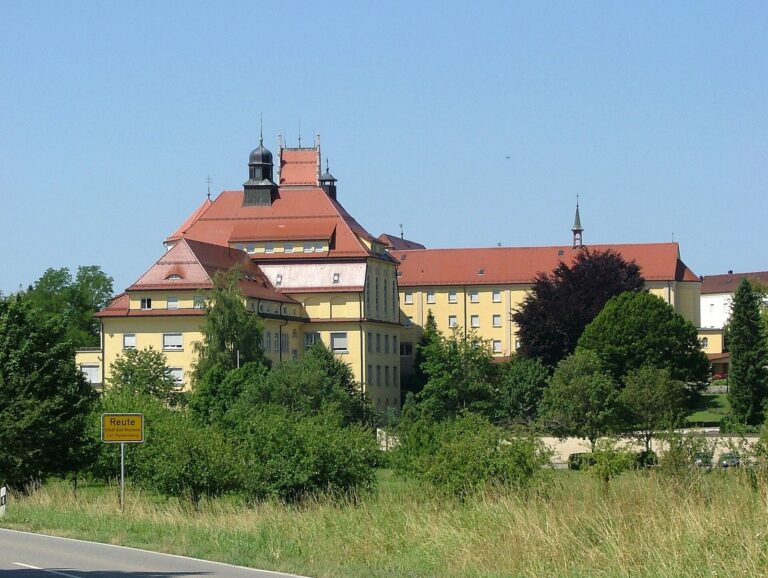
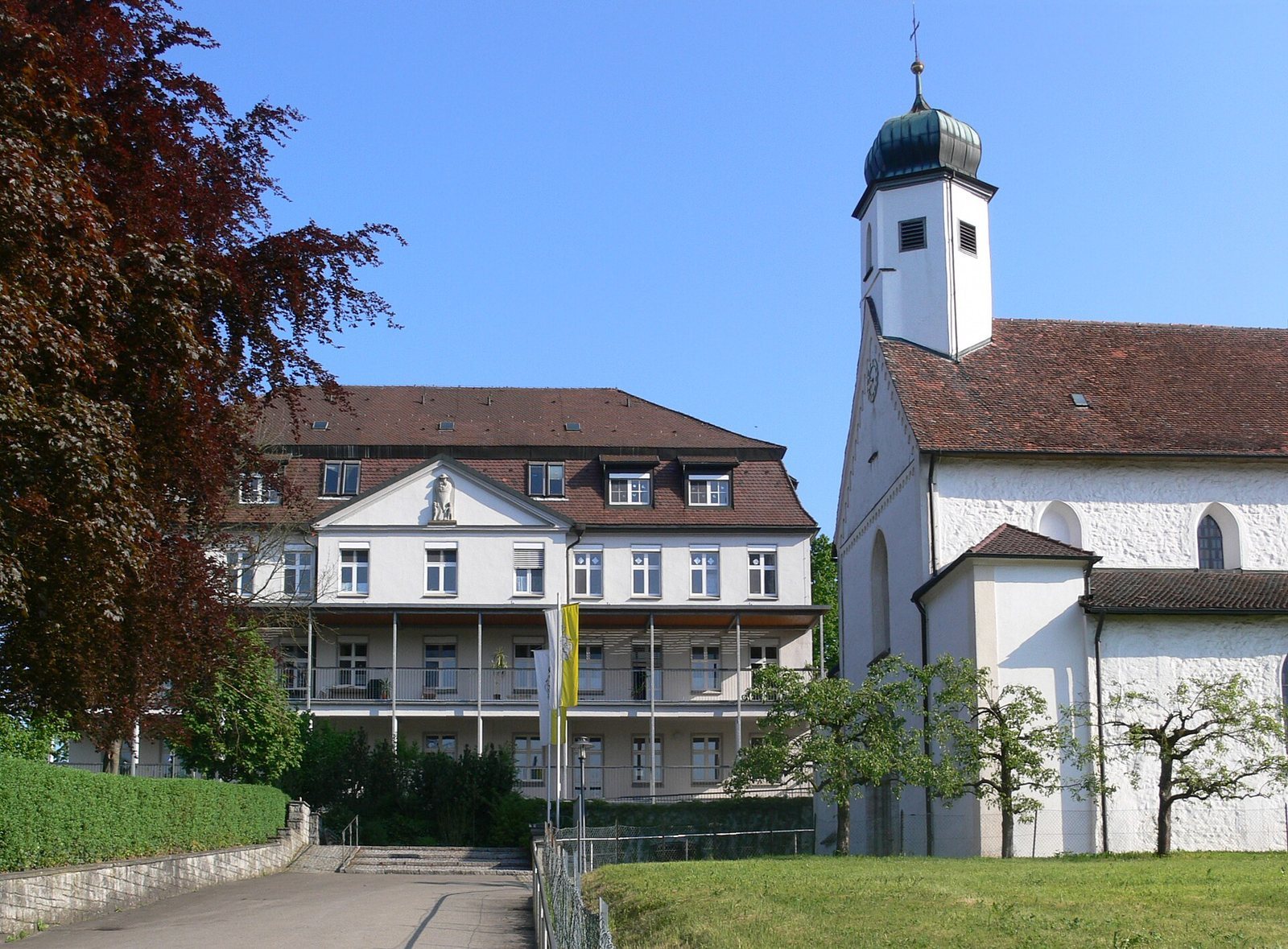
The abbey church became a parish church in 1817. Demolition of the convent buildings began in 1841, and remains associated with the abbey’s founding were transferred to the church the following year. In 1903, Franciscan sisters from Heiligenbronn acquired a former abbey building.
Remains
Abbey church and artworks
The surviving abbey church was originally dedicated to Our Lady and is now dedicated to Saint John the Baptist. A Baroque makeover in 1764–1766 and a comprehensive restoration in 1988–1989 form part of its later physical history. The church houses a depiction of Our Lady of Ludźmierz, a devotional title for the Virgin Mary associated with Ludźmierz in Poland. The Baindt altar, made around 1460 by an unknown artist, included a series of paintings depicting miracles of Christ. Paintings from that series are now held by the Staatsgalerie Stuttgart, the Alte Pinakothek in Munich, and the Kunsthaus Zürich.