Zangeburg: A Medieval Hilltop Castle Ruin in Germany
Site at a Glance
- Popularity
- Very Low
- Country
- Germany
- Primary era
- Medieval
- Eras represented
- Medieval
- Civilizations
- Holy Roman Empire
- Site type
- Military
- Remains
- Castle
On this page4 sections
History
Zangeburg is a medieval hilltop castle ruin near Vockenweiler, in the municipality of Berg, Germany. It originated in the 12th or 13th century.
Medieval references
Werner von Zange is named in medieval documents dated 30 July 1197 and 29 June 1198. Hermann von Zange appears in documents dated 10 November 1279 and 3 March 1282, while Hugo von Zange is named on 13 December 1282. On 3 March 1282, Hermann’s farm at Atzenhofen passed to Baindt Abbey for 10.5 marks of silver. A mark was a medieval unit of weight and currency whose value varied by place and period.
The historian and theologian Moritz Johner encountered Hermann von Zange while investigating Heinrich von Schmalegg, whose title of cupbearer referred to a medieval court office associated with serving wine.
Later history and discovery
Stones from Zangeburg were later reused in buildings at Vockenweiler. Matthäus Haag’s investigations found them in a farm built in 1842 and a barn erected at the Leser farm in 1870. Accidental excavations also revealed the former road between the castle and Vockenweiler.
Remains
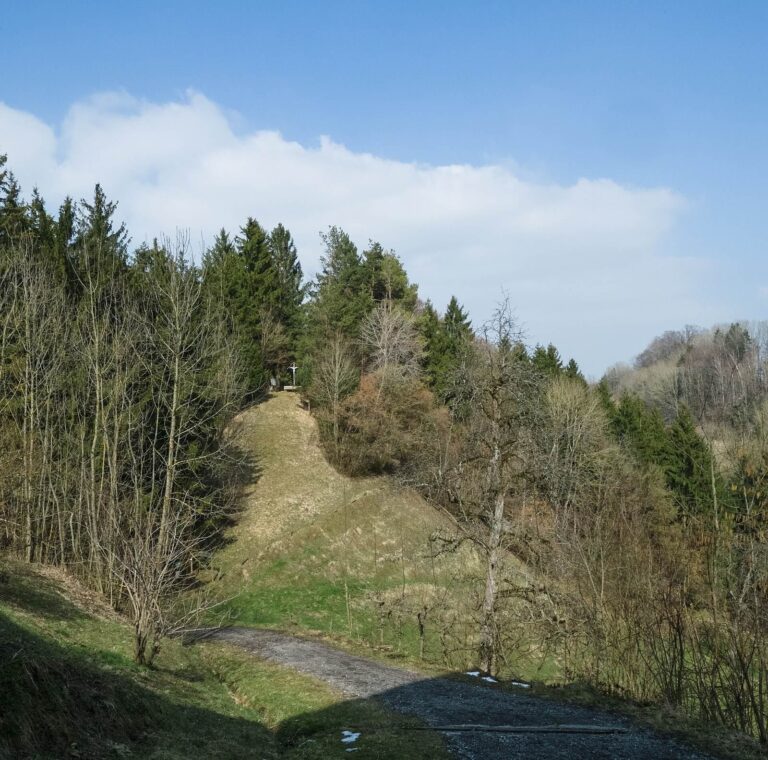
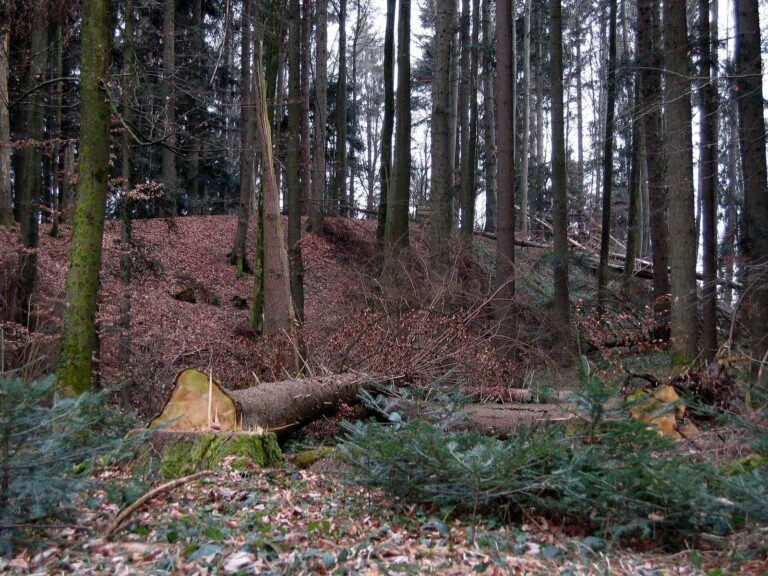
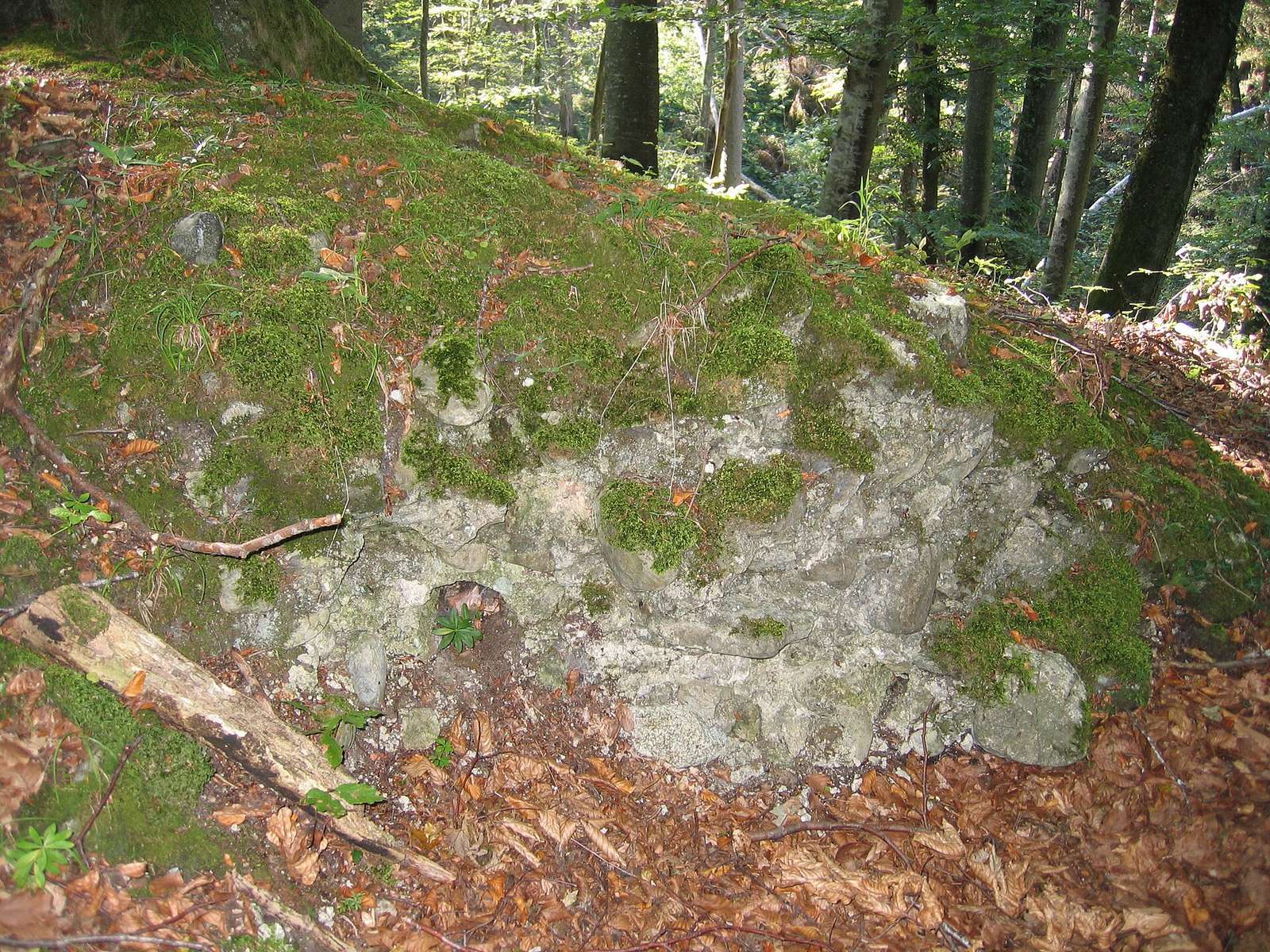
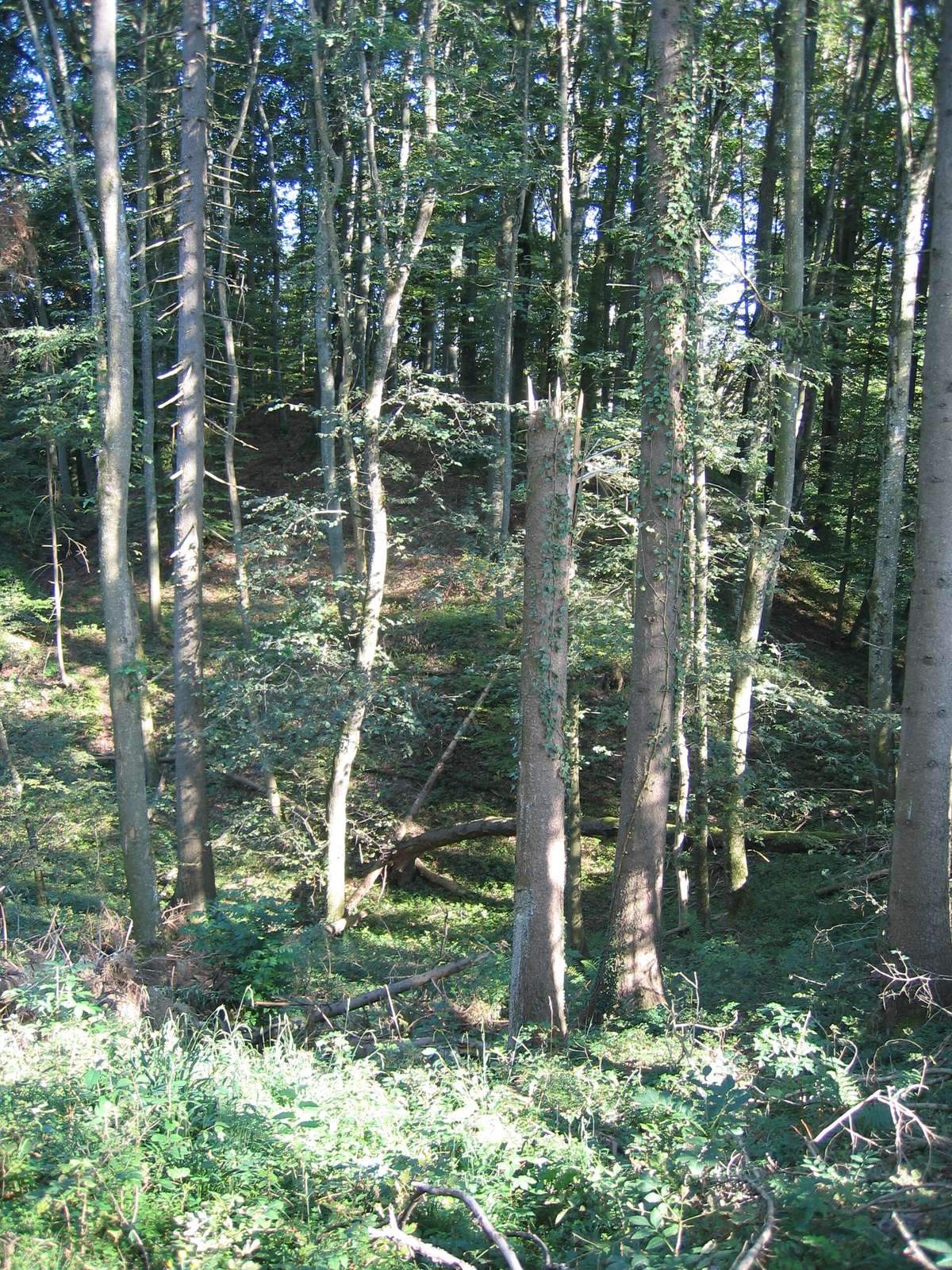
The ruin occupies a narrow elevated spur with two knolls at 526.7 metres above sea level, high above the Sturmtobel gorge in the densely wooded Schmalegger Tobel. Foundation remains survive on the western rise, where sections of wall are also visible.
The former road ran from the castle toward Vockenweiler. Its course is now covered by fields.