Church of the Assumption of the Virgin Mary in Vignale: A Baroque Parish Church
Site at a Glance
- Popularity
- Very Low
- Country
- Italy
- Primary era
- Modern
- Eras represented
- Medieval, Modern
- Civilizations
- Holy Roman Empire, Italian
- Site type
- Religious
- Remains
- Church
On this page12 sections
History
Medieval origins
The Church of the Assumption of the Virgin Mary is a Roman Catholic parish church in Vignale, a hamlet of Traversetolo in Italy. Its original building was probably constructed in the 11th or 12th century, when the Baratti branch of the counts of Canossa, a medieval noble family with power in parts of northern Italy, held sway in the area. The church is dedicated to the Assumption of Mary, the Christian belief that she was taken bodily into heaven, and to Saint Geminianus, a bishop venerated as Modena’s patron saint. Its architecture has Baroque forms, a style associated especially with the 17th and 18th centuries.
The church stood outside the settlement beside a branch of the road between Traversetolo, Guardasone, and Ciano. Its earliest known mention dates to 1230, when the Chapel of Saint Mary of Vignale appeared among the dependencies of Traversetolo’s parish church in the Diocese of Parma’s tithe register.
Parish church and renovation
In 1520, Pope Leo X issued a decree granting the Carbognani family patronage of the church and permanently joining it to the ruined Oratory of San Geminiano in Bottone, a small place of worship. Vignale’s church became a parish in 1564.
After the church had badly deteriorated, a complete renovation began in 1666 and was finished in the following years. From the late 17th through the 18th century, endowed church benefices, grants providing income or support, were assigned to the Guernieri and Quintavalla families. Donations from Vignale’s growing population also helped the church acquire works of art.
Later changes
The roof was entirely rebuilt in 1833. Between 1871 and 1873, the cemetery in the church forecourt was moved to land downhill near the Pedemontana road. The church was completed in 1888 and restored in 1938. In 1946, the cemetery was dismantled and its burials transferred to Traversetolo’s cemetery. Work on the adjoining rectory took place in 1965; the rectory probably dates to the 17th century.
The church serves as Vignale’s parish church and belongs to the Pedemontana pastoral zone, a diocesan subdivision that coordinates work among parishes.
Remains
Plan and exterior
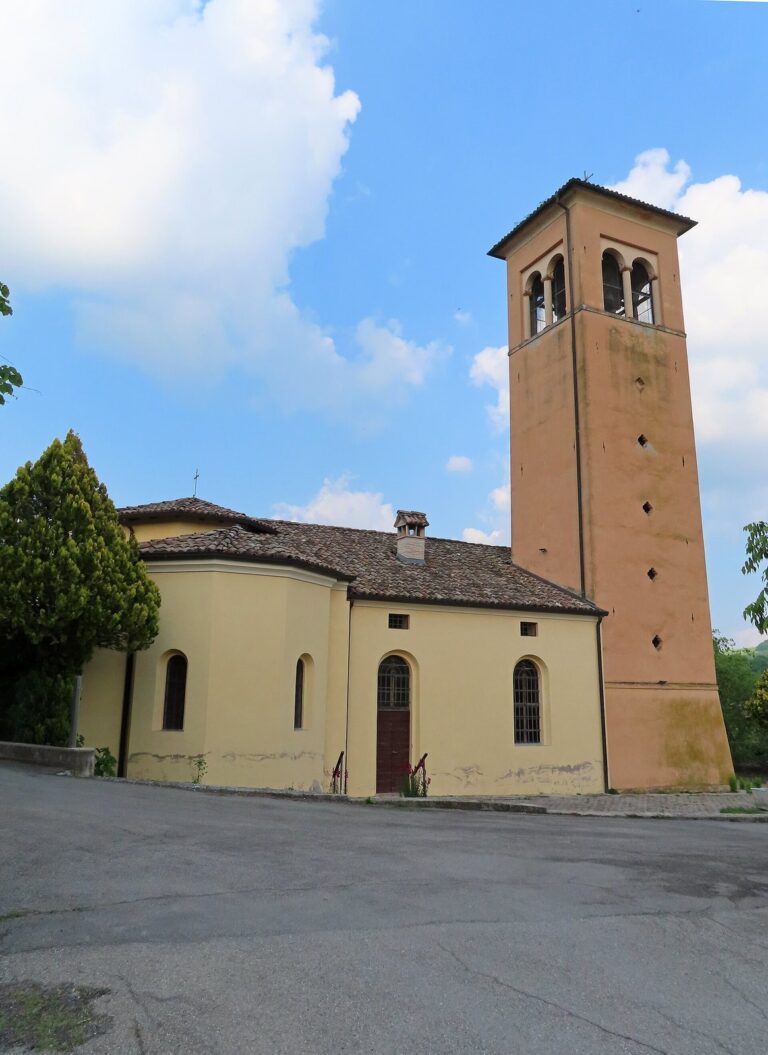
The church has a single-nave plan, with the entrance at the west end and the presbytery, the area around the altar, at the east. The eastern end terminates in an apse, a projecting curved space, and one chapel projects from each side wall.
Facade
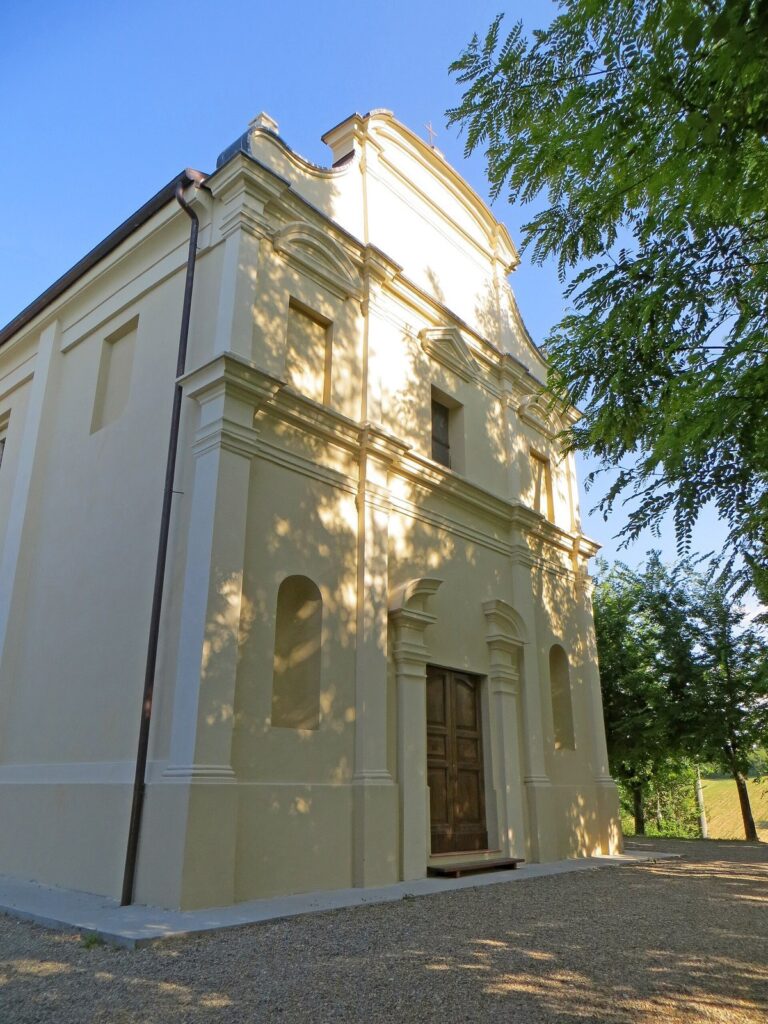
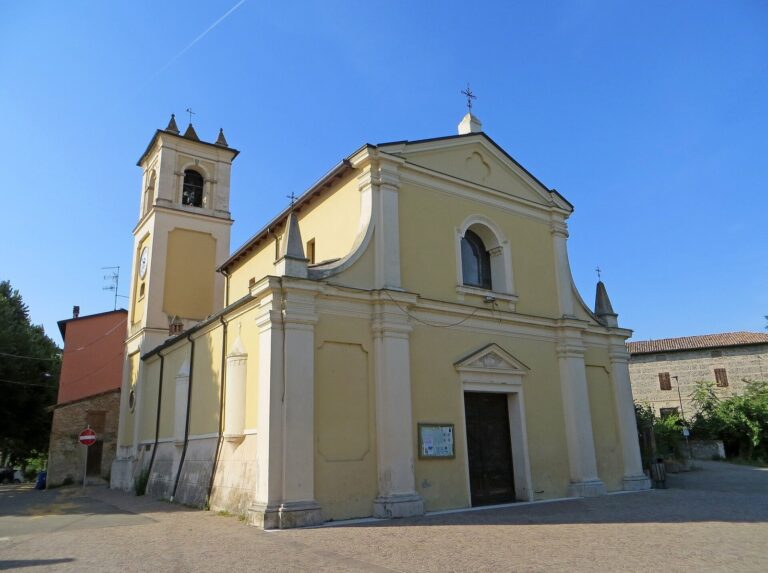
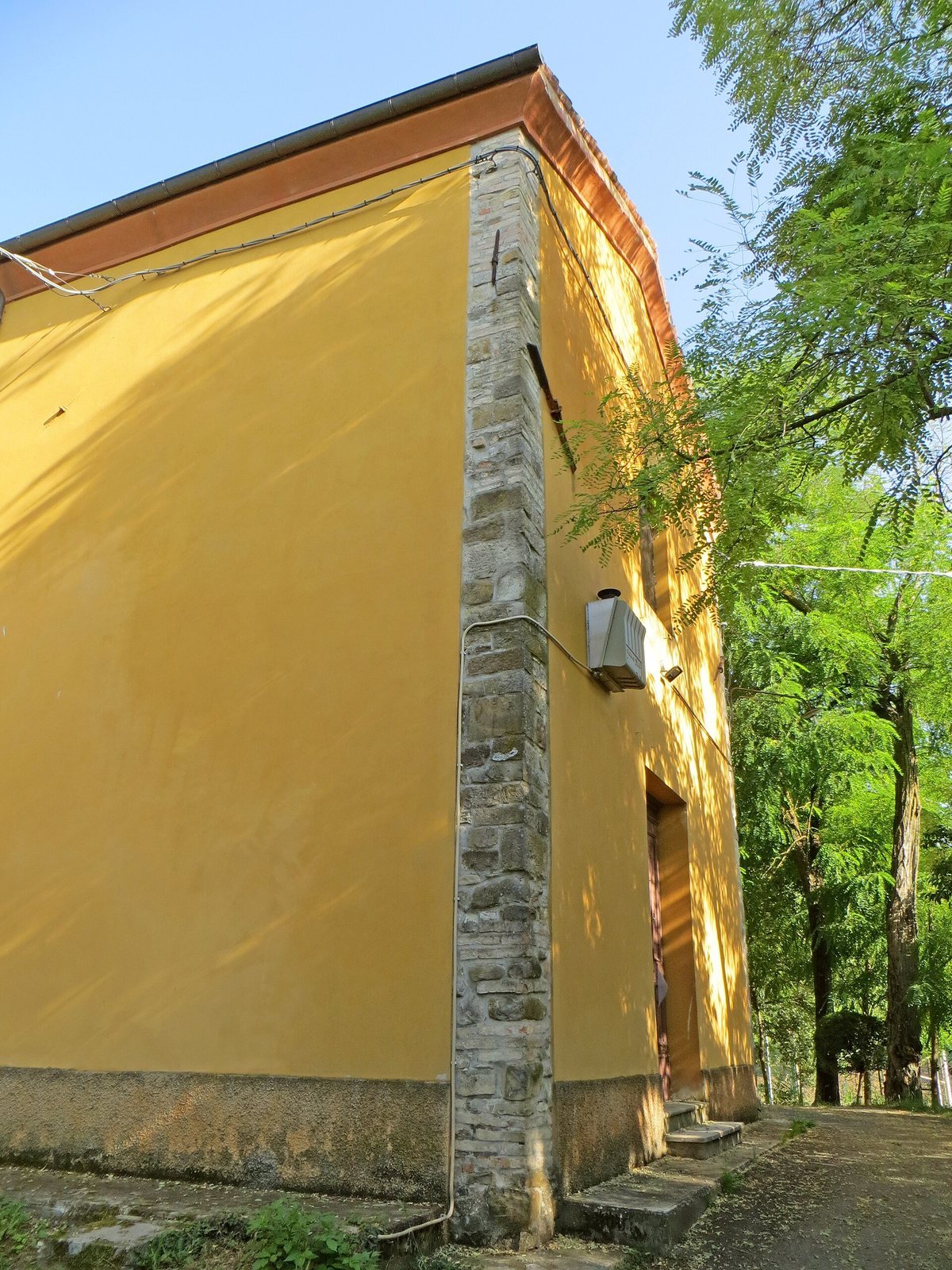
The plain, nearly symmetrical front is plastered and follows a gabled roofline. A large central entrance sits below a window with a shallow-curved top. Flat stone pilasters, or wall-attached supports, mark the corners, while a projecting decorative cornice follows the roof slopes.
Bell tower
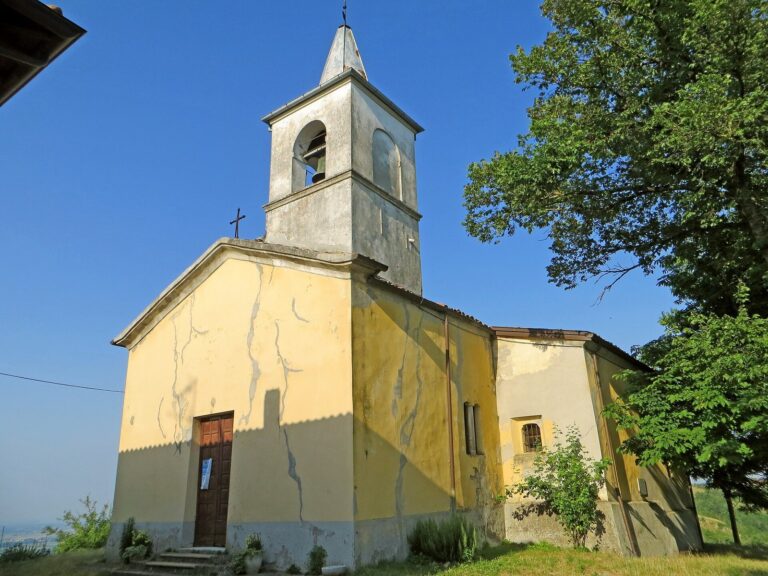
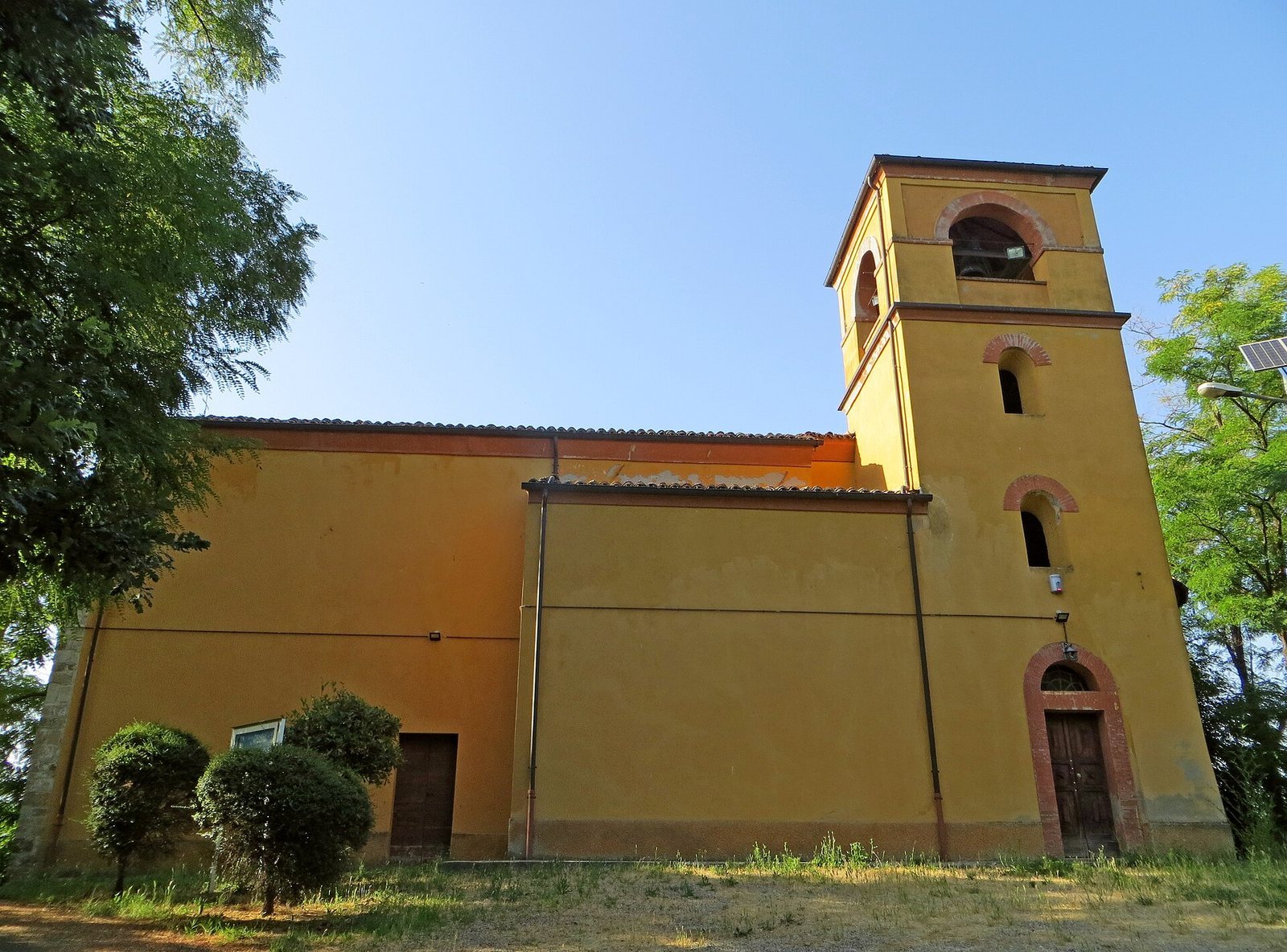
The bell tower stands at the church’s south end. Its entrance has a brick frame and a round-arched opening above it. Two round-arched windows with deeply angled sides are stacked higher up, and the bell chamber has a large, brick-framed round-arched opening on each of its four sides.
Interior
Nave and chapels
The nave has a flat ceiling supported by wooden beams. Doric pilasters, flat wall-attached supports with capitals in the Doric style, line the sides and support a molded cornice. Broad round arches connect the nave to the side chapels.
Presbytery and apse
A round arch supported by two Doric pilasters marks the entrance to the slightly raised presbytery. Its painted barrel vault forms a continuous curved ceiling. The apse has a semi-dome and receives light from a single-opening window on each side. A wooden altar table was added between 1970 and 1980.
Altarpiece and paintings
The church contains a 17th-century stucco altarpiece, a molded plaster altar feature, and several paintings. One shows the Virgin of the Rosary with the Child and Saints John the Baptist, Teresa of Ávila, and Maurus; it dates from the late 16th or early 17th century. Antonio Maria Quintavalla painted a Virgin and Child with Saints Roch, Lucy, and Charles Borromeo in 1684. The collection also includes a 17th-century Deposition of Christ from the Cross and a Saint Philomena attributed either to Giovan Battista Borghesi or Francesco Scaramuzza.