Artaxata: The Ancient Armenian Capital and Commercial Center


Site at a Glance
- Rating
- 4.9
- Popularity
- Very Low
- Country
- Armenia
- Primary era
- Classical
- Eras represented
- Iron Age, Classical
- Civilizations
- Armenian, Roman, Urartian
- Site type
- City
On this page23 sections
History
Artaxata is an ancient Armenian city in Armenia, near the modern town of Artashat. King Artaxias I of the Artaxiad dynasty founded it as a new capital in the late second century BC, replacing Yervandashat. Its precise foundation date is uncertain, with proposed dates ranging from 188 to 176 BC. Established at the confluence of the Araks and Metsamor rivers, Artaxata became a major center of administration, commerce, craftsmanship, coin production, and Hellenistic culture.
Foundation and Hellenistic development
The city occupied the Ostan Hayots canton of Ayrarat, a historical province of Armenia. Its name referred to Artaxias, while it was also known as Ostan Hayots, meaning the court or seat of the Armenians. Archaeological evidence indicates that the new capital may have been built over an older settlement of the Iron Age kingdom of Urartu.
Armenian, Greek, and Roman writers preserved a tradition that Hannibal Barca, the Carthaginian general, helped choose or plan the site. No direct evidence confirms his involvement. Artaxata’s position nevertheless gave it a powerful commercial role. Routes connected Persia and Mesopotamia with the Caucasus, the Black Sea ports, Asia Minor, and other regions of the Near East. The city therefore stood on long-distance caravan networks later associated with the Silk Road, a system of trade routes linking East Asia with the Near East and the Mediterranean.
Artaxata developed as a Hellenistic city, meaning that Greek political, artistic, and urban traditions shaped its institutions and built environment. Artisans, craftsmen, and merchants included Armenians, Greeks, Jews, and Syrians. Jews from Armavir were reportedly moved to the new capital, while Tigranes II transferred prisoners of war from twelve towns to Artaxata. Population estimates vary widely, from several thousand to tens of thousands and, in some descriptions, as many as 150,000 inhabitants.
Royal Armenia and Roman intervention
Artaxata remained the capital of the Kingdom of Armenia through successive political changes, although its role was interrupted at times. During the reign of Tigranes II, whose expansion greatly enlarged the Armenian kingdom in the first century BC, Tigranocerta was established as a second capital. Artaxata continued to serve as an important political and economic center.
Roman intervention brought repeated military crises. In 69 or 68 BC, the Roman commander Lucullus fought near Artaxata while pursuing Tigranes II. The city resisted a Parthian assault and later faced Pompey. Tigranes eventually submitted to Rome and surrendered much of his conquests. In 34 BC, Mark Antony successfully campaigned against Artaxata and captured King Artavasdes II.
Roman commanders continued to intervene in Armenia. In AD 58 to 59, the forces of Gnaeus Domitius Corbulo occupied and razed Artaxata. After Emperor Nero recognized Tiridates I as king in AD 66, Roman architects and construction specialists assisted in rebuilding the city. It was temporarily renamed Neroneia in Nero’s honor.
Emperor Trajan conquered Armenia in AD 115 to 117 and planned for Artaxata to become the capital of a new Roman province. The Roman army began constructing an aqueduct bridge for the city between AD 114 and 117, and a Roman garrison was established there. After Trajan’s death in AD 117, his successor Hadrian abandoned the plan to retain Armenia, and the aqueduct project was left unfinished.
Destruction and later political decline
Roman forces commanded by Statius Priscus destroyed or sacked Artaxata in AD 162 to 164, during the reign of Marcus Aurelius. The city was subsequently superseded as the Armenian capital by Vagharshapat, while the royal court later moved to Dvin. In the late 360s or in AD 369, the army of the Sasanian king Shapur II thoroughly destroyed Artaxata and reportedly carried its population into captivity.
Artaxata retained an economic and cultural function after its political decline. Following the division of Armenia between Sasanian Iran and the Eastern Roman Empire, it became one of three authorized trading points between the two empires. The city continued to operate as a commercial center even as Vagharshapat and Dvin gained greater administrative importance.
Christian history and archaeological rediscovery
Artaxata also played a role in the early Christian history of Armenia. In the late third or early fourth century, King Tiridates III used the city during the persecution of Christians. The Christian nun Hripsime was tortured there, and Gregory the Illuminator was imprisoned there before Tiridates converted to Christianity. Gregory’s prison later became the nucleus of the Khor Virap sanctuary.
In AD 449, Armenian Christian political and religious leaders met at Artaxata to discuss the demands of Yazdegerd II, the Sasanian king who sought to impose Sasanian religious leadership on Armenia. During the Armenian rebellion of AD 450 to 451, pro-Sasanian Armenian forces destroyed the city again. Artaxata gradually declined as political centers shifted elsewhere. Changes in the courses of the Araks and Metsamor rivers, flooding, and wider environmental changes contributed to its abandonment, which is placed variously in the fourth, fifth, or seventh century. Khor Virap remained a pilgrimage center among the abandoned ruins.
The exact location of ancient Artaxata was identified in the 1920s. Archaeological work expanded after two Latin inscriptions were discovered near Pokr Vedi in 1967. Regular excavations began in 1970 under the direction of B. Arakelyan and continued under J. Khachatryan from 1986 onward. Archaeologists have combined excavation with geophysics, geochemistry, and archaeoinformatics. Geomagnetic surveys, drilling, satellite imagery, drone-based infrared imaging, and computer-assisted path analysis have helped reconstruct the route of the unfinished Roman aqueduct and identify additional pillars that were unfinished or destroyed.
In 2024, Armenian and German archaeologists found the remains of a fourth-century church. Carbon dating of wooden platform remains placed the structure in the middle of the fourth century. Its octagonal central form and cruciform plan may identify it as a martyrion, an early Christian memorial church associated with the tomb or relics of a saint. The name of the possible saint is unknown. Artaxata is included in Armenia’s protected historical and cultural monument framework, and most excavated materials are preserved in the History Museum of Armenia.
Remains
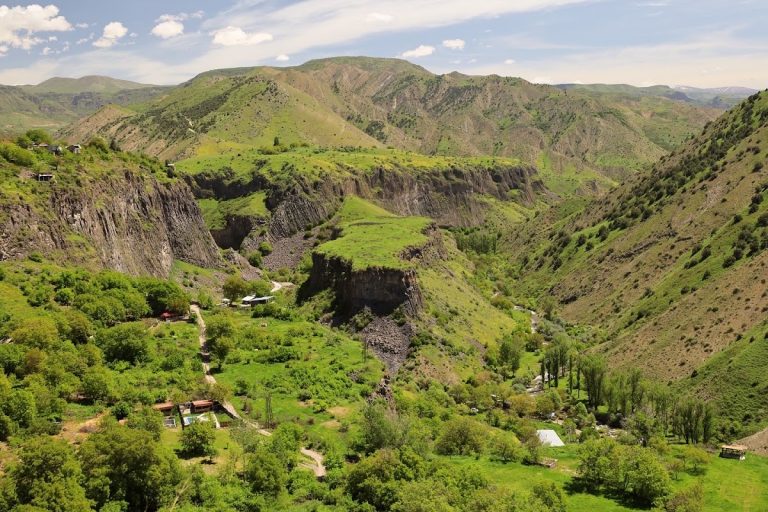
Artaxata occupied a peninsula-like group of nine hills at the meeting of the Araks and Metsamor rivers, on the left or northern bank of the Araks. Narrow passages connected the hills, while the settlement covered an area estimated at approximately 400 to 500 hectares or about 700 hectares. The city followed Hellenistic planning principles and included upper and lower areas with a citadel, residential districts, administrative complexes, markets, workshops, bathhouses, storage spaces, and other urban installations.
Fortifications and citadel
City walls and moats
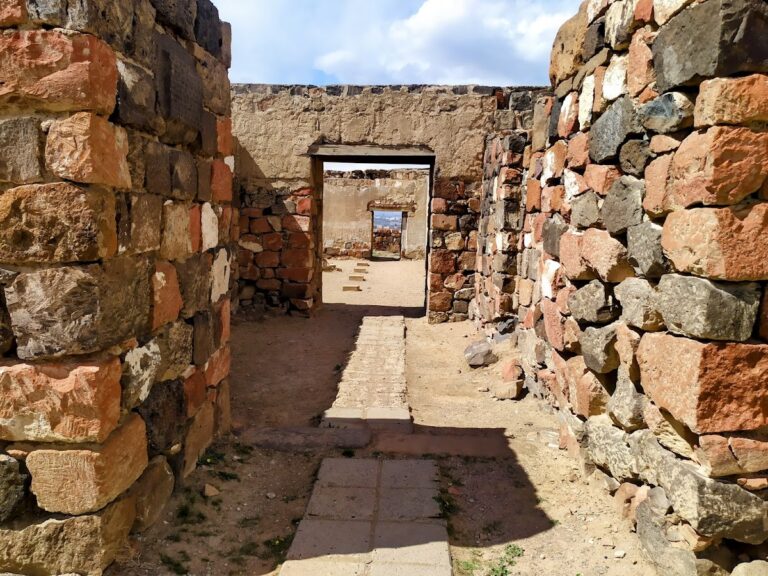
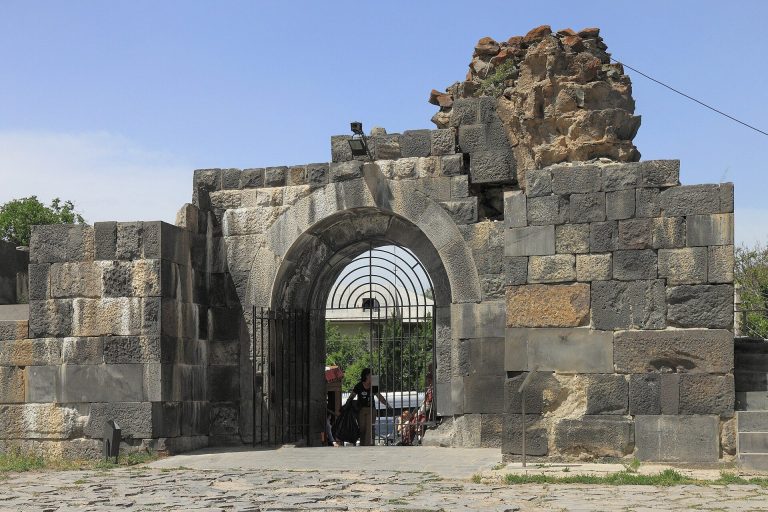
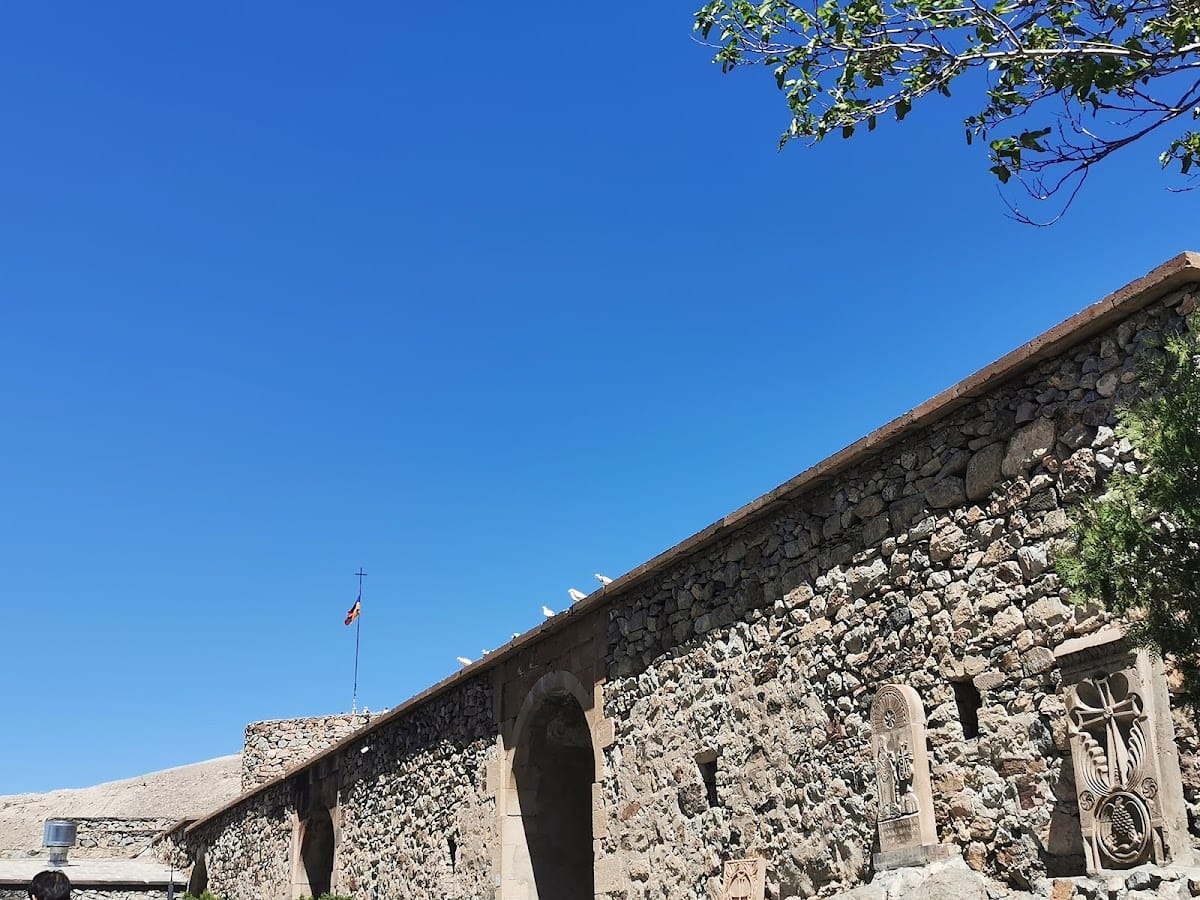
Artaxata’s defensive system extended for approximately 10 kilometres. Investigated sections of the walls are about 3 metres thick. Local reddish stone and grey marble formed the principal materials, with stone in the lower courses and mudbrick or clay above. The Araks and Metsamor protected the city on three sides, while a deep artificial moat defended the exposed northern side. Wall remains and traces of the moats survive across the site, and the walls may originally have reached 12 to 15 metres in height.
Defensive towers and hill passages
The defensive towers were cylindrical, approximately 9 to 13 metres in diameter. Their rounded form avoided vulnerable corners in the fortifications. Narrow fortified passages between the hills allowed the separate hilltop citadels to maintain independent defence while remaining part of the wider city system.
Acropolis and palace hill
The citadel, palace, administrative buildings, aristocratic residences, military facilities, and storage complexes occupied the highest and largest hill at the northeastern end of the hill group. Rising approximately 70 metres above the plain, the hill carried a large triangular fortress or acropolis, the fortified elevated part of an ancient city.
The fortress reused an older Urartian hill fort. Brick buttresses in its walls predate the early second century BC, while later Hellenistic additions included turrets associated with catapults. Excavations in the fortress area uncovered an armory, a blacksmith’s workshop, swords, daggers, and at least 3,000 arrowheads and spearheads.
Urban infrastructure and public buildings
Streets, markets, and workshops
Paved streets connected markets, workshops, administrative buildings, a treasury, a customs house, and the city’s mint. Residential and workshop complexes have yielded plain and painted pottery, weapons, objects of stone, glass, and bone, imported goods, jewelry-making molds, and glass bottles. Elite houses had roofs covered with red-painted tiles, while wall paintings and plaster cornice patterns decorated their interiors.
Water supply and drainage
Clay pipes formed part of Artaxata’s water-supply system and probably brought drinking water from the Garni area. Aqueducts and drainage channels served the urban settlement. The unfinished Roman aqueduct bridge was built as a monumental series of arches supported by pillars. Geophysical survey, drilling, and three-dimensional recording have revealed further pillars and allowed archaeologists to reconstruct the intended line between probable water sources and the city.
Bathhouses and theater
Bathhouses stood both on the acropolis and near the Araks in the lower city. Later antique baths included hypocausts, ancient underfloor-heating systems in which hot air circulated beneath raised floors, along with polychrome mosaics.
Artaxata also had a theater described as the first in Armenia, where Greek tragedies were performed. The city probably possessed an amphitheater as well. Excavated architectural fragments, column pieces, clay roof tiles, pipes, and other elements help define the character of its public and domestic buildings.
Sanctuaries and Christian buildings
Pagan temples
Pagan sanctuaries included temples dedicated to Anahit and Tir. Anahit, a major Armenian goddess associated with fertility and motherhood, was regarded as the city’s patron deity. Tir was associated with writing, learning, and divination, and ritual practices at his temple included interpreting dreams.
Fourth-century church
The fourth-century church discovered in 2024 had an octagonal central structure with square extensions on all four sides, creating an overall cruciform plan. Wooden platform remains lay within the extensions. The design may indicate a martyrion built over the tomb of a Christian saint, although the saint’s identity has not survived.
Khor Virap and the prison hill
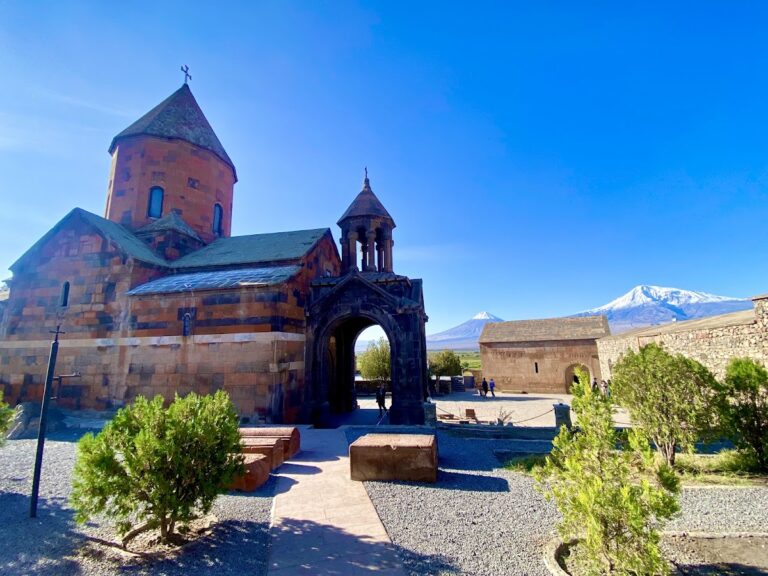
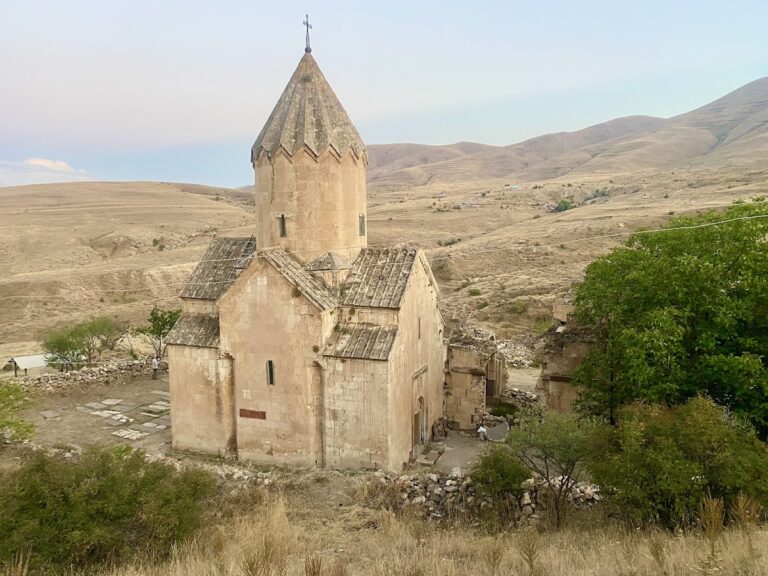
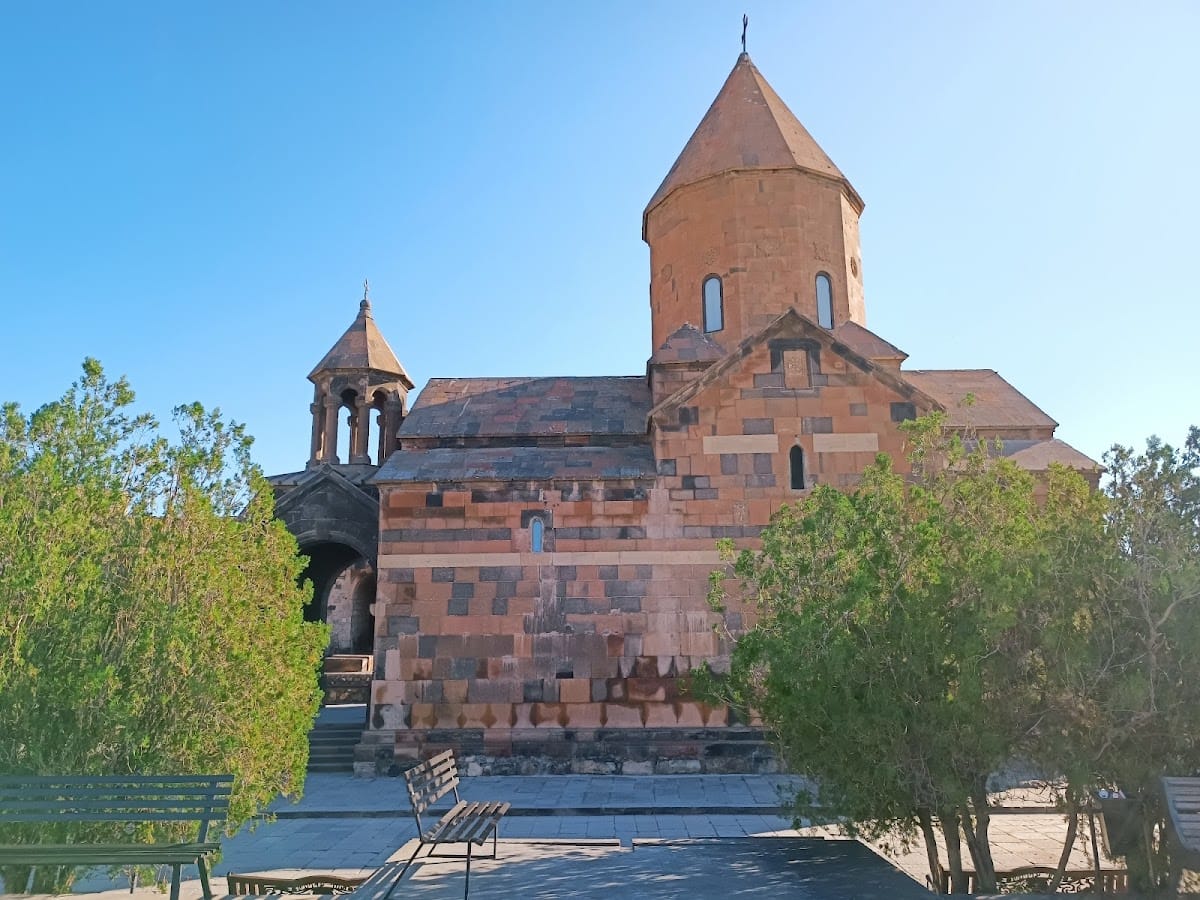
The hill later occupied by Khor Virap contained the royal prison associated with Gregory the Illuminator. His prison cell became the nucleus of the surviving sanctuary, which stands among the ruins of Artaxata. The site’s later religious use therefore remains physically connected with the ancient city’s archaeological landscape.
Objects, archives, and coinage
Sculpture, vessels, and figurines
Excavations have recovered a marble statue of a woman, a marble Aphrodite, a bust of Cleopatra Selene, thousands of clay figurines, a lapis lazuli bowl with gold pendants, a gold wreath decorated with leaves, a silver goat figurine, and elaborately worked handles from silver vessels. These finds belong to the material remains of the city’s artistic, domestic, and commercial life.
Clay bullae and administration
More than 8,000 clay bullae have been found at Artaxata. A bulla was a clay sealing used to secure or authenticate documents, goods, or containers. The examples bear images of gods, kings, and prisoners, providing evidence for developed administration and international commerce.
Mint and coins
Artaxata operated its own mint, and its coinage used the Greek letter alpha as a special mark. Excavated coins include silver and copper issues of Tigranes II, Artavasdes II, and Tigranes III. Seleucid, Persian, Cappadocian, Pontic, and Roman coins found at the site date from the second century BC to the first century AD.
Wine production
A large wine basin on Hill VIII had an approximate capacity of 14,000 litres. Its scale indicates that wine production formed part of the city’s organized industrial activity.