Aragonese Castle in Venosa: A Fifteenth-Century Fortress and Residence
Site at a Glance
- Rating
- 4.5
- Popularity
- High
- Country
- Italy
- Primary era
- Medieval
- Eras represented
- Medieval, Early Modern
- Civilizations
- Habsburg, Habsburg Spain, Kingdom of Naples, Spanish
- Site type
- Military
- Remains
- Castle
On this page10 sections
History
Construction and urban change
The Aragonese Castle in Venosa, Italy, was built in 1470 at the initiative of Pirro del Balzo, Duke of Venosa, as part of a wider fortification project under the House of Aragon, the royal dynasty that ruled the Kingdom of Naples. Building the fortress and digging its moat required the demolition of the Romanesque cathedral, a medieval church in a style marked by rounded arches and substantial masonry, along with the surrounding quarter. A new cathedral was constructed as the settlement expanded onto the lower part of the plateau.
Aristocratic residence
Carlo and Emanuele Gesualdo later adapted the fortress as an aristocratic residence. From 1612, it also housed the Accademia dei Rinascenti, a cultural academy for organized intellectual and artistic activity.
Remains
Fortress plan and defenses
Plan and towers
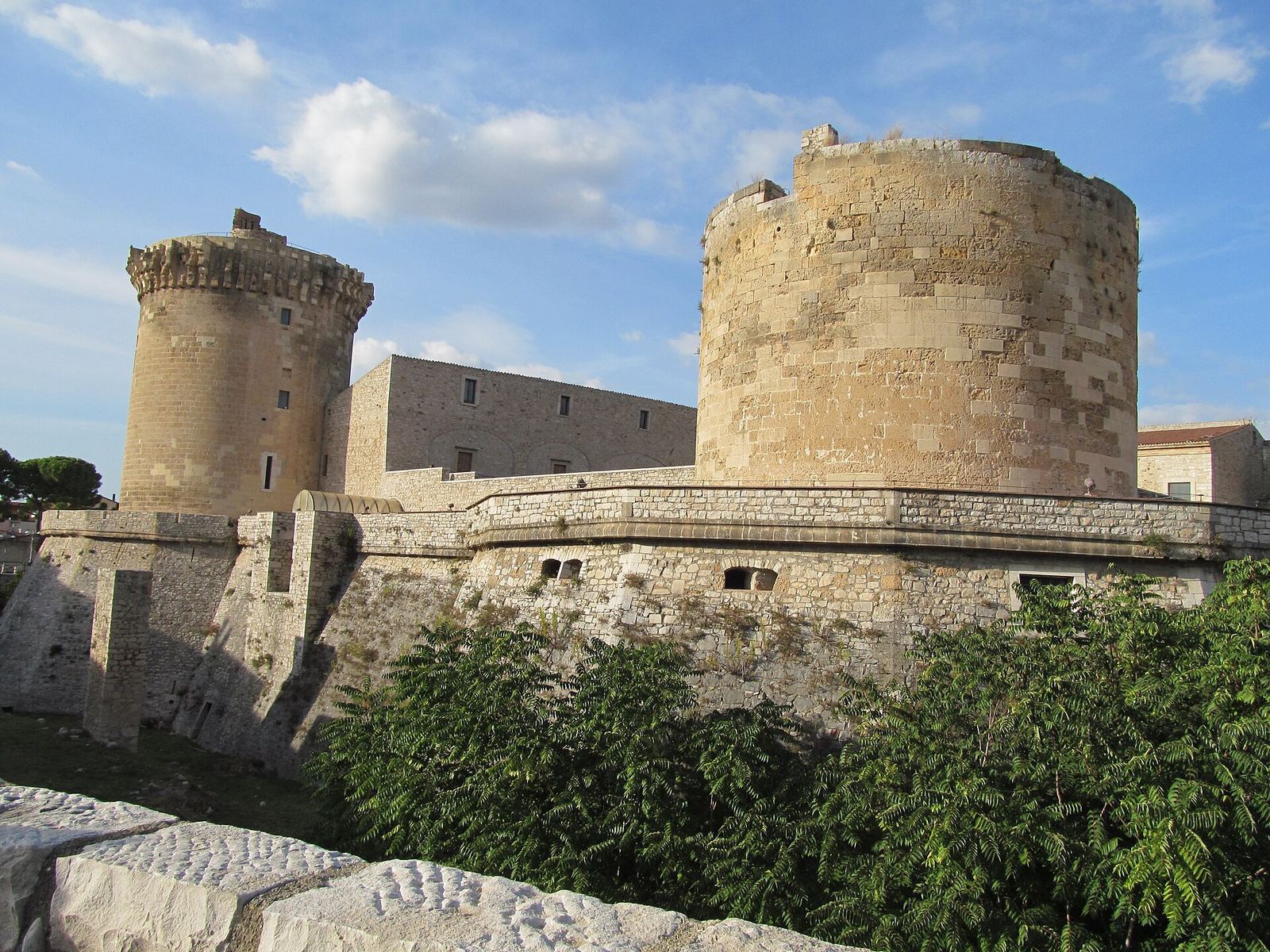
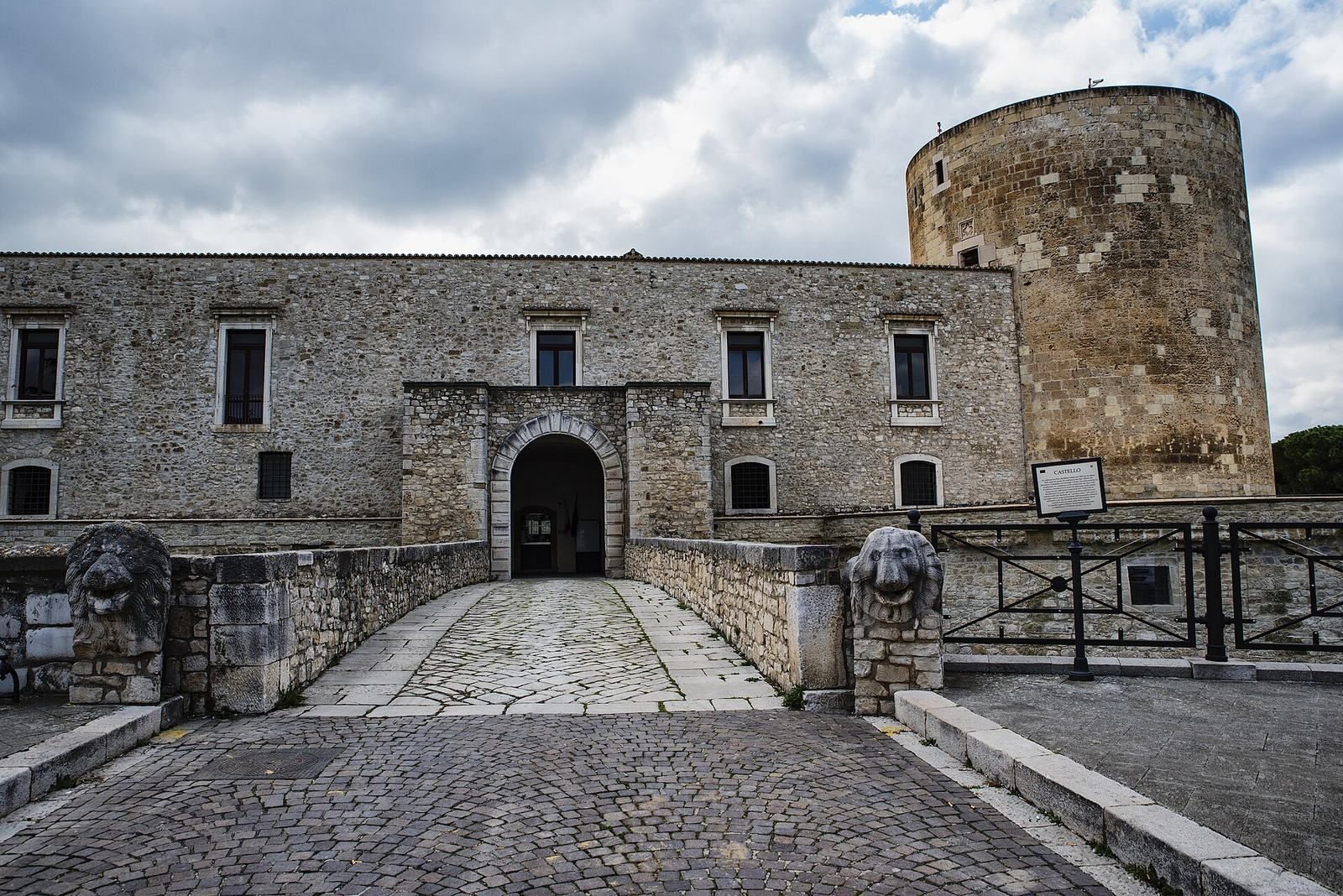
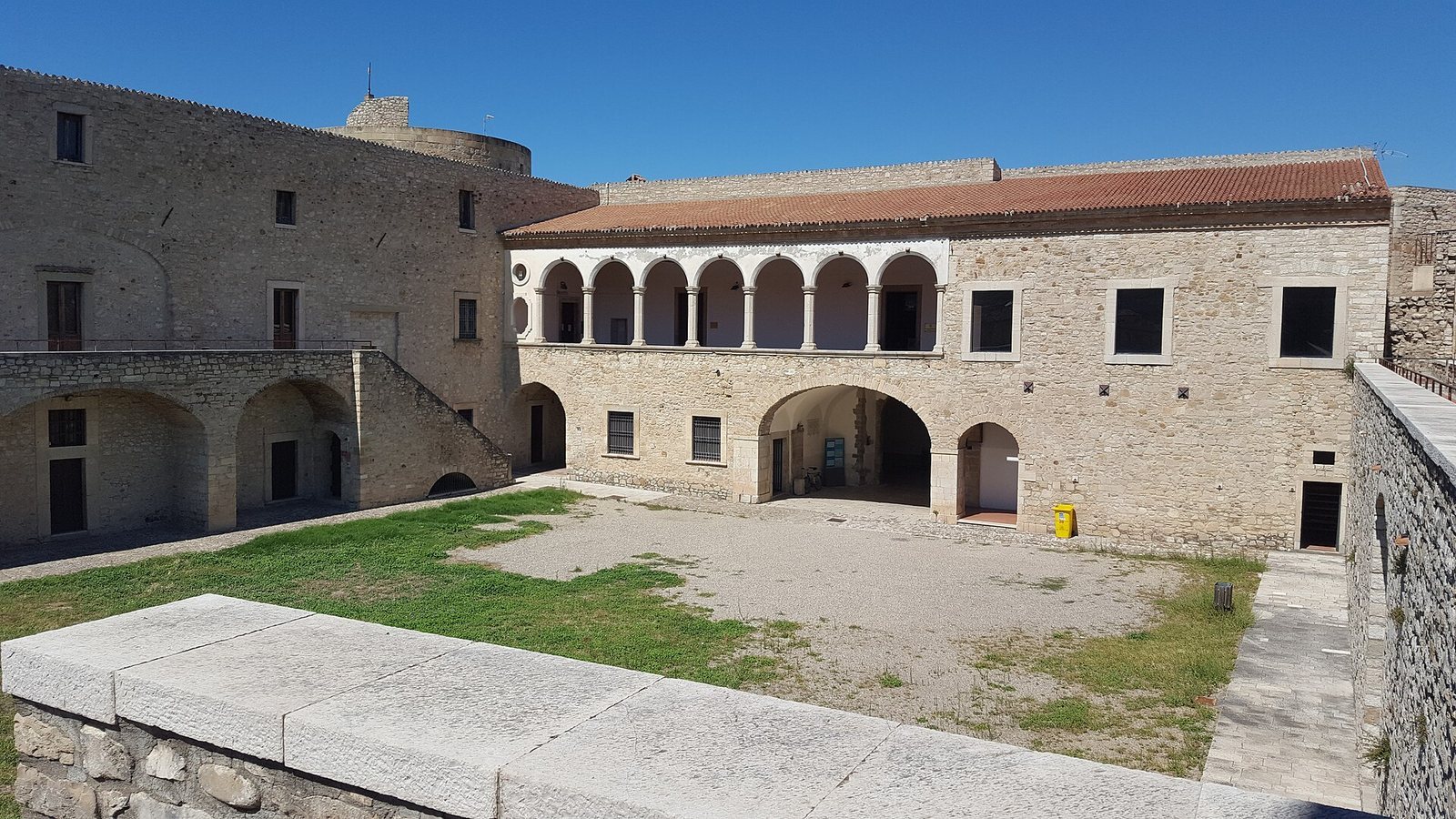
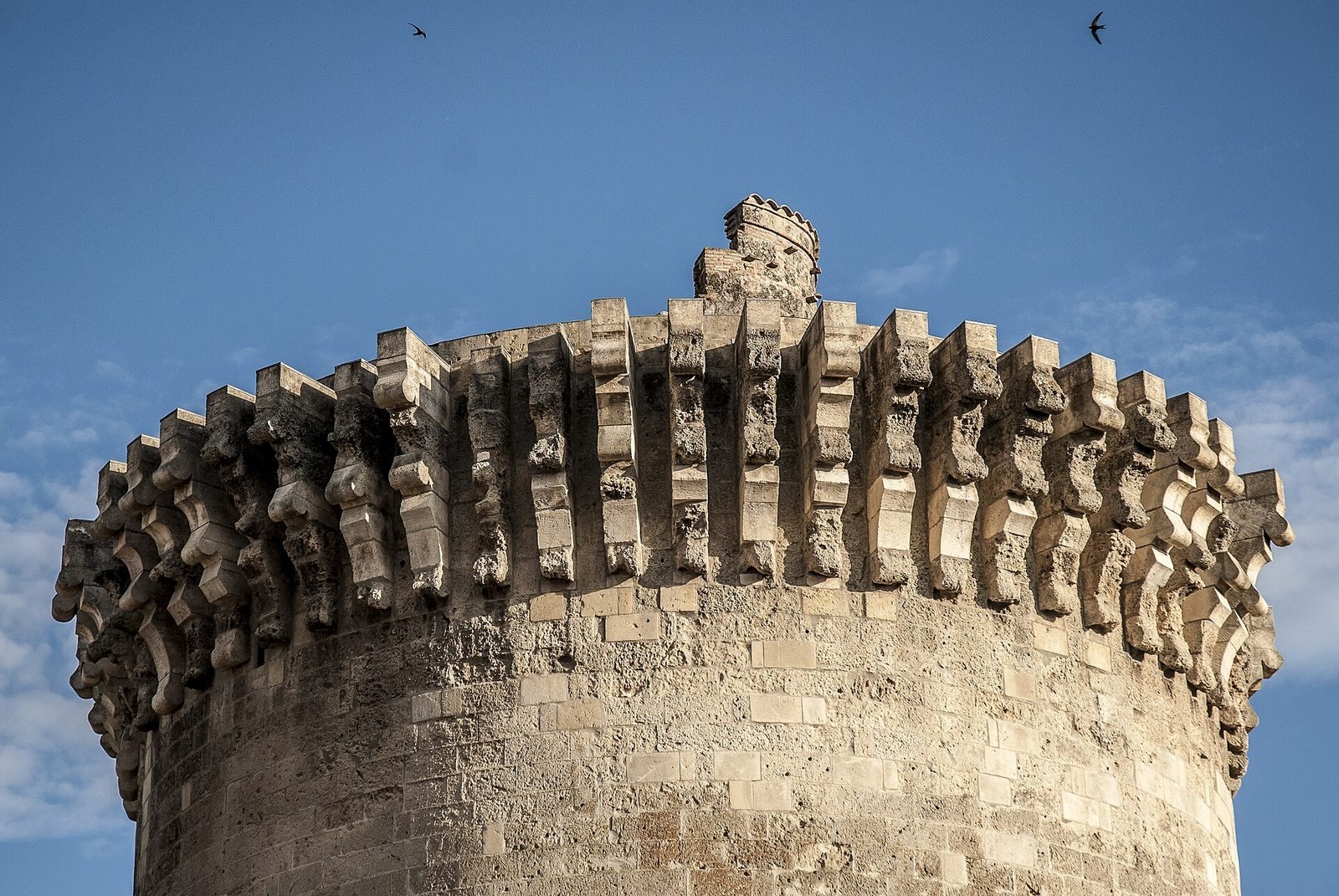
The castle has a square plan, with walls built of ashlar, carefully cut stone blocks, and a cylindrical tower at each corner. The towers were originally topped with crenellations and probably had conical roofs. The west tower bears the radiant-sun coat of arms of the Del Balzo family. The restored fortress also retains a deep moat and a drawbridge providing access across it.
Moat and redoubts
At the foot of each tower, a redoubt, or small defensive work, supports the structure and forms the sloping scarp, the defensive face of the moat. These tower-base rooms were also used as prisons.
Courtyard and museum
Loggia and square
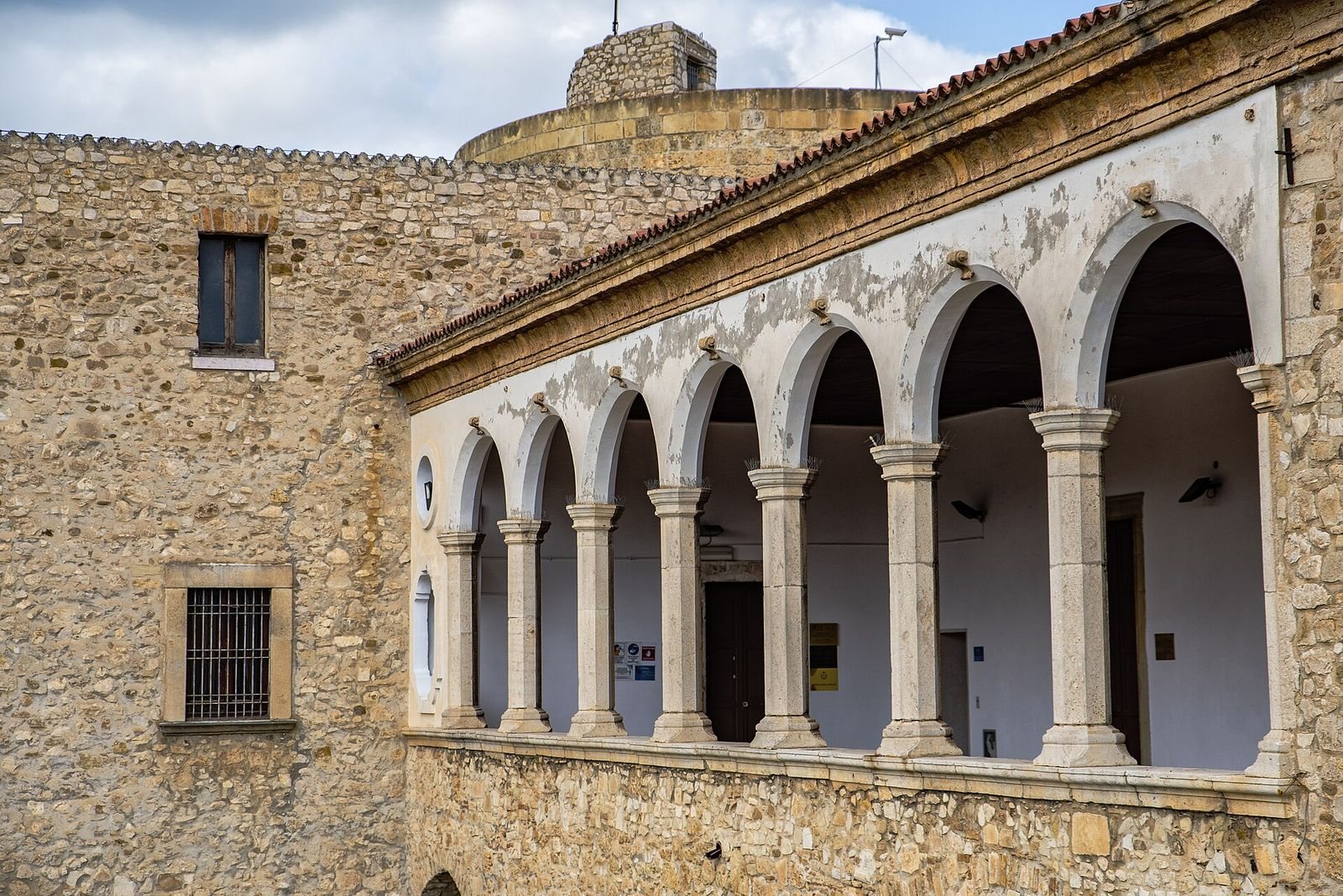
A spacious courtyard is enclosed by a Renaissance loggia, a roofed gallery open on one or more sides. A wing and the tower-base defenses were added during the castle’s transformation into a residence. In front of the building, a porticoed square contains a monumental fountain granted to Venosa by a ruler named Charles.
National Archaeological Museum
The basements of the towers accommodate the National Archaeological Museum of Venosa. Its collections preserve extensive evidence of Venusia, a settlement established under Roman rule.