Älvkarleby Church: A Medieval Parish Church in Sweden
Site at a Glance
- Country
- Sweden
- Primary era
- Early Modern
- Eras represented
- Medieval, Early Modern, Modern
- Civilizations
- Swedish
- Site type
- Religious
- Remains
- Church
On this page9 sections
History
Älvkarleby Church is a medieval parish church in Älvkarleby, Sweden. Construction of its nave began in 1478, and Archbishop Jakob Ulvsson consecrated the church in 1490. Ulvsson was a Swedish church leader who served as Archbishop of Uppsala in the late 15th and early 16th centuries.
Expansion and changing furnishings
Growth in the parish population led to building work from the 1690s. A new, three-sided chancel was completed in 1702, and a new sacristy replaced the late-medieval one. A small turret was added above the chancel and removed in 1829. These early 18th-century changes largely shaped the church’s appearance.
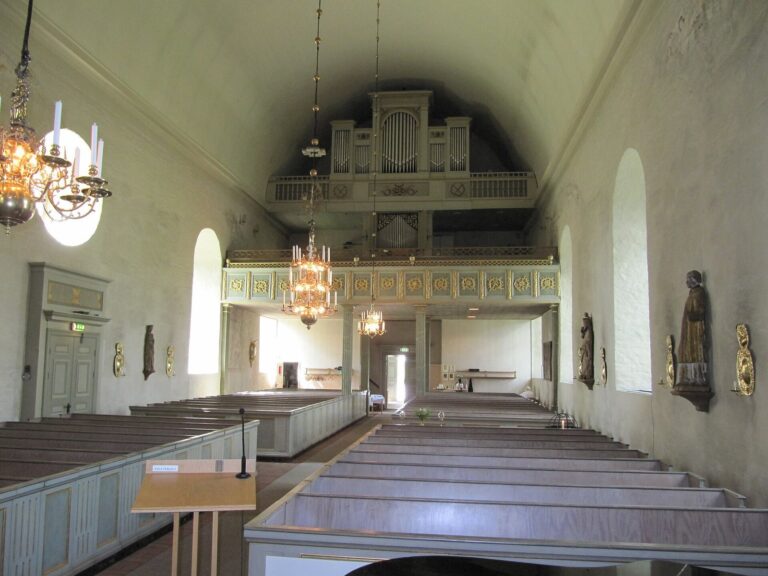
The church’s organs were also altered over time. An earlier small organ was removed in 1741, when Daniel Stråhle built a seven-stop instrument. Niclas Söderström of Nora enlarged it to eleven stops in 1780. A new organ followed in 1891, and in 1919 A. Mårtenssons Orgelfabrik expanded it to fifteen stops, with two manuals and a pedalboard.
Restoration and parish use
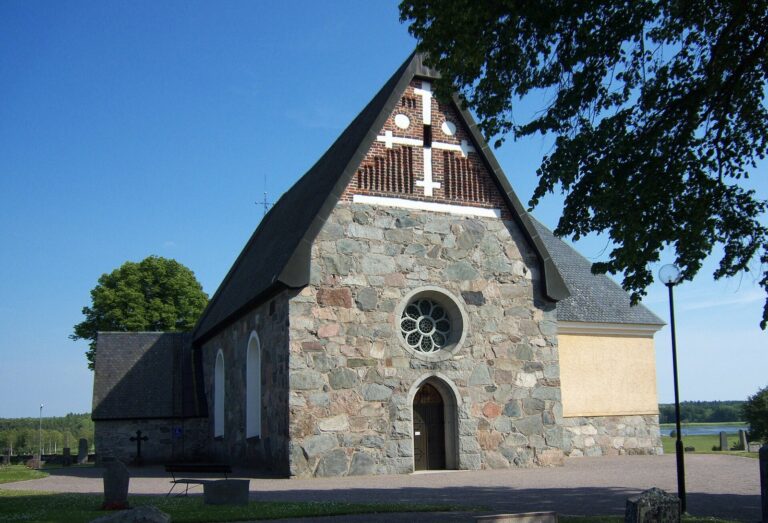
During restoration in 1890–1891, brick arcading on the west and porch gables was covered with plaster. The side galleries installed in 1772 were removed, and new pews, an organ gallery, and a pulpit were added. Many of the changes made after the 18th century concerned the interior. The gable arcading was uncovered again in 1958. Renovation work in 1964–1965 included new flooring in the aisle and chancel.
Today the church serves Älvkarleby-Skutskär parish in the Diocese of Uppsala, a regional church district within the Church of Sweden, Sweden’s national Lutheran church.
Remains
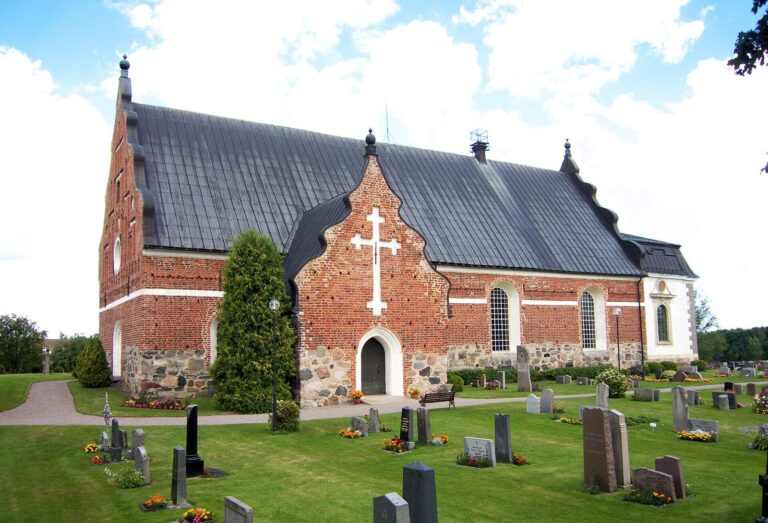
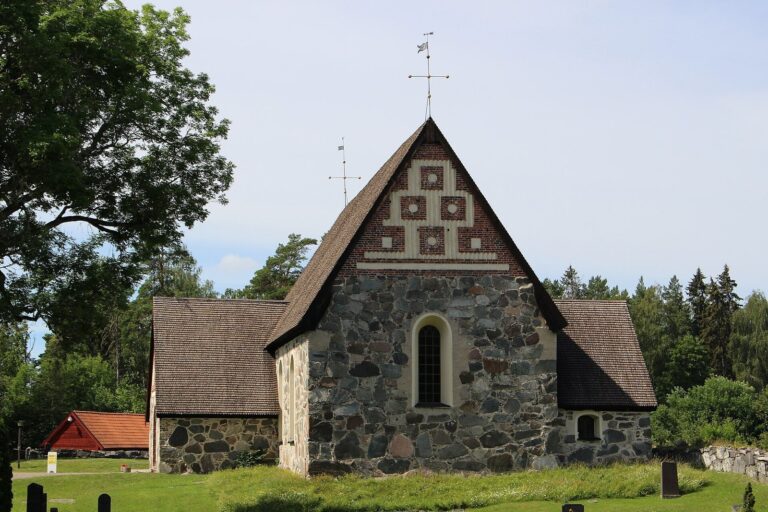
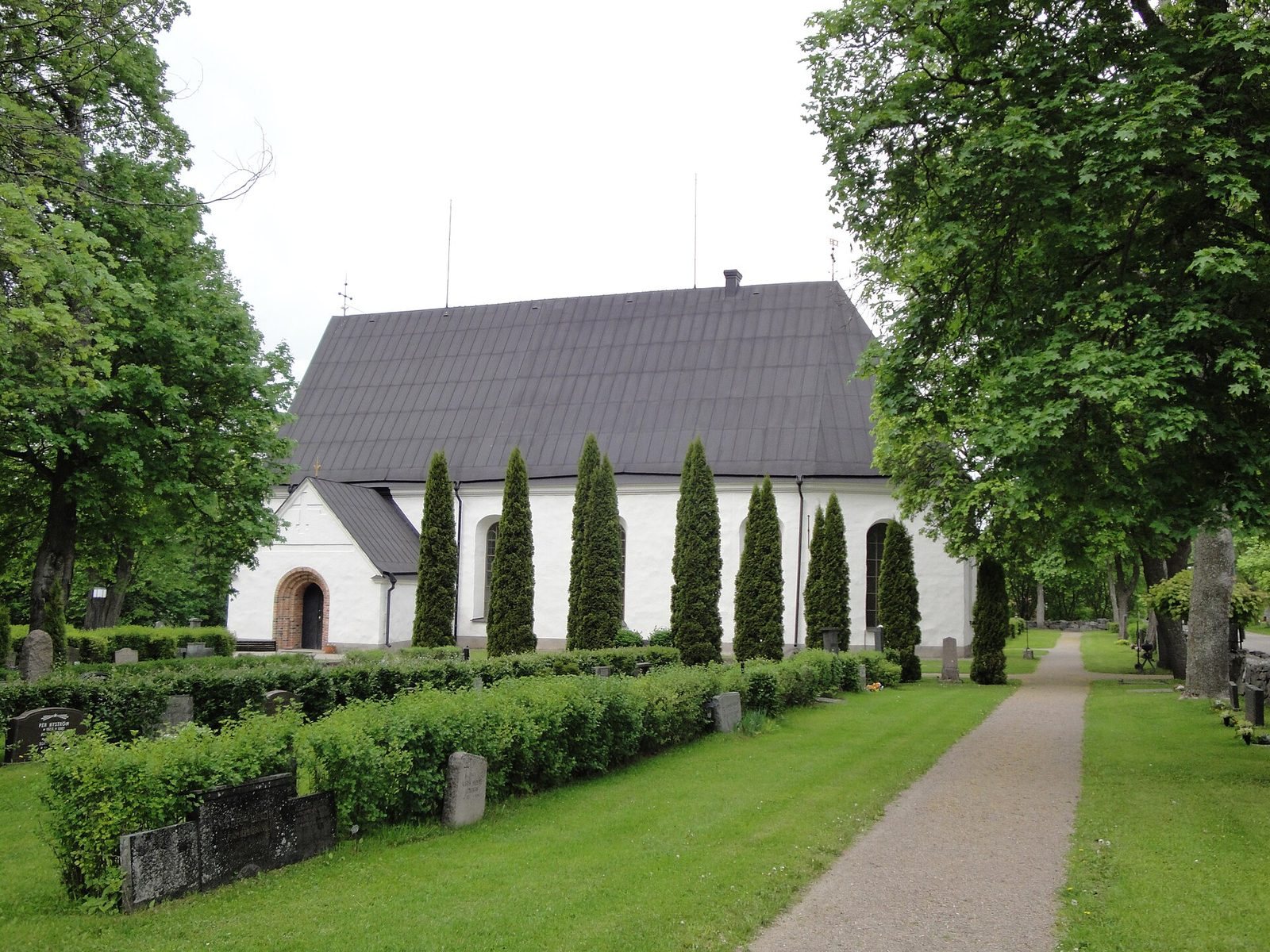
The church has a rectangular nave, a polygonal chancel, a sacristy on the north side, and a porch on the south, which provides the entrance to the interior. Its walls are built mainly of natural stone and covered in white plaster. Brick frames the openings and appears in the gable fields, while the chancel and sacristy are built of brick. The nave has a gabled roof that becomes hipped over the chancel; the porch has a gabled roof, and the sacristy a lean-to roof. Shallow brick arches set against the wall, called blind arcading, decorate the west and porch gables. The porch is probably original. East of the church stands a red-painted bell tower whose present appearance dates to 1834. A wooden mortuary chapel built in the latter half of the 19th century stands in the churchyard to the south.
Vaults and paintings
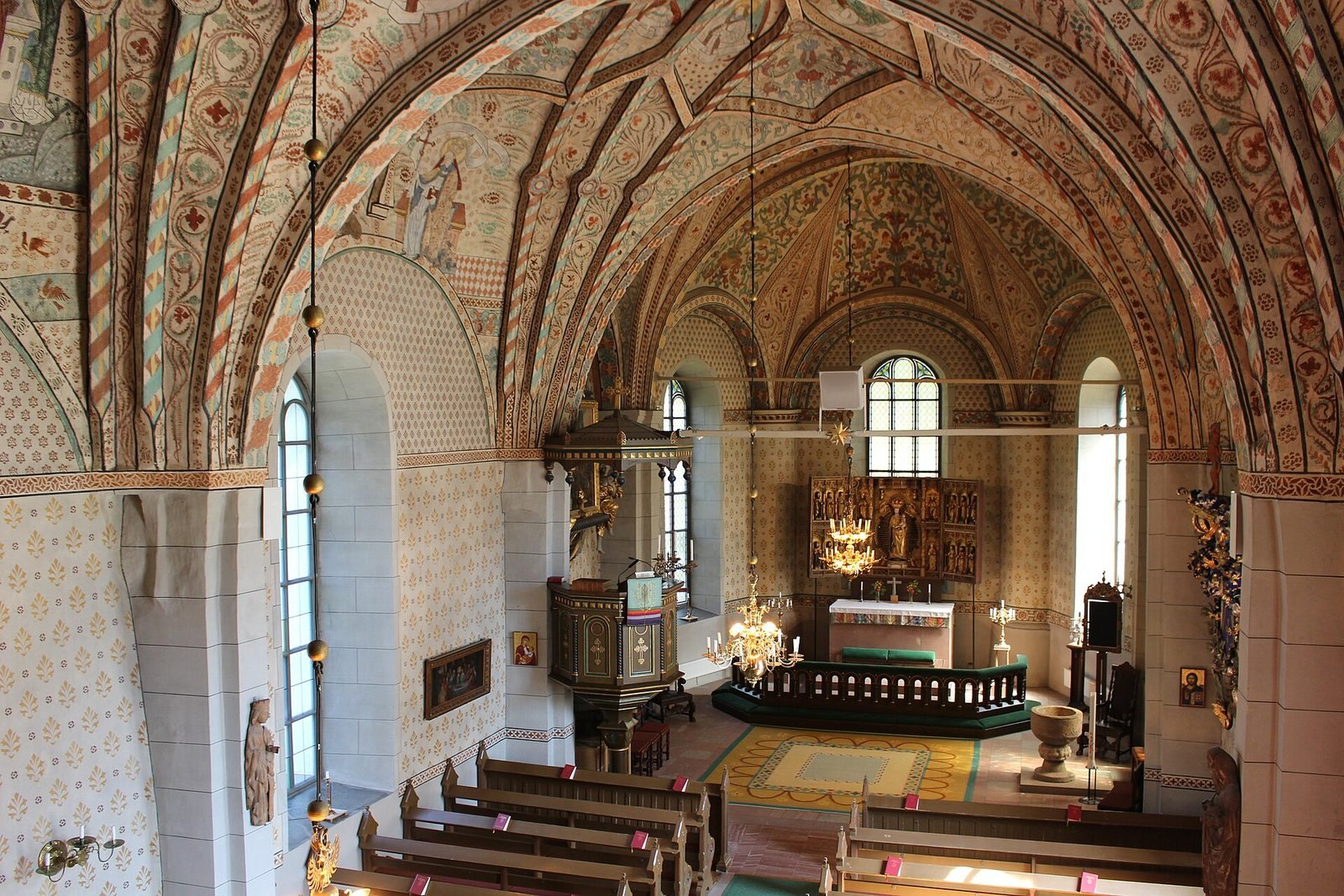
The nave has richly decorated vaults bearing medieval paintings, uncovered during restoration in 1890–1891. Because the older paintings were badly damaged, stencil decoration was added to the walls, and the chancel received ornament inspired by the medieval designs. The mural paintings were cleaned during the renovation of 1964–1965.
Fittings and memorials
Baptismal font and altarpiece
The church has a baptismal font from the same period as the building. Its central section is decorated with prominent interlacing patterns. An altarpiece from that period shows Mary surrounded by rays. It was returned to use as an altar adornment in 1964–1965.
Leijel family memorials and paintings
A burial chamber beneath the chancel floor was made for local ironworks proprietors. David Leijel the elder, co-founder of Älvkarleö ironworks, and his wife Catharina Honnon were buried there with descendants. The chamber belonged to the Leijel and Anckarström families and later the Tottie family; their earliest family members were also buried there. Memorials include a Baroque-style pedestal and crowning piece forming an epitaph, or memorial, to David Leijel and Catharina Honnon, as well as Leijel family coats of arms.
The brothers Jacob and Petter Leijel gave an altar painting to the church. It also holds a painting by the Flemish artist Joachim Bueckelaer, signed and dated 1563, showing Jesus on the way to Calvary. The Leijel family probably donated Bueckelaer’s painting in the early 18th century.
Organ
The present organ was built in 1945 and uses pneumatic action, which transmits the player’s control to the pipes through air pressure. Its facade comes from the 1891 organ. The instrument has two manuals, or keyboard divisions, and a pedalboard operated by the feet.