Alte Veste: A Medieval Fortified Site and Observation Tower in Germany


Site at a Glance
- Rating
- 4.6
- Popularity
- Low
- Country
- Germany
- Primary era
- Modern
- External website
- Open
- Eras represented
- Medieval, Early Modern, Modern
- Civilizations
- Holy Roman Empire
- Site type
- Military
- Remains
- Castle
On this page8 sections
History
Alte Veste is a historic fortified site and locality in Zirndorf, Germany, whose origins reach back to a thirteenth-century motte, a medieval castle centered on a raised earthen mound and tower. Formerly known as Burg Berch, it lies within the Zirndorf cadastral area and became associated with the Battle of Alte Veste during the Thirty Years’ War.
Medieval Castle and Nuremberg Rule
Early traditions and records indicate that a tower-hill castle stood at the site before 1300. The fortification was a ministerial castle, meaning it belonged to the sphere of a medieval administrative and military official. On 29 April 1306, Heinrich von Berg, a Zirndorf imperial ministerialis, sold “our castle Berch” to the Burgraviate of Nuremberg, a territorial lordship ruled by the burgraves of Nuremberg. He had previously pledged the castle to the Nuremberg financier Groß.
The castle was first documented in 1306. In 1325 it was called “zv dem alten Perge,” while the name Alte Veste first appeared in the early seventeenth century. During the Cities’ War of 1387 to 1389, Nuremberg forces demolished the existing fortifications in 1388.
Administration and the Battle of 1632
In 1632, during the Thirty Years’ War, a European conflict fought from 1618 to 1648 amid religious, dynastic, and political struggles, the hills around Alte Veste became a battlefield. King Gustav II Adolf of Sweden led an attack from the east against troops loyal to the emperor and commanded by Albrecht von Wallenstein, an imperial general and leading Bohemian military commander. Wallenstein had established and fortified a huge camp west of Nuremberg, where more than 50,000 mercenaries and camp followers were gathered while Swedish troops were encamped at Nuremberg.
After two days of heavy fighting and many deaths on both sides, the Swedish forces broke off the attack. Wallenstein is generally considered to have ended the engagement with an advantage, although the Swedish army had previously enjoyed military successes and substantial support at Nuremberg.
By the end of the eighteenth century, Alte Veste consisted of a single estate. The Brandenburg-Ansbach Oberamt Cadolzburg, a higher administrative and judicial office, exercised high jurisdiction, while the Cadolzburg Kastenamt, which managed territorial revenues and estates, owned the Wildmeisterhaus. From 1797 to 1808, the locality was administered by the Cadolzburg Justice and Chamber Office. In 1808 it was assigned to the Zirndorf tax district and the newly established rural municipality of Zirndorf.
Observation Towers and Modern Use
During commemorations marking two centuries since the 1632 battle, the foundation stone for an observation tower was ceremonially laid on 24 August 1832. The tower was completed in 1839, financed through the issue of shares, and became a recreational destination for residents of Fürth and Nuremberg.
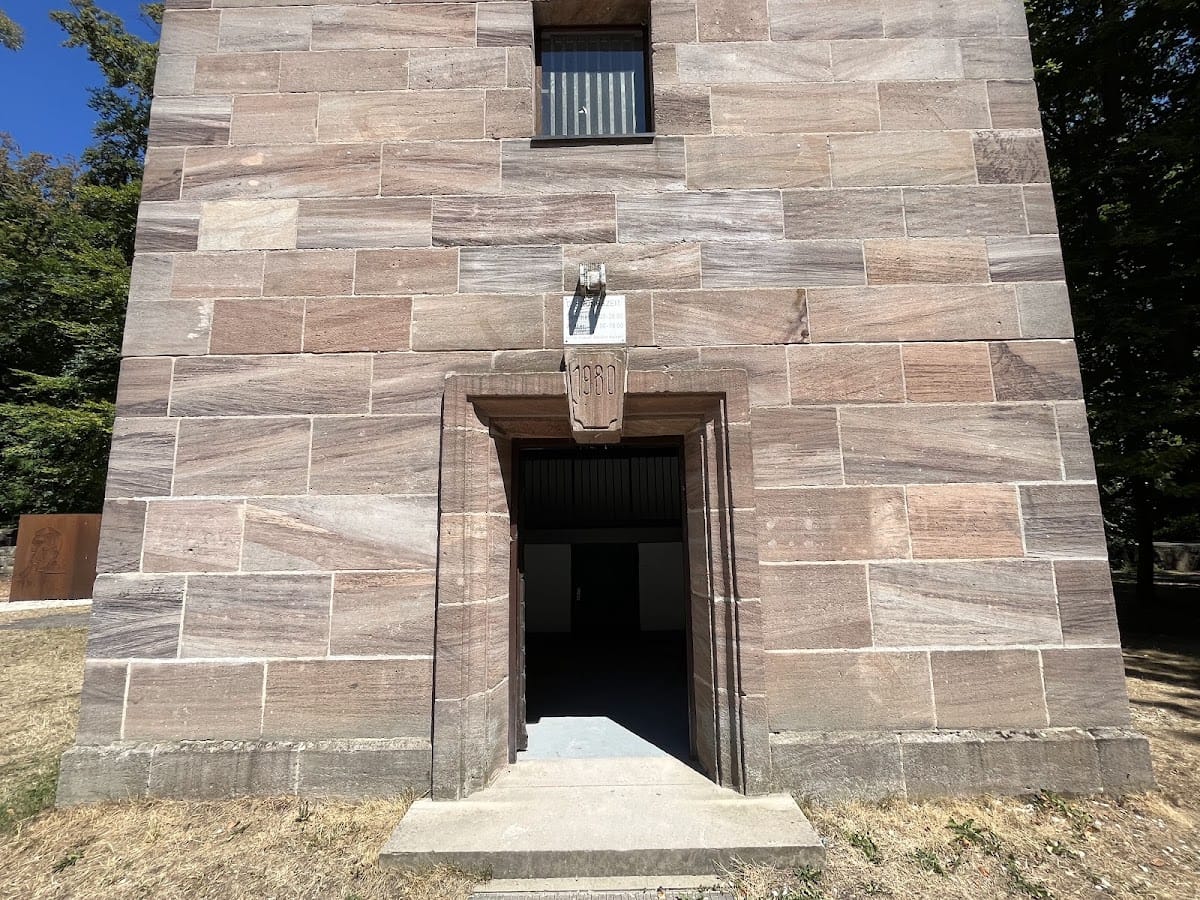
During the Second World War, the Wehrmacht used the observation tower and the vault beneath it as an air-defense position and for war production. The Vestner Tower was blown up by the Wehrmacht on 17 April 1945, shortly before Allied troops arrived. A replacement tower was constructed between 1979 and 1980 and inaugurated on 17 September 1980. It has since become a landmark of Zirndorf. Since the Reformation, Alte Veste has had a Protestant-Lutheran character and remains part of the parish of St. Rochus in Zirndorf. Roman Catholic residents belong to the parish of St. Joseph in Zirndorf.
Remains
Castle Ruins and Observation Tower
The ruins and present observation tower occupy a forested site at the highest point of the Rosenberg, the easternmost spur of the Cadolzburg Ridge, at approximately 360 metres above sea level north of Zirndorf. The original thirteenth-century motte stood within the settlement area. Rectangular foundation walls from the demolished defensive tower remain visible around the current tower.
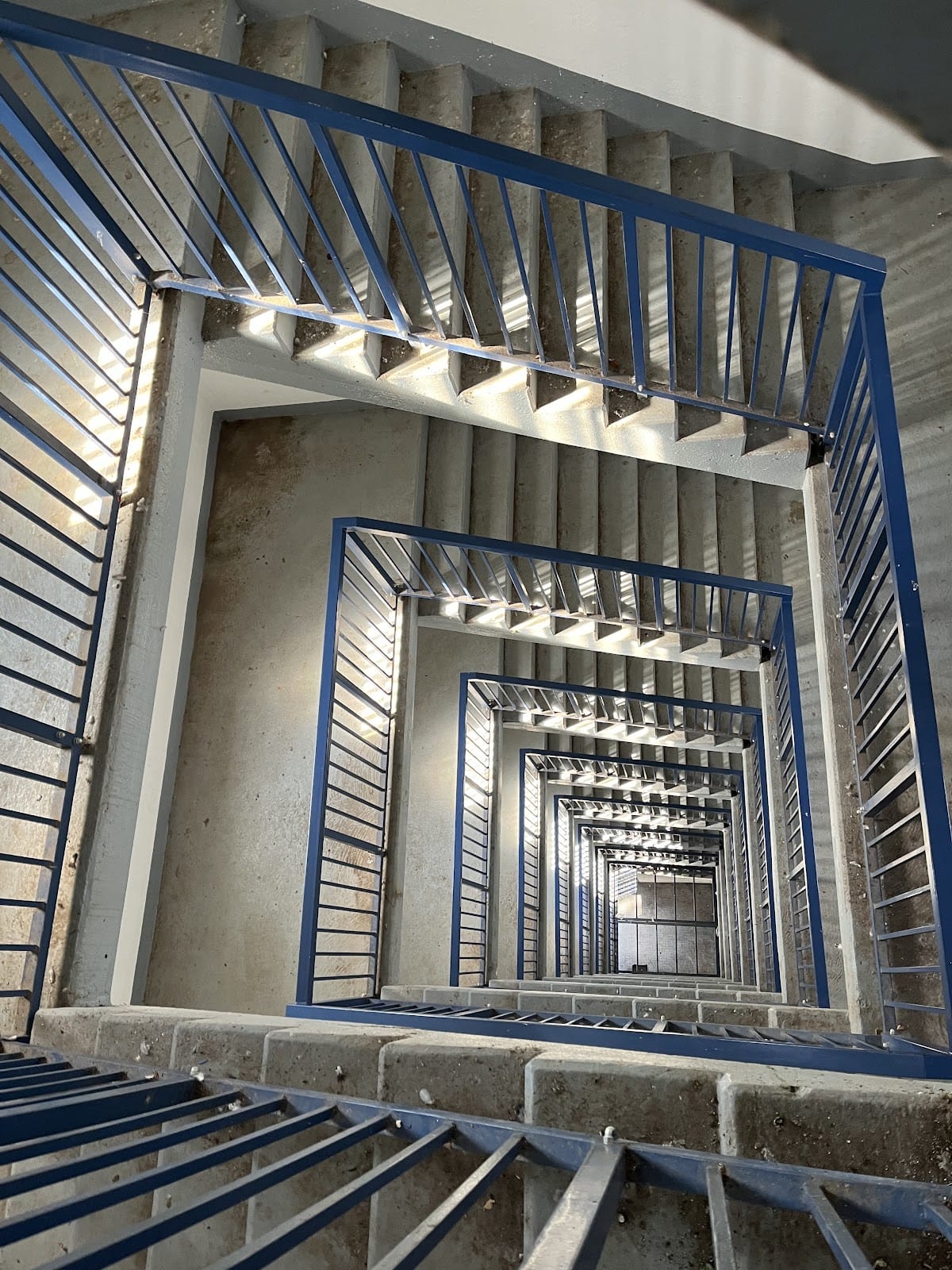
The nineteenth-century observation tower was built over the medieval ruins after the foundation stone was laid in 1832 and was completed in 1839. Its destruction in April 1945 was followed by construction of the present Gothic-style tower in 1979 and 1980. The replacement rises 28 metres above the site. The vault beneath the former tower, used during the Second World War, survives but is no longer accessible because its entrances have been bricked up.
Battlefield Features
A marked walk through the surrounding forest leads to locations associated with the Thirty Years’ War. About 400 metres from the tower, a section of an artillery entrenchment belonging to Wallenstein’s defensive works has been reconstructed.
Present Tower Function
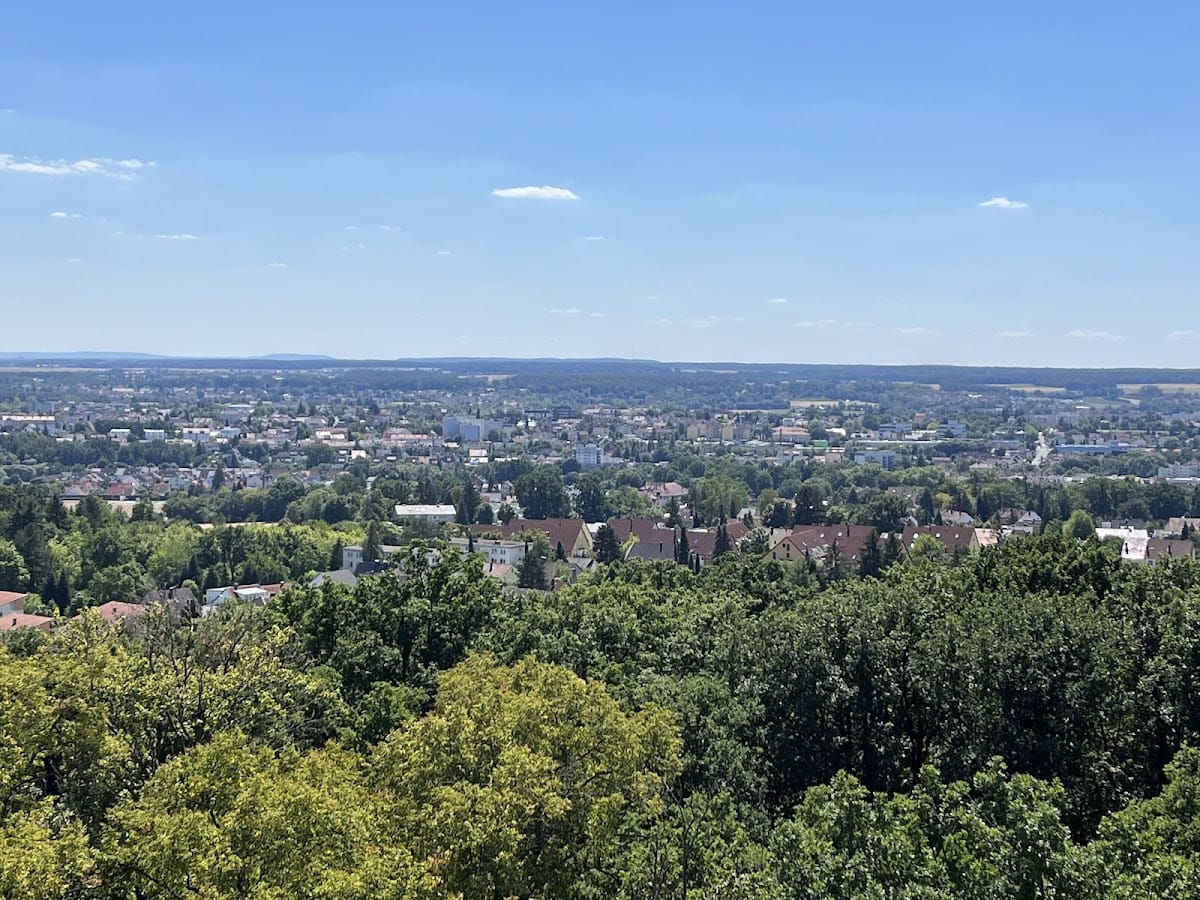
The observation tower provides views over Zirndorf, Fürth, and Nuremberg, toward Franconian Switzerland to the northeast, and toward the Altmühl Valley to the south. It is also used by the fire service as a relay station for BOS emergency radio, the German public-authority and emergency-services radio system.