Allajbegi’s Mosque: An Early Muslim Religious Building in Albania
Site at a Glance
- Popularity
- Low
- Country
- Albania
- Primary era
- Early Modern
- Eras represented
- Early Modern, Modern
- Civilizations
- Ottoman
- Site type
- Religious
- Remains
- Mosque
On this page7 sections
History
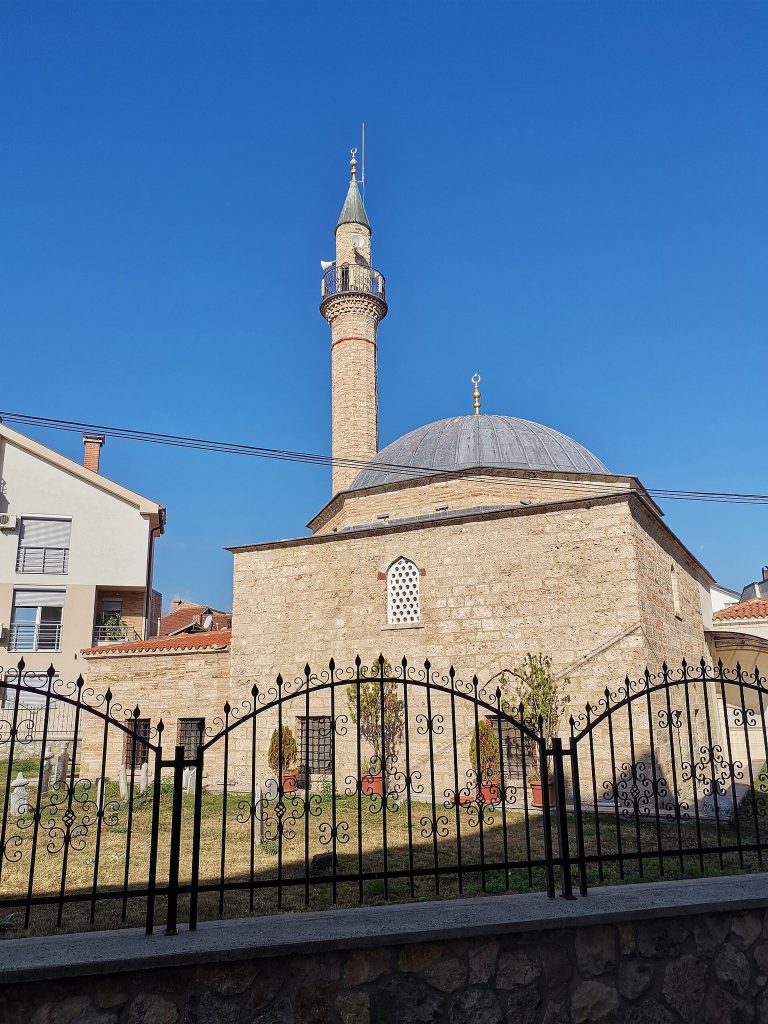
Allajbegi’s Mosque is a Muslim religious building in Burim, Dibër County, Albania, probably built during the sixteenth century before 1578. It is regarded as one of Albania’s earliest Muslim religious buildings and as evidence of Islam’s spread from cities into rural communities.
Origins and early role
The mosque’s exact construction date is unknown. Alaj Beg may have funded and built it, and may have come from the surrounding area. It may originally have served as a mescit, or small Muslim prayer house.
Damage and restoration
An earthquake seriously damaged the building in December 1967. On 30 May 1970, it was designated an Albanian Cultural Monument. This was two years after Enver Hoxha’s communist government prohibited organized religion and declared Albania an atheist state. Restoration work in the early 1970s, including a campaign in 1973, returned much of the mosque to its earlier condition.
Continued use
A minaret was added again in the 1990s. The village continues to use the mosque for worship, and it is affiliated with Sunni Islam, the largest branch of Islam.
Remains
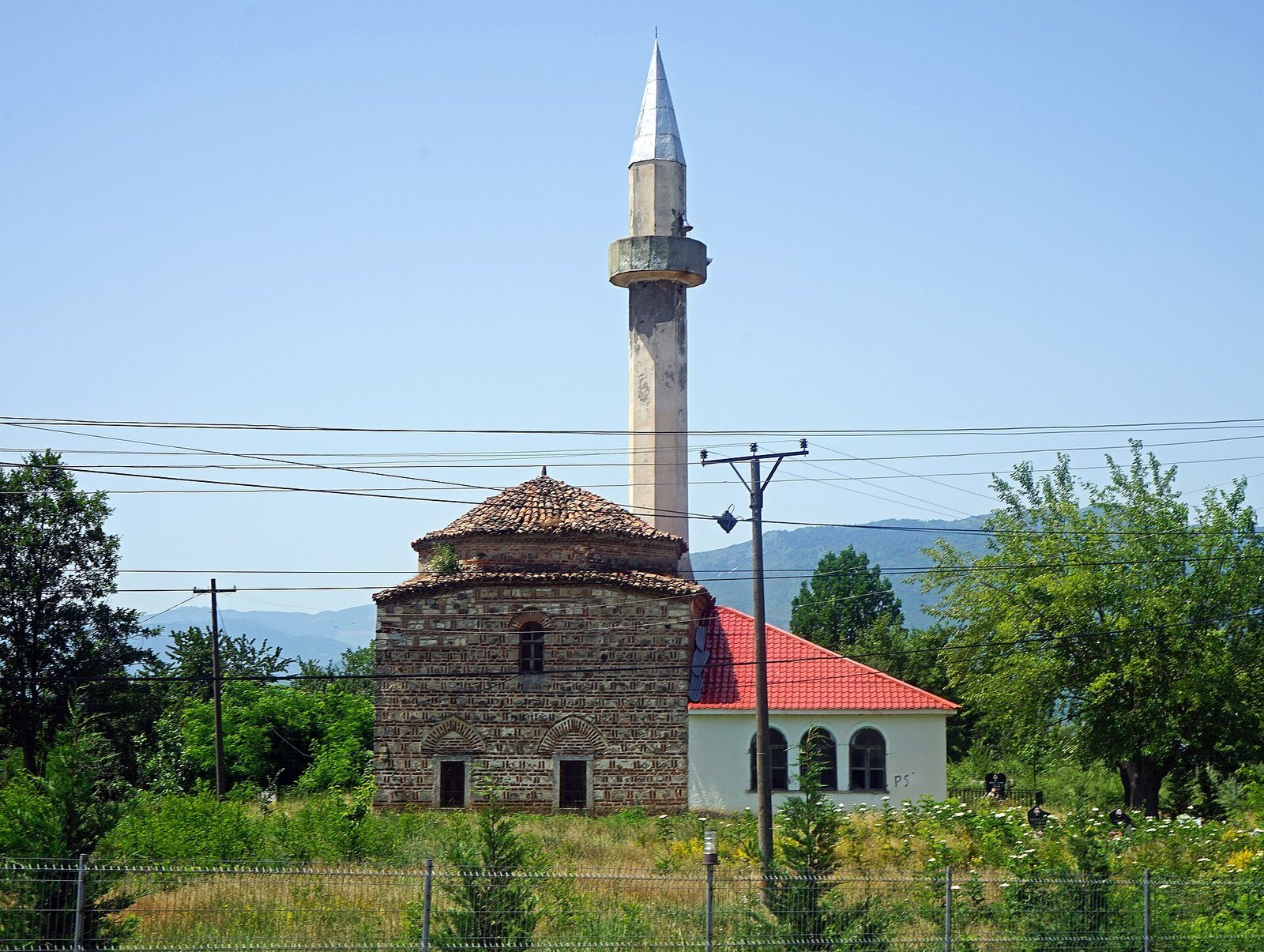
The mosque stands within a cemetery. Its compact, cubic form follows a single-dome design, with a dome raised on an octagonal drum, the structure that supports and lifts the dome. The square interior measures slightly more than six metres on each side. The building is among the smallest of its type.
Masonry and openings
Three walls use cloisonné masonry, in which brick courses frame smaller sections of stone, a technique unusual in this part of Albania. Each of these walls has three windows. The fourth wall contains the entrance and a window beside it.
Interior and adjoining features
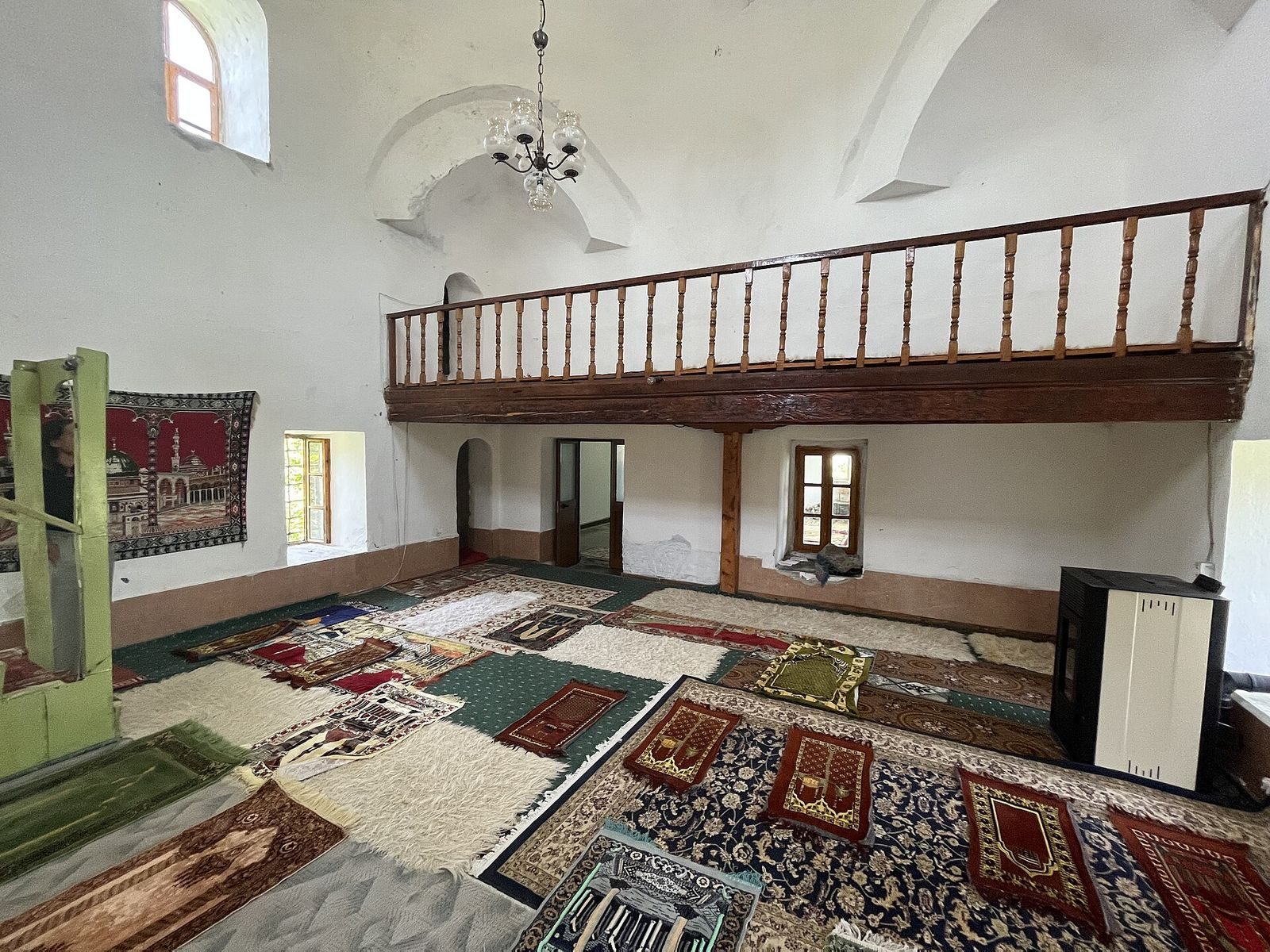
The interior is plain, with white walls and little architectural decoration. The mosque’s design closely resembles that of the Naziresha Mosque in Elbasan. Its former porch was slightly wider than the main building, with a room on each side of a central passage. A modern annex now takes the place of that porch. The simplified minaret and the annex are finished in white plaster.