St. Saviour’s Church in Herbel, Albania: A Fourteenth-Century Orthodox Church
Site at a Glance
- Popularity
- Very Low
- Country
- Albania
- Primary era
- Medieval
- Eras represented
- Medieval
- Civilizations
- Unclassified
- Site type
- Religious
- Remains
- Church
On this page7 sections
History
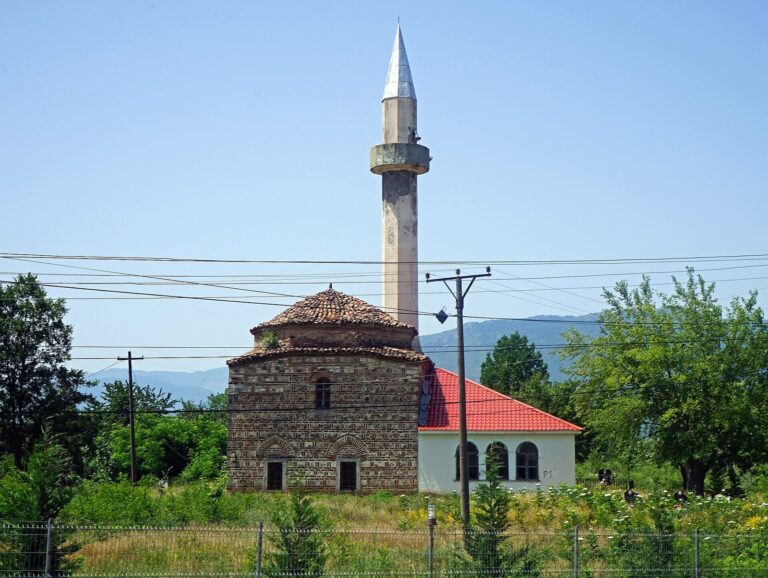
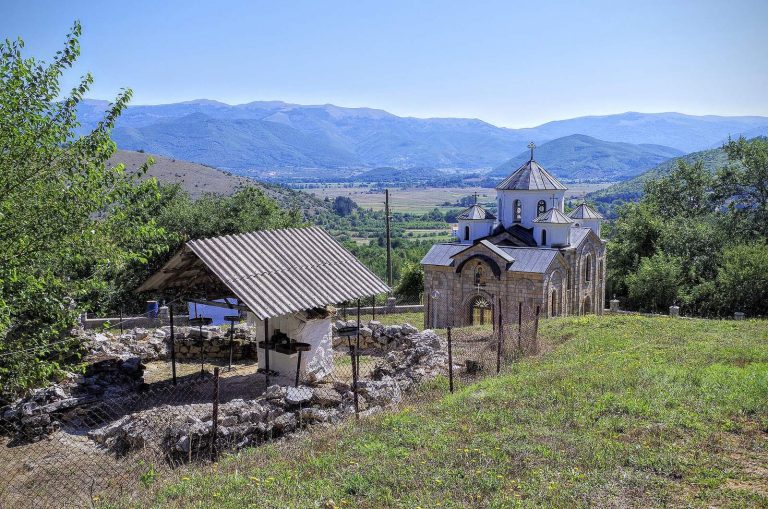
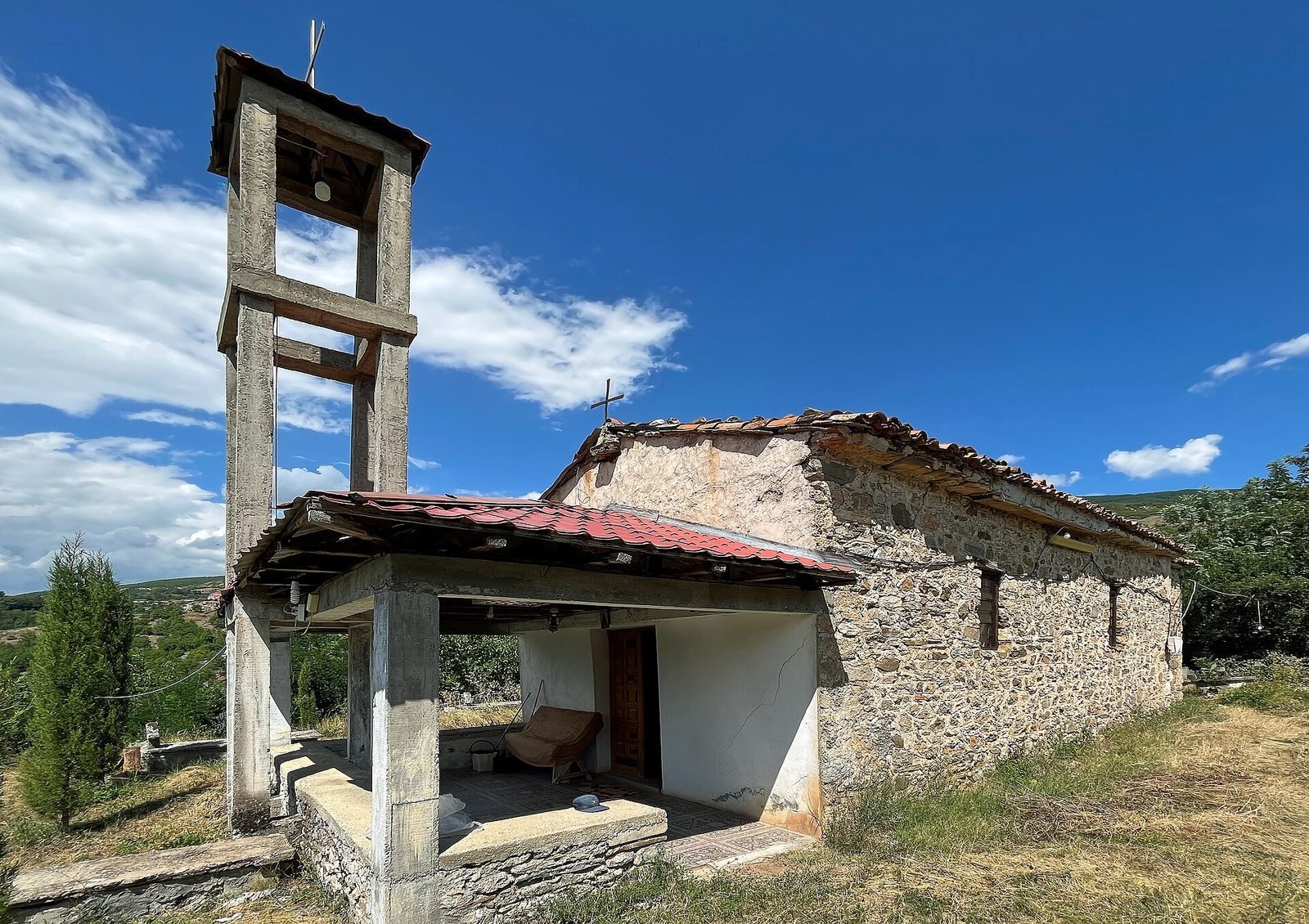
St. Saviour’s Church, also known as the Church of the Transfiguration, is a fourteenth-century Orthodox church in Herbel, in Albania’s Dibër region. Its fresco tradition is associated with spiritual centers of the Ohrid Archbishopric, a historic Orthodox church authority based at Ohrid, and with western Macedonia in the late fourteenth century. This artistic world is linked to Ohrid and Kastoria and to the era’s last Christian rulers, including Andrea Gropa, a regional ruler, and the Muzaka brothers, members of a noble family who governed parts of the region.
The church is an active congregation within the Albanian Orthodox Church, an Eastern Orthodox church, and the Tirana–Durrës Diocese, a regional church district. Albania designated it a protected cultural monument in 1970. Its feast day falls on August 18, when people of Macedonian origin from Herbel and neighboring Gorno Krchishte traditionally gather at the church. Many now live in Tirana, Durrës, Elbasan, Peshkopi, Makelari, and Macedonia. Local legend says that each August 18 a fiery red form descends from the Church of the Transfiguration on Mount Krchin, whose territory is divided between Albania and Macedonia, toward the church at Herbel.
Remains
Church building
The church is a simple, single-aisled basilica, a long building organized around one main interior space, with a wooden roof. Its nave is the principal interior area, and the apse is the projecting sanctuary space at the church’s end.
Frescoes
Apse and altar area
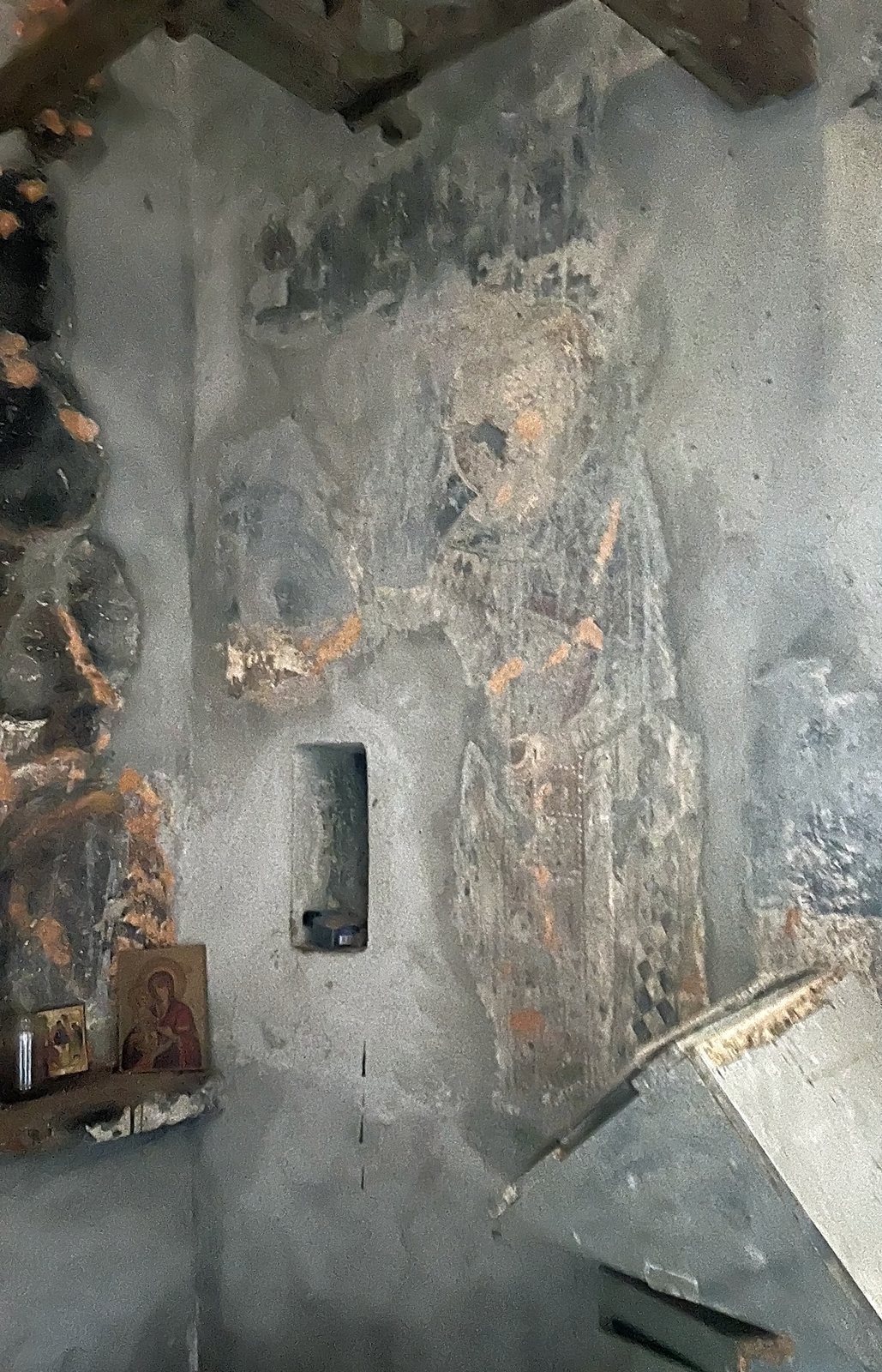
The apse contains an image of the Virgin of Blachernae, a title for Mary associated with a Byzantine sanctuary in Constantinople, with Christ in a medallion. Beneath them, two senior church officials are shown conducting services with scrolls. The east wall also bears the Annunciation, the Christian account of the angel Gabriel telling Mary she would bear Jesus, and images of holy deacons. Other senior church officials appear on the south wall of the altar area.
Nave
In the nave, full-length saints occupy the lower band of paintings, standing beneath low painted arches. Above them, the middle band contains medallions of saints beside a cross.
Date and artistic comparisons
The frescoes date to 1400–1440, although attribution to a painter from western Macedonia remains uncertain. Their style has been compared with paintings at the Church of the Virgin Faneromeni, around 1400, and the Church of St. Andrew Rousoulis, dated 1441/2, both in Kastoria. A further comparison is with the first painting phase at the Church of St. Paraskeva in Monodendri, Epirus, dated 1414. The frescoes have received amateur repairs, and all their inscriptions are in Slavic.