Aljibe del Rey: An 11th-Century Water Cistern in Granada


Site at a Glance
- Rating
- 4.6
- Popularity
- Low
- Country
- Spain
- Primary era
- Medieval
- External website
- Open
- Eras represented
- Medieval
- Civilizations
- Taifa Kingdoms
- Site type
- Infrastructure
- Remains
- Cistern
On this page7 sections
History
Aljibe del Rey, meaning “King’s Cistern,” is an 11th-century water-storage cistern in Granada’s Albaicín district, Spain. The Zirid emir Badis ibn al-Mansur built it during his reign from 1038 to 1073 to supply the royal citadel and palace complex later known as the Old Citadel. Its water came from the Fuente Grande through the Aynadamar irrigation channel at Alfacar, north of Granada.
Zirid construction and royal supply
The cistern predates the construction of the Alhambra and was originally known as the “Old Well.” It formed part of the hydraulic system serving the Zirid seat in Granada, receiving water carried from the Aynadamar channel. Its construction reflects the importance of managed water storage to the city’s royal and urban life.
Continued use in the Albaicín
After Granada’s rulers relocated to the Alhambra, Aljibe del Rey continued to supply the Albaicín, particularly the Dar al-Horra palace. With a capacity of 300 cubic metres, it was the district’s largest cistern. Water sellers were permitted to draw water commercially from it, making it the only cistern in the Albaicín where this form of extraction was allowed.
Eels and turtles were raised in the cistern to help keep its water potable. By consuming algae and insects, they helped delay stagnation.
Restoration and interpretation
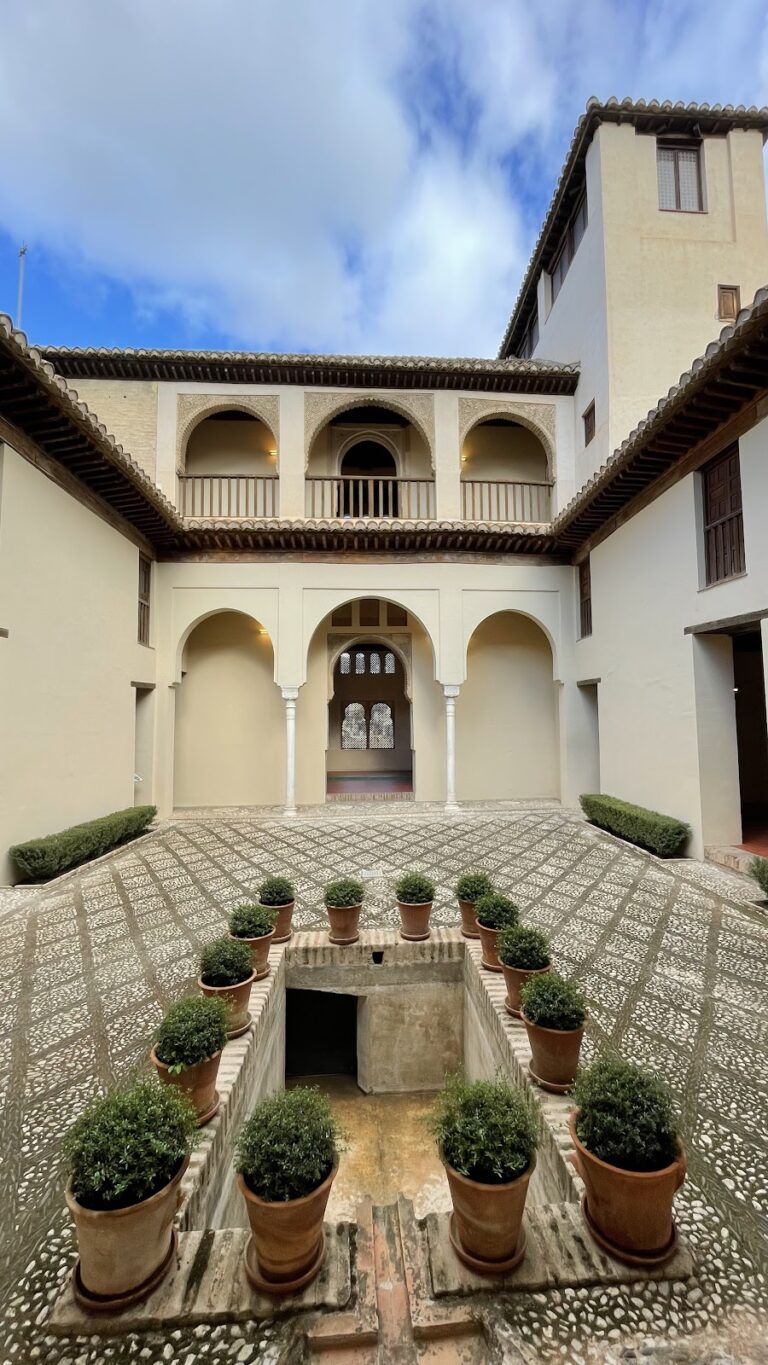
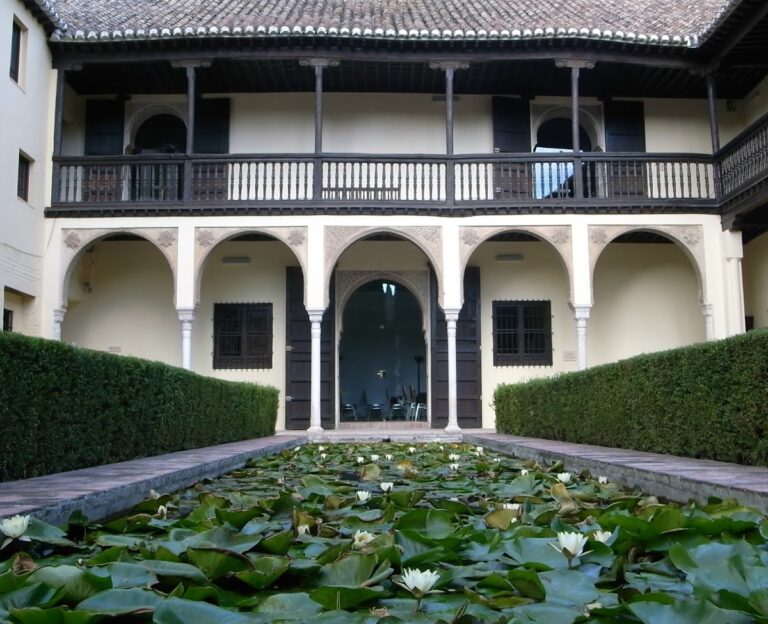
The Ayuntamiento de Granada restored the cistern and its associated carmen, a traditional Granada house linked to an enclosed garden, in 1988. Since 2008, the site has been managed by the AguaGranada Foundation, the charitable arm of the Emasagra water-supply company. An interpretation centre in the attached carmen was officially opened by Queen Sofía of Spain in 2009.
Remains
Aljibe del Rey survives as a quadrangular underground cistern measuring approximately 11 by 11 metres and about 4 metres high. Its basilica-style plan contains four vaulted chambers, arranged so that water could be drawn through two portals. The structure preserves the scale and organization of a substantial water-storage installation serving the surrounding royal and residential areas.
The cistern
The four underground chambers have central openings in their roofs. These openings are described as unique to Aljibe del Rey and may have allowed rainwater to supplement the supply arriving through the Aynadamar channel. The external entrance has an alfiz, a rectangular frame around an architectural opening, although this element dates from a modern reconstruction in the 1990s.
The carmen and garden
The attached carmen has been restored and contains the interpretation centre, together with educational and administrative facilities. Its adjoining orchard has been redeveloped as a garden, preserving the connection between the cistern complex and the enclosed domestic landscape associated with a traditional Granada house.