Al-Husayni Mosque: A Historic Najdi Mosque in Shaqra, Saudi Arabia
Site at a Glance
- Rating
- 4.9
- Popularity
- Very Low
- Country
- Saudi Arabia
- Primary era
- Modern
- Eras represented
- Early Modern, Modern
- Civilizations
- Saudi
- Site type
- Religious
- Remains
- Mosque
On this page11 sections
History
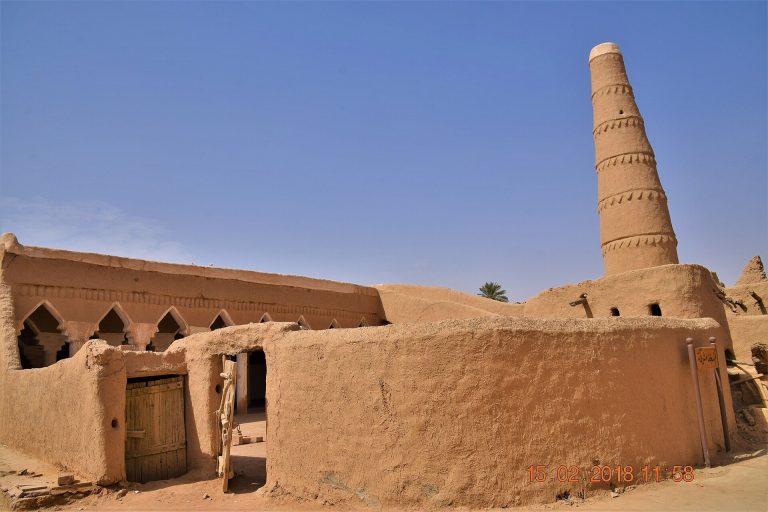
Al-Husayni Mosque is a historic mosque on the western edge of Shaqra in Saudi Arabia, near the town’s former western wall. Built in the Najdi tradition, it is regarded as one of the oldest mosques in Shaqra’s heritage town. The original construction date is unknown, although documents concerning its endowed properties indicate that it was built during the twelfth century AH. The Hijri calendar is a lunar Islamic calendar that counts years from the migration of Muhammad and his followers from Mecca to Medina.
Foundation and rebuilding
The mosque underwent rebuilding during its history. It is described as having been rebuilt in 1307 AH, while another document dated 1407 AH also records a rebuilding. These references reflect the continued maintenance and renewal of a religious building that remained part of the old town’s communal life.
Friday prayers and religious leadership
Al-Husayni Mosque was regarded as the second mosque in the old town after the congregational mosque. Friday prayer was first held there in 1354 AH while the congregational mosque was being enlarged. The mosque again hosted Friday prayers after the congregational mosque was demolished in 1386 AH.
Recorded imams include Sheikh Saad ibn Abd al-Aziz al-Bawardi, also known as al-Saadi, Sheikh Ibrahim ibn Abd al-Latif al-Abd al-Latif, Sheikh Abd al-Rahman ibn Ibrahim al-Khalaf al-Isa, Sheikh Muhammad ibn Nasir al-Shaqri, known as Shaqran, and Sheikh Sulayman ibn Ali al-Salih. The recorded muezzins, who called worshippers to prayer, include Abdullah Muhammad al-Tawil, Umar al-Aqil, Muhammad Ibrahim al-Shalil, and Abdul Aziz Muhammad al-Jalal.
Modern improvement and restoration
A comprehensive improvement project was completed in 1419 AH. It provided lighting for the mosque and its surroundings, connected a modern lavatory to the water network, and installed interior air-conditioning. These changes allowed all prayers, including Tarawih, the additional congregational prayers held during Ramadan nights, to take place there.
The Charitable Heritage Foundation restored the mosque in 1431 AH with support from local residents. The restoration helped preserve the building and its associated traditional facilities.
Remains
Prayer spaces
Underground winter room
The mosque includes a khalwah, a partly or fully underground room used as a sheltered winter prayer space. Its position below ground protected worshippers from cold weather, making it the usual place for prayer during winter.
Open yard and roof
The sarhah, an open prayer area, is used for daytime worship in winter. The roof provides another prayer space in summer, particularly at night, and is also used for the noon and afternoon prayers on sunny winter days. Together, these areas form a flexible arrangement suited to seasonal conditions.
Water facilities and surrounding lands
Well and animal access
The restored masqah contains the ablution facilities, and its original well was re-excavated. A sloping feature called the manhat descends to the depth of the well, allowing livestock and draught animals to reach the water more easily while it was being drawn.
Minaret and endowed palm groves
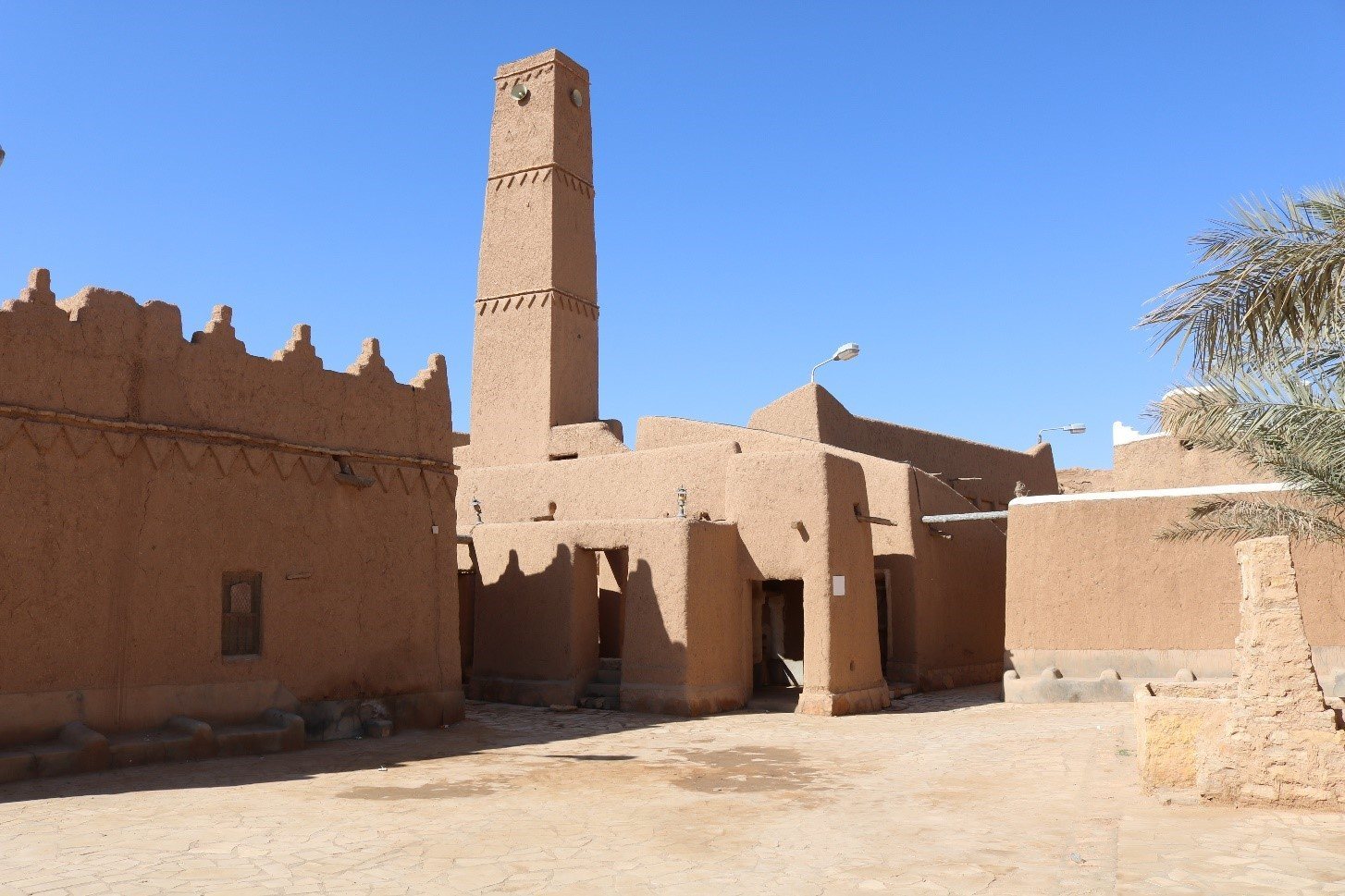
The minaret rises about 12 metres. It was rebuilt after collapsing in 1418 AH following repeated flooding. Before loudspeakers were available, its purpose was to carry the call to prayer across the greatest possible distance.
The mosque is associated with the Lulwah palm grove and the Community enclosure, date-palm fields endowed to support the mosque and surrounding it. Floodwater from the neighborhood flows onto these fields. A gate was added to Shaqra’s western wall to improve access to the mosque.