Al Bithnah Fort: A Strategic Defensive Fortification in the United Arab Emirates


Site at a Glance
- Rating
- 4.2
- Popularity
- Low
- Country
- United Arab Emirates
- Primary era
- Early Modern
- Eras represented
- Early Modern, Modern
- Civilizations
- Unclassified
- Site type
- Military
- Remains
- Castle
On this page11 sections
History
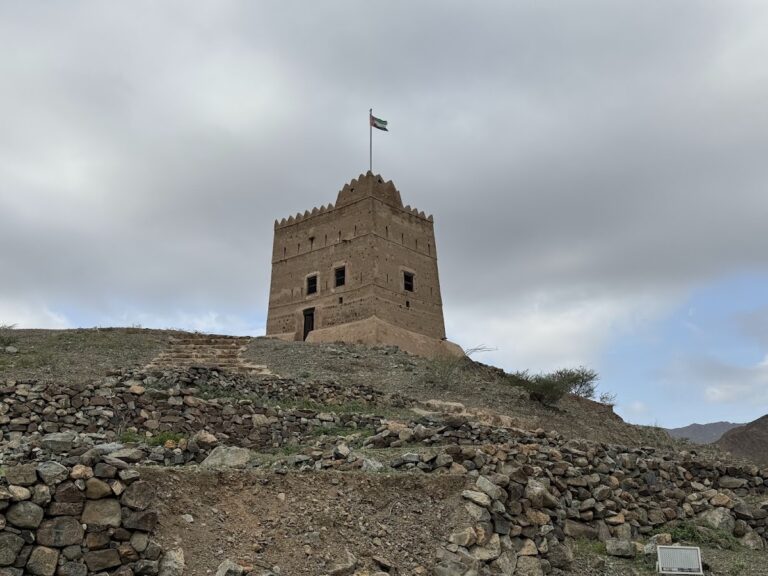
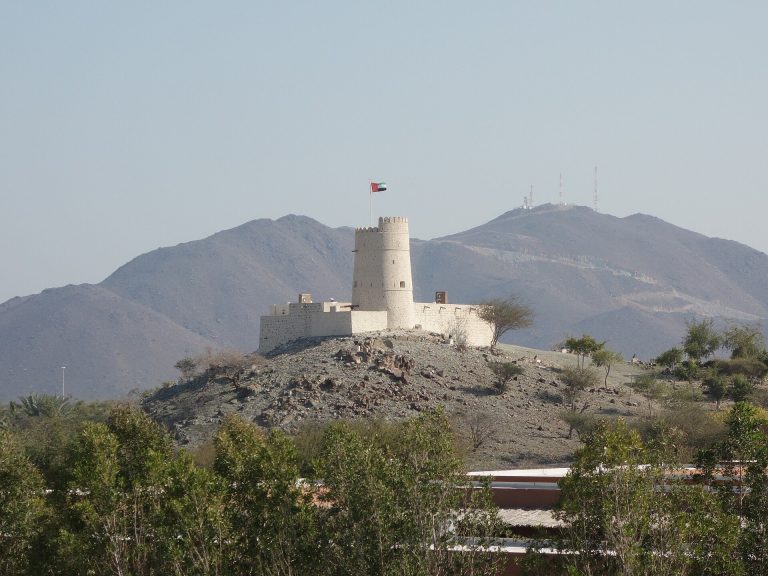
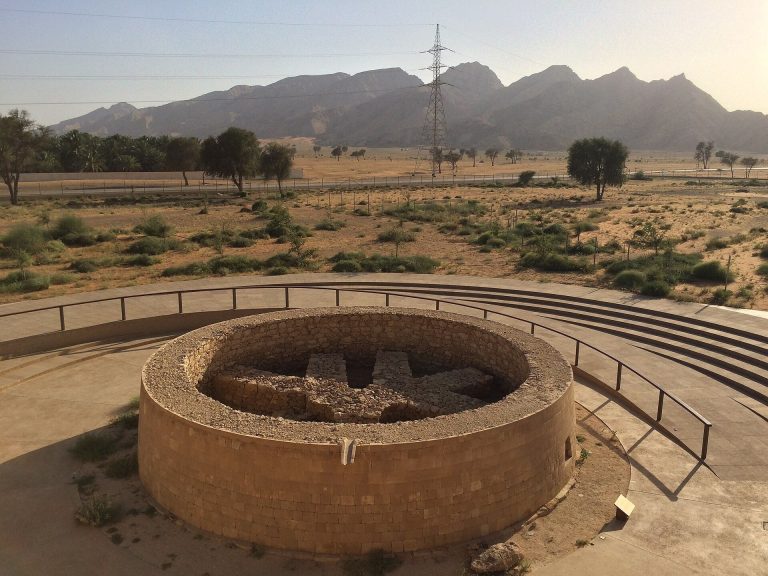
Al Bithnah Fort is a traditional defensive fortification near Bithnah village in the United Arab Emirates, overlooking Wadi Ham and the historic route between Fujairah’s coast and the interior. Its construction date is uncertain, but the fort existed by 1808, when Saudi Wahhabi forces held it. Built to control movement through the wadi, it replaced an earlier Iron Age fortification and later became central to the political rise of Fujairah.
Conflict over Wadi Ham
Before the metalled Fujairah to Masafi road was constructed in the 1970s, traffic between the East Coast and the interior passed through the wadi bed below the fort. This position made Al Bithnah a strategically contested holding and an important base for the Sharqiyin, the tribal group associated with Fujairah and the eastern Arabian coast.
In 1745, Qawasim and Na’im forces attempted to cross Wadi Ham toward the East Coast and the port of Sohar. At Bithnah, they fought the forces of Ahmed bin Said Al Busaidi, the Omani ruler who founded the Al Bu Said dynasty. The Qawasim won after Ahmed bin Said’s troops deserted him.
The wider conflict continued throughout the eighteenth century. Ahmed bin Said blockaded Julfar in 1762 while the Qawasim moved against Rustaq. Raids continued until 1792, when the Na’im of Buraimi captured Sohar before being defeated by forces reinforced by the Bani Yas of Dubai and the Bani Qitab. Ahmed bin Said’s forces later sacked Dibba, killing members of the Naqbiyin and Sharqiyin tribes.
Saudi and Qawasim control
Saudi expansion into Buraimi brought Saudi-backed forces into the struggle for the East Coast. After Sultan bin Saqr Al Qasimi resisted Saudi pressure, control of the forts at Fujairah, Bithnah, and Khor Fakkan was placed with Saudi-backed forces. By 1809, Saudi-appointed walis, or governors, administered Qawasim territory.
Al Bithnah Fort remained involved in the prolonged contest between the Qawasim, Oman, Saudi Arabia, Persia, and tribal groups from the western coast and interior. The 1819 Persian Gulf Campaign restored Sultan bin Saqr to Qawasim rule. In 1820, he signed the General Maritime Treaty as ruler of Sharjah and Ras Al Khaimah.
In 1850, Sultan bin Saqr reached a compromise with the Sultan of Muscat. The agreement accepted Qawasim authority over much of the Shamaliyah, the coastal and inland region on the eastern side of the peninsula, including territory on the East Coast. It ended the long conflict with Muscat over the area, although the highlands north of the agreed line were excluded.
Fujairah’s emergence
Qawasim influence weakened after Sultan bin Saqr’s death in 1866. Sheikh Hamad bin Abdullah Al Sharqi, leader of Fujairah’s Sharqiyin community, began an insurrection against Sharjah in 1879. In 1884, he captured Al Bithnah Fort and gained control of the only route from the interior into the Shamaliyah.
Holding the fort enabled Hamad bin Abdullah to prevent Sheikh Saqr bin Khalid Al Qasimi, ruler of Sharjah, from sending aid to Kalba. This strengthened Fujairah’s effective independence from Sharjah and Muscat, although the British did not recognize Fujairah as independent until 1952.
Sheikh Hamad declared independence in 1901. Sharjah attempted to recover the fort and control Wadi Ham in 1903, but Fujairah remained effectively independent. In 1906, Fujairah was claimed as a dependency of Abu Dhabi without opposition from Sharjah.
Consolidation and restoration
Mohammed bin Hamad Al Sharqi became Sheikh of Fujairah in 1939 and consolidated Sharqiyin control over Fujairah and its surroundings. By 1950, his holdings included Bithnah and Al Bithnah Fort, as well as Dibba and the coastal settlements of Bidayah and Sakamkam.
The fort’s inclusion in this consolidated territory strengthened Mohammed bin Hamad’s position during British negotiations over oil-exploration concessions. In 1952, the British recognized him as a Trucial Ruler, meaning the ruler of a Gulf sheikhdom recognized within the British-backed system of maritime treaties that preceded the United Arab Emirates. Fujairah thereby became the seventh emirate to receive that recognition.
During Mohammed bin Hamad’s rule, the fort fell into ruin and both towers collapsed. It was restored in 1974, deteriorated again, and was in poor condition by 2006. Full restoration took place between 2008 and 2012. The fort was inhabited by Saed Ali Saed Al Yamahi until before 2009. Its last guard is identified as Saeed Al Hamr Al Yamahi, who died in 2007 at approximately one hundred years of age. The Fujairah Tourism and Antiquities Authority owns the fort.
Remains
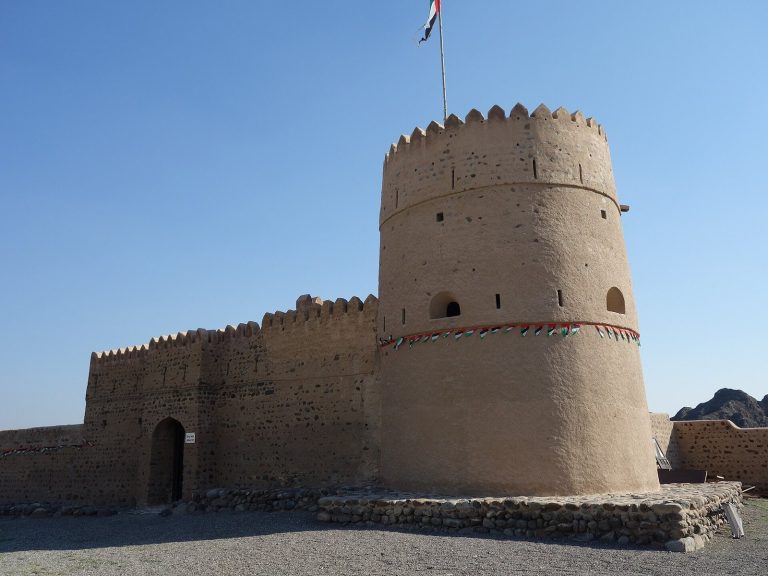
Al Bithnah Fort stands approximately 13 kilometres west of Fujairah City, among mountain ranges associated with Wadi Ham and Wadi Al Hayl. It overlooks Wadi Ham and nearby agricultural oases. The structure is a traditional local defensive building made principally of stone, coral, mud brick, and mud-based mortar, with fired brick also incorporated. Its roughly rectangular plan includes two round corner towers, while a rectangular guardroom gives the outward appearance of a third tower.
Defensive structure and entrance
Walls and towers
The walls contain defensive openings, including additional openings high in the towers that were large enough to accommodate many defenders. The fort is described both as a two-storey structure and as having a three-storey principal building with a conical form and pyramidal defensive elements. Roof joists and ceiling beams were made mainly from date-palm planks, with limited use of hardwood. Traditional repairs used mud-based renders.
Eastern entrance
The entrance lies in the eastern wall. It is a small doorway approximately one metre high that leads into a large courtyard. The entrance includes a 3.3-metre corridor covered with hardwood slabs. The passage continues to a subterranean room and then reaches the courtyard by ladder.
Date-processing room
Restoration work in 2008 revealed channelled floors in the subterranean room, identifying it as a madbasa, a traditional date-processing installation where pressed date juice was collected through channels. The collected juice, known as dhibs, was date syrup or juice. This feature adds an agricultural and domestic function to the fort’s defensive role.
Archaeological setting
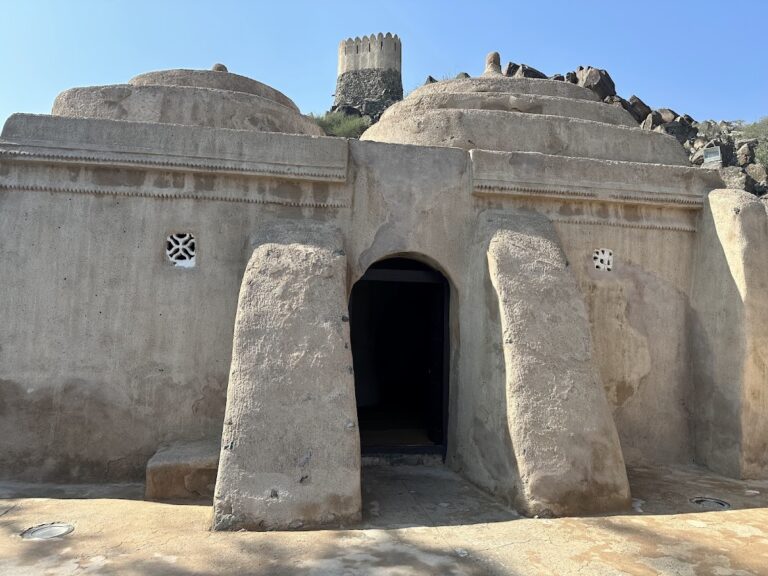
The Bithnah area contains remains associated with an ancient village, burials, forts, and other defensive structures. Al Bithnah Fort occupies this wider archaeological landscape above Wadi Ham, where its physical position reflects its control over the route between the coast and the interior.