Airlie Castle: A Medieval Stronghold and Later Mansion in Scotland
Site at a Glance
- Rating
- 3
- Popularity
- Very Low
- Country
- United Kingdom
- Primary era
- Early Modern
- Eras represented
- Medieval, Early Modern
- Civilizations
- British, Kingdom of Scotland
- Site type
- Domestic
- Remains
- Castle
On this page7 sections
History
Airlie Castle is a medieval stronghold and later mansion in Airlie, near Kirriemuir in Angus, Scotland, United Kingdom. King James I granted the land to Walter Ogilvy of Lintrathen in 1432, and Ogilvy built the castle around that time. It became the Ogilvies’ principal residence and stronghold.
The Ogilvy stronghold
In 1564, James Ogilvy, 5th Lord Ogilvy of Airlie, planned to rebuild the castle. In 1639, Charles I made a different James Ogilvy the first Earl of Airlie. The new earl refused to sign the National Covenant, a Scottish religious and political agreement opposing royal interference in the Presbyterian church.
Royalism and destruction
The Ogilvies supported Charles I during the Wars of the Three Kingdoms, conflicts involving Scotland, England and Ireland in the mid-seventeenth century. In 1640, troops aligned with Parliament, commanded by Archibald Campbell, 8th Earl of Argyll, burned and destroyed Airlie Castle. Campbell also burned the Ogilvies’ castles at Craig and Forter. The destruction of Airlie became the subject of the ballad The Bonnie Hoose o’ Airlie. The Ogilvies did not rebuild the castle.
Confiscation and later residence
A grandson of the first earl joined the 1715 Jacobite rising, an attempt by supporters of the Stuart dynasty to restore it to the British throne. He was attainted, a legal punishment that could take away titles and rights. After his father died in 1717, he could not inherit the earldom. Although pardoned in 1725, he did not regain the castle, which George II had confiscated.
David Ogilvy was pardoned in 1778 and returned to Scotland from exile in Versailles. In 1792–93, he had a mansion built at Airlie. The property remains privately owned and occupied. The house and stables are Category B listed, a statutory designation for buildings of regional or more than local importance, and the grounds are included in Scotland’s Inventory of Gardens and Designed Landscapes.
Remains
Castle enclosure
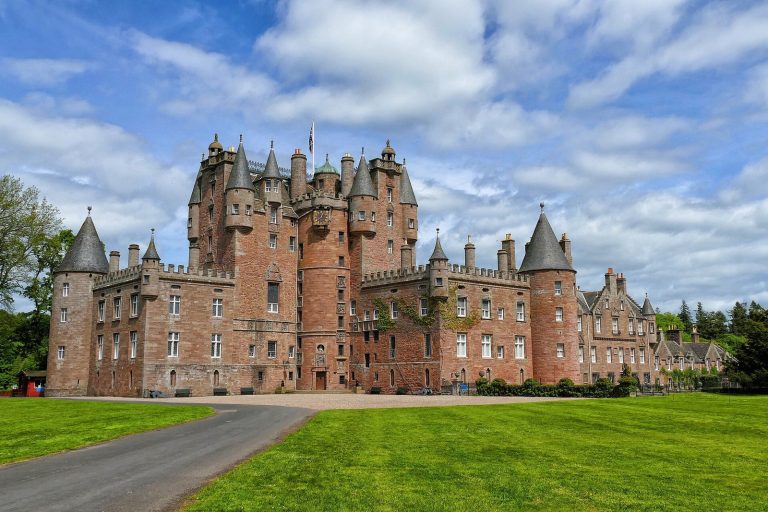
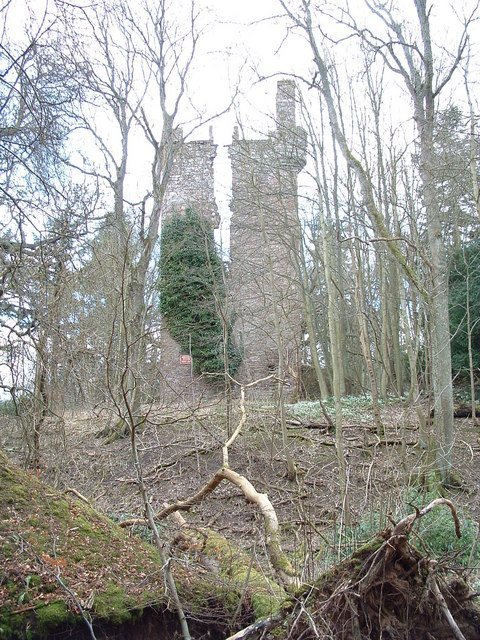
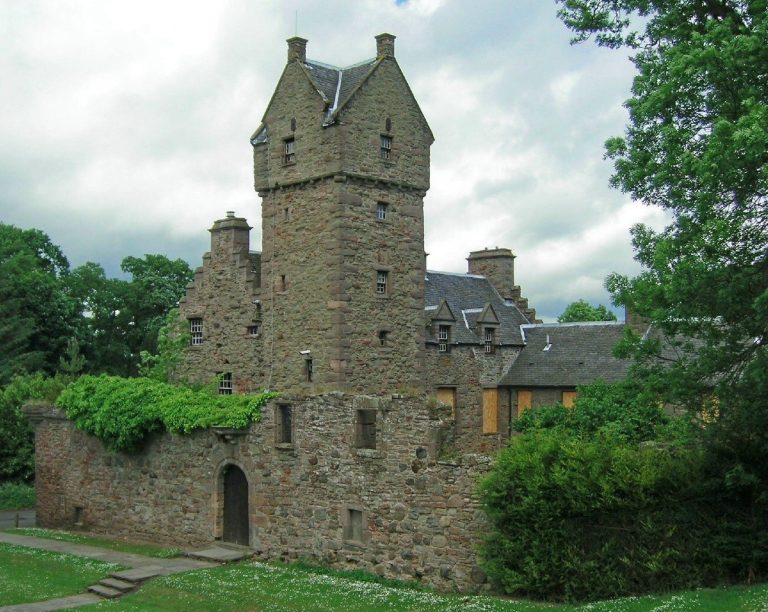
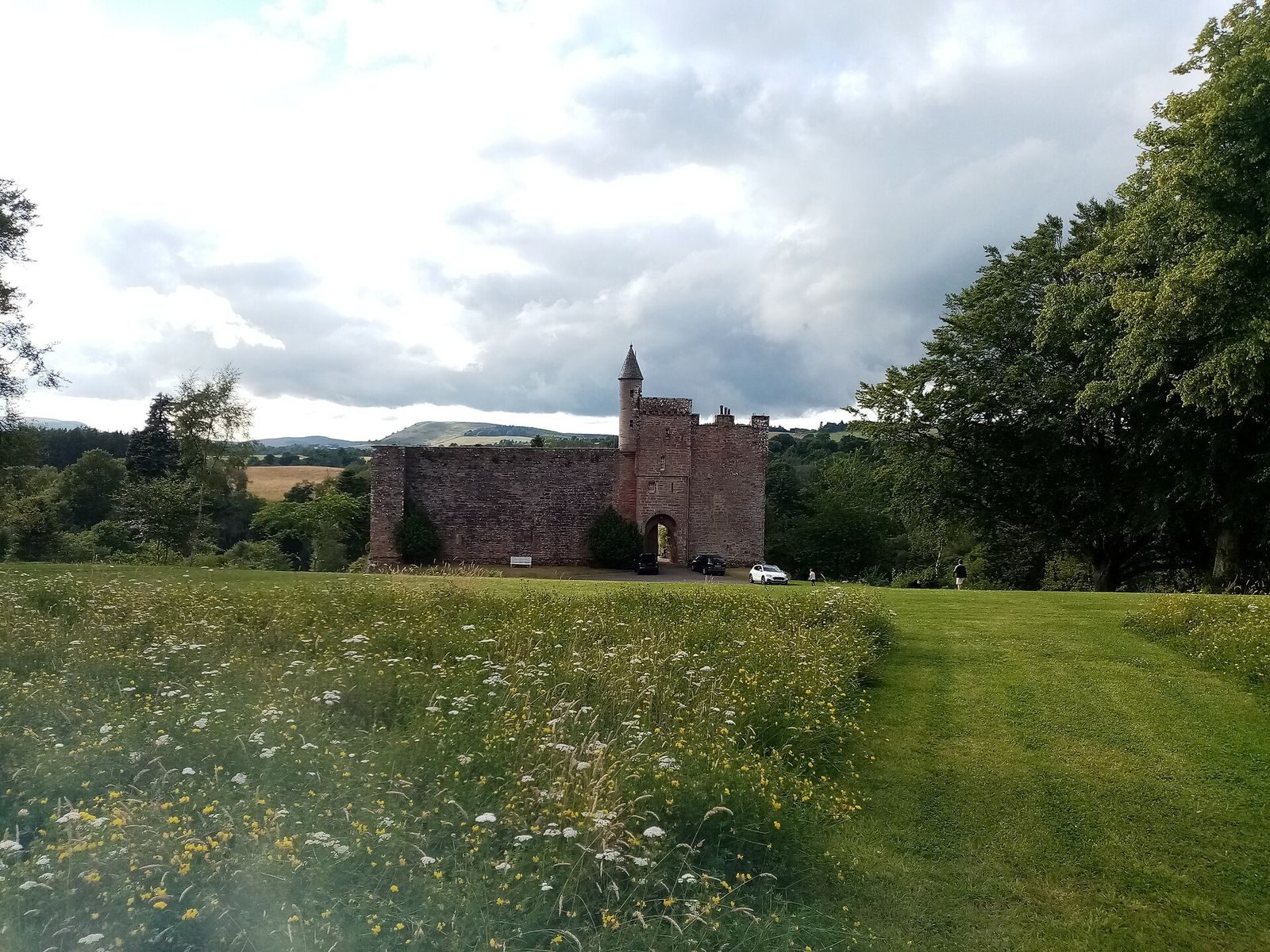
The castle was built of stone around a rectangular courtyard enclosed by walls about three metres thick. Its setting is raised ground near the confluence of the River Isla and Melgam Water, about nine kilometres west of Kirriemuir, with a steep drop of roughly 400 feet to the rivers. The original eastern wall survives, measuring approximately 36 metres long and nine metres high. At its north end, an entrance gateway is surmounted by a square tower added after the courtyard was built. A moat protected the eastern approach.
Mansion and associated buildings
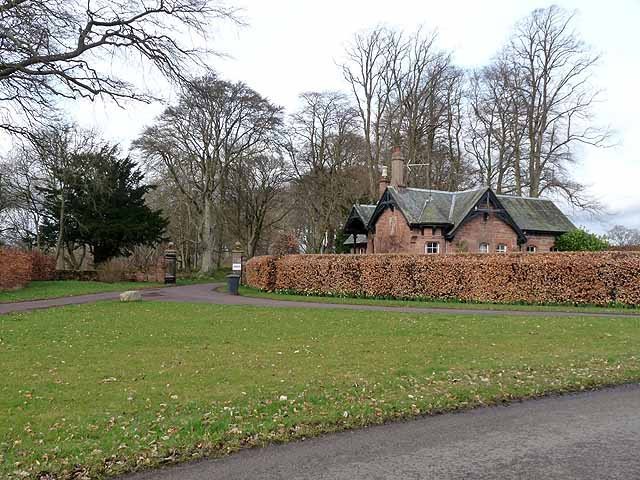
The present mansion incorporates and overlies surviving parts of the castle ruins. Stables are also part of the site.