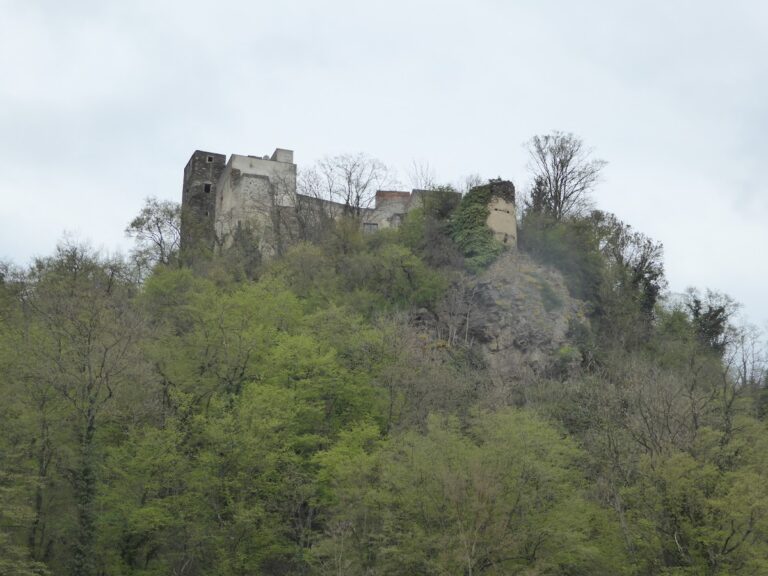
Aggsbach Charterhouse: A Former Carthusian Monastery in Austria


Site at a Glance
- Rating
- 4.5
- Popularity
- Low
- Country
- Austria
- Primary era
- Medieval
- External website
- Open
- Eras represented
- Medieval
- Civilizations
- Habsburg, Holy Roman Empire
- Site type
- Domestic
- Remains
- Castle
On this page8 sections
History
Aggsbach Charterhouse is a former Carthusian monastery in Aggsbach-Dorf, Austria, founded in 1380 as a late-medieval religious complex. The Carthusians were a Catholic contemplative order whose monasteries combined communal worship with highly secluded individual cells. Heidenreich von Maissau, a late-medieval Austrian nobleman, established the charterhouse, which became an important center of Carthusian religious and intellectual life in Lower Austria.
Medieval Carthusian community
Michael of Prague served as prior from 1387 to 1391. The charterhouse was also the lifelong home of Vincent of Aggsbach, a Carthusian theologian born in 1389 who died in 1464. Vincent wrote theological works there, served as prior, defended Hugh of Balma in a controversy concerning learned ignorance, and opposed Jean Gerson. Learned ignorance was the theological idea that recognizing the limits of human knowledge could lead to deeper understanding of divine realities.
Around 1648, Matthias Thanner died at Aggsbach after fifty-two years as a Carthusian of Freiburg Charterhouse and as prior of Aggsbach. He had edited and translated numerous books. The monastery also held extensive territorial resources. Its lordships, meaning estates or jurisdictions held under the feudal and early modern system, included Purgstall, Seiterndorf, Großmugl, Külb, Kühbach, Stiefern, and Strohdorf. By 1723, the charterhouse held twelve lordships.
Dissolution and later ownership
Emperor Joseph II dissolved the monastery in 1782 as part of his ecclesiastical reforms. Joseph II was the Habsburg emperor whose late-eighteenth-century policies closed many monasteries and restricted religious institutions considered insufficiently useful to the state. The monks were dispersed, the complex was largely converted into a castle, and parts of the former monastery were incorporated into the parish rectory.
In 1790, the Religious Fund sold the former charterhouse and its associated lordship to Maria Anna Wimmer, later Weiller. The Religious Fund was an Austrian state body that administered property confiscated from dissolved religious institutions. During Wimmer’s ownership, the monks’ cells were demolished. Her son from her first marriage, Josef Wimmer, sold the lordship in 1846 to Count Franz de Paula von Colloredo-Waldsee. Because Colloredo-Waldsee had no biological children, the charterhouse passed by inheritance to his nephew, Count Franz von Falkenhayn.
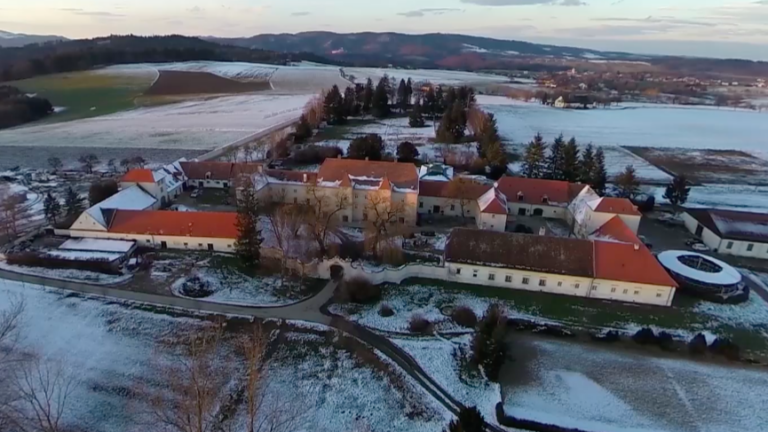
Falkenhayn’s daughter, Maria Julia, donated the possessions in 1947 to the St. Peter Claver Sodality, a Catholic religious association named for the Jesuit missionary Peter Claver. In 1970, the prelature and economic wing were acquired by the artist Marianne Maderna and her husband, Alfons. They renovated the buildings, lived in part of the complex, and established a museum. The former charterhouse now brings together a Carthusian museum, the parish church, and an events and conference center. After investigations by the Federal Monuments Office, the former cell wing was represented as a meditation garden following plans by landscape architect Alfred Benesch.
Remains
The surviving complex combines the former monastery church, parts of the chapter wing and parish rectory, adapted premises used for castle purposes, a Carthusian museum, event spaces, and a meditation garden laid out over the former cell tract. The large cloister and the monks’ cells were demolished after the dissolution, so the former cell area is expressed through its landscaped arrangement rather than through a complete surviving building.
Church and associated monastery buildings
Parish church
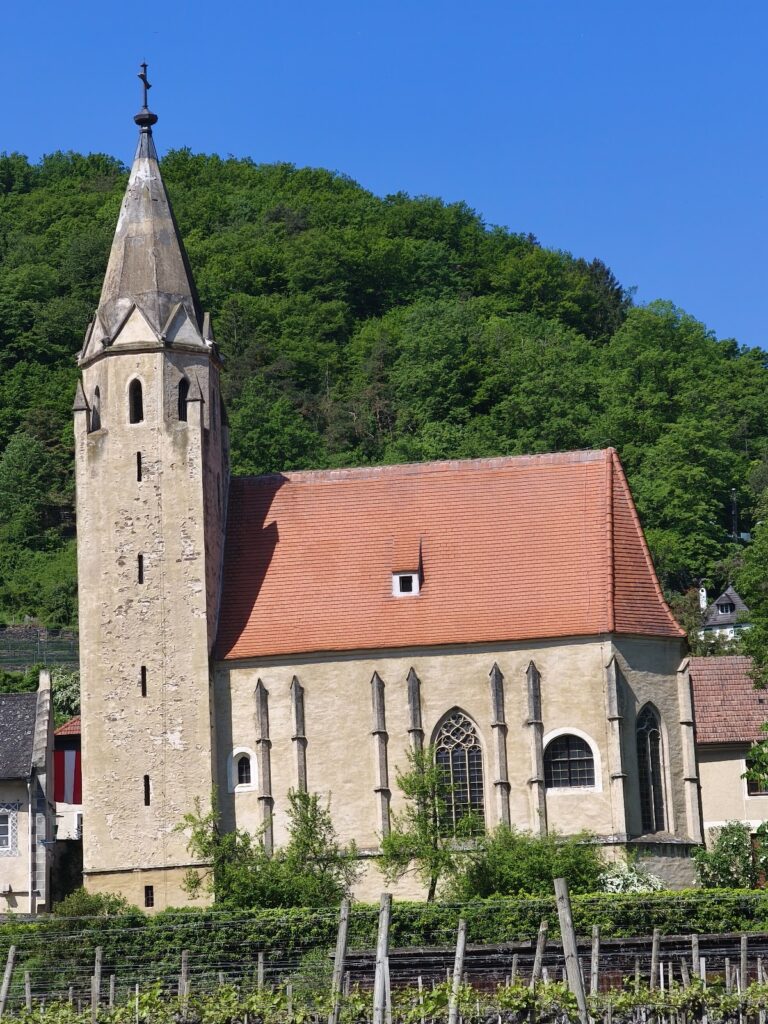
The former monastery church is now the parish church of Aggsbach-Dorf. A church tower was added at the sanctuary, and the building remains in use as a parish church. The church is associated with the chapter wing, the part of a monastery containing the chapter house where the religious community held formal meetings and conducted business. The complex also includes an organ gallery, a raised structure designed to support an organ and accommodate its musicians.
Former cell wing
The former cell wing is represented by a meditation garden. Excavations and investigations by the Federal Monuments Office in 2010 indicated that material from the demolished monks’ cells may have been reused in the church tower. A cubiculum, a small private room or cell used by a Carthusian monk for sleeping and prayer, is among the identified features of the former charterhouse.
Rectory and adapted premises
Parts of the former monastery were incorporated into the parish rectory, while the main premises were adapted for castle use after the eighteenth-century dissolution. The present complex retains these layers of reuse alongside the museum, parish church, event and conference spaces, and the meditation garden occupying the former cell tract.