Cocinilla del Obispo Rock Shelter: A Prehistoric Rock-Art Site in Spain
Site at a Glance
- Popularity
- Very Low
- Country
- Spain
- Primary era
- Stone Age
- Eras represented
- Stone Age
- Civilizations
- Unclassified
- Site type
- Civic
- Remains
- Rock Art
On this page6 sections
History
Cocinilla del Obispo Rock Shelter is a prehistoric rock shelter in Albarracín, Teruel Province, Spain. Its paintings probably date to the Early Neolithic, a prehistoric period associated in many regions with farming and settled communities, around 5000 to 4000 BCE. The imagery is associated with Iberian schematic art, which uses simplified or abstracted forms. Overlapping images and differences in color support the interpretation that the paintings were made in four phases separated by a short interval.
Study and interpretation
Eduardo Marconell made the earliest written reference to the paintings in an 1892 article. In 1911, Spanish archaeologist Juan Cabré and French prehistorian Henri Breuil published the first scientific study of the shelter. In the preceding decade, they had examined rock paintings elsewhere in the Spanish Mediterranean basin and classified a type of this art as Levantine art. A 1982 study by Fernando Piñón Varela identified figures that Cabré and Breuil had not noted.
Protection and recognition
The shelter has held Spain’s Asset of Cultural Interest designation since 1996. In 1998, it became part of the UNESCO World Heritage property Rock Art of the Mediterranean Basin on the Iberian Peninsula, listed under criterion (iii). That property includes 758 rock-art sites.
Remains
Setting and panel
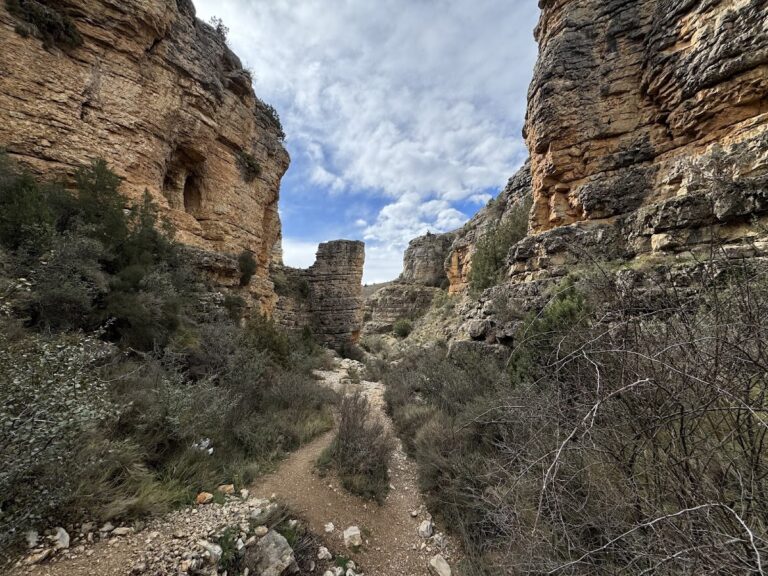
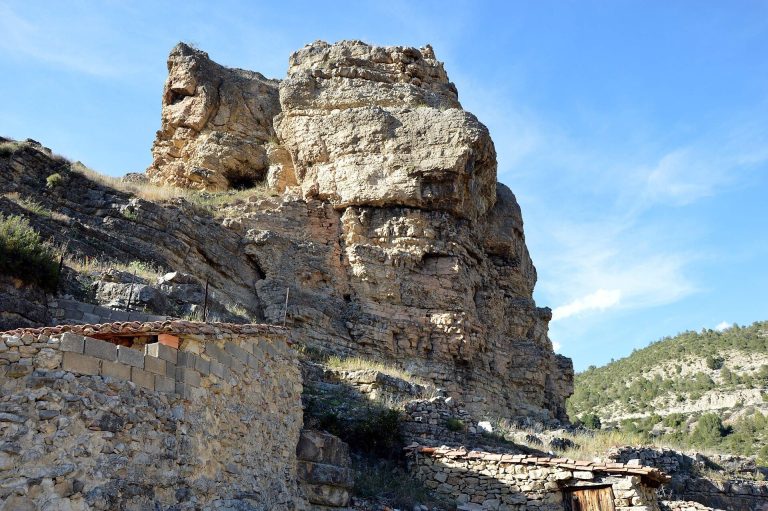
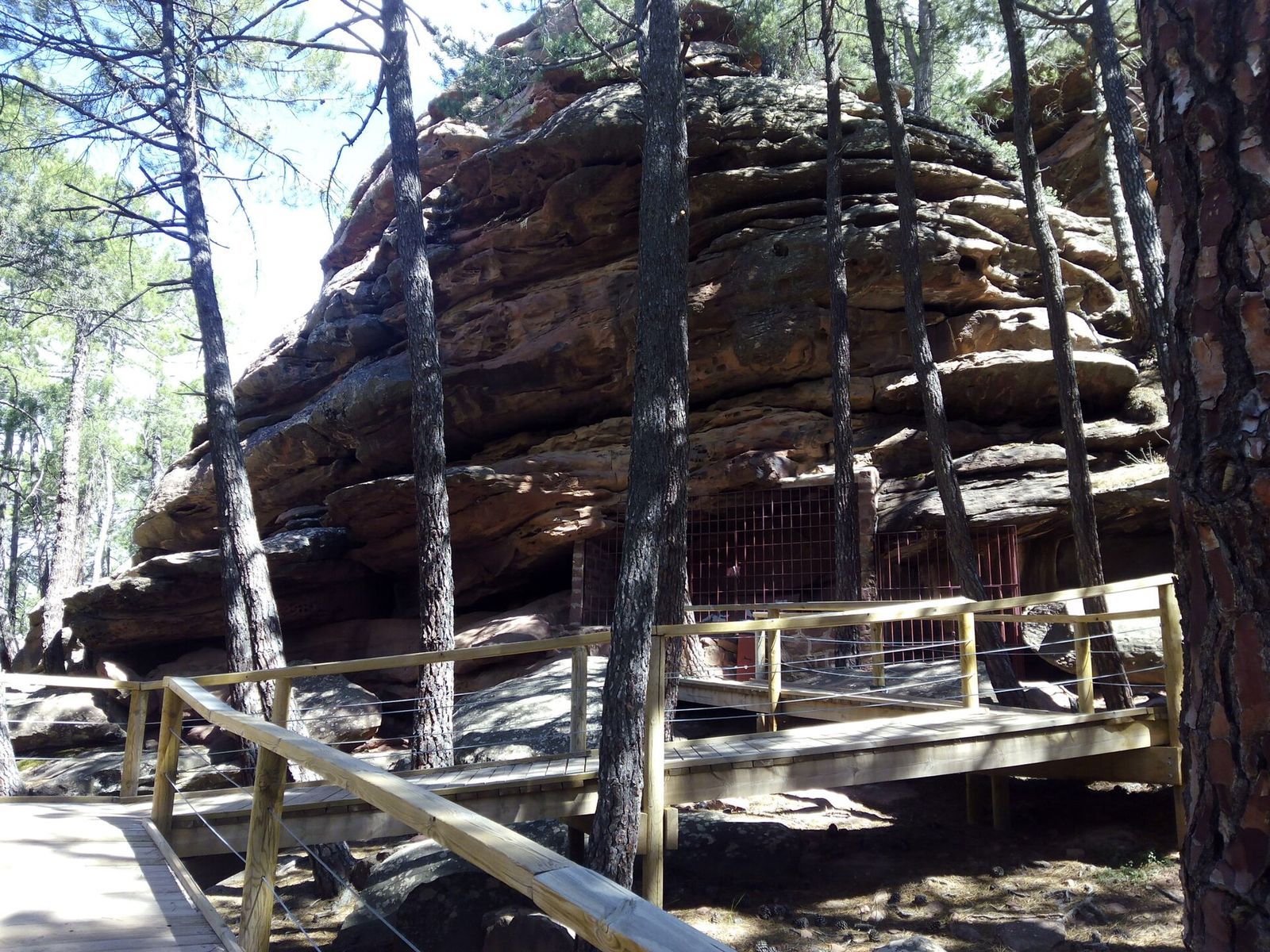
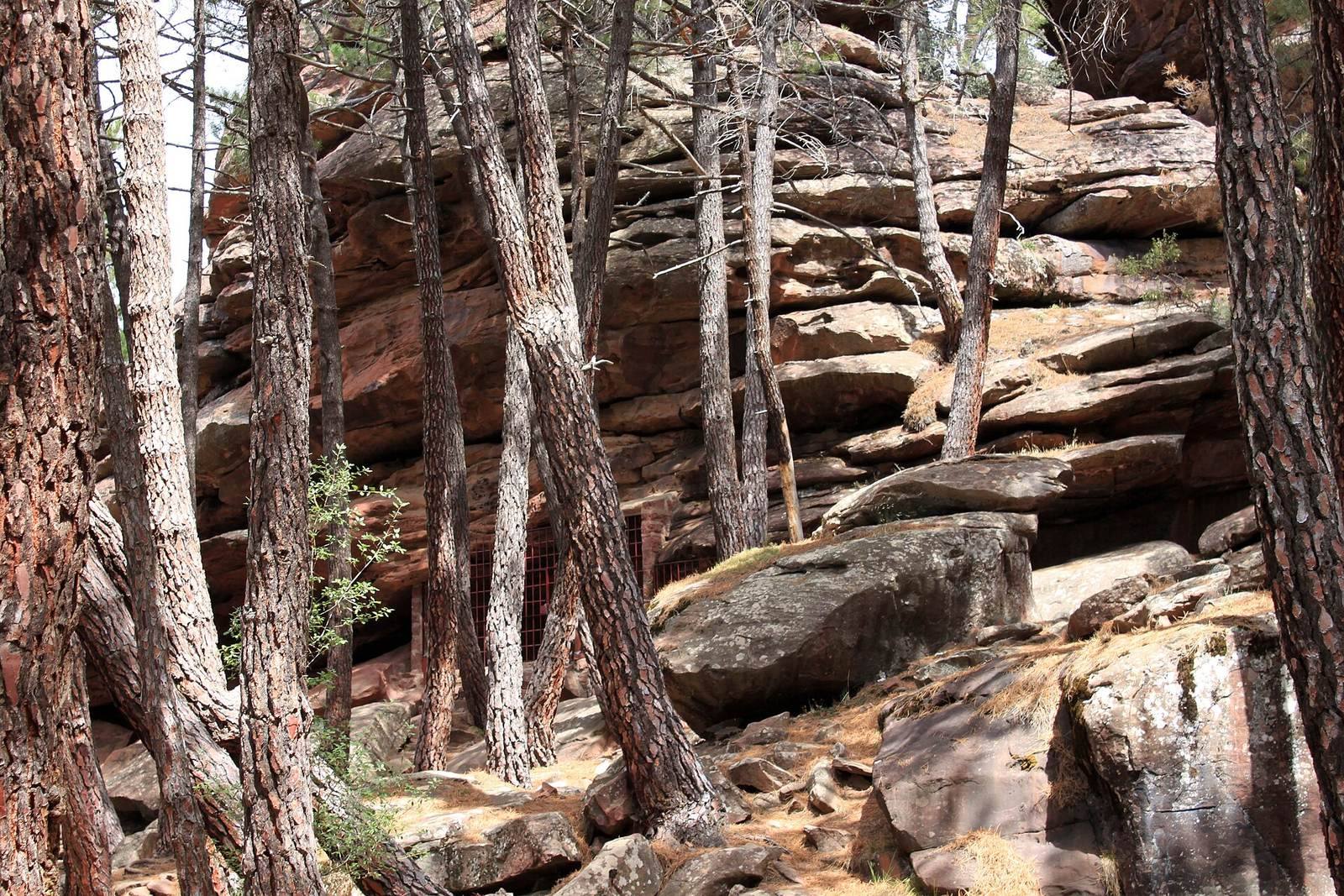
The shelter lies in the Sierra de Albarracín, within the protected landscape of Pinares de Rodeno. Pine forest and rocky outcrops characterize the area, where natural shelters and cavities occur. The painted and engraved panel measures 5.7 metres in length and between 1.35 and 2.4 metres in height, and its figures are arranged in three zones.
Painted and engraved figures
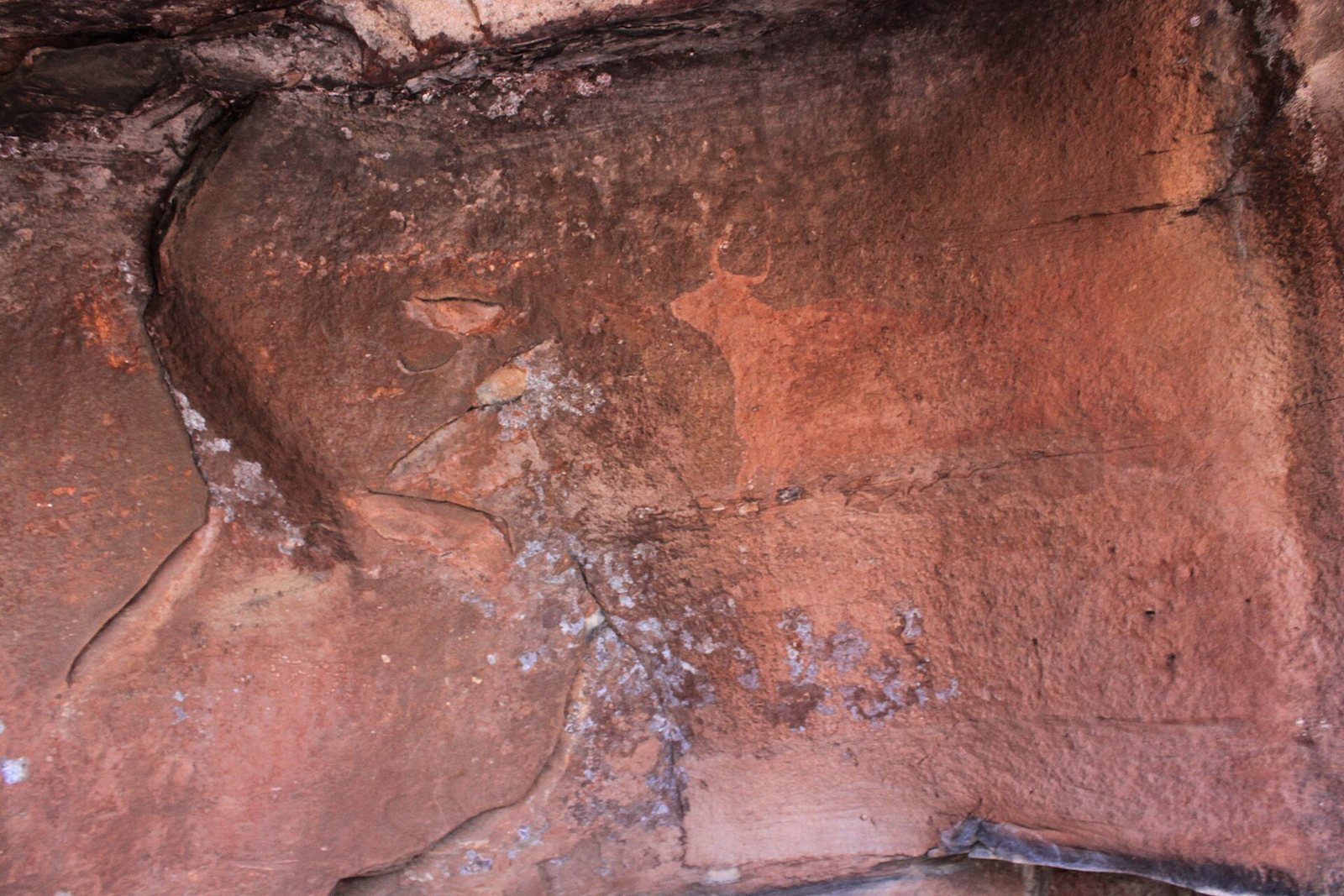
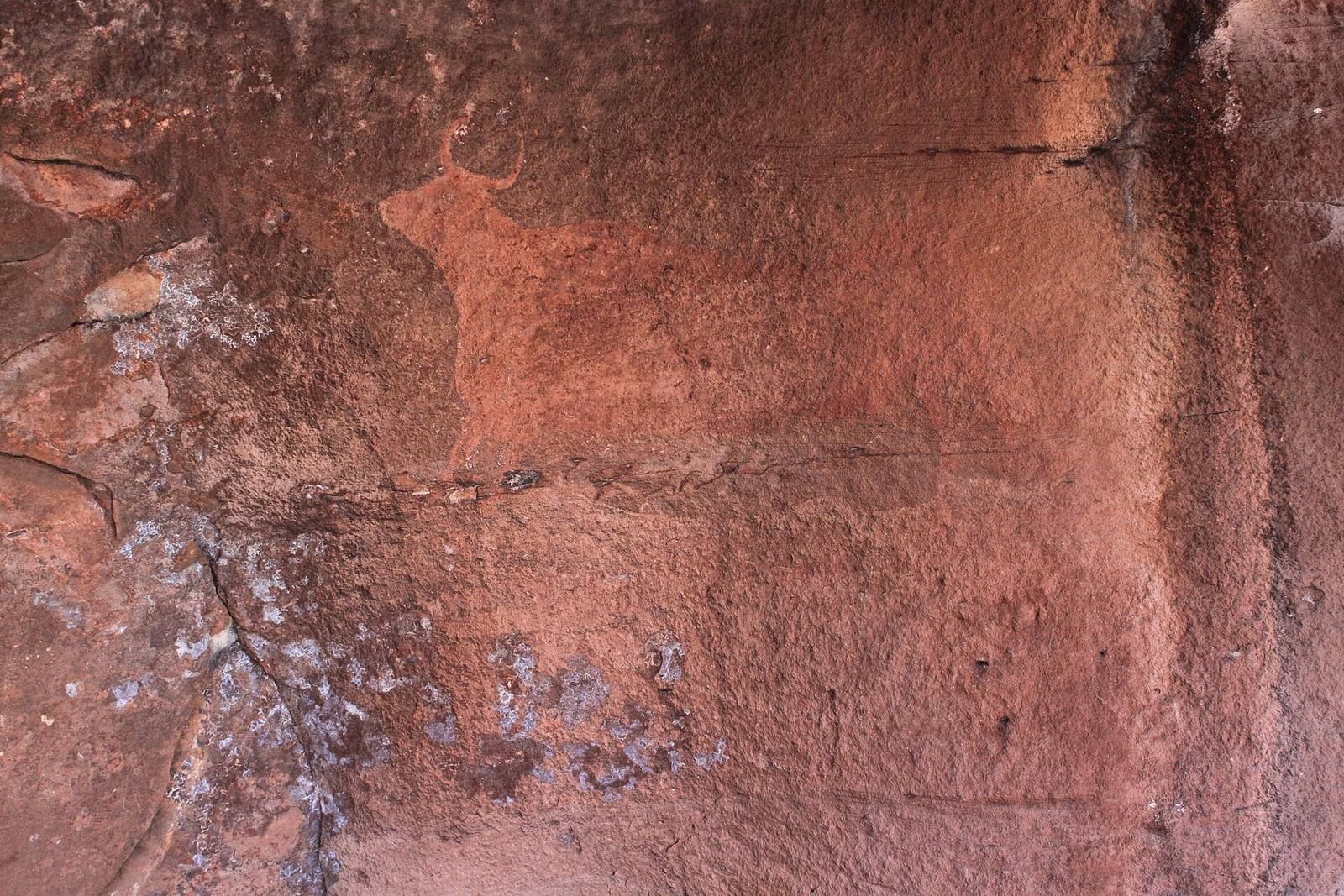
The left zone contains five large bulls, four orange and one black, as well as a black horse. A black rectangular mark divided into three sections appears on the belly of one bull. At the center, an isolated reddish-brown bull rears over an earlier white bull, which is now barely visible. On the right, an orange bull appears in the upper part of the panel, with a partly overlapping white bull below; a small paint mark is also present. The orange bull is shown running and measures 35.5 centimetres high by 69 centimetres wide. The figures use flat colors, and three have a fine engraved outline.