Abbey of St. Vincent, Laon: A Monastic Institution in France
Site at a Glance
- Popularity
- Medium
- Country
- France
- Primary era
- Medieval
- Eras represented
- Medieval, Early Modern
- Civilizations
- French
- Site type
- Religious
- Remains
- Fortified Monastery
On this page13 sections
History
The Abbey of St. Vincent, Laon, was a Christian monastery in France whose origins are generally placed around 580, in the late sixth century. Its religious history began earlier, when Bishop Remigius of Reims designated a promontory southwest of Laon’s plateau as the city cemetery. He intended a church of St. Christopher there to serve as a second center of diocesan authority and as the burial place of Laon’s bishops.
Early foundations and rebuilding
Around 590, Queen Brunhild had a large church, or basilica, built at the site. Monks who followed the Columbanian Rule, a monastic discipline associated with the Irish missionary Columbanus, settled there. This community formed the early basis of the abbey.
Viking raiders sacked and burned the monastery in November 882, killing or driving away its monks. A few years later, Bishop Didon arranged for the church to be rebuilt and established a community of twelve monks, but the abbey was plundered again in 892. In 925, Bishop Adelhelm secured privileges from King Rudolf of West Francia, the western Frankish kingdom that preceded France, for another rebuilding. King Louis IV was anointed at the abbey in 936 by Artald, Archbishop of Reims. Soon afterward, Hugh the Great, a powerful nobleman opposed to Louis, plundered the church during his unsuccessful siege of Laon.
Benedictine monastery and medieval church
The abbey adopted the Benedictine Rule in 948. Bishop Rorico brought twelve Benedictine monks from Fleury Abbey, and a regional council confirmed his decision in 961. King Lothair confirmed it in 975, while King Hugh Capet confirmed privileges granted by Rorico’s predecessors on 26 September 987. Hugh Capet later became king of the Franks and founded the Capetian dynasty. Bishop Adalbero of Laon was buried at the abbey in 1030 or 1031.
Bishop Helinand consecrated a new monastery church in 1072. In 1082, Abbot Adalbero enclosed the abbey with a wall, partly to distinguish its grounds from the growing town. Pope Alexander III placed the institution directly under the Holy See, the central governing authority of the Roman Catholic Church, in 1171.
Fire, rebuilding, and war
A storm caused a fire in the church in 1145, and rebuilding followed. The work began in 1175 and was completed in 1305. In 1359, during the Hundred Years’ War, a prolonged conflict between the English and French crowns, English troops under Edward III attacked the poorly defended district of La Villette and set fire to the abbey. The fire destroyed nearly all of its library, which held more than 20,000 manuscripts. Two hundred and fifty-seven manuscripts were saved; fifty are now in Laon City Library, and several others are in the Royal Library of Belgium.
In 1520, Abbot Jean Charpentier directed work on the church façade and the rebuilding of its main hall’s vaulted ceilings. He was the last regular abbot. The institution was subsequently governed by commendatory abbots, who received an abbey’s title and revenues by appointment rather than necessarily leading its monastic community. Geoffroy de Billy held the position from 1601 to 1612, while also serving as abbot of Saint-Jean in Amiens. In the seventeenth century, restoration began alongside the introduction of the Maurist reform, a renewal movement within the Benedictine tradition.
During the 1594 siege of Laon, King Henry IV of France used the abbey as his headquarters. He placed some guns on the church vaults to extend their range, exposing the structure to strong vibrations. During another siege in 1618, the church’s nave and bell tower collapsed. The church was not immediately rebuilt, and services were held outdoors within it. Reconstruction began in 1640 and continued until 1771.
Revolution and later changes of use
The French Revolution brought the abbey’s dissolution and looting. Its buildings were used in turn as a fodder store, military hospital, and prison, then sold in 1796. The purchaser sold building stone to recover his costs, but became insolvent in 1810 and lost the property. It later passed to other owners. In 1854, the bishop of Soissons acquired the site for a home for retired priests. The Jesuits took it over in 1860 as a house for the Third Year of their formation, a stage following earlier training. Father Sébastien Fouillot directed the house until 1869, when Father Edouard Dorr succeeded him.
The state took control of the grounds in 1876 and sold them to the army the following year. An arsenal associated with the Thérémin-d’Hame barracks operated there until it was discontinued in the late 1990s. The abbot’s residence was listed as a historic monument in 1926. Further protections followed in 1927 for the enclosure, old church, cellars, and underground spaces, and in 1999 for the monks’ pond, powder magazine, and archaeological ground. Permission to demolish the abbey was issued in 2007. A major fire, apparently deliberate, struck the surviving residence on 14 June 2008. The city of Laon acquired the property on 17 December 2019.
Remains
The abbey occupied a promontory, a projecting high point of land, southwest of Laon’s plateau. Its remains include parts of the church and enclosure, the abbot’s residence, underground spaces, and features of the grounds such as the monks’ pond and powder magazine.
Church and sanctuary
Monastery church
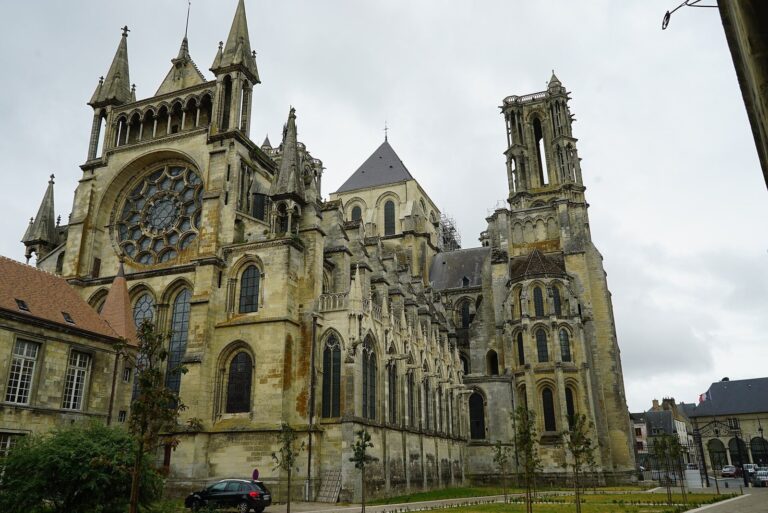
The rebuilt church measured about 90 metres long and 45 metres wide. It had four rose windows, large circular windows with radiating tracery, and a total of 135 windows. Its design closely resembled that of Laon Cathedral. Parts of the old church remain among the surviving elements of the abbey complex.
Sanctuary painting and tombs
A thirteenth-century wall painting in the sanctuary, to the left of the altar, was discovered in 1769. It showed three generations of knights from the Eppes family, a medieval noble family. Three nearby tombs were associated with Jehan, who died in 1273, a younger Jehan, who died in 1293, and another family member whose tomb bore no epitaph.
Enclosure, residence, and grounds
Fortified enclosure
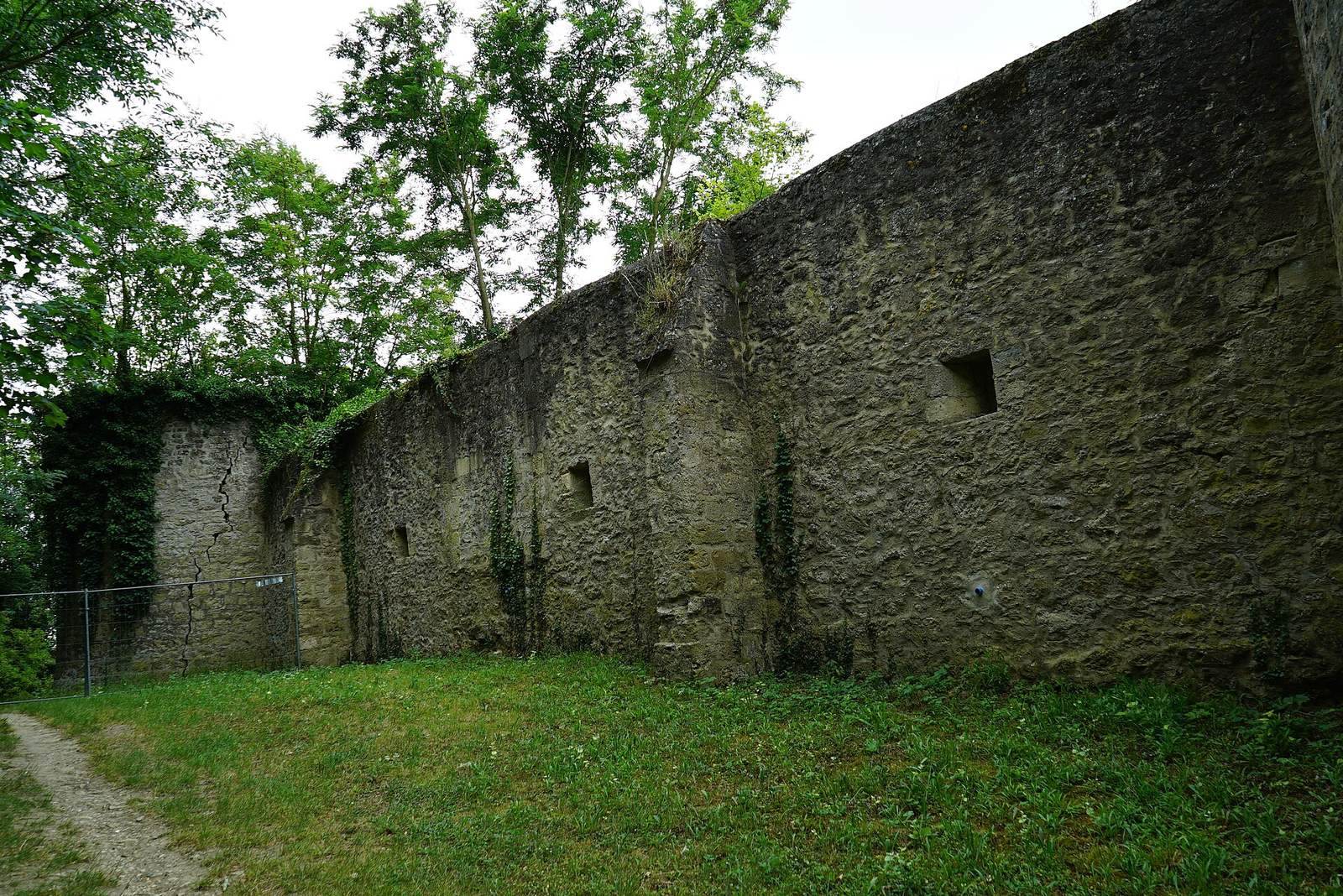
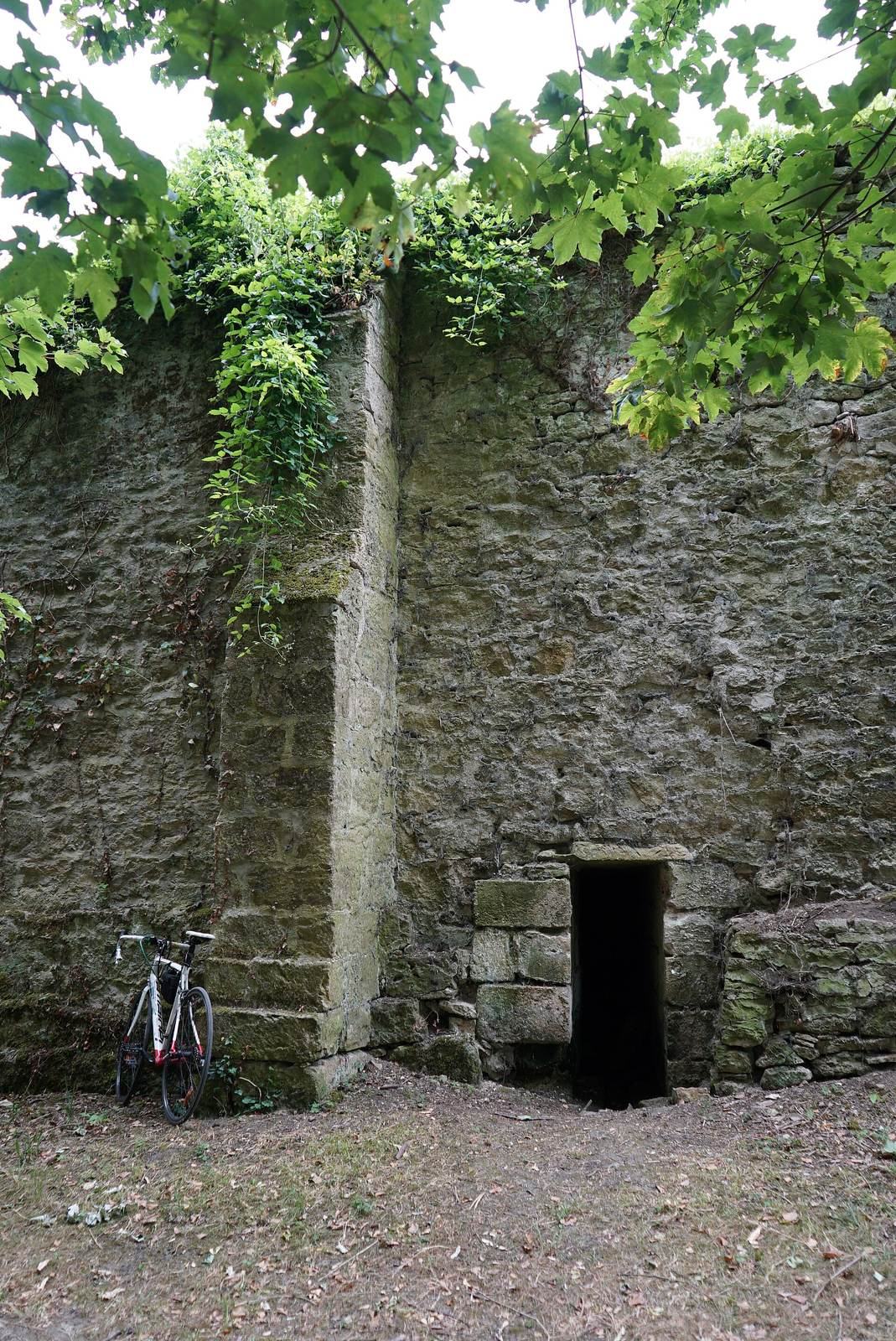
Built to enclose the abbey precinct, the wall dates to 1082. Remains of the fortified boundary form part of the surviving complex alongside the old church.
Abbot’s residence
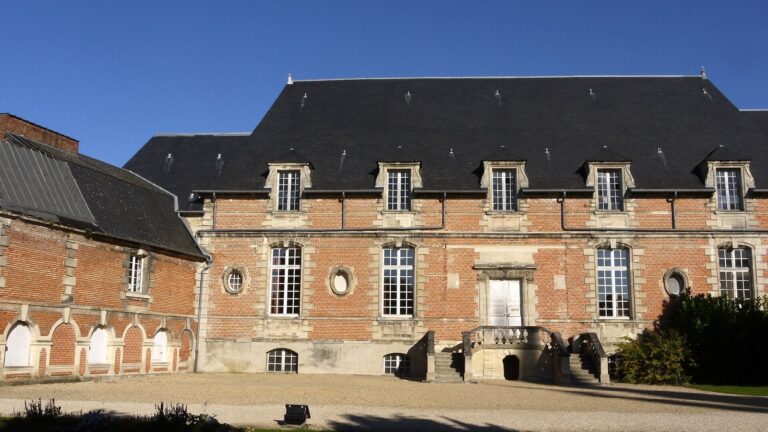
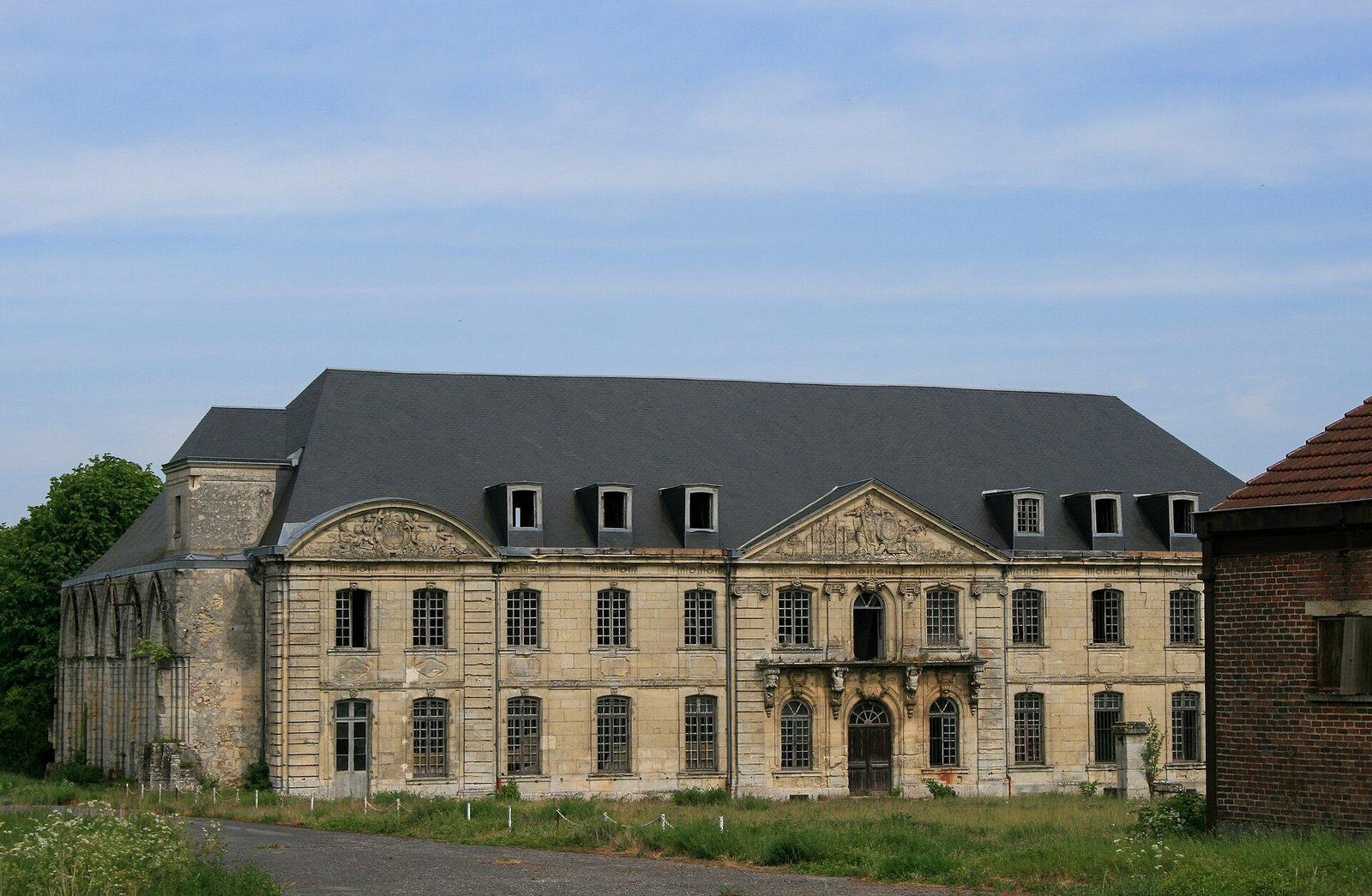
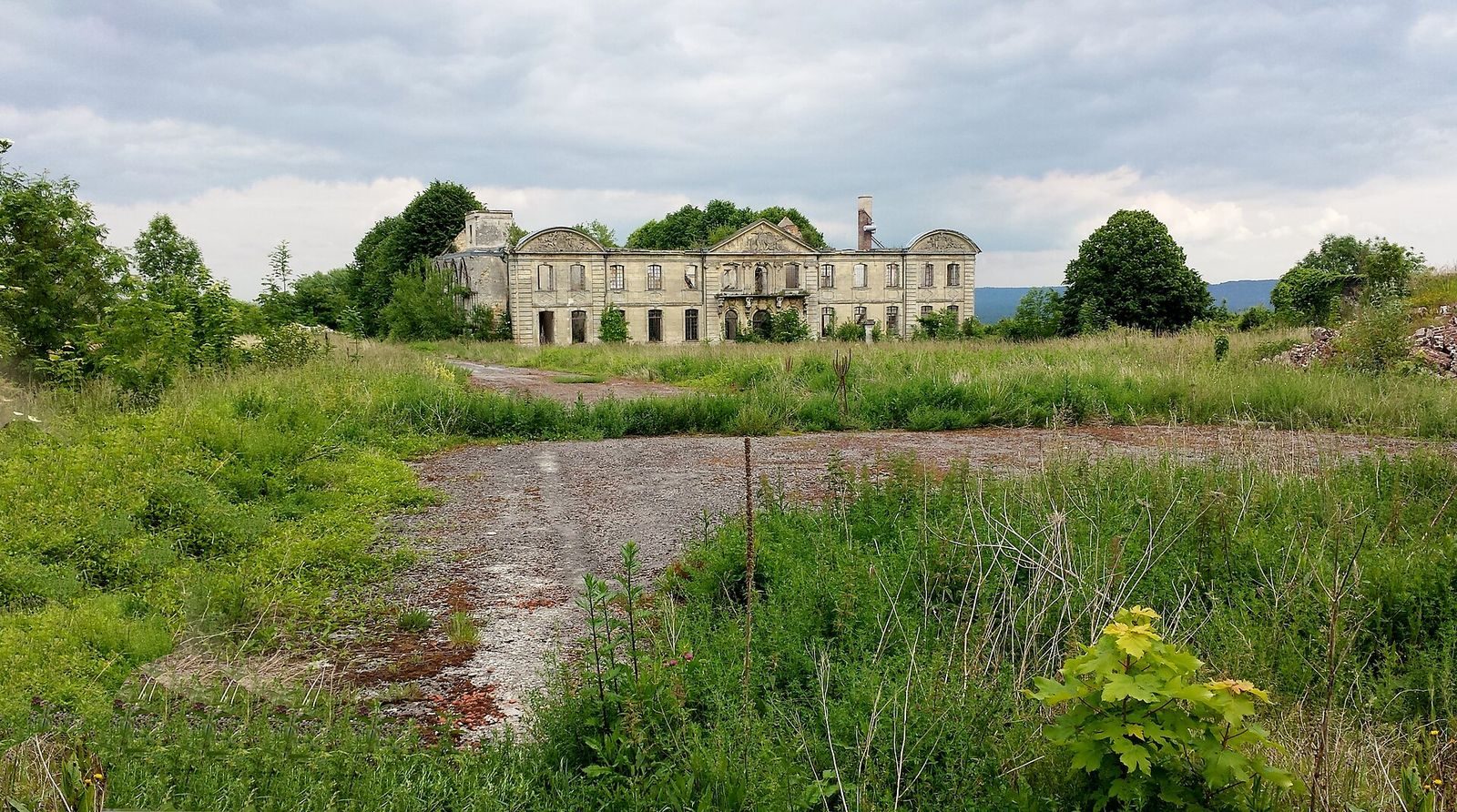
Completed in 1771, the abbot’s residence had three gables. It was the only abbey building left intact before the fire of 2008, which destroyed its roof and floors and left the structure in ruins.
Cellars and grounds
The remains of the abbey grounds include cellars and storage spaces, the monks’ large pond, and a powder magazine, a storehouse for gunpowder. Archaeological ground also forms part of the site.