Abbey of Kells: A Columban Monastic Centre in Ireland
Site at a Glance
- Popularity
- Very High
- Country
- Ireland
- Primary era
- Medieval
- Eras represented
- Medieval, Early Modern
- Civilizations
- British, Irish
- Site type
- Religious
- Remains
- Monastery
On this page15 sections
History
The Abbey of Kells is a monastic site in Kells, County Meath, Ireland. Monks from Iona re-established its community in the early ninth century, and the church they built was completed between 807 and 814.
Foundation and Columban leadership
Tradition dates the abbey’s foundation to about 554, when Columba, a sixth-century Irish Christian missionary and monastic leader, established a community on land granted by Diarmuid Mac Caroll. Mac Caroll was High King of Ireland, a title for a ruler claiming authority over the island’s regional kings. The earliest recorded mention of the church of St Columba dates to 806 or 807.
The new community at Kells appears to have offered monks from Iona a safer refuge from Viking attacks. Its church was consecrated in 814. Cellach, the head of Iona’s monastery, retired to Kells after the building was completed, although Iona remained the leading Columban monastery for several more decades.
In 878, important relics from Iona, including a shrine containing Columba’s relics, were brought to Ireland. Kells then became the leading house in the Columban monastic tradition associated with Columba, as well as a centre for communities in the southern territories of the Uí Néill, a prominent Irish dynasty. The abbey’s wealth and influence increased despite repeated damage by Irish kings and Viking raiders. During the tenth century, Vikings plundered it several times.
Reform, decline, and dissolution
A church-reform synod, or formal gathering of church leaders, met at Kells in 1152. Its decisions completed the formation of dioceses across Ireland, church districts overseen by bishops. During the twelfth century, Kells lost its leading place among Columban monasteries to Derry. Its standing declined further after the Anglo-Norman conquest, the late-twelfth-century invasion that established Anglo-Norman power in Ireland.
The abbey was dissolved in 1539 during the English Reformation, a period of religious and institutional change that included the closure of religious houses. Its church continued as a parish church. The round tower and high crosses are designated National Monuments of Ireland.
Remains
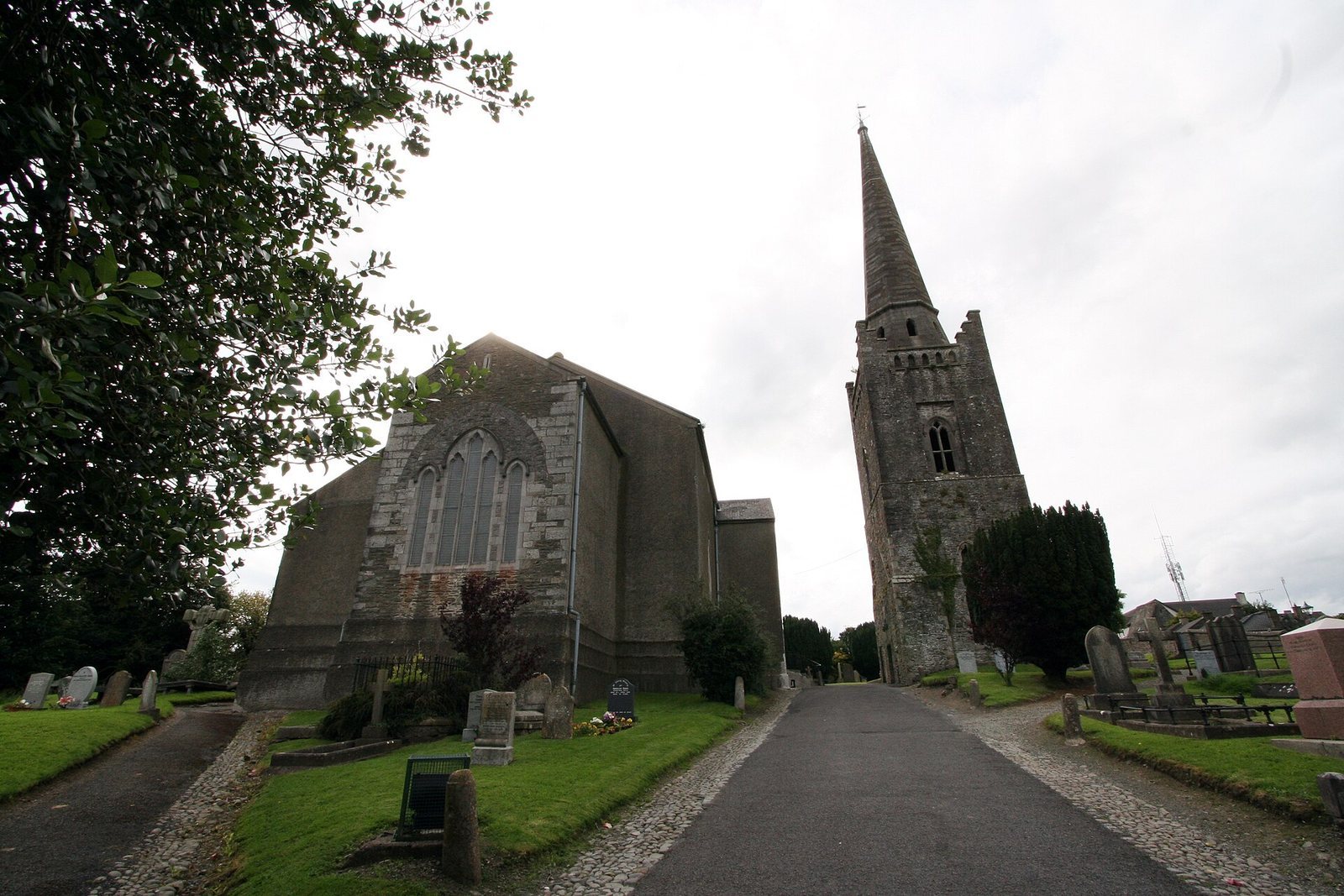
The monastic site probably occupies the ground of an earlier Irish hill fort. Its present church stands within a cemetery, alongside surviving medieval buildings and carved stone crosses. The Market Cross, once at the abbey’s eastern gate, now stands in front of the old courthouse.
Monastic buildings
Church and cemetery
The church now on the site is a Church of Ireland building dating to 1778. It was renovated in 1965, and a cemetery occupies the surrounding ground.
Round tower
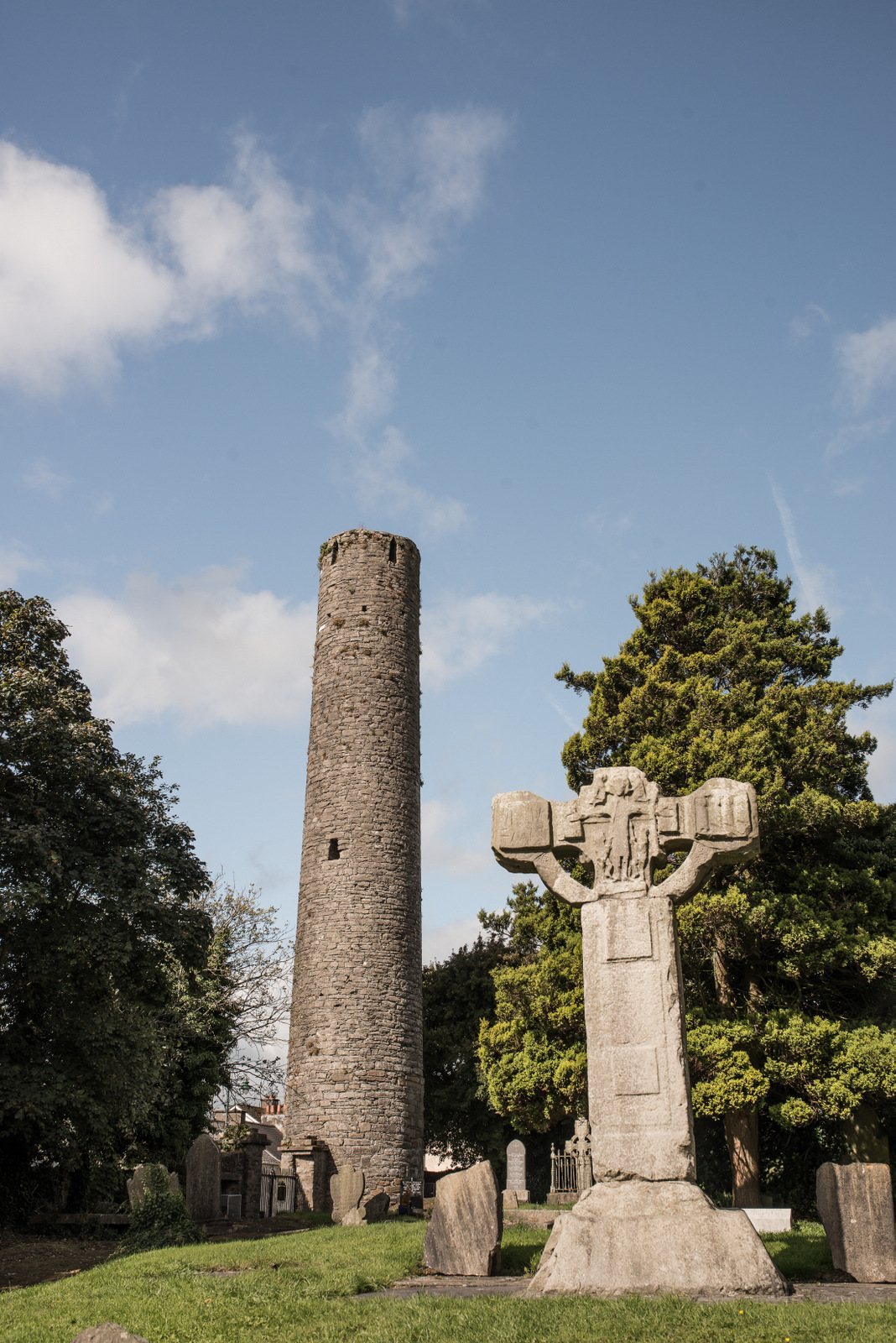
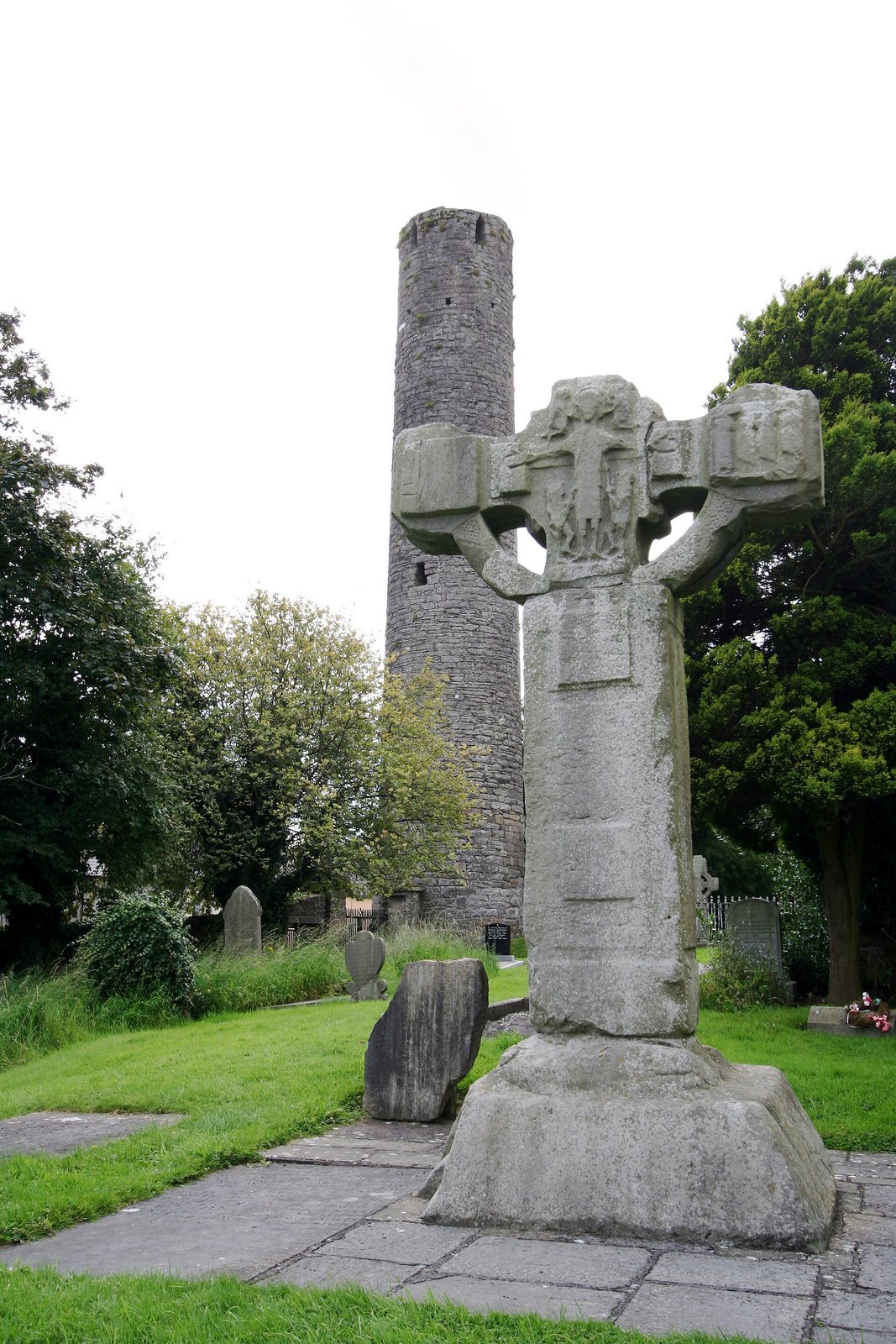
The tenth-century round tower rises about 30 metres above the original street level and has a conical roof. Five windows on its upper floor face the five roads leading into Kells, compared with the four windows usual for towers of this type. The earliest recorded reference to the tower dates to 1076, when Muircheartach Maelsechnaill, king of Tara, an ancient royal centre, was killed inside it.
St Columb’s House
Nearby, St Columb’s House is a tenth-century oratory, a small building used for prayer.
Carved crosses
West Cross
The West Cross stands at the cemetery boundary. Its carved scenes include the baptism of Jesus, Adam’s Fall, the Judgment of Solomon, and Noah’s Ark.
North Cross
The surviving parts of the North Cross are its base and central shaft.
Cross of St Patrick and Columba
Near the cemetery, the Cross of St Patrick and Columba is the best-preserved of the crosses. Its base carries the Latin inscription Patrici et Columbae Crux, meaning Cross of Patrick and Columba. Its carved panels depict Daniel in the lions’ den, a hot cauldron, Adam’s expulsion, and a hunt. Other scenes show the Last Judgment, the crucifixion of Jesus, and a charioteer with a dog.
East Cross
The East Cross was left unfinished, with some panels uncarved. Its completed scenes include four figures on one arm and the crucifixion of Jesus.
Market Cross
This ninth-century cross originally stood at the abbey’s eastern entrance. Tradition attributes damage to Cromwellian soldiers and says the cross was later used to hang participants in the 1798 rebellion. It now stands in front of the old courthouse.
Book of Kells
The Book of Kells is an illuminated Gospel manuscript, a Christian Gospel book decorated with images and ornament, associated with the abbey. Its place of production remains uncertain: it may have been begun on Iona and finished at Kells, or made entirely at Kells by successive generations of monks. Land charters copied onto blank pages provide the earliest secure evidence of the book’s presence there, in the twelfth century.
In 1006, the manuscript was stolen from its shrine and returned two months later without its cover. The loss of the cover probably explains why illustrations are missing at the beginning and end. The book remained at Kells through the Middle Ages and into the early modern period. Around 1650, while Oliver Cromwell’s troops were stationed in Kells, it was sent to Dublin for safekeeping. Trinity College Dublin acquired it in 1661, and it remains there.