Sainte-Colombe Abbey of Saint-Denis-lès-Sens: A Medieval Monastery in France
Site at a Glance
- Popularity
- Medium
- Country
- France
- Primary era
- Modern
- Eras represented
- Modern
- Civilizations
- French
- Site type
- Religious
- Remains
- Monastery
On this page11 sections
History
Sainte-Colombe Abbey of Saint-Denis-lès-Sens was a Catholic abbey in France, founded in 620 by Merovingian king Clotaire II over the burial place of Saint Columba of Sens. Columba had lived in Sens in the third century, and people had venerated her by the sixth. The abbey became influential in the diocese of Sens and beyond, and its history was closely connected with the region’s religious and political rivalries.
Foundation and Early Expansion
Clotaire’s son, King Dagobert, appointed Saint Éloi, a Frankish bishop and royal official, to administer the abbey. In 638 Dagobert granted it the estate of Grandchamp, which it inherited after his death on January 19, 639. This gave the monks a base in the southern part of the diocese, an area then largely wild except for a salt route linking the Loire and Yonne. They soon established a priory, a smaller dependent religious house, at Saint-Val on the estate. Sens’s archbishops encouraged this expansion as they sought to counter the growing influence of Saint-Germain of Auxerre.
The abbey’s wider network included the parishes of Sainte-Colombe de Champignelles and Saint-Denis de Saint-Denis-sur-Ouanne, established before the middle of the ninth century. A sanctuary on the southern boundary between Chevillon and La Ferté-Loupière later became known as the Martroi of Saint-Denis. Marchais-Beton, another place linked to Grandchamp, originated with Betton, who dug or enlarged the pond associated with the future village. The abbey’s early cartulary, a collection of copied charters and legal records, became very incomplete after repeated disasters.
Destruction, Rebuilding, and Decline
During the Muslim siege of Sens in 732, Archbishop Ebbon led the fighting that saved the city, but the abbey was destroyed. In the mid-ninth century, Archbishop Wenilon brought the relics of Saint Columba and Saint Loup to the abbey and consecrated a new church there in 853. The community then grew for about eighty years, despite the unsettled conditions of the period. The Grandchamp priory also became involved in the rivalry between the archbishopric of Sens and the bishopric of Auxerre.
The abbey’s head was sometimes a lay abbot, someone who held the office without being a monk, while a provost handled its practical administration. In 846 Charles the Bald, a Carolingian king, appointed Lambert II of Nantes as lay abbot. Richard the Justiciar, Duke of Burgundy, held the office in 894 or 895. The abbey narrowly escaped the Norman invasion of 885, which reached Sens the following year, during the tenure of Archbishop Evrard. Early in the tenth century, Betton, then provost, had ramparts built around the abbey.
Rudolf of France, son of Richard the Justiciar, enriched the church and gave it numerous properties. He was buried in the abbey before the high altar beside his father. A Hungarian raid in the winter of 936–937 burned the abbey, and feudal lords seized many of its dependent properties, including Grandchamp. The institution declined during the tenth century and came close to being forgotten. In 945 Count Fromond I of Sens used the abbey as a base while retaking Sens by a ruse from Count Raynald of Reims. Afterward, he had its ramparts demolished to prevent anyone from repeating his stratagem.
Medieval Renewal and Influence
In 1075 Arnolf, abbot of Sainte-Colombe and Saint-Pierre de Lagny, brought relics of his brother, Saint Thibaut of Provins, from Italy. From the eleventh century onward, the abbey was known for these relics. A third abbey church was built between 1142 and 1164. Thibaud de Payns, whose identity is uncertain, was abbot by about 1140 and remained so at least through 1142. He began the rebuilding in 1142 and died during the Second Crusade.
Pope Alexander III had taken refuge in France in 1162 during his conflict with Holy Roman Emperor Frederick Barbarossa. He lived at the abbey from October 1163 to November 1165, consecrated its church in 1164, and met Thomas Becket there that year. Becket, the archbishop of Canterbury, had left England in 1164. After spending two years at Cîteaux, where his life was again threatened, he returned to Sainte-Colombe and remained there from the mid-1160s until 1170.
In 1165 Guérin, Viscount of Sens, and his father Salon jointly gave property to the abbey. Guérin also surrendered his rights to protect the abbey and the revenues it owed him. After his death in 1168, the abbey inherited the Sablons plain along the Yonne, north of the town. Archbishop Michel of Sens confirmed its patronage rights over the parish of Béon between 1196 and 1198.
Revolution and Later Use
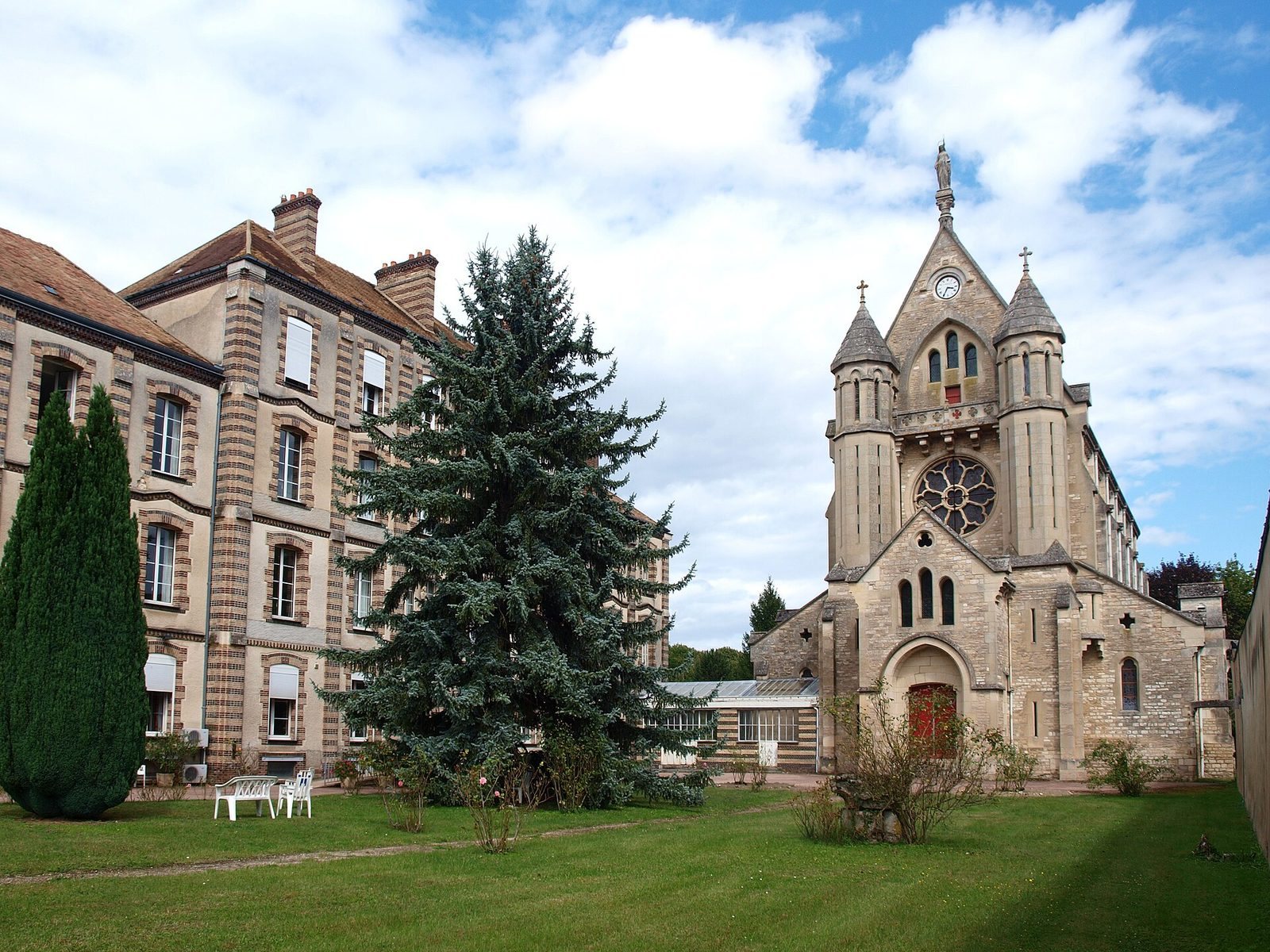
The abbey church was demolished in 1792 during the French Revolution, and the abbey’s relics were scattered. The monastery later became a convalescent center. The site was listed as a historic monument in 1966.
Remains
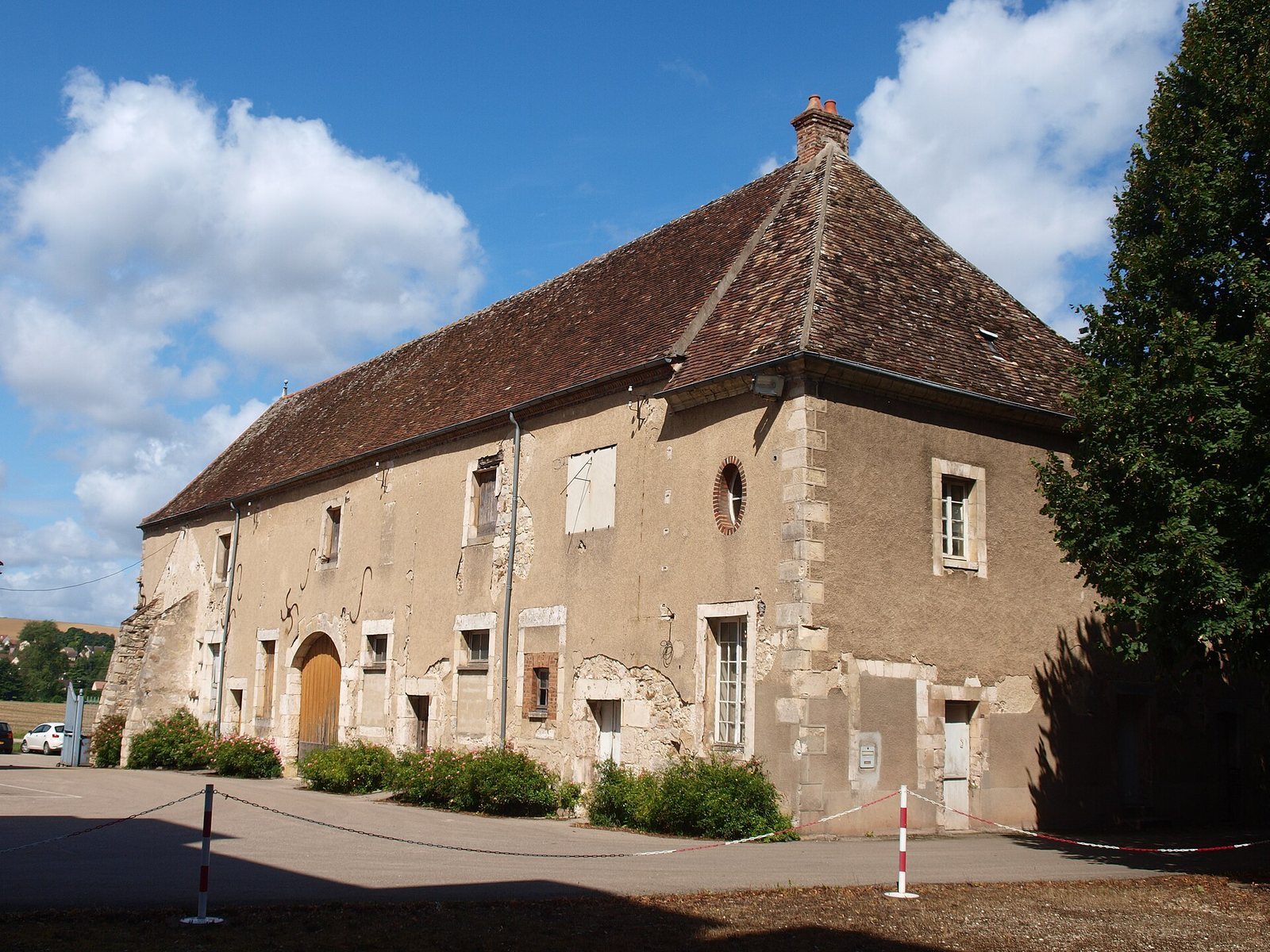
The surviving features include a chapel on the former abbey church site, identified remains of the cloister and its enclosure wall, a secondary portal, and a few stones from the monastery in the lawn.
Church Site and Monastic Remains
Chapel and Crypt
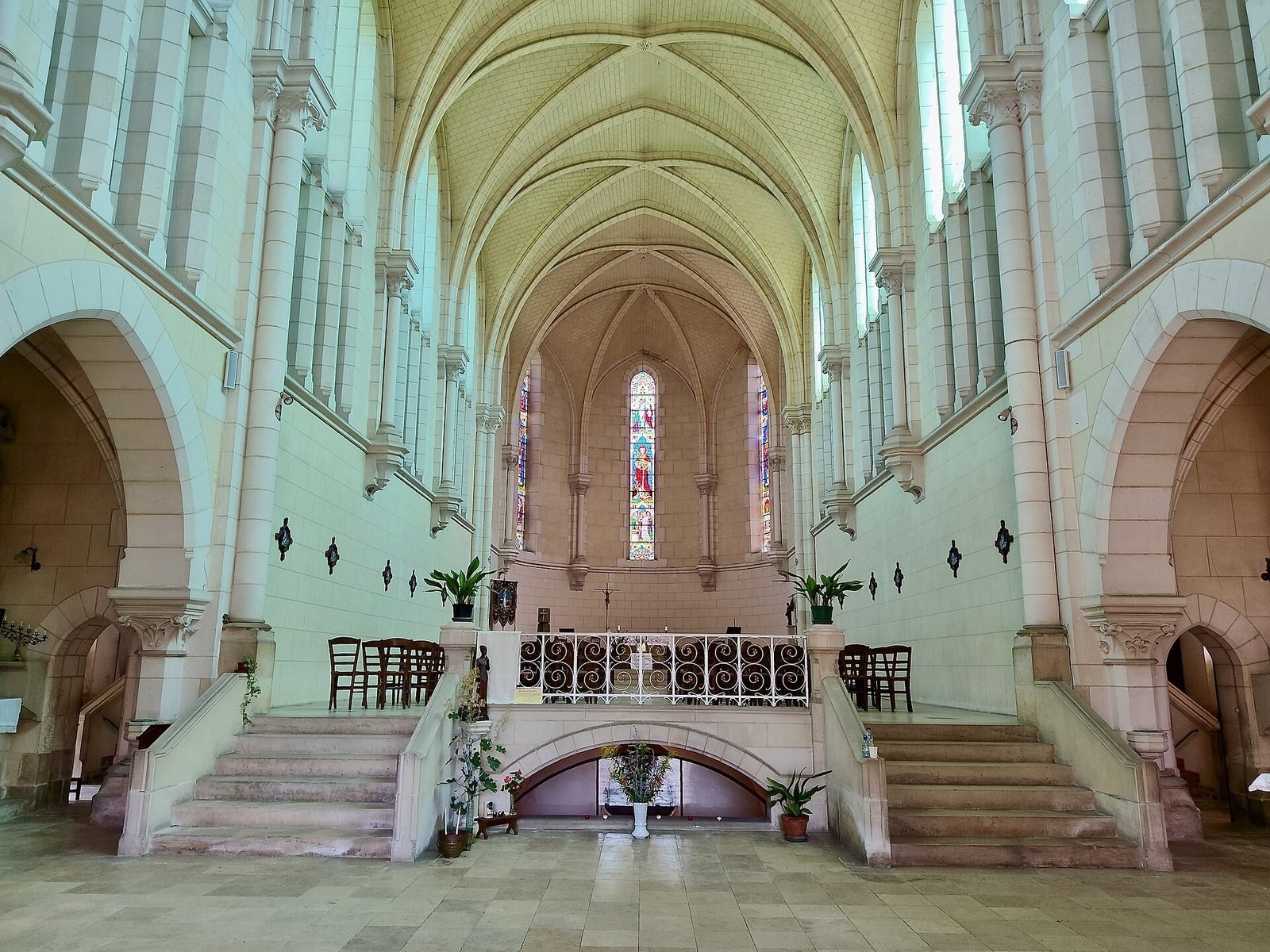
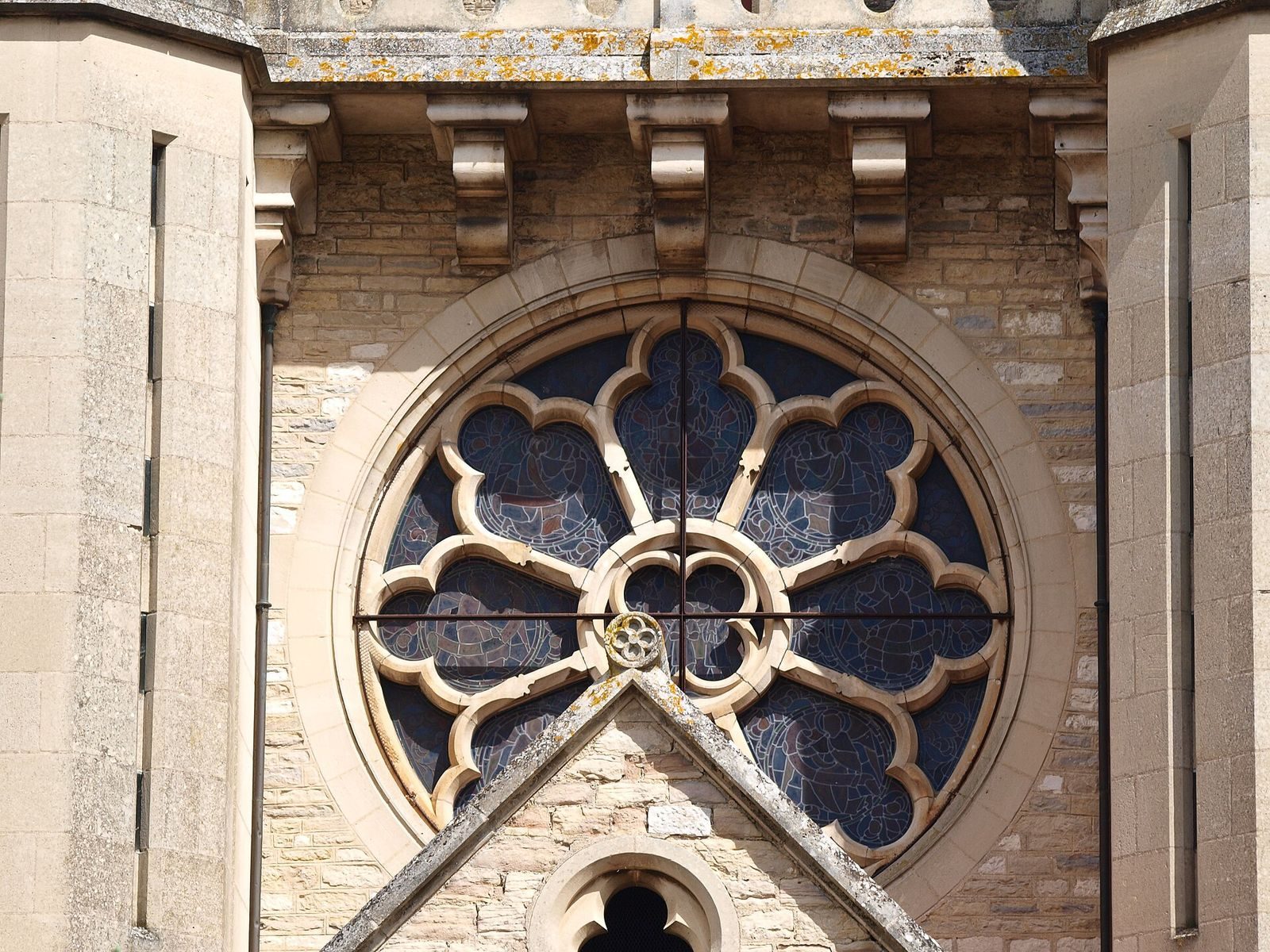
The Chapel of the Immaculate Conception was built on the former church site in the nineteenth century. Relics of Saint Columba are held in its crypt. A bell hangs in the chapel’s left-hand bell tower and can be rung by pulling a rope.
Cloister and Enclosure Wall
The former cloister and its enclosure wall are identified at the site. A statue of the Virgin stands against the wall.
Secondary Portal
A secondary portal of the abbey is also identified among the site’s remains.
Monastery Stones
A few stones identified as remains of the former monastery lie in the lawn.