Notre-Dame de Sept-Fontaines Abbey: A Premonstratensian Foundation and Château Estate
Site at a Glance
- Rating
- 5
- Popularity
- Very Low
- Country
- France
- Primary era
- Early Modern
- Eras represented
- Early Modern
- Civilizations
- French
- Site type
- Domestic
- Remains
- Castle
On this page10 sections
History
Notre-Dame de Sept-Fontaines Abbey is a former Roman Catholic abbey and later château estate at Fagnon, France, founded in 1129 by Hélie, lord of Mézières. It belonged to the Premonstratensian Order, a Catholic religious order whose members are also known as Norbertines; monks from the Premonstratensian house at Floreffe served its community. The abbey lay in the Ardennes Thiérache and the Diocese of Reims. The estate’s château is in the Louis XIII style, a French architectural style associated with the early seventeenth century.
Conflict and rebuilding
The French Wars of Religion, sixteenth-century conflicts between Catholics and Protestants, and later frontier fighting devastated the abbey. Premonstratensians rebuilt it in 1698.
Louis Du Four de Longuerue served as abbot from 1674 to 1733. In 1733, the Duke of Orléans appointed Jean-François Du Resnel du Bellay as abbot.
Revolution and private ownership
After the French Revolution and the resulting sale of church property, the abbey’s household furnishings and contents went on sale on 4 April 1791. The sale lasted four days, and church objects were sold on 1 June. Some of those objects were later found in churches at Gespunsart, Saint-Marcel, Fagnon, and elsewhere.
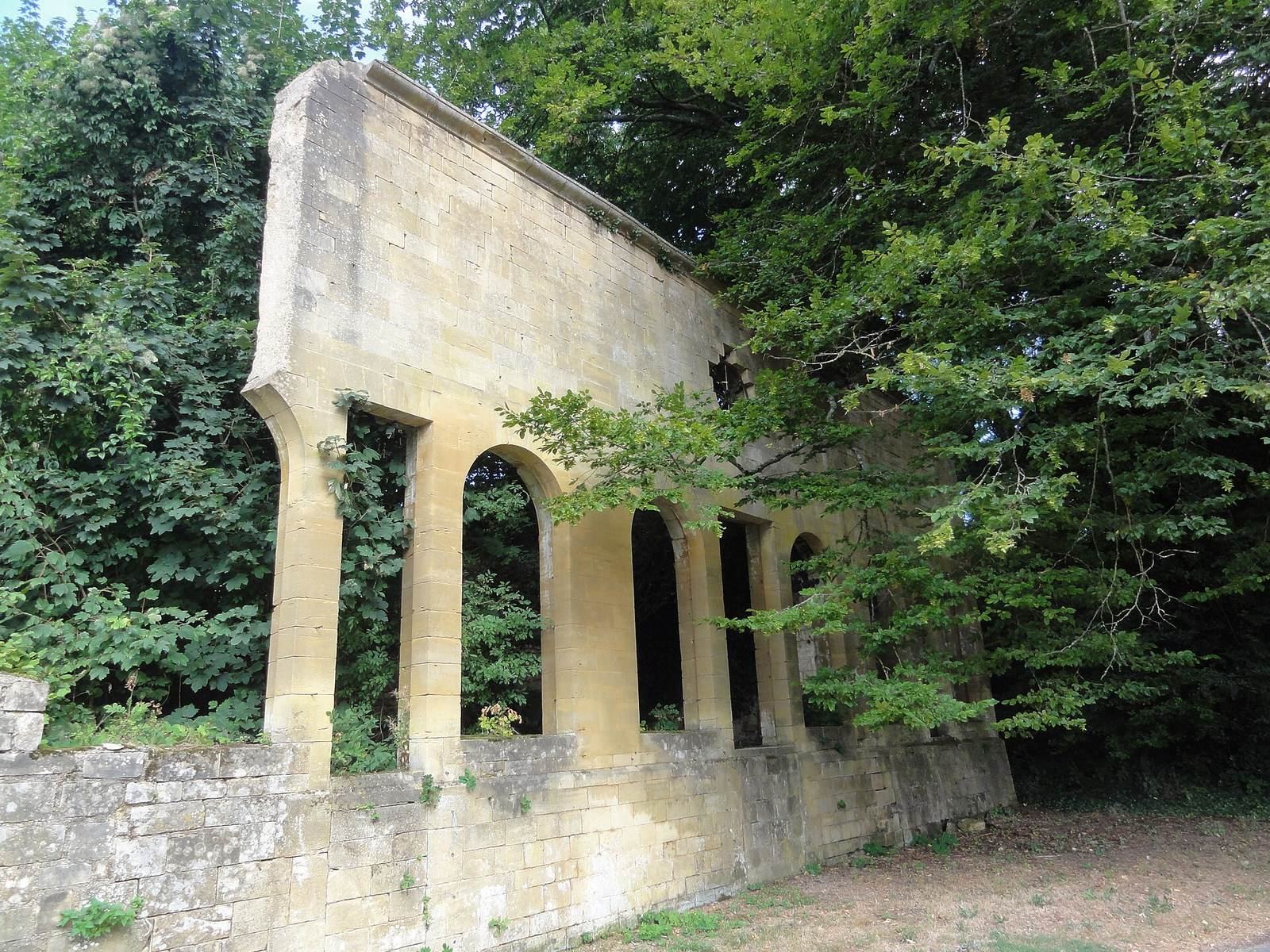
In 1794, Presolles, the estate’s first private owner, had the abbey church demolished. The cloister and two wings also disappeared. The château later passed to the Vicomte de Rémont and his descendants, who made extensive changes to the property.
The château as a country estate
Industrialist Alfred Corneau bought the estate in the early twentieth century and used it as a country retreat. After his death, his son-in-law, Mr Forest, acquired the château. It later passed to Forest’s daughter Marguerite, who was married to Jacques Vendroux, a shipowner in Calais. The Vendroux family spent August there with their four children, while farmers worked the estate’s fields and orchards.
At the start of the First World War, French general Joseph Joffre established his headquarters at Sept-Fontaines, but withdrew after only a few days. In September 1914, German Emperor William II, then based at Charleville, had the château converted into a casino. He visited daily for tea with senior officers from his entourage.
Between the wars, Charles de Gaulle, later president of France, and his wife Yvonne stayed at the estate several times. De Gaulle rode horses, played croquet and badminton, and hunted in autumn. The Vendroux family left in May 1940 as German forces broke through on the Meuse. Jean Vendroux regained the badly damaged château in 1945 and died there in 1956.
Later ownership and preservation
In May 1978, Yvonne de Gaulle visited the estate for the last time before entering a retirement home in Paris. Madeleine, Jean Vendroux’s widow, was still living there. The château was listed as a historic monument on 12 June 1980.
Around 1985, the Prince of Mérode bought the property and undertook a complete renovation. The château and 35 hectares were later sold to Crédit Agricole, then purchased by Michel Nicolle in 1997.
Remains
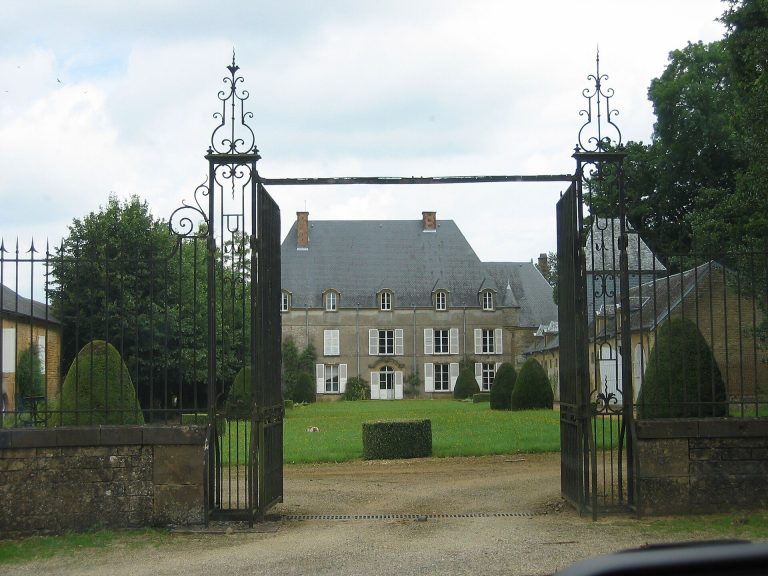
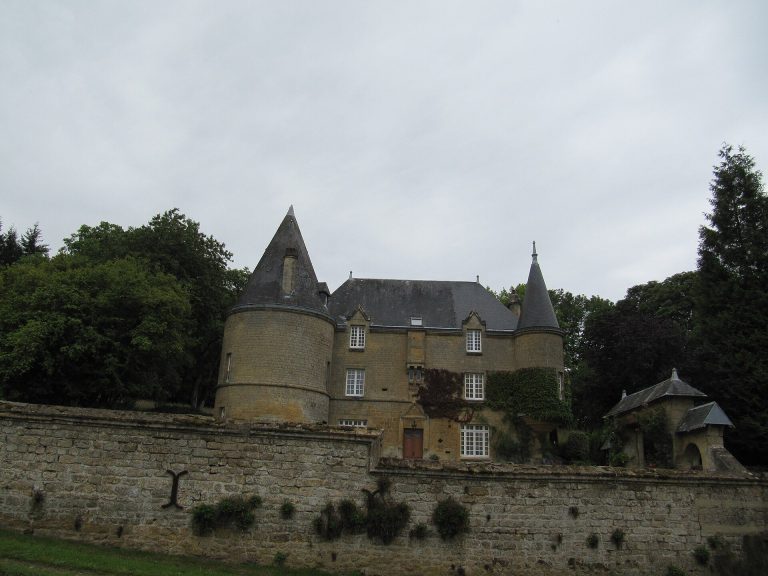
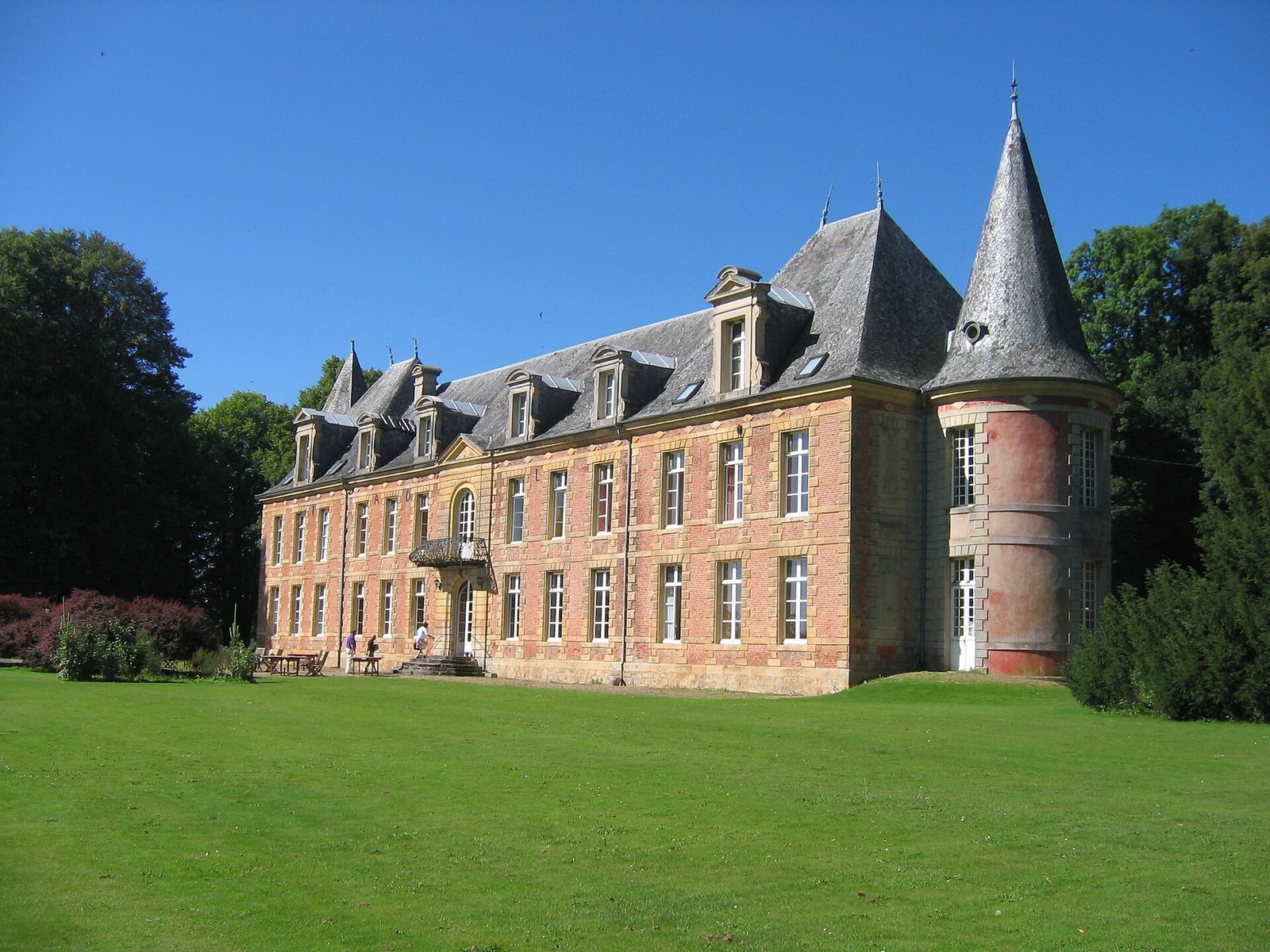
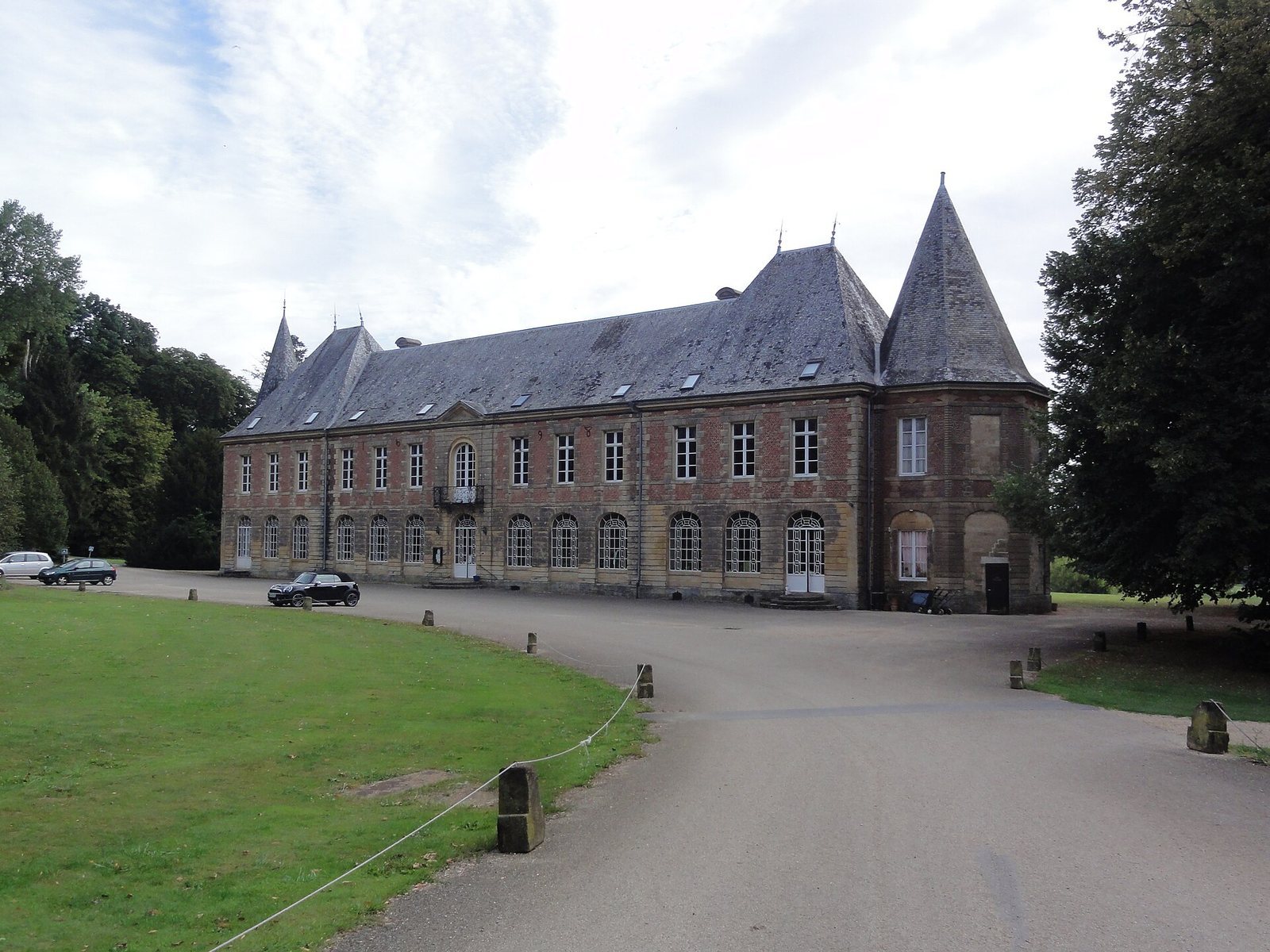
The surviving château is more than 60 metres long and stands in a hilly park of about 60 hectares. Its brick-and-stone construction forms the estate’s principal built feature.
Château architecture
Main building
The main building has two storeys beneath a slate roof, with attic space and a row of dormer windows. A triangular feature marks the central section. Stone frames the windows, and a sequence of stone diamond shapes runs below the roof edge.
Flanking towers
Two three-storey towers flank the building, one circular and the other hexagonal. A fire partly damaged the château in 1907, and its north turret was rebuilt the following year.
Park and golf course
The hilly grounds include trees and small ponds. A golf course was introduced during the renovation around 1985, beginning with nine holes and later expanding to eighteen.