Wortley Top Forge: A Seventeenth-Century Ironworks in South Yorkshire
Site at a Glance
- Rating
- 4.8
- Popularity
- Medium
- Country
- United Kingdom
- Primary era
- Early Modern
- Eras represented
- Early Modern, Modern
- Civilizations
- British, English
- Site type
- Economic
- Remains
- Production Complex
On this page8 sections
History
Wortley Top Forge is an ironworking site on a loop of the River Don in the Barnsley area of South Yorkshire, United Kingdom. Established in the seventeenth century under Sir Francis Wortley, an English politician and Royalist who supported the Crown in the English Civil War, it was part of a group of ironworking enterprises in the area. Its furnace was a Walloon forge, a type of ironworks used to refine pig iron into wrought iron.
Beginnings and the English Civil War
Ironworking may have taken place in the surrounding area during the fourteenth century, but the forge itself dates from the seventeenth. At least one of the Wortley forges was probably built around 1639, and both may have been. A forge was certainly operating by 1641. Thomas Cotton and then his son William (1627–1674) were among the ironmasters, or managers of ironworks, associated with Wortley; William was the father of another Thomas Cotton. Cannonballs may have been made at the forge during the English Civil War, the mid-seventeenth-century conflict between supporters of Charles I and Parliament.
Top Forge worked with Wortley Low Forge, a short distance downstream. The two forges and Nether Bank Furnace were leased together from the Wortley family. The furnace probably ceased operating around 1780. The forges were usually connected to a network of ironmasters led by the Spencer family of Cannon Hall, except between 1676 and 1690, when other ironmasters rented them.
The Cockshutt family and new processes
In 1744, John Cockshutt took the forge on lease and ran it with a partner. He also operated a tinmill, a rolling mill that made thin iron sheets. His son, also named John, succeeded him, and around 1800 his brother James took over. James had worked at Cyfarthfa Ironworks in Merthyr Tydfil with the Welsh ironmaster William Crawshay. After their partnership ended, James returned to Wortley in 1791 and introduced puddling, a method of converting pig iron into wrought iron.
Railway production and closure
After James died in 1820, the works passed to relatives and then changed hands several times. Thomas Andrews took them over in 1849. His son, also Thomas Andrews, succeeded him after his death in 1871 and remained associated with the forge until 1907. Production shifted mainly to shafts and axles for railway wagons. The forge made high-quality axles for export around the world, and Thomas Andrews carried out metallurgical experiments there that rank among the earliest worldwide.
Production ended around 1912, although some parts of the site continued in use until 1929. One of the hammers was run as a demonstration in 1933 or 1934.
Museum and preservation
The forge reopened as an industrial museum in 1955 through the work of the Sheffield Trades Historical Society, now the South Yorkshire Industrial History Society. C. R. Andrews, son of the second Thomas Andrews, had worked toward the reopening. From the mid-1960s, honorary curator Ken Hawley led volunteers in preserving and restoring the forge for more than four decades. The site became a Scheduled Monument in 1952, a designation that protects historic or archaeological sites, and the main forge was listed Grade I in 1968, the highest category of listed-building status.
Remains
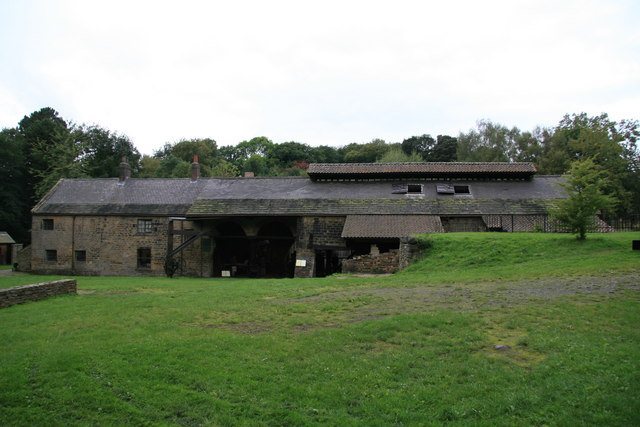
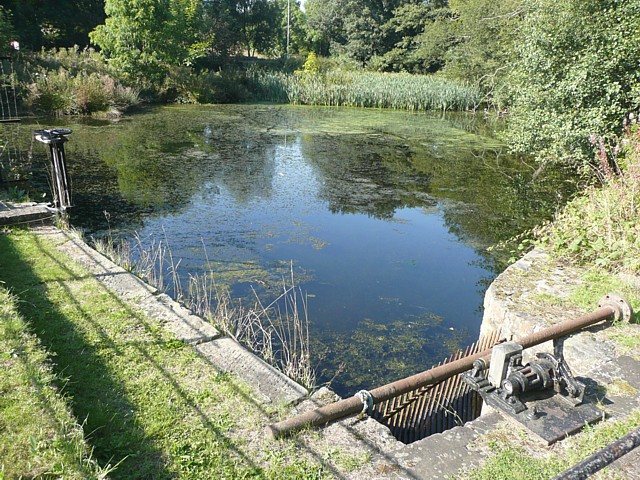
The forge stands beside a loop of the River Don, and its buildings follow a layout established in the 1850s. The complex combines the water-powered ironworks with later industrial equipment and cottages. Its furnace was a Walloon forge, used to refine pig iron into wrought iron.
Water-powered machinery
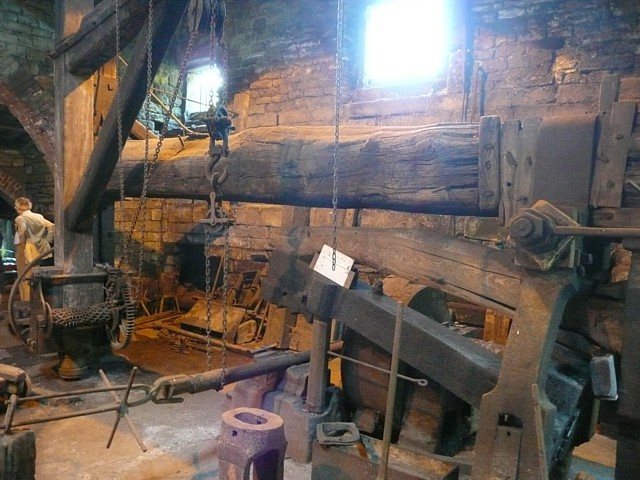
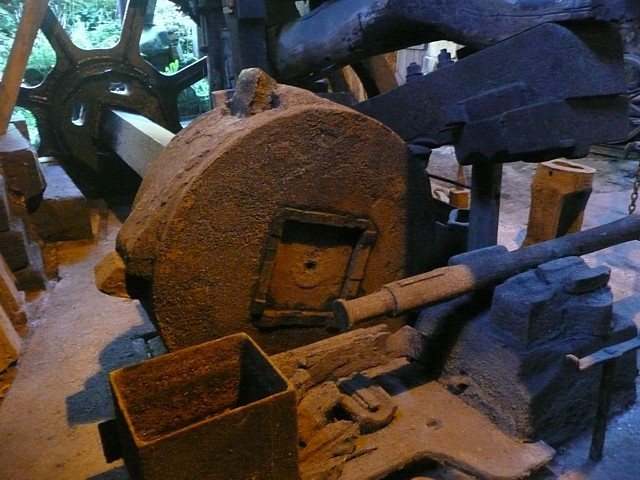
Waterwheels supplied all the power for the forge’s machinery. The original hammer system used a trip hammer, a mechanically powered hammer, mounted with a large timber cantilever. A waterwheel also powered the furnace’s twin blowers at some point. Three waterwheels have been restored to working order, including an overshot wheel 24 feet in diameter, driven by water flowing over its top and fitted with two-gallon buckets.
Buildings and equipment
A date stone bearing the year 1713 is set into one of the buildings. Other museum buildings contain industrial machinery, including a Marshall twin-cylinder steam engine. The site also includes Top Forge Cottage and two further cottages south of the forge.