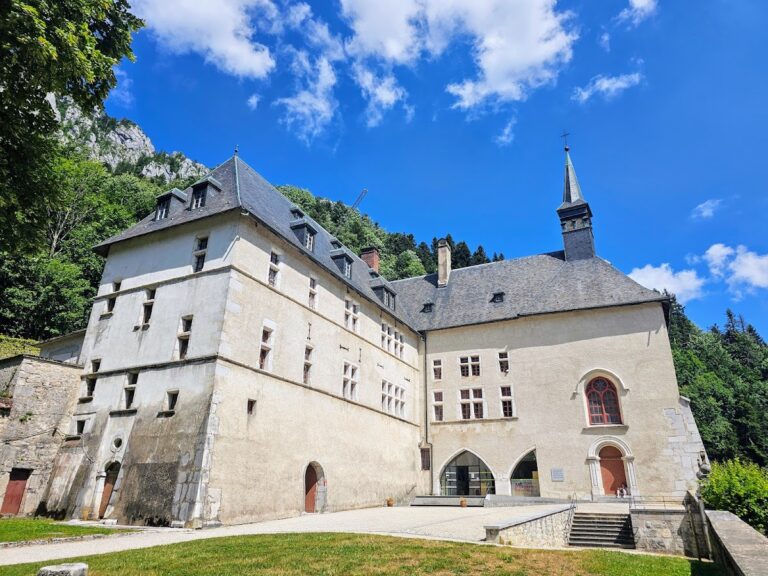
Abbey of Ayes: A Cistercian Nunnery in Crolles, France


Site at a Glance
- Rating
- 4.8
- Popularity
- Very Low
- Country
- France
- Primary era
- Classical
- External website
- Open
- Eras represented
- Classical
- Civilizations
- French
- Site type
- Domestic
- Remains
- Elite Residence
On this page9 sections
History
The Abbey of Ayes in Crolles, France, was a Cistercian nunnery dedicated to Notre-Dame and founded around 1140 in the Dauphiné. Its foundation is attributed to Clémence-Marguerite of Burgundy, wife of Guigues IV of Albon and Countess of Albon. The date 1142 is also given, and twelve nuns with an abbess may have arrived from Betton Abbey in 1143.
Cistercian foundation and medieval development
Ayes was a daughter house of Betton and belonged to the Cistercian lineage of Cîteaux, the monastic tradition that developed from the abbey of Cîteaux in Burgundy. It did not establish daughter abbeys of its own. During the Middle Ages, the nunnery accumulated extensive possessions in the Dauphiné and developed a mill on the nearby Craponoz stream.
The community was reduced after the Black Death, a devastating epidemic that spread through Europe in the fourteenth century. In 1399, it appears to have consisted of ten nuns in addition to the abbess.
Reform, destruction, and rebuilding
In 1623, three nuns of Ayes, Claude de Buissonrond, Louise de Paquier, and Louise de Ponsonas, sought to reform religious life. Their efforts helped establish Sainte-Cécile Abbey in Grenoble on 24 November 1624. Louise de Ponsonas became its first abbess and later opposed Louise de Ballon over the constitutions and historical presentation of the reformed Bernardine congregation.
Troops during the Wars of Religion, a series of sixteenth-century conflicts between Catholics and Protestants in France, pillaged Ayes and partly destroyed its buildings in 1560. A fire caused further damage in 1648, and the complex was rebuilt between 1662 and 1666.
Revolutionary suppression
By 1781, shortly before the French Revolution, the convent had seriously deteriorated and was threatened with collapse. The church was properly maintained, while most of the other buildings were considered unsafe. Revolutionary commissioners began an inventory on 21 January 1791, and the monastery was sold as national property on 18 April that year to César de Chaléon. He left the nuns their apartments, the choir, and the church’s side chapels, while taking the remainder for himself and his wife.
Municipal officers returned on 22 September 1792 to evacuate the sisters. Only the chaplain, one nun, and one lay sister were then present. In February 1793, five Bernardine nuns from the Notre-Dame des Grâces convent at Tullins took refuge at Ayes. In 1797, five or six non-juring priests, Catholic clerics who refused the oath imposed on clergy during the Revolution, celebrated a weekly Mass there, drawing approximately 500 to 600 worshippers.
The abbey was suppressed in 1791. The surviving building was added to France’s supplementary inventory of historic monuments on 17 July 1990.
Remains
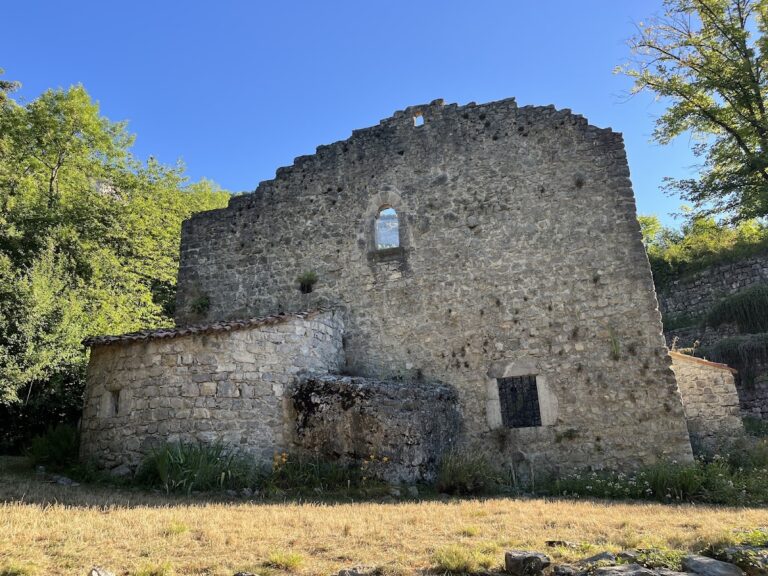
The former abbey stood along the present Avenue de l’Abbaye, at the present-day Impasse Elsa-Triolet in Crolles. Its surviving fabric includes a residential building, reused medieval architectural elements, painted ceilings, relocated choir stalls, and the nearby mill on the Craponoz stream.
Surviving buildings
Residential building
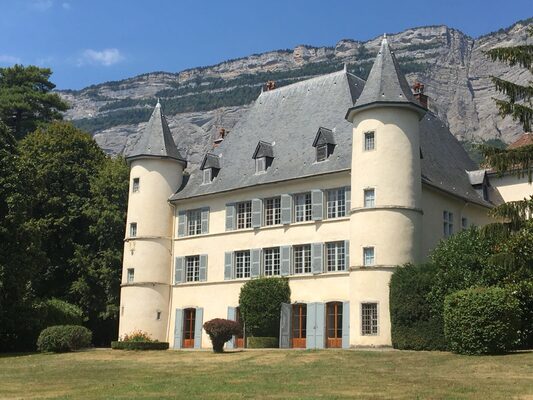
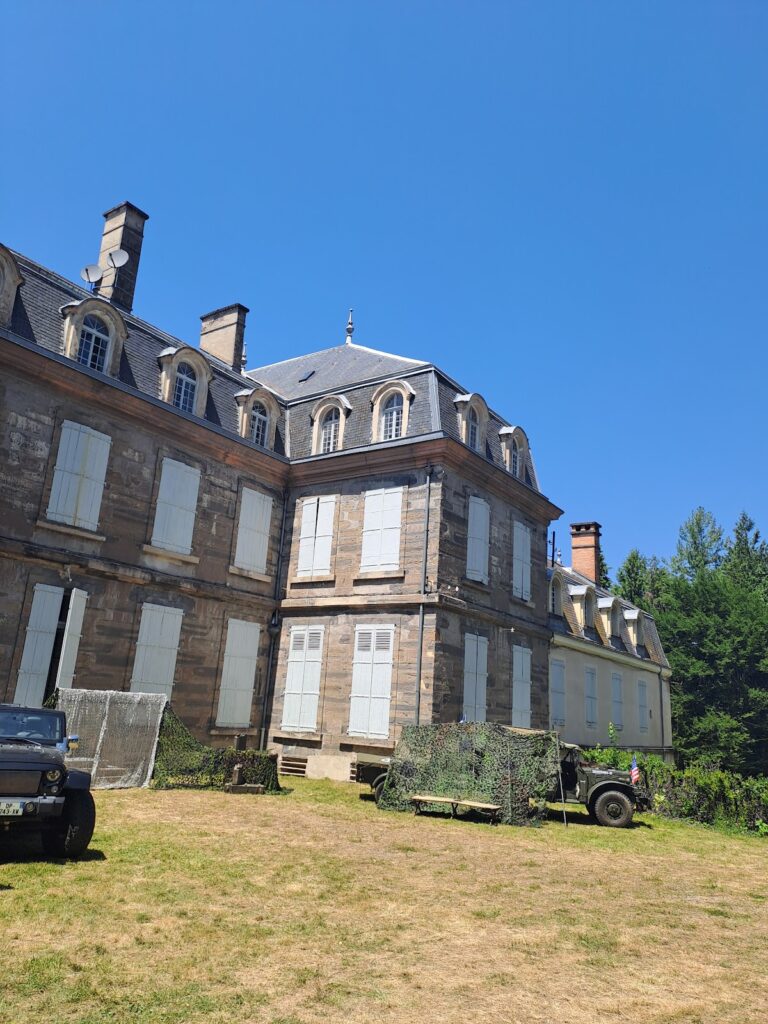
The surviving residential building, probably the former lodging of the abbess, is now used as a dwelling. Its interiors preserve painted ceilings from the Classical period, broadly the seventeenth and eighteenth centuries. Twelfth-century capitals from the cloister were reused in the building, linking the later domestic structure with the abbey’s medieval phase.
Abbey mill
The abbey mill stood near the monastery beside the Craponoz stream. It continued operating until the 1980s and was modernized several times during the nineteenth and twentieth centuries. Its survival preserves the physical remains of an installation connected with the abbey’s medieval possessions and economic activity.
Relocated furnishings
The abbey’s choir stalls are now located at the Chapel of La Salette in Grenoble. Their relocation preserves part of the former church furnishings outside the original abbey complex.