Prébenoît Abbey: A Cistercian Monastery in Bétête, France
Site at a Glance
- Popularity
- Medium
- Country
- France
- Primary era
- Medieval
- Eras represented
- Medieval, Early Modern
- Civilizations
- French
- Site type
- Religious
- Remains
- Fortified Monastery
On this page15 sections
History
Prébenoît Abbey was a monastery in Bétête, near the Petite Creuse in France’s Creuse department. Dalon founded it in 1140, and it formally joined the Cistercian order, a monastic movement that developed at Cîteaux in the late eleventh century, around 1162–1163. Its architecture came to combine Cistercian, Gothic and later Baroque forms. Dedicated to Saint Mary, it belonged to the Diocese of Limoges, an ecclesiastical district governed by a bishop.
Foundation and growth
The abbey may have grown from a community of hermits living in the forest around 1120, near the boundary between the lordships of Malval and Boussac. Dalon established the monastery after receiving a donation from the lord of Malval. Pierre, its first abbot, was probably its founder. The monks may have come from Dalon or from Chatreix at Saint-Julien-le-Petit. Prébenoît was a daughter house, a monastery founded by or affiliated with another abbey, of Dalon, and belonged to the Cistercian lineage of Pontigny. Construction was complete around 1180.
Land, patrons and burial
Gifts from local nobles provided land and income, although the abbey never became exceptionally wealthy. Between 1162 and 1192, the Nouzerines gave it Luyat and Montbeau, as well as the granges of Villatte and Fontanelle. A grange was a farm estate managed by a monastery. Around 1200, the Adhémar family granted land, woods, meadows and rights at several places in Bétête and Genouillac, alongside tithes at Ligondeix and other income at Saint-Pierre-le-Bost. The Verneiges family later donated the domains of Molles at Ladapeyre and Bramareix at Châtelus-Malvaleix. Further gifts and confirmations followed in later centuries.
The abbey exercised rights across much of the surrounding countryside and held some land south of the Petite Creuse. About seven granges managed its estates, including one at Sinaise in Indre. Other holdings included La Villatte, Fontanelle, Bramareix, Molles, Écosse, Moisse, Chassain, Ligondeix and Sainte-Sévère. The abbey also owned a house at Châteaumeillant, a chapel at Sainte-Sévère, and a property at La Châtre with a house, wine press and vineyards.
The Brosse family, lords of Boussac and connected through marriage to the Déols family, chose Prébenoît as its burial place. Roger de Brosse, who died in 1287, was buried there with his wife, Marguerite de Déols. Their descendants included Jean de Brosse, called the “Marshal of Boussac,” who died in 1433. The family also gave property near the abbey, along with farms and woods at Saint-Dizier-les-Domaines and Ladapeyre.
Fortification, conflict and decline
During the Hundred Years’ War, the prolonged conflict between the English and French crowns, the abbey was fortified. Its church nave was shortened, defensive towers were added to the church, and moats were dug around the buildings. The monastery buildings were reduced to create a defensive perimeter. From the late fifteenth century, the lords of Saint-Julien were described as the abbey’s guardians; Jean VI de Saint-Julien held that role in 1490.
During the sixteenth-century Wars of Religion between Catholic and Protestant factions, the abbey changed hands amid the related Catholic League conflicts, in which a Catholic political and military coalition took part. Protestant troops occupied it in 1590–1591, before being driven out after fighting damaged the church and monastery buildings. In 1591, troops of the Duke of Zweibrücken took possession. On withdrawing, they burned furnishings and damaged the buildings.
The decline continued. In 1621, commendatory abbot Mathieu de Verthamont described extensive ruin. A commendatory abbot held the abbey’s title and revenues by appointment and was not necessarily its resident monastic superior. A Guéret official found the buildings in very poor condition in 1691. The abbey remained modest despite its estates, and the conduct of its commendatory abbots hindered substantial restoration.
Dissolution and later use
An inventory from August 1790 recorded annual revenues of 5,502 livres and expenses of 5,188 livres, including 1,800 livres paid to the commendatory abbot. Only two monks remained shortly before the French Revolution. The abbey was dissolved in 1791, and its church, buildings and lands became national property, meaning they passed into state ownership for sale. Henri Carbonnières bought them but could not pay the full price. The buildings were then assigned to the Legion of Honour, France’s national order of merit, and transferred in 1806 to the Caisse d’amortissement, a state fund concerned with public debt. Louis Gérouilhe de Beauvais acquired them in 1811. After another sale in 1829, the former monastery building was used as a farmhouse dwelling.
Much of the abbey was destroyed during the nineteenth century. From the 1960s, an activity centre leased and restored the former monastery building. Bétête acquired the site in 1987 and placed it in the care of an association. After a dispute in 2001, the municipality resumed control, while associations continued restoration and excavations at the church site. The abbey was listed as a historic monument in 1980. In 2022, a Cistercian monk took up residence there as a hermit.
Remains
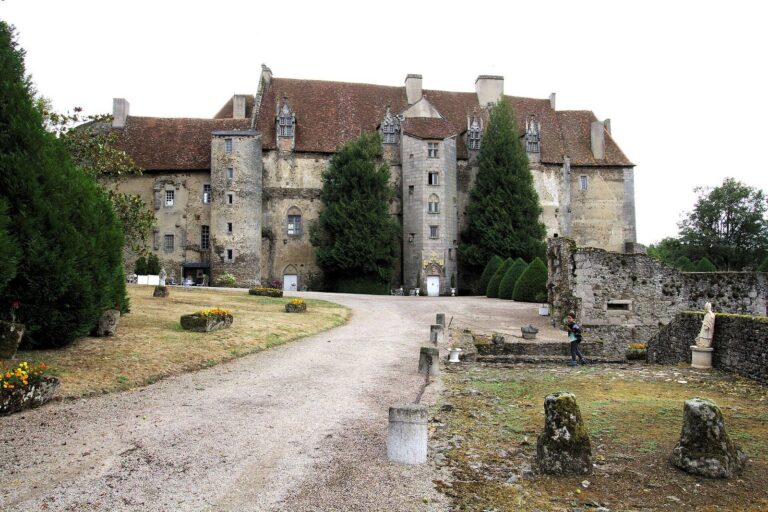
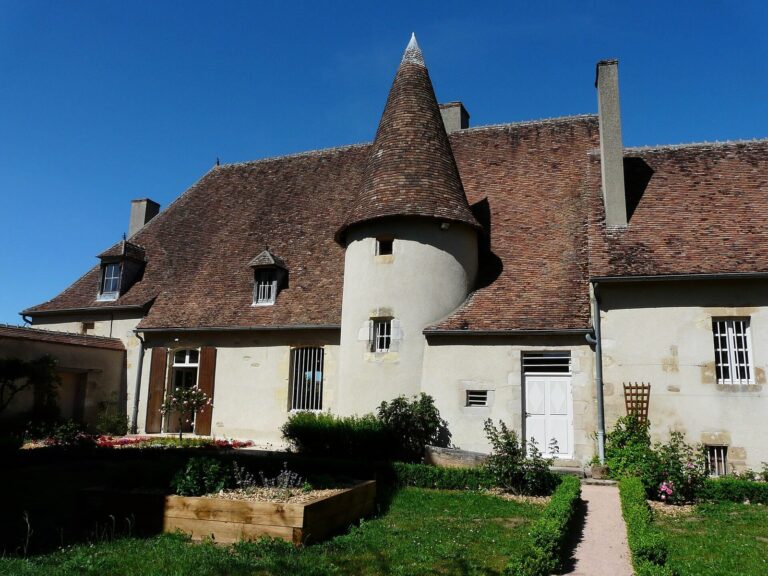
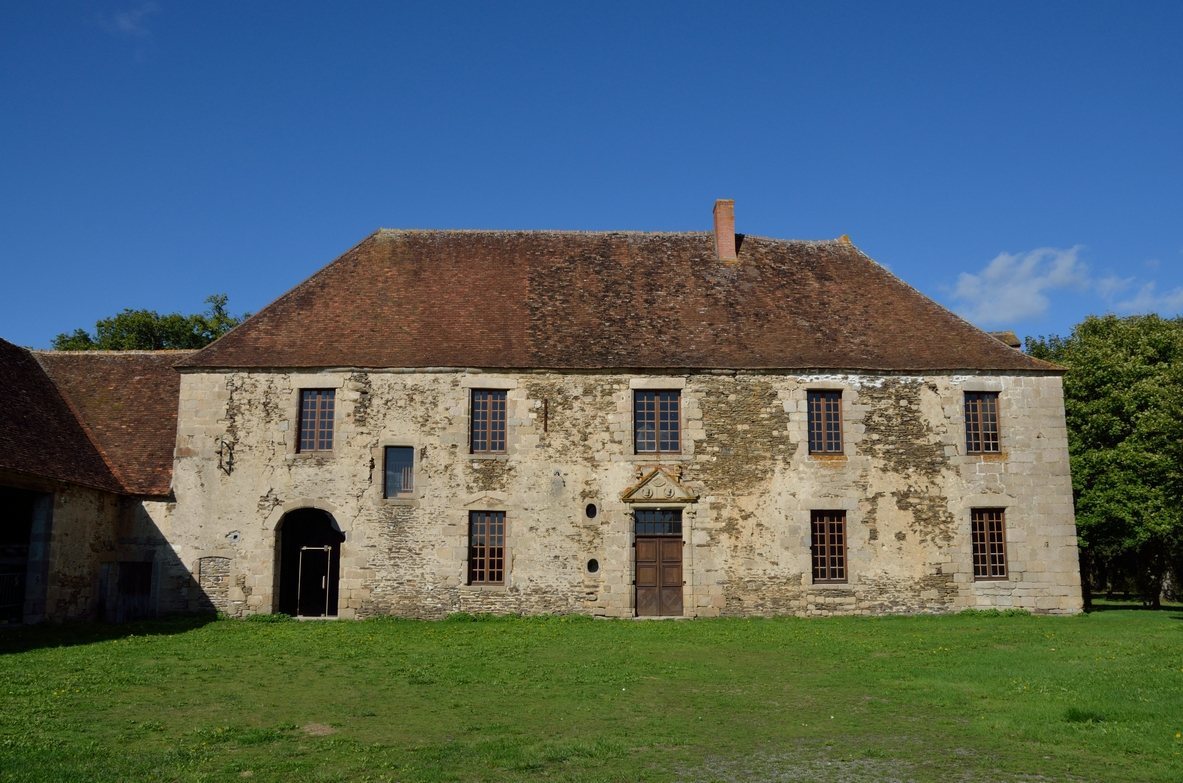
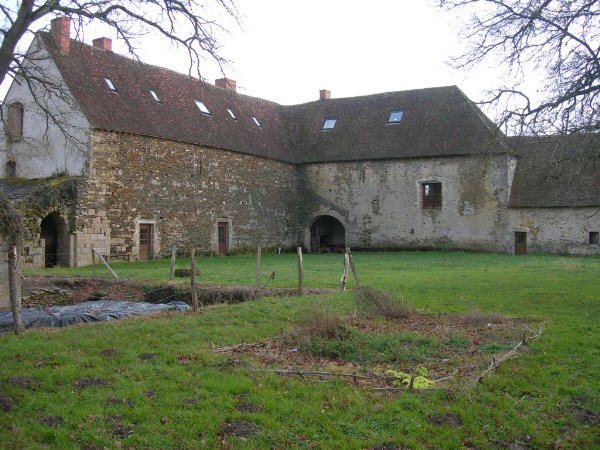
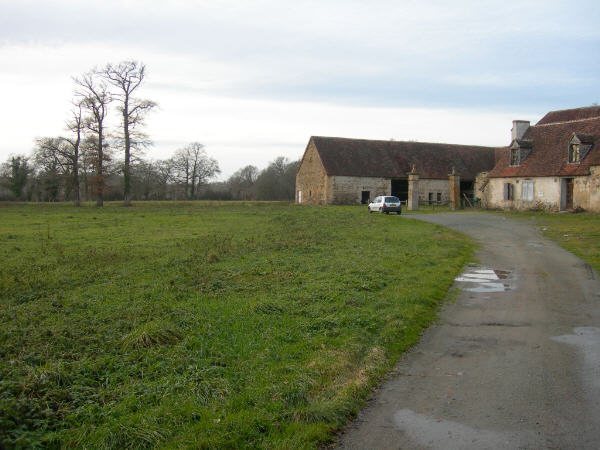
The surviving complex includes fragments of the abbey church and portions of the former monastery buildings. Its architectural character brings together Cistercian, Gothic and later Baroque influences. Waterworks, ponds and channels formed part of the wider estate and its management.
Abbey church
The church survives in fragmentary form. Its remains include a seventeenth-century portal, the first structural section of the north aisle, and parts of a wall and vaulted ceiling in the north transept, the part of a church that crosses the nave. Excavations at the church site have exposed the floor.
Former monastery building
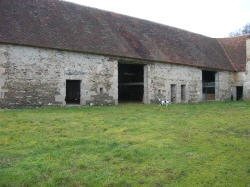
The east and south portions of the former monastery building remain, and the structure has been partly restored. After its nineteenth-century use as a farmhouse dwelling, restoration work from the 1960s renewed parts of the building.
Water management
Stream, mills and channels
In the first decades of the thirteenth century, the monks redirected the Cluzeau stream along the foot of the valley’s eastern slope, moving it away from the abbey. Mills associated with the estate stood at La Côte, La Barrière, Naucher, Fontanelle and La Porte on the Cluzeau, as well as at La Châtre and Les Boissières in Saint-Dizier. In the eighteenth century, another diversion supplied water to the moats, which had been turned into a fishpond; a separate channel drained the pond.
Ponds
Three artificial ponds formed part of the surrounding water system. The Étang Noir had a dam about 100 metres long, which broke in the 1970s. Upstream, the Étang des Côtes supplied the abbey through a canal. The Étang Rompu lay about two kilometres from the monastery.
Burial monuments
Roger de Brosse’s tomb
Duval described a life-size effigy of Roger de Brosse wearing a bronze coat bearing heraldic designs. The tomb, about four inches thick, had a covering of gilt copper with painted medallions displaying the arms of the Brosse, Déols and other families. Some medallions had been damaged or removed. A Maurist abbot, from a French Benedictine congregation known for scholarly work, described a raised tomb about three feet high before the church’s high altar. Its carved figure lay with hands joined and held a cross, among numerous heraldic shields.
The wooden-and-copper mausoleum
A wooden-and-copper mausoleum still stood at the abbey in 1790. It may have belonged to Jean de Brosse and may have included plaques decorated with Limoges enamel. The monument was dismantled and taken to Guéret, where it later disappeared.
Fountain at Châtelus-Malvaleix
A fountain installed in the village of Châtelus-Malvaleix after the French Revolution came from the abbey.