San Francesco all’Immacolata: A Franciscan Sanctuary in Messina


Site at a Glance
- Rating
- 4.6
- Popularity
- Low
- Country
- Italy
- Primary era
- Medieval
- External website
- Open
- Eras represented
- Medieval, Early Modern, Modern
- Civilizations
- Italian, Kingdom of Sicily, Spanish
- Site type
- Religious
- Remains
- Church
On this page21 sections
History
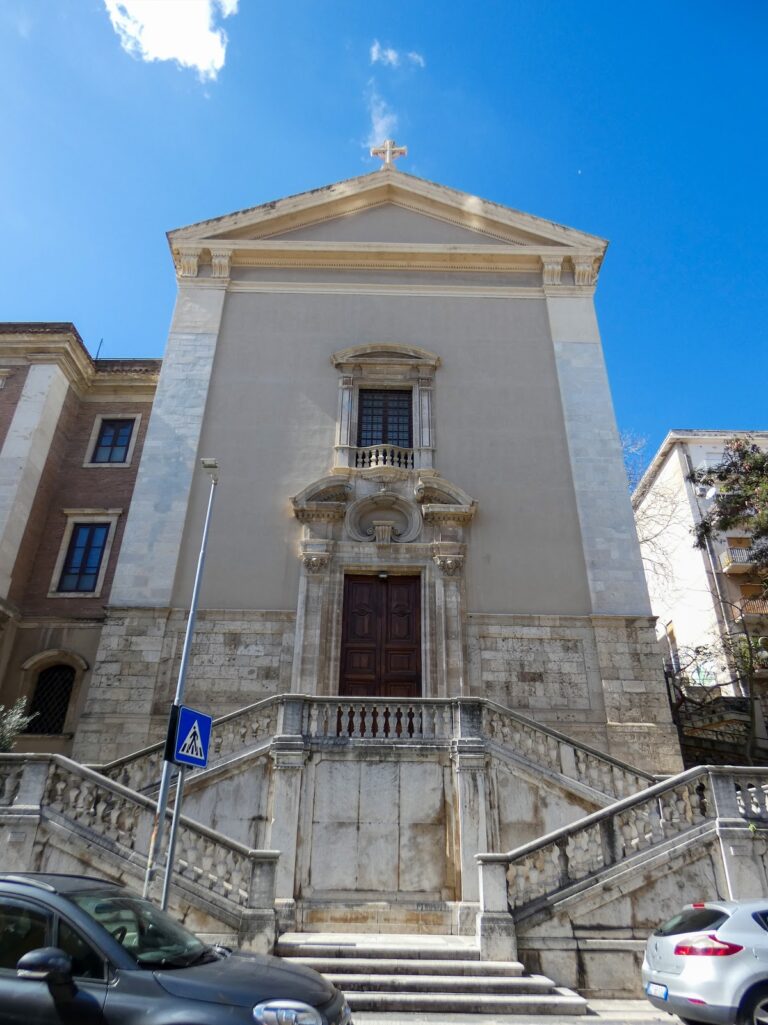
San Francesco all’Immacolata is a Roman Catholic Franciscan sanctuary in Messina, Italy, built by the Friars Minor in the Gothic period beginning in 1254. It was the first Franciscan church in Sicily, later became a Royal Chapel, and served as the head institution of the Franciscan province of Sicily. The church is also described as the second-largest in Messina.
Franciscan origins in Messina
The first Friars Minor, the religious order founded by Francis of Assisi and commonly known as the Franciscans, reached Messina in 1212. They initially settled at the small Church of San Leone outside the city walls. In 1216, they moved to a conventual site, meaning a church and monastery complex, near the stream and the primitive Church of Sant’Orsola. The relocation led to disputes with the Dominicans over territorial boundaries and jurisdiction.
Anthony of Padua stayed at the institution in 1221 after being shipwrecked on the Sicilian coast while returning from a mission in Africa. Local tradition places him in a cell beside the convent well and associates him with a spring that appeared in the garden after he was publicly punished for disobeying his prior. Devotion to Anthony, Francis, and the Immaculate Conception remained central to the sanctuary’s religious identity.
Foundation and royal patronage
Construction of the present church began in 1254, during the Angevin period and only twenty-eight years after Francis of Assisi’s death. On 5 January 1255, Pope Alexander IV blessed the first stone at Naples. Tradition attributes the initiative to the Messinese noblewomen Violante Palizzi, Eleonora da Procida, and Beatrice Belfiore.
The church attracted the patronage of Federico III of Sicily, his daughter-in-law Elisabeth of Carinthia, and his grandson Federico IV of Sicily. Federico IV built the convent. On 13 October 1370, he was attacked as he left a ceremony at the church while accompanied by Archbishop Dionysius of Murcia.
As a Royal Chapel, the church received royal and noble burials. Federico IV was buried there after his death in 1377, as was Elisabeth of Carinthia, who died around 1352. The Aragonese dukes Guglielmo and Giovanni of Randazzo were also interred there, together with the Messinese noblewoman Camiola Turinga. In the sixteenth century, the mathematician Francesco Maurolico visited her tomb.
Learning and Franciscan administration
During the late thirteenth century, the Franciscan houses of Messina and Palermo established study centers in grammar, logic, philosophy, canon law, theology, ethics, Greek, Arabic, Hebrew, Armenian, Chaldean, Syriac, and Aramaic. The convent later hosted the provincial chapter, the governing assembly of the Franciscan province, in 1443.
In 1535, during Charles V’s return from Tunis, the institution received the title Magna Domus Messanensis. The designation recognized it as the principal house of the Franciscan province in Sicily and confirmed its status as a Royal Chapel. In 1618, the convents of Bauso, Santa Lucia del Mela, Novara di Sicilia, Savoca, and Taormina were incorporated into its jurisdiction.
The convent also hosted several lay religious associations, or confraternities. These included the Congregation of the Immaculate Conception, the Congregation of the Flagellants under the title of Saint Louis, and the Congregation of Anthony of Padua. The Confraternity of Our Lady of Childbirth is associated with the Aragonese period, while the Confraternity of Our Lady of Light was linked to the church’s chapel.
Devotion to the Immaculate Conception
Messina’s vow to the Immaculate Conception dates from 1647. Archbishop Simone Caraffa confirmed and renewed it in 1656 with the participation of the cathedral chapter, the city senate, and the people of Messina. In 1655, Viceroy Rodrigo Díaz de Vivar Sandoval Hurtado de Mendoza, Duke of Infantado, urged the bishops of Sicily to swear an oath placing the kingdom under the heavenly protection of the Immaculate Virgin.
The sanctuary’s religious calendar included processions for Anthony of Padua on 13 June, Francis of Assisi on 4 October, and the Immaculate Conception on 8 December. These observances formed part of a wider devotional tradition that also honored Our Lady of Childbirth and Our Lady of Light.
Earthquakes, fire, and reconstruction
The church’s fabric changed repeatedly through natural disasters. After the 1693 Val di Noto earthquake damaged the roof, the building was reconstructed in Baroque style in 1721. Repairs directed by Abbot Giacomo Minutolo followed damage from the 1783 earthquake in southern Calabria, and further work altered the church’s furnishings and monuments.
A violent fire on 23 July 1884 destroyed the interiors and wooden roof. The perimeter walls remained standing, while statues of Francis of Assisi, the Immaculate Conception, and Anthony of Padua survived. Giuseppe Patricolo directed restoration work later in the nineteenth century. The statue of Anthony was subsequently placed in the cloister garden.
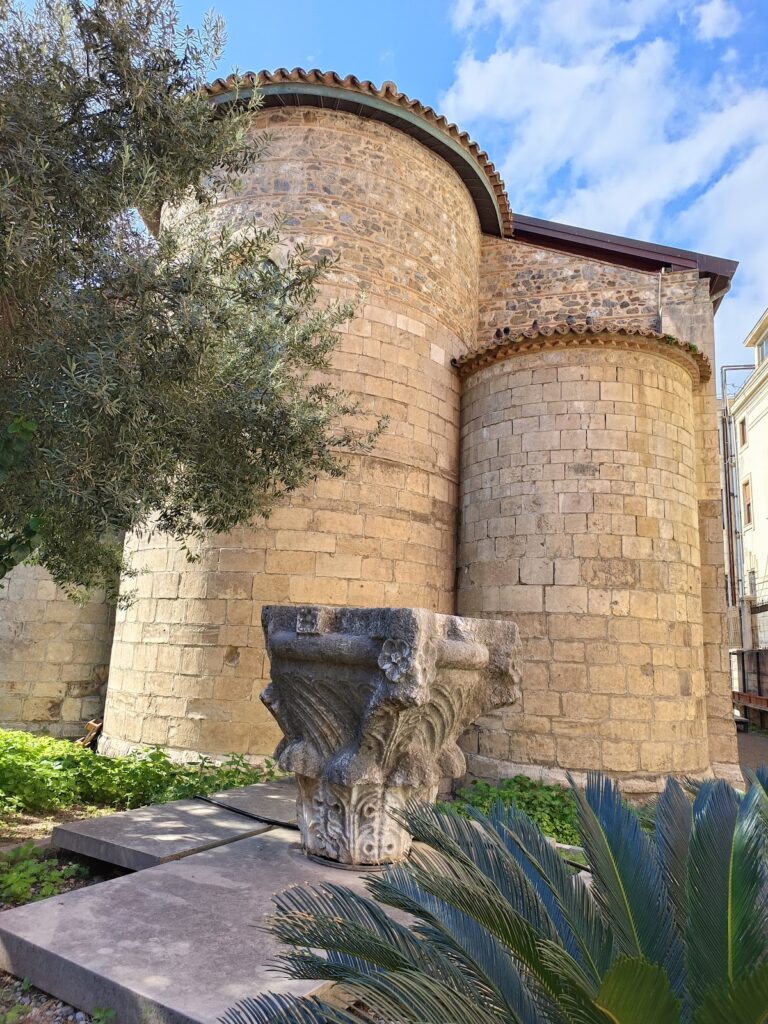
The earthquake of 28 December 1908 caused part of the church to collapse. The monumental buttresses of the splayed, crenellated apses resisted the shock. Engineer Letterio Savoja designed a reconstruction in 1923, and the Cardillo brothers’ firm carried it out from February 1926 to November 1928. The work sought to reproduce the earlier plan and style, using surviving ashlar blocks and fallen materials. The church was consecrated and reopened for worship on 25 November 1928.
In 1954, another restoration campaign repaired damage caused by bombing during the Second World War. In 1992, the main altar was replaced and the apse was remodeled around a central crucifix.
The convent and its changing uses
The convent was occupied and damaged during the British occupation of 1806 and the Garibaldian occupation of 1860. It was occupied again on 30 August 1863, completely suppressed in 1866 under anti-religious laws, and converted into offices of the financial administration. The Franciscan community was re-established in 1895. After the war, adjoining rooms were added for social uses.
The adjacent Church of Sant’Erasmo belonged to the friars until 1452, when it was granted to the coopers’ confraternity under the title of Saint Jerome. It was attached to the main church’s apses and was destroyed in the fire of 1884. The Church of Our Lady of Light stood opposite the convent’s principal entrance and contained frescoes and oil paintings by Giovanni Tuccari.
Remains
Church structure
San Francesco all’Immacolata stands on Viale Boccetta as a large Gothic building with an elongated plan and imposing forms that echo northern European architecture. Its surviving monumental apses are splayed and crenellated. Antonello da Messina depicted these apses in Christ in Pity Supported by Three Angels, now held in the Correr Museum in Venice.
The rebuilt interior uses neo-Gothic references for its altars. A nave with eight bays on each side leads to a transept, a cross arm intersecting the nave, and a central apse with two subsidiary apses. The building also has lateral entrances and access to the cloister. The right side includes a monumental station for a processional vara, a platform carrying a religious image, in the first bay, followed by the chapels of Saint Elizabeth, Saint Michael the Archangel, Anthony of Padua, Our Lady of Light, and the Holy Crucifix. A lateral entrance opens onto Viale Boccetta, and the Holy Crucifix chapel contains a statue of the Sorrowful Virgin.
The left side contains a wooden pulpit and the chapels of Saint Maximilian Maria Kolbe, Saint Lucy, Joseph of Copertino, Saint Joseph, the Immaculate Conception, and the Sacred Heart of Jesus. The Chapel of the Immaculate Conception holds a seventeenth-century Messinese statue covered with silver sheet. In the right arm of the transept is the Chapel of Saint Joseph, beside the Chapel of the Blessed Sacrament in the subsidiary apse. The left arm contains the organ and the Chapel of Francis of Assisi, while the principal apse contains the main altar.
Chapels and artworks
Former right nave
The former right nave contained eight chapels and a fourteenth-century lateral portal. Among its furnishings were the Chapel of Saint Ursula, the Chapel of Our Lady of Childbirth, the Chapel of the Flagellation, the Chapel of the Virgin, the Chapel of Francis of Assisi, the Chapel of the Porziuncola, and the Chapel of Saint Lawrence, also called the De Gregorio Chapel. The Saint Ursula chapel held Andrea Suppa’s Martyrdom of Saint Ursula and Her Companions. The Chapel of Our Lady of Childbirth contained Antonio Catalano the Elder’s Madonna and Child between Saint Diego the Confessor, Francis of Assisi, and Louis of Anjou, together with wooden sculptures of Our Lady of Childbirth.
The Chapel of the Flagellation contained Catalano’s Flagellation of Christ at the Column. The Chapel of the Virgin held a twelfth-century marble relief of the praying Virgin, later bearing the posthumous attributes of the Campo family, now in the Regional Museum of Messina. The Chapel of Francis of Assisi contained the Stigmata of Francis, attributed to Salvatore d’Antonio, and frescoes by Vincenzo Tuccari. Antonello Gagini’s marble Our Lady of the Angels, also called the Virgin of the Porziuncola, came from the Porziuncola chapel and is now in the Regional Museum.
The De Gregorio chapel, sponsored by the De Gregorio family, contained Alonzo Rodriguez’s Martyrdom of Saint Lawrence. It also held the tombs of Paola De Gregorio Spatafora, who died in 1716, Eleonora De Gregorio Donato, who died in 1719, and Lorenzo De Gregorio. The former nave also contained Alessandro Allori’s Our Lady of Itria between Saint Joseph and Saint Stephen, dated 1590 and now in the Regional Museum.
Former left nave
The former left nave included chapels dedicated to Anthony of Padua, the Marquises of Altamira, the Immaculate Conception, Our Lady of the Letter, Saint Bonaventure, and other Franciscan and saintly subjects. The Chapel of Anthony contained paintings of the saint and the miracles The Reattached Foot and The Heretic’s Mule, attributed to Antonio Catalano the Elder, as well as a fresco cycle by Nicolò Francesco Maffei. Its furnishings also included a late-seventeenth-century silver statue of Anthony.
The Chapel of the Marquises of Altamira contained a sixteenth-century marble altarpiece and three paintings by Mario Minniti, the Nativity or Adoration of the Shepherds, Saint Elizabeth Adoring the Crucifix, and Saint Margaret of Cortona. The former Chapel of Our Lady of the Letter held Alonzo Rodriguez’s Our Lady of the Letter between Saint Placid and Francis of Assisi and an anonymous painting of John Duns Scotus preaching. Andrea Suppa’s Angel Communicating with Saint Bonaventure belonged to the Chapel of Saint Bonaventure.
The former left nave also contained a sixteenth-century marble tomb for Angelo Balsamo, Baron of San Basilio and an admiral who died in 1507. Attributed to Antonello Freri, it depicts the kneeling armored deceased before a draped lectern and open prayer book, with a page holding a raised small sword. The base shows Amphitrite and bears a Latin funerary inscription. The monument was moved, reassembled, restored, and finally reassembled in the Regional Museum of Messina after the 1908 earthquake.
Transept, apse, and sacristy
Transept chapels
The former right transept contained the Chapel of Saint Joseph, with Giuseppe Manno’s large canvas The Transit of Saint Joseph, and the cenotaph of Girolamo Cappellino, a commemorative tomb that does not necessarily contain the deceased’s remains. The adjacent Chapel of the Blessed Sacrament was sponsored by the Marchetto family and decorated with frescoes by Filippo Tancredi, a mixed-marble Baroque altar, and a wooden altar ensemble.
The former left transept probably accommodated an organ in a richly carved seventeenth-century wooden structure made by Messinese craftsmen. A nearby room contained Deodato Guinaccia’s Our Lady of the Rosary with Saint Jerome and Other Saints. The area also held a bronze funerary monument erected by Giovanni Lanza for his young wife Francesca Lanza Cybo, probably in 1618. It was reassembled in 1905 at the expense of Archbishop Domenico Lancia di Brolo and is now in the Regional Museum of Messina.
Central apse
The central apse was sponsored by the Bonfiglio family, which held burial rights. Its furnishings included a wooden choir made in 1512, probably by the Palermitan Giovanni Gili, a fully modeled Crucifix attributed to Stefano Giordano, a statue of the Sorrowful Virgin, and a pelican-shaped lectern from the first half of the sixteenth century. Archbishop Ottaviano Preconio donated the lectern, which is now in the Regional Museum of Messina.
A third-century Roman sarcophagus, a stone coffin decorated with relief sculpture, was reused as the funerary urn of Federico IV of Aragon, Elisabeth of Carinthia, and the Aragonese dukes Guglielmo and Giovanni. Its relief depicts the Rape of Proserpina. Other works associated with the church include Tiburzi’s Crucifix, Gothic high-relief busts of saints from a Venetian school, Mariano Riccio’s sixteenth-century panel of the Holy Family, and a seventeenth-century Virgin of Mercy by Giovanni Simone Comandè.
Sacristy and associated works
The sacristy contained Michele Panebianco’s 1836 painting of the Immaculate Conception, a sixteenth-century Adoration of the Magi attributed to Albrecht Dürer, Deodato Guinaccia’s Saint John Pointing to Jesus in the Desert, and a sixteenth-century Deposition attributed to Colijn de Coter. The last work is preserved in the Regional Museum of Messina. Other paintings associated with the church include works connected with the Antonellian school, a Conception of the Virgin attributed to Antonio di Antonio or the school of the Antoni, and a Stigmata of Francis of Assisi traditionally attributed to Giovanni de Antonio, father of Antonello da Messina.
Anthony’s chapel and the cloister
Chapel of Anthony of Padua
The present Chapel of Anthony of Padua contains a plaster-and-papier-mache statue clad on its front with finely worked silver sheet representing the saint’s habit. The statue was formerly displayed on the chapel altar and is now kept in the convent. A surviving floor tile from the destroyed convent, bearing alleged traces of Anthony’s blood, is preserved on the altar. The primitive Chapel of Anthony stood beside the cell associated with him and the cloister well. It contained a wooden altar and a marble aedicule, a small architectural shrine or frame, attributed to Antonello Gagini. Fragments of the aedicule’s carved frame are now in the Regional Museum of Messina.
The frame once surrounded a niche probably intended for a wooden Madonna of Childbirth made around 1511 for Cassandra Bonfiglio. After that sculpture was damaged, Mario Minniti’s painting replaced it. Giovanni Tuccari frescoed the chapel. The garden behind the apses now contains the statue of Anthony that survived the 1884 fire.
Renaissance cloister
The Renaissance cloister is enclosed by thirty-six marble columns supporting round arches. A central well occupies the courtyard. The project may have been promoted by the Marullo family of Condoianni, while Antonello Freri directed the workmen. The cloister is also described as having been designed from plans and drawings by Polidoro da Caravaggio.
Domenico Gagini, Giovan Battista and Giandomenico Mazzolo, Cristoforo da Como, Andrea Mancino, and Gabriele di Battista worked on the cloister. Construction lasted several decades and was completed in 1566. In the eighteenth century, Filippo Tancredi decorated the arcades with frescoes depicting episodes from the life of Franciscan figures and the life and miracles of Anthony of Padua.
Relics and funerary memorials
Relics associated with the church include a fragment of the True Cross, the cord of Francis of Assisi, three heads of companions of Saint Ursula, a bone of Blessed Gerard, an arm bone of Saint Lawrence, and bone fragments associated with Saint Blaise, Saint Christopher, Saint Ursula, and Saint Stephen. The group connected with Saint Ursula includes the head of Saint Gerasina, identified by tradition as the martyr’s aunt and a queen of Sicily. Charles V donated this relic to Bishop Ottaviano Preconio.
The Cottone Chapel contains a funerary plaque for Andrea Cottone, Baron of Bauso, who died at Naples in 1561, and another for Giovanni, Nicolò, and Giovanni Antonio Cottone, Barons of Bauso. Both plaques preserve Latin funerary inscriptions. Other funerary features associated with the church include the tombs of Violante Palizzi, Eleonora da Procida, Beatrice Belfiore, and Giuseppe Costanzo Bonfiglio, as well as reliefs of the Presentation of Jesus in the Temple and the Healing of the Paralytic and statues identified as Allegories of Victory and Strength.
Former adjoining churches
The former Church of Sant’Erasmo contained an unattributed painting of Saint Jerome, an anonymous 1480 Virgin and Child between Francis of Assisi and Saint Lawrence, and Gaspare Camarda’s signed 1608 Virgin and Child between Saint Erasmus and Anthony of Padua. The Church of Our Lady of Light contained frescoes of Old Testament episodes and Messinese saints, together with an oil-painting cycle by Giovanni Tuccari.
Nearby sites