Tamuda: An Ancient Berber City and Roman Military Camp in Morocco
Site at a Glance
- Rating
- 4.1
- Popularity
- Low
- Country
- Morocco
- Primary era
- Classical
- Eras represented
- Classical, Medieval
- Civilizations
- Amazigh, Kingdom of Mauretania, Roman
- Site type
- City
On this page14 sections
History
Tamuda is an ancient Berber city and Roman military camp in Morocco, located about 6 km west of Tetouan in the southern part of the Martil Valley. Founded in the third century BC by Mauretanian Berbers of northern Morocco, it developed into an open Mediterranean city during the second century BC and later became an important center in the Roman province of Mauretania Tingitana.
Mauretanian foundation and development
Tamuda was established by local Mauretanian Berbers, although a possible earlier connection with Punic or Carthaginian activity remains uncertain. Phoenicians probably visited the city during the following century, mainly for trade. Its position near the Tamuda River, which connected the settlement with the Mediterranean, supported its development and commercial contacts.
The pre-Roman city flourished during the second century BC. A fire in the late first century BC devastated the Mauretanian settlement. Rome occupied Tamuda under Augustus, Rome’s first emperor, who ruled from 27 BC to AD 14. During the revolt associated with Aedemon, Roman forces destroyed the city around AD 40 to 42 and established a fortified settlement in its place.
Roman military occupation
Augustus’s successors rebuilt Tamuda as a Roman castrum, a fortified military camp organized around regular streets, gates, walls, and towers. The Roman camp is dated broadly from the first to the fifth century AD, while its construction is also associated with the second century AD. Tamuda developed under the emperors Trajan and Septimius Severus and became one of the principal cities of Mauretania Tingitana, a Roman province in northwestern Africa.
Economic activity probably included fish salting and the production of purple dye. A stone inscription found at Tamuda in 1933 and dated approximately to AD 253 to 257 records a Roman victory over unnamed barbarians. The victory is believed to have concerned the Franks. By the end of the fourth century, the camp served as the headquarters of the Ala Herculea, a cavalry unit of the limitanei, Roman frontier troops assigned to provincial border defense. The unit was associated with a cohort based at Lixus, as listed in the Notitia Dignitatum, a late Roman register of imperial offices and military units.
Late antiquity and the rise of Tetouan
During the fifth century, the surrounding region was Romanized, Christianized, and described as pacified. The fort was probably dismantled, and Tamuda may have been abandoned by the time of the Vandal arrival. Small fortifications called Tittawin stood near the Roman ruins in the late thirteenth century and were later renamed Tetouan.
After the Arab conquest, a first fortified settlement was built opposite Tamuda in 1286. A small town followed in the fourteenth century and served as a base for attacks on Ceuta. In the fifteenth century, Tetouan became a base for corsairs operating in the Strait of Gibraltar. King Henry III of Castile, who ruled from 1390 to 1406, destroyed the town and its ships.
Archaeological investigation
Archaeological work began under the Spanish High Commission in Morocco, with financial support obtained by General Dámaso Berenguer and Lieutenant Colonel Juan Lasquetty Perozo. The archaeologist César Luis de Montalbán participated in the early investigations, and Miquel Tarradell conducted extensive excavations around the 1950s. An international team from the University of Cadiz, Abdelmalek Essaadi University, and Morocco’s Ministry of Culture excavated Tamuda in 2012. Later surveys in the Martil Valley continued the type of investigations previously undertaken by Tarradell.
In July 2018, researchers found a rib fragment from a North Atlantic right whale at Tamuda. The bone dates to AD 180 to 396, and the find was proposed as evidence that Roman industrial-scale whaling may have taken place along the western Mediterranean coast.
Remains
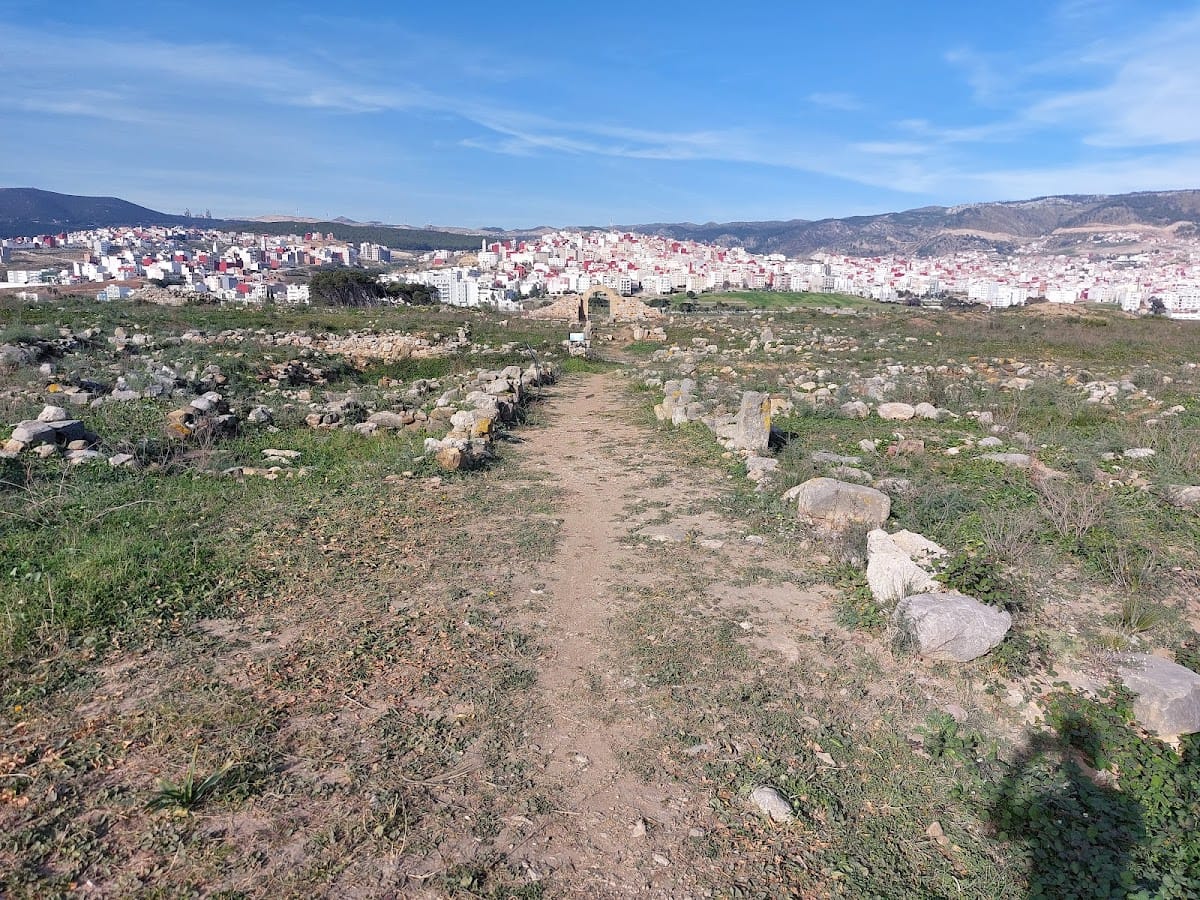
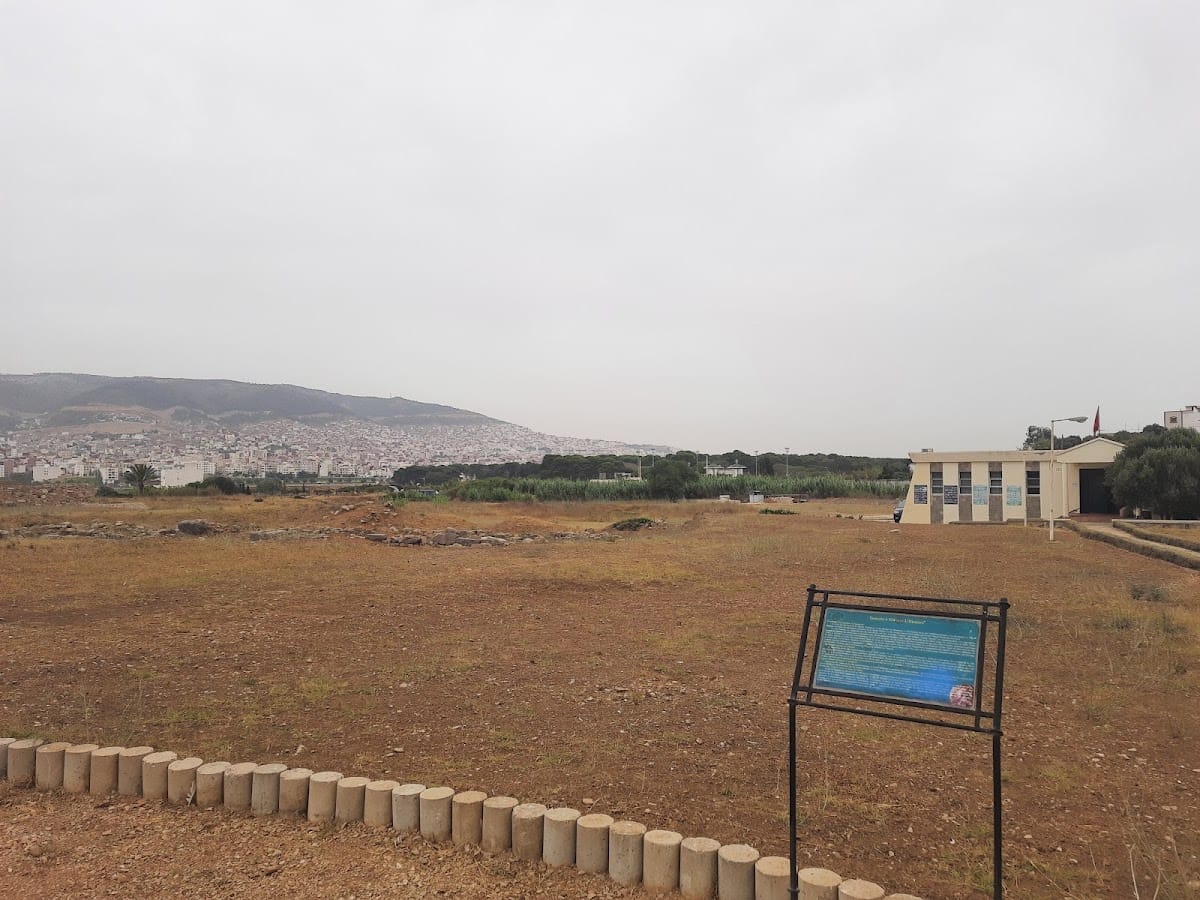
Tamuda preserves the remains of a planned Hellenistic city dating to the second and first centuries BC and a square Roman military camp used from the first to the fifth century AD. The earlier settlement had an oriented urban plan divided into functional districts, while the Roman installation was enclosed by defensive walls and organized around intersecting principal streets. The site stood beside the Tamuda River, known in ancient references as flumen tamudae, which connected it with the Mediterranean.
Pre-Roman urban remains
Planned city and civic district
The pre-Roman city followed a regular plan and contained several functional areas. Its southern district consisted of house blocks with rectangular rooms. In the southeastern sector, a square plaza was surrounded by rooms and probably served as the forum, or civic center. A necropolis lay west of the wall enclosing this space, giving the urban plan a distinct relationship between civic and burial areas.
Roman military camp
Walls, gates, and principal streets
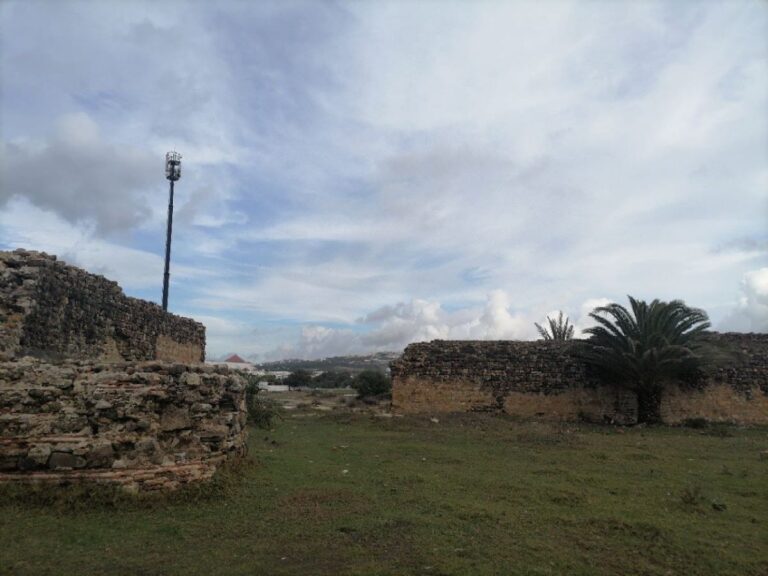
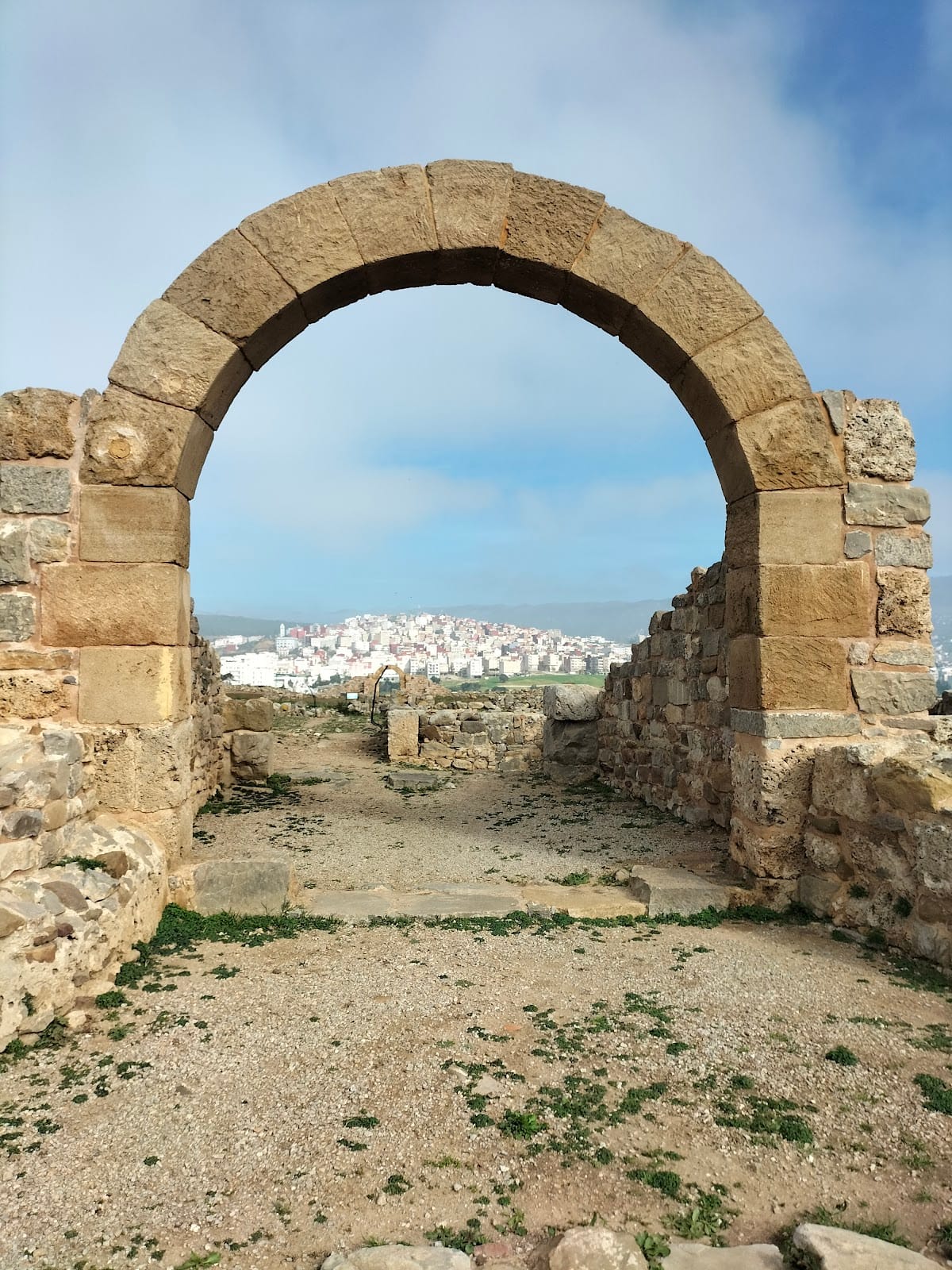
The Roman castrum was a square, walled installation measuring approximately 98 by 93 m. Its gates faced the four cardinal directions, and towers defended the corners and the areas beside the entrances. By the end of the third century, semicircular towers had been added at the corners and along the curtain walls, the continuous defensive walls joining the towers.
Inside the camp, the north-south cardo maximus and east-west decumanus maximus formed the two principal streets. Their intersection contained a large cistern supplied by a canal. Other buildings used relatively simple construction techniques and included square or rectangular rooms, some with paved floors.
Southern baths
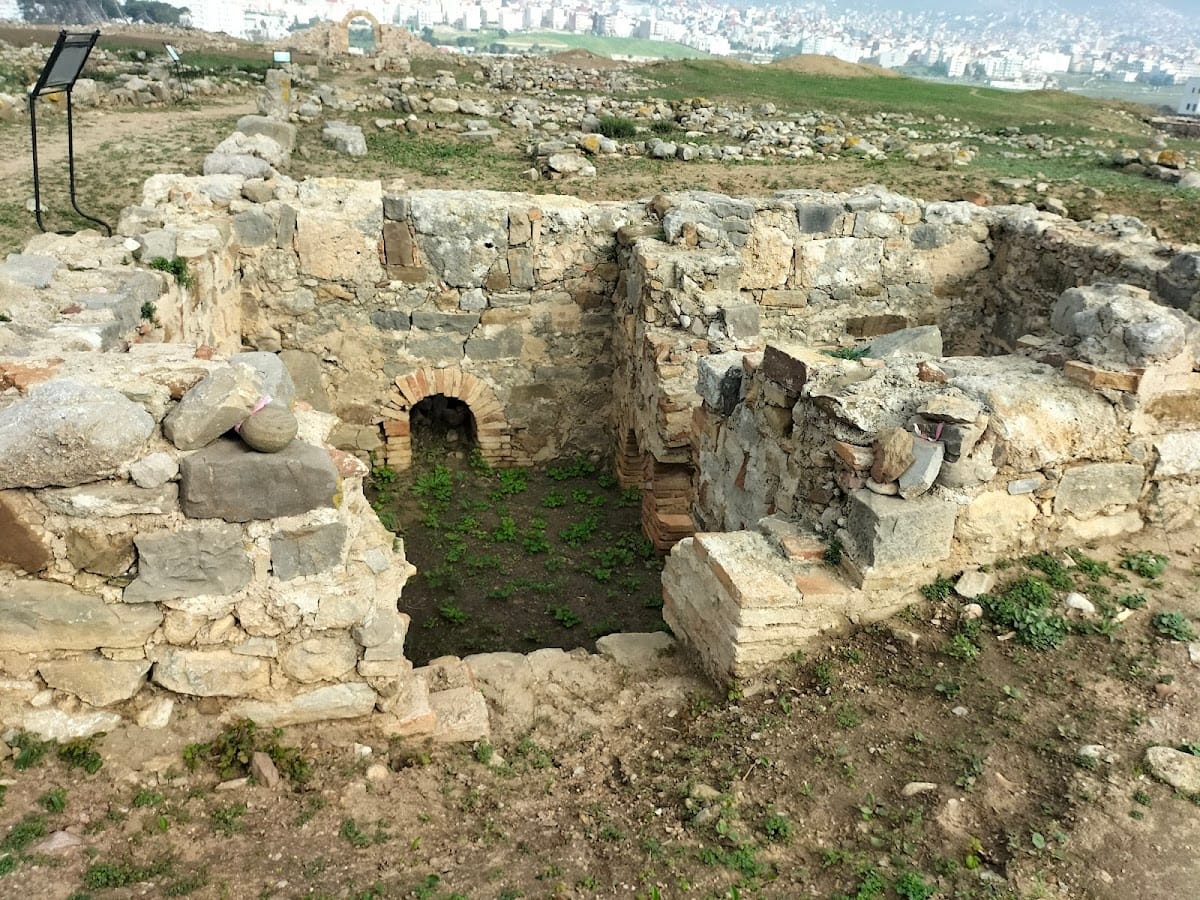
Small baths stood near the southern gate. They included a brick-built room and were separated by a wall resting on three brick arches. Their position within the camp places them among the Roman installation’s service and communal structures.
Finds and surviving objects
Phoenician and Roman artifacts
Excavations have yielded artifacts from both the Roman and Phoenician periods. A clay vessel bears a seahorse with a rider, an image associated with Phoenician iconography. Many objects from Tamuda are preserved in the Archaeological Museum of Tetouan, including a Roman amphora and a mosaic associated with the site.
Whale-bone find
The excavated rib fragment belongs to a North Atlantic right whale and dates to AD 180 to 396. Its presence at Tamuda contributes physical evidence to interpretations of marine exploitation during the Roman period.