Varagavank: An Armenian Apostolic Monastery on Mount Varag


Site at a Glance
- Rating
- 3.9
- Popularity
- Low
- Country
- Turkey
- Primary era
- Medieval
- External website
- Open
- Eras represented
- Iron Age, Medieval, Early Modern, Modern
- Civilizations
- Armenian, Ottoman, Urartian
- Site type
- Religious
- Remains
- Monastery
On this page18 sections
History
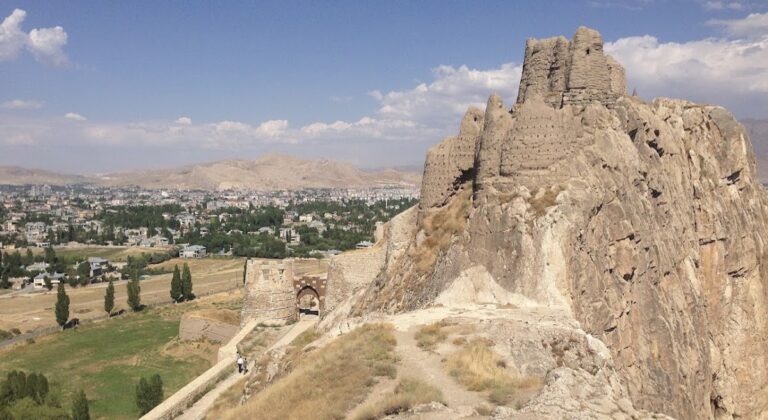
Varagavank was an Armenian Apostolic monastery in present-day Turkey, on Mount Erek, also called Mount Varag, southeast of Van. The complex developed on a religious site with pre-Christian associations and became one of the major ecclesiastical, educational, and cultural centers of the Armenian Church around Lake Van.
Pre-Christian and early Christian traditions
Religious activity on the mountain preceded Christianity. Urartian inscriptions dedicated to the gods Haldi and Teisheba were present at the site, which later housed a sanctuary of Vahagn, identified with the Zoroastrian deity Verethragna. The name Varag may derive from this earlier religious association.
Christian traditions connect the site with Saint Hripsime, who is said to have hidden a fragment of the True Cross there in the late third century while fleeing the persecution of the Roman emperor Diocletian. Another tradition attributes the earliest church foundation to Saint Gregory the Illuminator. In the seventh century, the hermit Thodik reportedly rediscovered the relic. Traditions place this event in either 653 or 664.
Catholicos Nerses III, known as the Builder, established the Church of Surb Nshan at Varag and instituted the Feast of the Holy Cross of Varag in connection with the relic. The feast was celebrated on the Sunday nearest 28 September, two weeks after the Feast of the Cross. The monastery also observed the Feast of the Ascension.
The Artsruni monastery
The monastery itself was founded in the early eleventh century during the reign of Senekerim-Hovhannes Artsruni, king of Vaspurakan. The Artsruni were the Armenian dynasty that ruled the region around Lake Van before Vaspurakan was annexed by the Byzantine Empire in 1021. Varagavank was established on the earlier religious site and initially served as the necropolis of the Artsruni kings.
Queen Khushush, daughter of King Gagik I of Armenia and wife of Senekerim-Hovhannes, founded the Church of Surb Sopia in 981. The Church of Surb Hovhannes was built to the north during the tenth century. Queen Mlke, wife of Gagik I, presented the monastery with the Gospels of Queen Mlke, and another tradition credits her with commissioning the Church of Surb Astvatsatsin and beginning an ornamented Gospel manuscript.
Varagavank later became the seat of the archbishop of the Armenian Church in Van. Its abbots also acted as leaders of Van and surrounding villages. The True Cross remained at the monastery until 1021, when Senekerim-Hovhannes carried it to Sebastia after the Byzantine annexation of Vaspurakan. In 1022, his son Atom founded the Surb Nshan Monastery there. After Senekerim-Hovhannes died in 1025 and was buried at Varagavank, the relic was returned.
In 1237, Father Ghukas of Varagavank moved the True Cross to northeastern Armenia because of fear of Muslim attack. He settled at the Anapat Monastery in the Tavush region, which was subsequently renamed Nor Varagavank.
Destruction and restoration in the medieval period
The Mongols attacked and looted Varagavank in 1318. All its churches except Surb Hovhannes were destroyed. The monks sheltered inside that church because it had an iron door. Reconstruction took place from about 1320 into the 1350s and was associated with Bishop Peter, Hovasap, and the scholar Karapet.
From the fourteenth through the sixteenth centuries, Varagavank became a center of Armenian manuscript production. Its scribes copied and illuminated religious books and added colophons, or notes about a manuscript’s production, ownership, and transmission. Manuscripts produced at or associated with the monastery are now held in the Matenadaran, the major Armenian manuscript repository and research institution in Yerevan.
Early modern upheavals
Safavid Emperor Tahmasp I plundered the monastery in 1534. An earthquake destroyed Varagavank and other buildings in the Van region in 1648. Father Kirakos began rebuilding immediately with financial support from wealthy merchants of Van. A seventeenth-century account states that four churches were restored.
In 1651, Suleyman, prince of Hoşap Castle, attacked the monastery and seized the True Cross, manuscripts, and other treasures. The relic was later recovered through ransom and taken to the Tiramayr Church in Van in 1655. It remained there until 1915, when that church was renamed Surb Nshan, or Etchmiadzin Church.
Financial difficulties contributed to the monastery’s decline late in the seventeenth century, and many treasures were sold in 1679. Archbishop Bardughimeos Shushanetsi renovated the complex in 1724. Father Baghdasar vardapet, an Armenian cleric recognized for theological and scholarly learning, decorated the gavit, or church entrance hall, with frescoes in 1779. The unknown painter combined Armenian, Persian, and Western European artistic styles.
Nineteenth-century religious and educational center
A surrounding wall was built in 1803. Archbishop Galust completely renovated Surb Khach in 1817 and converted it into a manuscript repository. Tamur Pasha of Van robbed the monastery’s treasures and killed Father Mktrich vardapet Gaghatatsi in 1832. After an earthquake, Gabriel vardapet Shiroyan restored Surb Sion in 1849 and converted it into a wheat storehouse.
Mkrtich Khrimian became father of Varagavank in 1857. He made the monastery effectively independent of the Van prelacy and answerable only to the Armenian Patriarchate of Constantinople. He founded a printing press and a modern school, and from 1858 to 1864 published Artsvi Vaspurakan, the first newspaper in historical Armenia.
The school taught theology, music, grammar, geography, Armenian studies, and history. The novelist Raffi briefly taught there. The first students graduated in 1862, and the institution was later transformed into an agricultural school. After Khrimian was summoned to Constantinople in 1885, the monastery returned to the authority of the Van diocese. His successor, Archbishop Grigoris Aliatjian, renovated the printing press, school building, and other structures before serving until 1888.
The monastery’s religious role was supported by an extensive agricultural estate. It reportedly possessed 619 pieces of arable land and broad pasture, while feast days brought many pilgrims and donations. Varagavank was described as one of the great monastic centers of the Armenian Church and as the richest and most celebrated monastery in the Lake Van region. It appears in Raffi’s novel Sparks, published from 1883 to 1887, and in a 1910 article by the poet Hovhannes Tumanyan.
Attacks, destruction, and later deterioration
During the Hamidian massacres of 1896, the monastery was attacked and looted. Teachers, students, monks, and workers were killed, while much of the administrative complex was burned and reduced to ruins. Varagavank was subsequently abandoned.
On 20 April 1915, approximately thirty gendarmes arrived at Varagavank and killed two monks and four servants. The gendarmes occupied the monastery until 30 April. Their withdrawal coincided with the arrival of about 3,000 Armenian refugees from the Hayatzor valley, followed by about 3,000 other survivors of massacres who sought refuge in villages and monasteries on Mount Varag.
Armenian self-defense units were formed on the mountain. About 250 men were stationed at Varagavank, while most of the remaining forces were based at the nearby Shushants Monastery. On the order of Van governor Djevdet Bey, Ottoman forces returned with approximately 300 cavalrymen, 1,000 militia members, and three artillery batteries. Shushants was captured and burned, followed shortly afterward by Varagavank.
Most villagers and refugees escaped to Van at night. The exact date of Varagavank’s burning is uncertain. Contemporary missionary testimony places the destruction between 27 April and 8 May 1915, while one diary gives 4 May. The destruction formed part of the wider destruction and confiscation of Armenian institutions during the Armenian genocide. By that year, the monastery’s ancient manuscripts and other treasures had been lost, looted, relocated, or destroyed.
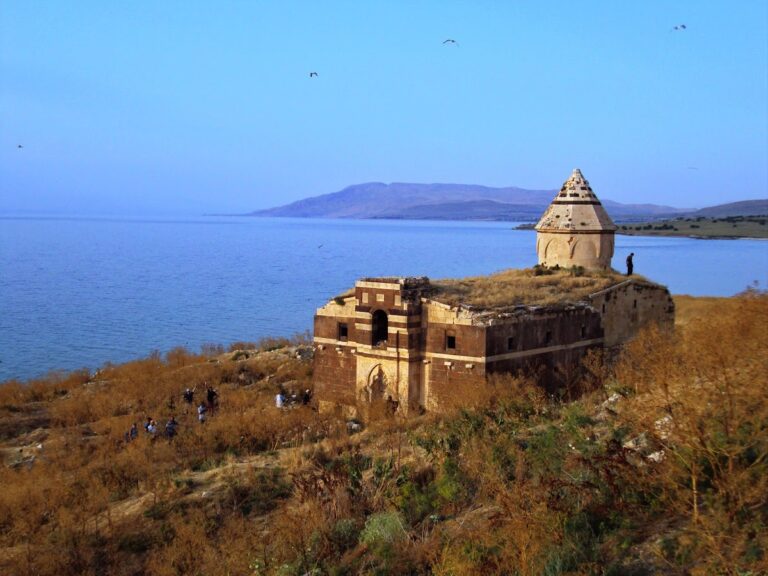
A substantial part of the surviving fabric was destroyed during the 1960s. By 2006, the remains were being used as a barn, and later reports described continuing deterioration and the survival of only limited sections. Officials in Van Province announced proposed restoration plans in 2010, including Varagavank and Ktuts Monastery on Çarpanak Island. The 2011 Van earthquake caused further damage: parts of the main church collapsed and existing cracks widened. Although engineers inspected the site and local and provincial authorities expressed support for preservation, restoration was delayed by social and natural obstacles.
In 2017, remaining stones were reported to be regularly removed for construction of a local mosque and other buildings. Modern ownership was disputed. Fatih Altaylı stated that he had inherited the monastery through his grandfather and father, while Armenian activists sought the return of the title to an Armenian community foundation. Altaylı said he was willing to transfer it to the Armenian Patriarchate of Constantinople, but no agreement had been reached by September 2014.
Remains
Varagavank stood in a valley about 1,800 meters above sea level on the slopes of Mount Varag. A narrow gorge divided the mountain into an eastern upper section and a western lower section toward Van. Upper Varag and Lower Varag could appear from a distance as one complex, but Varagavank was the lower monastery. Its courtyard extended from the northeast toward the south. Two-storey buildings along the western and southern sides contained monastic cells, school and parish classrooms, the episcopal residence, and service rooms. The main entrance lay on the southwest beside the monastic barn and sheepfold.
The lower monastery churches
Surb Astvatsatsin
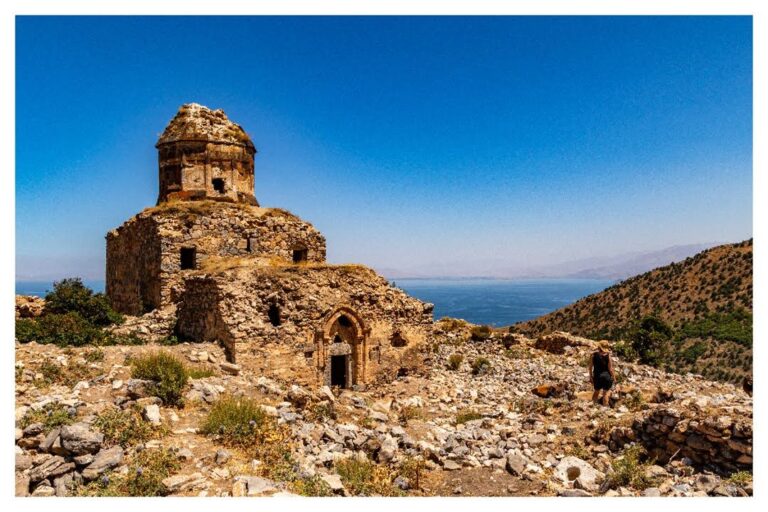
Surb Astvatsatsin, the principal church, dates to the eleventh century. Its cross-shaped plan had no internal columns and included four apses, horseshoe-shaped arches, four corner recesses leading toward the apses, and four small, narrow windows. A twelve-sided dome carried a pyramidal cupola. The western recesses were closed because one served as the prayer place of the Artsruni king and the other as the prayer place of the queen.
The western entrance opened onto the gavit later known as Surb Gevorg. Surb Astvatsatsin was built from large rough stones, while the cupola was made of fired brick and the walls were painted white. Its plan was similar to that of Saint Hripsime Church at Vagharshapat, and it was regarded as the most beautiful of the Varag churches.
Surb Sopia
Surb Sopia stood in the southern part of the complex and was its earliest structure. It dates to the tenth century, and an inscription on its western wall gives 981 as the date of its construction by Queen Khushush and Senekerim Artsruni. In the late medieval period it was fortified and became known as Berdavor. Its semicircular sanctuary and defensive features indicate that monks used the building as a refuge during periods of danger.
Surb Nshan and Surb Hovhannes
Surb Nshan was a small church with horseshoe-shaped arches and a wooden dome. Its southwestern doorway connected it with Surb Astvatsatsin, while its dome had disappeared by the modern period. Surb Hovhannes, also called the Church of the Forty Monks, was built from finely dressed stone. It had horseshoe-shaped arches, an arched sanctuary, and an octagonal cupola with four windows. Its southwestern doorway connected it with Surb Sopia.
Surb Khach
Surb Khach was built from dressed stone and contained a semicircular sanctuary with a wooden dome. Following its restoration in the nineteenth century, it was converted into a manuscript repository. This reuse connected the building directly with Varagavank’s continuing role as a center of Armenian writing and preservation.
Surb Gevorg and the gavit
Surb Gevorg consisted of a square gavit built west of Surb Astvatsatsin in 1648 by the architect Tiratur. The entrance hall had an octagonal dome, an entrance vestibule, and richly painted oil decorations. During the nineteenth century, it functioned as a church under the name Surb Gevorg. Its northern side connected with Surb Khach, while its eastern entrance led toward Surb Astvatsatsin. A recess in the northeast corner served as a baptistery.
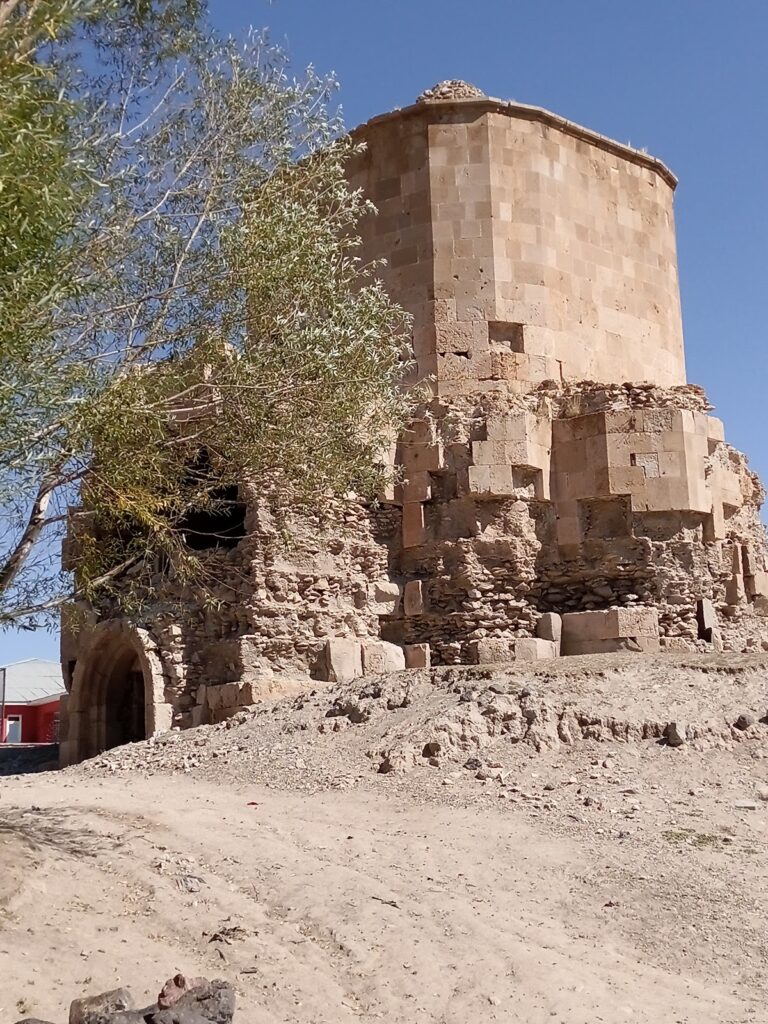
A three-arched open porch from the seventeenth century stood west of the gavit. The walls of the entrance hall were covered with frescoes in 1779. Their subjects included King Abgar V, Emperor Theodosius I, Saint Gayane, Saint Hripsime, Khosrovidukht, and Gabriel. The tombs of King Senekerim, his wife, and Catholicos Peter of Ghetadartz were located at Surb Gevorg. It is the best-preserved surviving section of the monastery, although its dome is partly collapsed and retains traces of frescoes.
Surb Sion
Surb Sion stood south of Surb Gevorg. After its dome and much of its walls were destroyed, the building was converted into a wheat storehouse. Gabriel vardapet Shiroyan restored it after the earthquake of 1849, giving the church a later agricultural use within the monastery complex.
Upper Varagavank
Upper Varagavank, also called Surb Grigor Monastery, stood on a plateau northeast of the lower monastery. It contained three churches, Surb Prkich, Surb Astvatsatsin, and the Church or Chapel of Surb Hripsime, also called the Chapel of Saint Gregory. The upper complex was built in three phases.
Upper Varag’s Surb Astvatsatsin was associated with the Hripsime virgins and stood on the slope called Karmravor. It faced Shushants village, Van’s Aygestan district, and Lake Van. Surb Prkich and the Chapel of Surb Grigor were built between the ninth and tenth centuries. The chapel had a baptistery recess in its northern wall.
Inscriptions, carvings, and surviving fabric
Urartian cuneiform inscriptions were reused as lintels above the western entrances of several churches. Surb Astvatsatsin contained a khachkar, an Armenian carved stone bearing a cross and often an inscription, while another khachkar was erected at the monastery in 1402.
The surviving remains include a few brick vaults and scattered ruins among later village buildings. Some sections were used to shelter goats, and the complex was also used as a barn. Surb Gevorg remains the most substantial surviving church, while the dome of Surb Nshan is entirely lost. The 2011 earthquake caused parts of the main church to collapse and widened existing cracks.
Manuscript heritage
Varagavank’s manuscript heritage reflects centuries of copying, illumination, and liturgical scholarship. Important works associated with the monastery include the Gospels of Queen Mlke, a 1293 Gospel, a 1309 Gospel copied by Stepanos of Varag, a 1354 Bible donated to Surb Nshan, and a 1401 Homiliary. Later holdings included Gospels from 1435, 1444, 1511, 1559, 1617, and 1739; Haysmavurks, collections of saints’ lives and feast-day readings, from 1442, 1445, 1446, 1684, and other periods; and Gandzarans, Armenian liturgical books of hymns and ceremonial texts, from 1448, 1486, and the sixteenth century.
The collection also included a 1507 Gospel of John and Sharakan, an Armenian liturgical hymn collection, a 1534 Mashtots ritual book, a 1602 Bible, a 1644 Psalter, a 1660 Sharakan, and a 1772 commentary on the theology of Proclus. Colophons and inscriptions from the monastery preserve information about the production and transmission of these works. A number of the manuscripts are now held at the Matenadaran in Yerevan.
Nearby sites