Sase Monastery: A Serbian Orthodox Monastic Estate in Bosnia and Herzegovina

Site at a Glance
- Rating
- 5
- Popularity
- Very Low
- Country
- Bosnia and Herzegovina
- Primary era
- Medieval
- Eras represented
- Medieval, Modern
- Civilizations
- Ottoman, Serbian
- Site type
- Religious
- Remains
- Monastery
On this page8 sections
History
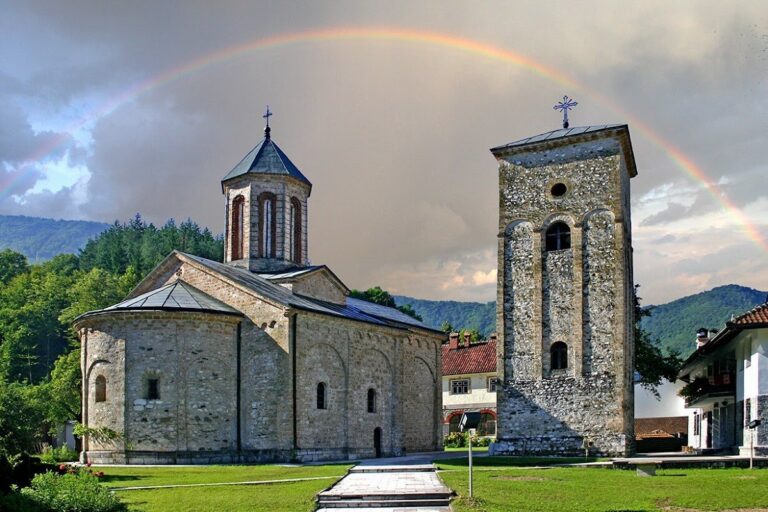
Sase Monastery is a Serbian Orthodox monastery in Bosnia and Herzegovina, located at Sase near the ancient Roman site of Domavia. Built in 1242 during the medieval Serbian period, it began as a metoch, a dependent monastic estate administered in connection with a larger monastery, belonging to Hilandar on Mount Athos. Its foundation is traditionally attributed to Uroš Nemanjić, identified in that tradition as Saint Emperor Stefan Uroš V.
Medieval foundation and mining community
The monastery stood in an area known since Roman times for rich deposits of silver, lead, and zinc. Its foundation was connected with the religious needs of Orthodox miners who worked in the surrounding mines. Sase also preserved an association with its traditional founder, whose cross was reportedly kept there for a long period.
As the Ottoman conquest of Bosnia brought major changes to the region, the mines and their settlements were abandoned. Sase Monastery fell into ruin, and the foundations of its former church remained covered by earth for almost four centuries.
Rebuilding and parish use
The reopening of the Sase mine in 1850 revived activity in the area. In 1858, miners excavated the monastery foundations and built a new church on them. This church was reportedly dedicated to Saint Peter the Apostle and served as a parish church for more than a century, mainly for the Bratunac parish.
Restoration, wartime damage, and revival
A new restoration phase began in 1989. The foundations of a monastery residence were consecrated, and a new copper roof was installed during ceremonies marking the monastery’s 750th anniversary. War prevented the planned consecration of the residence in 1991.
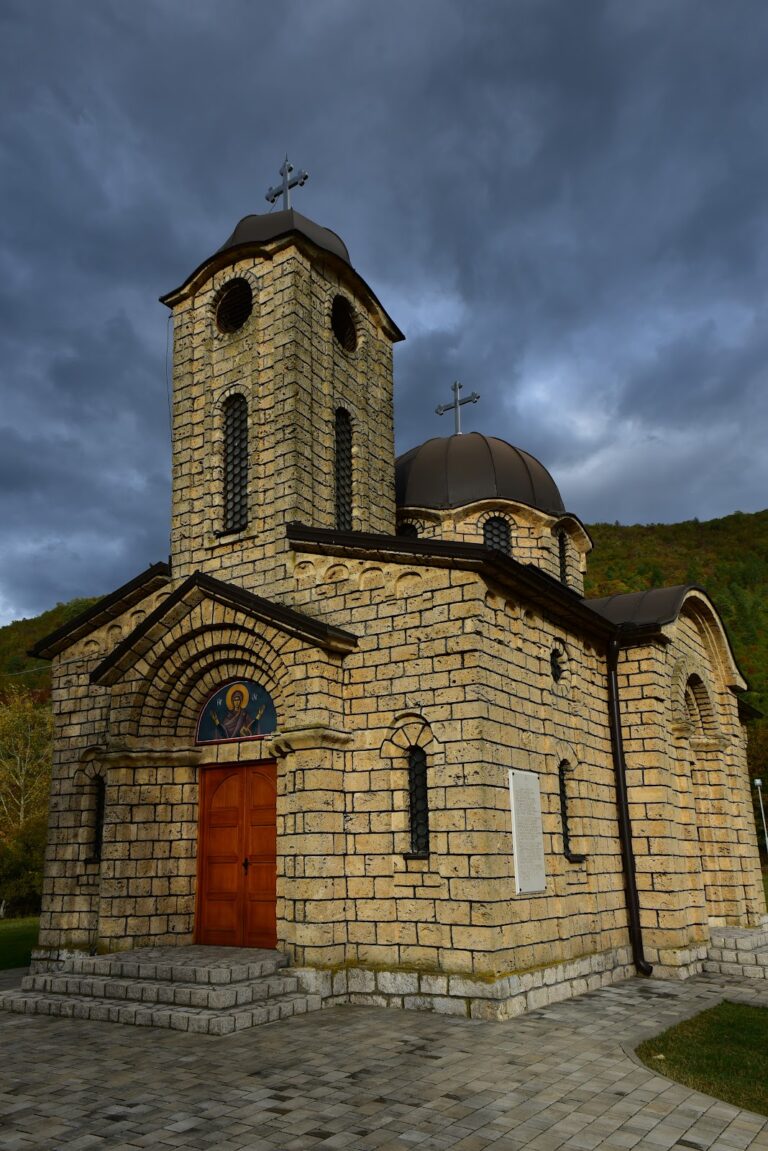
During the 1992–1995 war, the monastery church was damaged in early 1992, while the newly built residence was destroyed. The older church was later demolished. Bishop Vasilije of Zvornik-Tuzla supported efforts to revive monastic life, and large-scale reconstruction began in 2002. The work was completed in 2010, and the rebuilt monastery church was consecrated on 18 September that year.
Relics and patronage
Sase commemorates Saint Emperor Uroš as its founder and patron. On 5 December 2007, Bishop Vasilije presented the monastery with portions of the relics of King Uroš I and Saint Emperor Stefan Uroš V, two medieval Serbian rulers associated with the Nemanjić dynasty. The gifts came respectively from Bishop Joanikije of Budimlje-Nikšić and Serbian Patriarch Pavle. A portion of the relics of Saint Nektarios of Aegina, a Greek Orthodox bishop and twentieth-century saint associated with the island of Aegina, is also kept at the monastery.
Remains
Sase Monastery occupies a setting near Domavia, where the remains of two Roman buildings have been found. The surviving archaeological context includes large baths and a municipium building, a Roman municipal town with an organized civic administration. Both structures existed by AD 220 and continued in use until the fourth century.
Earlier church and archaeological relief
The church demolished after the wartime damage had a copper-sheet roof over an older wooden-shingle roof. Its altar wall contained one window, while each long side of the building had two windows. The openings ended in shallow segmental arches, and the western side had an arched entrance positioned off-center toward the north.
A stone relief slab was set into the outside of the southern facade. It carried a late-antique double half-length portrait of a woman and a man holding a scroll. Its original purpose remains uncertain, although it is thought to have been funerary. One recorded example measured 131 centimeters in height and 62 centimeters in width. The inscription panel was empty, while the pediment bore ornament resembling a rose.
Reconstructed monastic complex
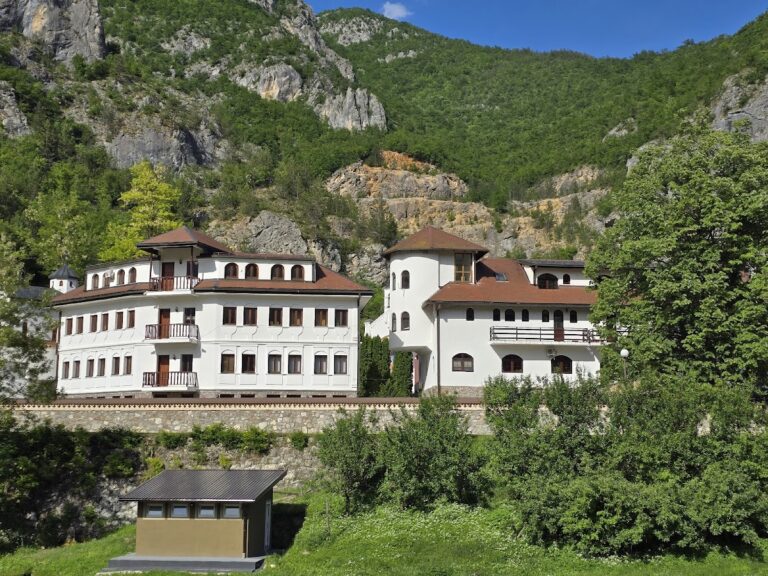
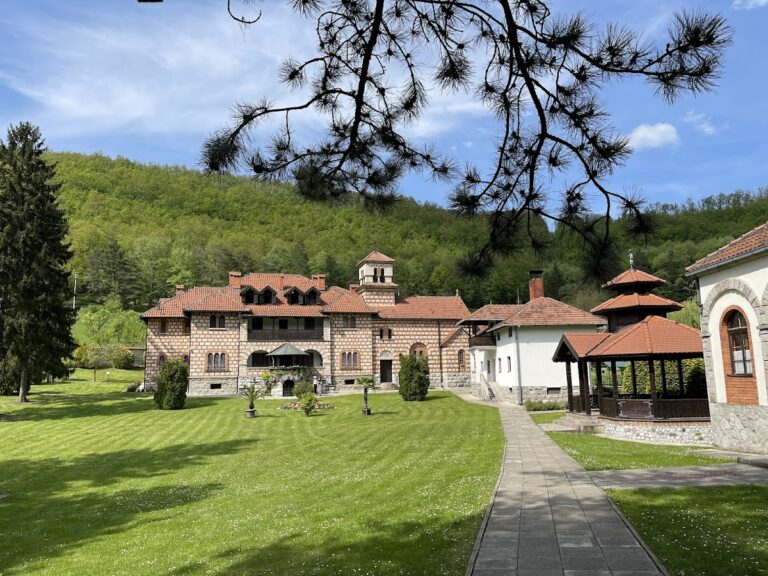
During the rebuilding period, two prefabricated buildings served the monastery. One provided a place for worship, while the other contained monastic cells, a common room, and a kitchen and functioned as the residence. The reconstructed monastery church was painted by craftsmen from Petar Bilić’s icon-painting workshop in Belgrade. Rade Pantić of Milići executed all of its woodcarving.
Nearby sites