Mustafa Çelebi Mosque: An Ottoman Place of Worship in Struga

Site at a Glance
- Rating
- 4.8
- Popularity
- Very Low
- Country
- North Macedonia
- Primary era
- Early Modern
- External website
- Open
- Eras represented
- Early Modern
- Civilizations
- Ottoman
- Site type
- Religious
- Remains
- Mosque
On this page7 sections
History
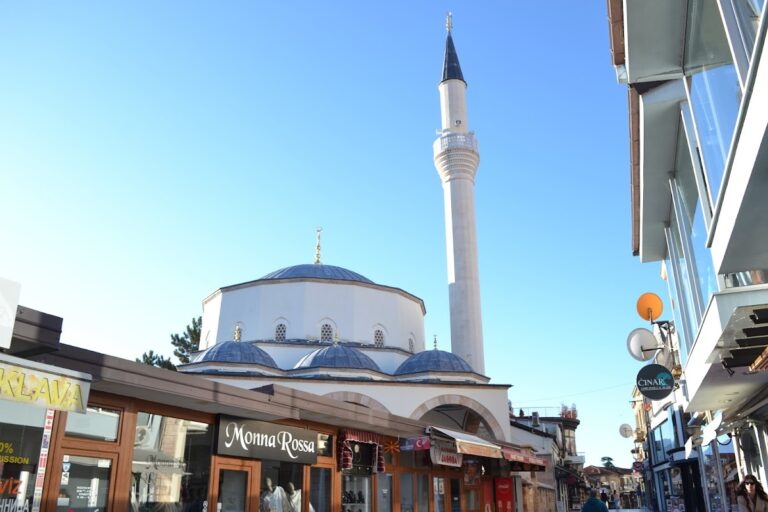
Mustafa Çelebi Mosque is an Ottoman Sunni mosque in Struga, North Macedonia, built between the late 16th and early 17th centuries. It stands east of the town square and the Black Drin River on Vardarska Street, beside the Mustafa Çelebi Hammam. The name refers to Mustafa Çelebi, since Çelebi was an Ottoman honorific for a gentleman or educated person. The mosque follows Sunni Islam and belongs to the Struga Mufti Office, a regional Islamic administrative body led by a mufti, an Islamic legal scholar.
Ottoman religious setting
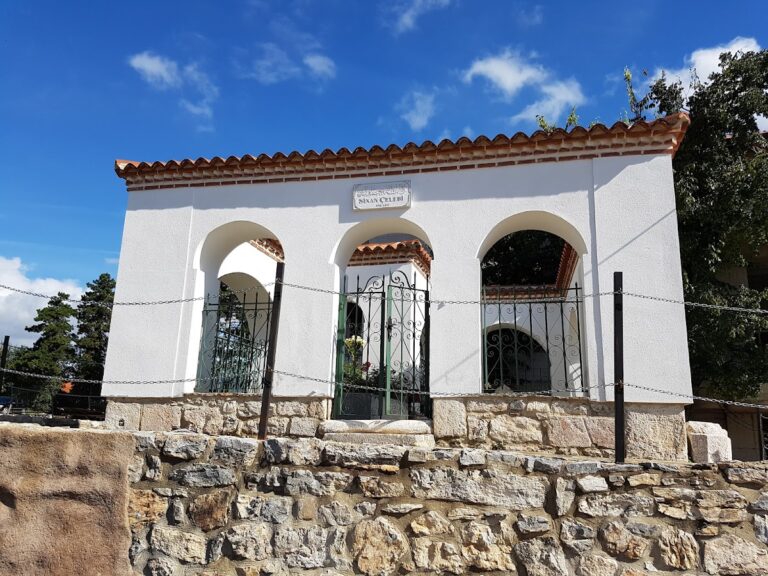
The mosque formed part of a wider religious setting that included the nearby Hasan Baba tekke, a lodge associated with the Halveti Sufi order. The order’s sheikhs directed spiritual communities and their lodges. An adjoining tomb structure, probably built in the early 18th century, contains the graves of eight sheikhs connected with the Hasan Baba institution.
Renovation and conservation
The building was renovated in 1985–1986, when its former porch was converted into a two-storey structure and incorporated into the prayer space. Further reconstruction took place during the 2010s. In 2012, a fire damaged an auxiliary building. An attempt to demolish the damaged part was halted after intervention by the Institute for the Protection of Monuments and strong public opposition, and the mufti who ordered the demolition was dismissed. The auxiliary building was later rebuilt, while repairs to the mosque followed conservation standards for protected monuments.
Mustafa Çelebi Mosque was designated significant cultural heritage on 12 December 2013 and is recognized as a cultural monument in North Macedonia.
Remains
Prayer hall
The mosque is a single-room domed building measuring 7.25 by 7.40 metres. Its dome rests on a shallow octagonal drum, with squinches, structural devices that create a suitable transition to a dome, forming the connection between the room and its covering. The dome was originally clad in lead and was later covered with sheet metal. Windows occupy the northeast, southeast, and northwest sides in two rows. Each of those sides has two lower windows and one upper window, while the southwest windows are blocked by the attached tomb structure. The lower windows originally had stone frames, relieving niches, broken arches, and wooden lattice screens. These features were removed during the 1985–1986 intervention.
Minaret and interior fittings
The minaret rises on the mosque’s west side. It begins with an octagonal base, continues into a polygonal shaft, and has a sherefe, the balcony of a minaret from which the call to prayer is traditionally proclaimed, near the top. The balcony has a metal railing and profiled decoration made from vertically laid bricks arranged in three rows. Inside, the mihrab, the wall niche indicating the direction of prayer, is a semicircular recess set within a profiled rectangular frame. Its upper part is finished with vertically arranged bricks in five rows. A simply formed wooden minbar, the raised pulpit used for the Friday sermon, stands to its right. A mahfil, or interior gallery, extends across the full width of the northwest wall and provides access to the minaret.
Porch and tomb structure
The present porch has a hipped, four-sided tiled roof and ornamental interior decoration added during the renovation. Along the full width of the mosque’s southwest wall stands the attached tomb structure, or turbe, a building associated with the graves of honored religious figures. Its three-sided tiled roof covers two rooms. The entrance room contains the grave of Rifat Efendi. The other room holds the graves of Hasan ibn Feyzulah, Kadri Efendi, Arif Efendi, Ferush Hanim, Kemal Efendi, Saadet Hanim, and Sakine Hanim. Numerous gravestones are located in the mosque courtyard.