Asinou – Panagia Phorbiotissa: The Monastery Church of Forvion


Site at a Glance
- Rating
- 4.7
- Popularity
- Low
- Country
- Cyprus
- Primary era
- Medieval
- External website
- Open
- Eras represented
- Medieval
- Civilizations
- Byzantine
- Site type
- Religious
- Remains
- Church
On this page6 sections
History
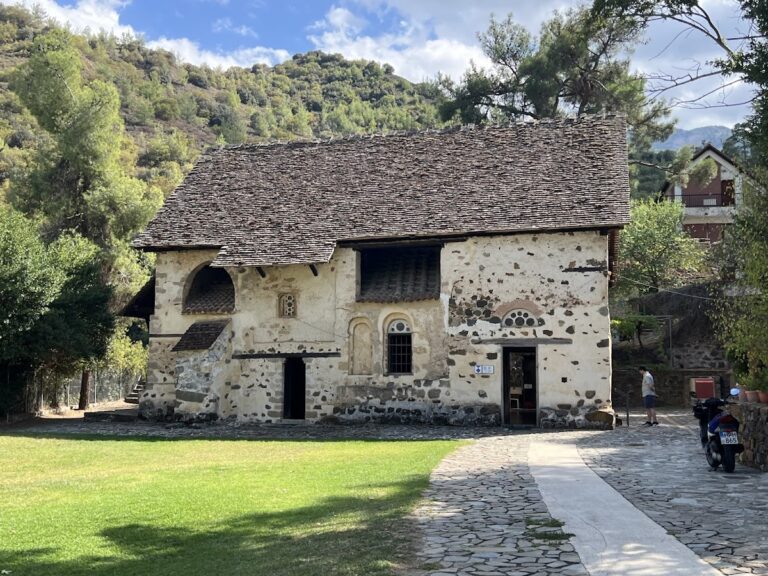
Asinou – Panagia Phorbiotissa is a Byzantine Christian church in Cyprus, about 5 kilometres south of Nikitari in the Troodos Mountains, built in the early twelfth century as the principal church of the Monastery of Forvion. Dedicated to the Virgin Mary, it is known as the Panagia, meaning “All-Holy,” and the Theotokos, a Christian title for Mary meaning “God-bearer.” The church belongs to the group of nine painted churches in the Troodos region inscribed on the UNESCO World Heritage List in 1985.
The Monastery of Forvion
The Monastery of Forvion was founded in 1099, and its principal church became the katholikon, the main church of an Eastern Christian monastery. The monastery continued to function during the period of Ottoman rule before being abandoned in the eighteenth century. The church is the only surviving part of the monastic complex.
The name “Phorbiotissa” may refer to the euphorbia plant, which grows abundantly in the area. “Asinou” may derive from the ancient settlement of Asine in the Argolid.
Early Byzantine Painting
A donor inscription places the church’s painting in 1105–1106, during the reign of Emperor Alexios Komnenos. It attributes the work to the urgent request and resources of the official Nikolaos Ischirios. The paintings belong to two principal phases, with the earlier group dating from the early twelfth century and reflecting new tendencies in Komnenian art, the Byzantine style associated especially with the Komnenos emperors of the eleventh and twelfth centuries. A later phase was added in the fourteenth century.
Remains
Church Structure
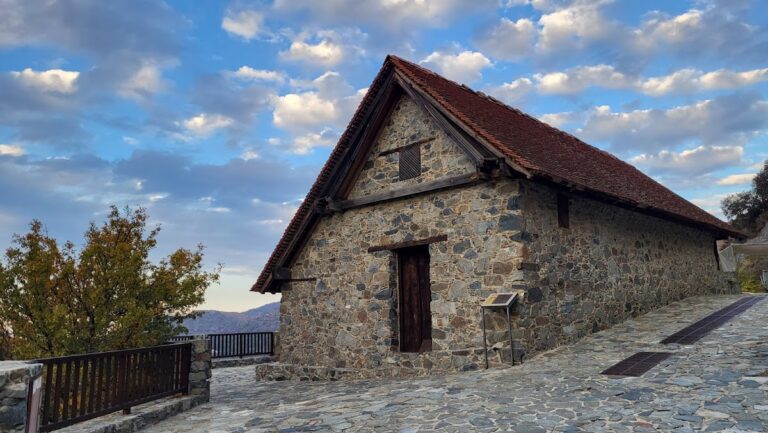
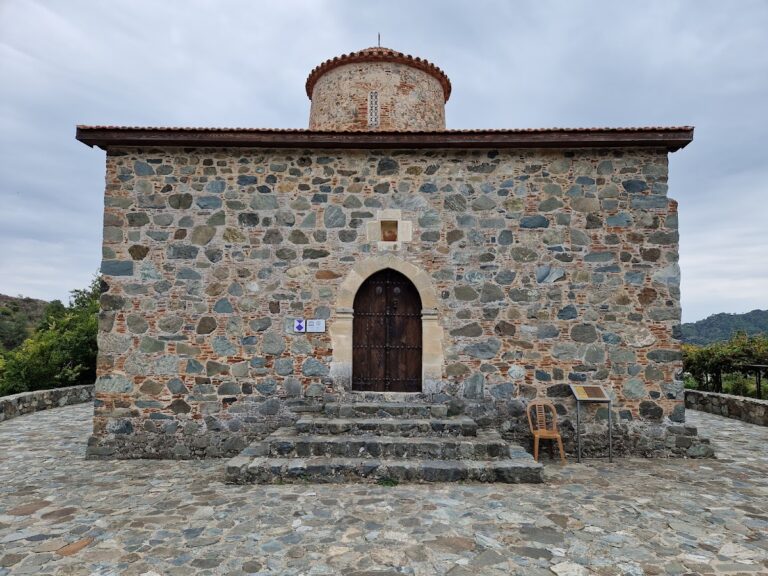
Asinou – Panagia Phorbiotissa is a single-nave, one-storey stone building covering approximately 120 square metres. Its vaulted nave and apse date from the early twelfth century. The narthex, an entrance vestibule west of the main worship space, has a vaulted roof and apses on its northern and southern sides; this addition probably belongs to the late twelfth century.
The church had a wooden roof from the beginning, while the present wooden roof was built in 1959. A niche in the southern wall preserves the donor inscription naming the Holy Theotokos and recording the painting of the church in 1105–1106 through Nikolaos Ischirios during the reign of Alexios Komnenos.
Wall Paintings
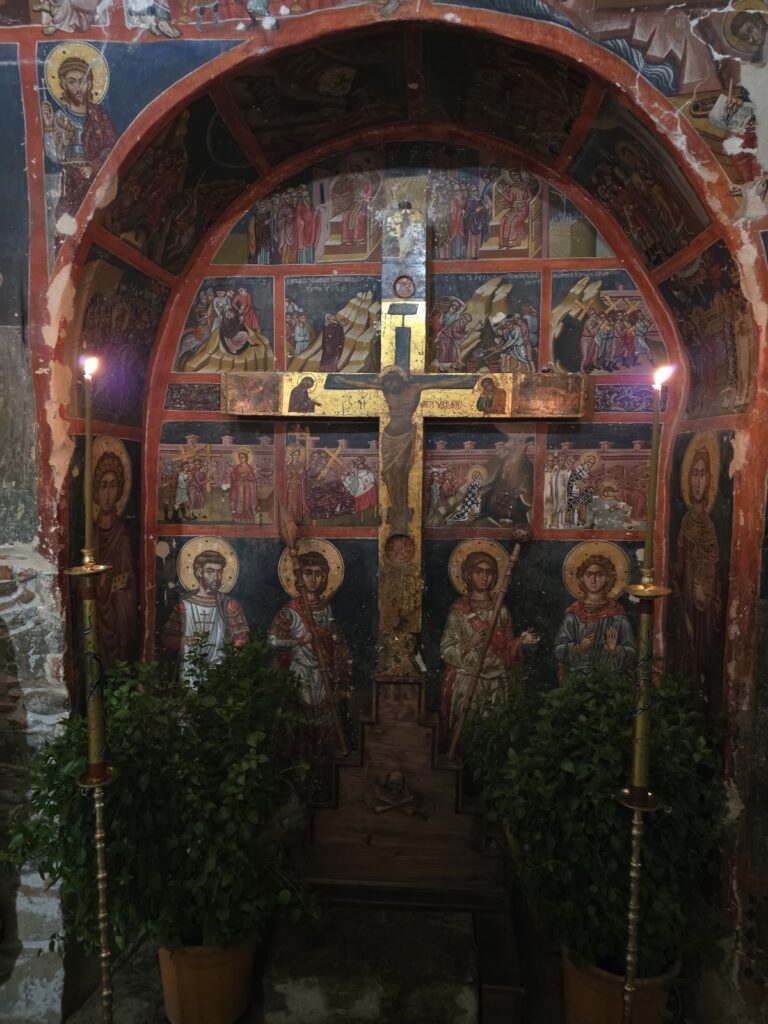
The interior preserves wall paintings from the early twelfth and fourteenth centuries. In the eastern apse, the Communion of the Apostles shows Jesus handing John a golden vessel containing wine, while Judas Iscariot turns away to betray him. The westernmost niche of the northern wall depicts the Forty Martyrs of Sebaste.
The narthex contains a Last Judgment scene with punishments for the damned, including wailing and the gnashing of teeth. Saint Anastasia Pharmakolytria appears holding a medicine vessel and a cross. This saint is traditionally associated with protection from poisons and harmful substances. A donor is also depicted wearing the Byzantine costume of the period.
Nearby sites