Saint Mary Kondariotissa Church: A Byzantine Monument in Greece


Site at a Glance
- Rating
- 4.9
- Popularity
- Low
- Country
- Greece
- Primary era
- Medieval
- External website
- Open
- Eras represented
- Medieval
- Civilizations
- Byzantine
- Site type
- Religious
- Remains
- Church
On this page7 sections
History
Saint Mary Kondariotissa Church is a Byzantine monument in Greece, generally placed in the late tenth or eleventh century and associated with the transitional architecture of the Byzantine period. Officially known as the Holy Church of the Dormition of the Virgin Mary, it stands near Kondariotissa in Pieria, Central Macedonia. The church is regarded as the oldest Byzantine monument in Pieria and is dedicated to the Eastern Christian feast commemorating the death and assumption of Mary into heavenly glory.
Origins and Byzantine development
The precise construction date remains uncertain. The building’s form has been interpreted as belonging to the period of Byzantine Iconoclasm, the eighth- and ninth-century controversy over the religious use of sacred images, or to an earlier phase. Its foundation is generally assigned to the late tenth or eleventh century. Changes to the structure took place during the eleventh century, showing that the church developed after its initial construction rather than remaining unchanged.
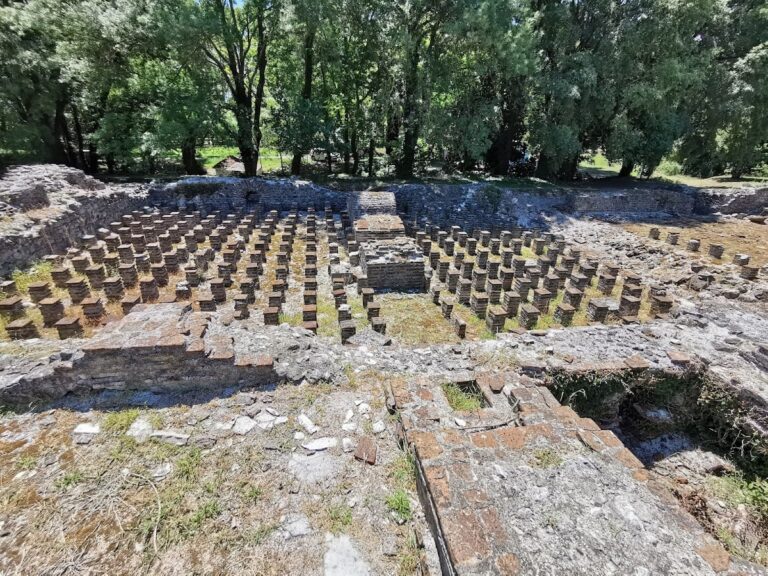
Its foundation is traditionally connected with the destruction and abandonment of ancient Dion, an ancient city in the Pierian region associated with the sanctuary landscape of Mount Olympus. Material from Dion was incorporated into the church, linking the Byzantine building physically with the earlier settlement. The church may have served as a katholikon, the principal church of an Orthodox monastery.
Later restoration and continuing associations
The church was restored in the fifteenth century, when much of the visible mural decoration was also created. It formerly belonged to the Greek Orthodox Church under the Ecumenical Patriarchate of Constantinople and the Metropolis of Kitros, Katerini and Platamon. Although it is no longer active as a church and now serves as a cultural center, it remains associated with pilgrimage during the Dormition festival on August 15.
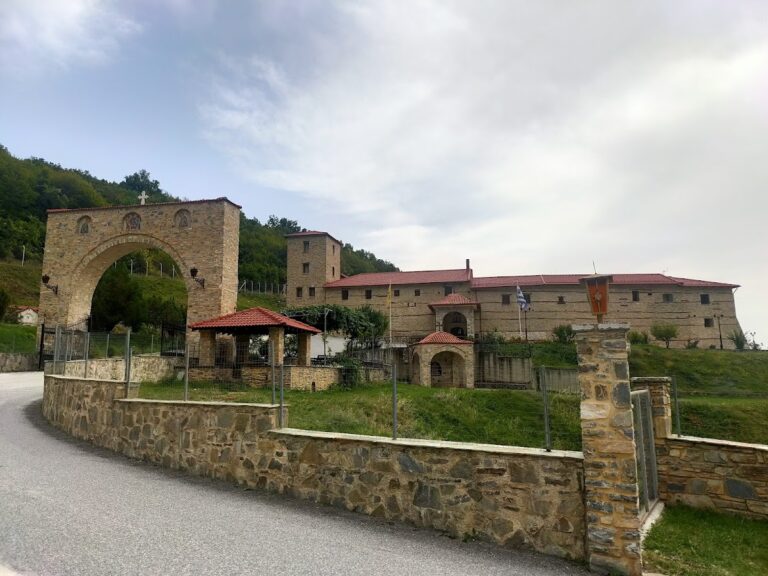
The name Kontariotissa refers to the modern community that developed near the church. One tradition derives the name from the church and connects it with the angelic figures represented in its dome. Another explanation links it to the manufacture of spear shafts from timber taken from the nearby forest. Parthenios Vardakas, Bishop of Kitros, supported the latter interpretation. A cemetery dating from the Early Iron Age has been found near the church, while the nearby Monastery of Saint Ephraim the Syrian is also associated with the site. The church was designated a protected monument on April 18, 1966.
Remains
Setting and structural form
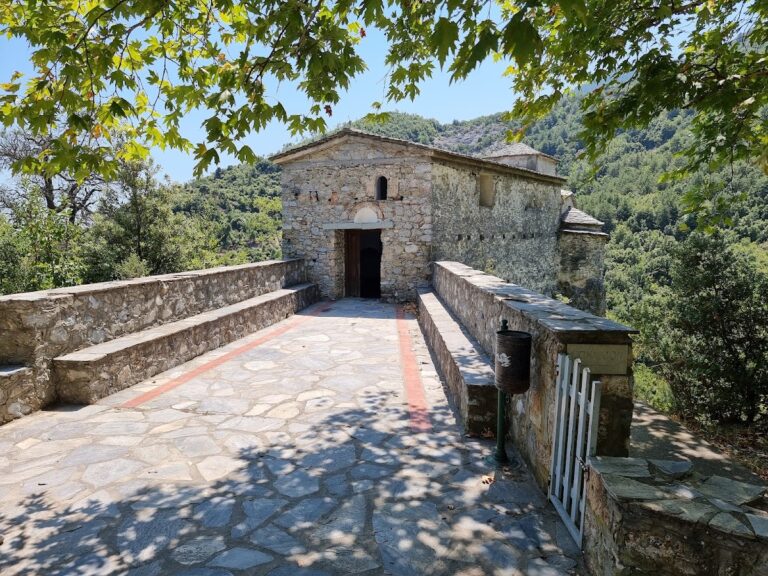
Saint Mary Kondariotissa Church stands on a hill at the northwestern edge of Kondariotissa, about 6.5 kilometres southwest of Katerini, on the slopes of Mount Olympus. It is a well-preserved, architecturally complex Byzantine building of a transitional type. A central cylindrical dome rises above four round pillars, while a covered passage, or peristoon, surrounds the central space of the church.
The exterior walls contain sections built in different masonry styles. Some of the construction material came from ancient Dion, and this reused stone forms part of the building’s physical connection with the ancient city. The earliest architectural elements resemble those of the Basilica of Hagia Sophia in Thessaloniki, while related features occur in other Greek churches of the eighth and ninth centuries.
Chapels and eastern sanctuary
Two chapels are attached to the western side of the church, one on the north and one on the south. Their position, together with the dome and the surrounding passage, contributes to the building’s distinctive transitional plan and complex outline.
At the eastern end, the apse, the curved sanctuary end of the church, is separated from the main interior by a carved wooden iconostasis. It contains a three-lobed window. This sanctuary arrangement remains part of the surviving interior, alongside other elements shaped by the church’s medieval alterations.
Murals and floor evidence
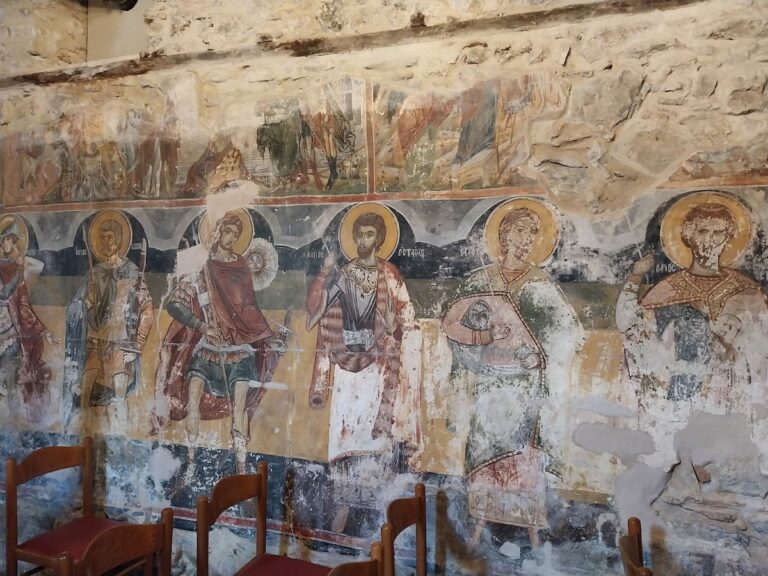
The apse, dome, and parts of the walls carry mural decoration, although the original decorative scheme does not survive. The visible frescoes date chiefly from the fifteenth-century restoration. In the dome, Christ as Pantocrator, the all-powerful ruler, appears within a circular glory held by four archangels. Above the tribelon, a three-part opening or passage, is a scene of the Dormition of the Virgin.
Some terracotta floor tiles bear the inscription “Dion.” Together with the reused masonry, these tiles preserve a direct material reference to the ancient city and help explain the relationship between the church and the earlier landscape of Dion.
Nearby sites