Fenek Monastery: A Serbian Orthodox Monastic Complex near Jakovo



Site at a Glance
- Rating
- 4.9
- Popularity
- Medium
- Country
- Serbia
- Primary era
- Early Modern
- External website
- Open
- Eras represented
- Early Modern, Modern
- Civilizations
- Habsburg
- Site type
- Religious
- Remains
- Monastery
On this page16 sections
History
Fenek Monastery is a Serbian Orthodox male monastery in Serbia, near Jakovo in the municipality of Surčin. Traditionally founded in the second half of the fifteenth century, it is associated with Stefan Branković, a Serbian despot, and his wife Angelina Branković, a major religious patron. Although Fenek lies outside the Fruška Gora range, its history is closely connected with the monasteries of that region.
Origins and early records
The monastery’s foundation is traditionally attributed to Stefan and Angelina Branković. Another tradition, recorded in 1775 by Metropolitan Vikentije Jovanović, credits Fenek, like Krušedol and Hopovo, to Bishop Maksim Branković and his mother Angelina.
An earlier identification places the monastery’s beginnings around 1404 to 1406. According to this possibility, Despot Stefan Lazarević may have built a church dedicated to the Three Hierarchs as the seat of the Belgrade metropolitans. If Fenek was that church, the relics of Saint Petka may have been transferred there from Kruševac in 1406 or 1407. They may have remained at Fenek until no later than 1457, when a testament places them within the walls of Belgrade. This proposed identification remains uncertain.
Fenek does not appear in the Ottoman land register compiled between 1545 and 1558, but it certainly existed by 1563. That year it was named as the Monastery of Saint Petka in a minej, an Orthodox liturgical book arranged by the months of the year, acquired by a woman from Belgrade. In 1574, the hieromonk Orest wrote a Four Gospels manuscript at the monastery. A note from 1586 names Georgije as abbot and Grigorije as hieromonk.
Fenek under Ottoman and Habsburg rule
During Ottoman rule, Fenek paid a monetary substitute for the tithe and also paid an additional tax known as baduhava. In 1566, following measures associated with Sheikh-ul-Islam Ebussuud Efendi and Grand Vizier Mehmed Pasha Sokolović, its required payment reached 3,800 akçes, while its regular assessments also increased. The monastery received title deeds for vineyards, gardens, meadows, fields, a tract called Duge Njive, a lake beside the monastery, the place called Kurmadin, and nearby woodland. Its fixed tax rose from 300 to 600 and then 700 akçes in successive registers.
Austrian forces occupied Srem in 1688 during the Great Turkish War. After the Treaty of Karlowitz in 1699, Fenek remained in Ottoman territory until the Treaty of Passarowitz in 1718 transferred the area to Habsburg rule.
The settlement connected with the monastery was examined in 1698 by an imperial commission headed by Count Carlo Caraffa di Stigliano. Its local prince reported 15 houses and 35 married men, while General Johann Christian Neme later reported 95 houses.
Library, education, and eighteenth-century rebuilding
In 1733, Maksim Ratković, acting for Metropolitan Vikentije Jovanović of Karlovci, inventoried the monastery library. He found nine Serbian and seven Russian books. By 1753, the inventory listed only four Serbian books. That same year, Metropolitan Pavle Nenadović required monasteries to provide instruction for monks and local residents. At Fenek, Hieromonk Vasilij taught monks, servants, deacons, and people living in the monastery settlement basic prayers and the Ten Commandments.
A bell tower and residential buildings were erected between 1776 and 1782. In 1782, Konstantin Teodor Gadeša commissioned an engraving of Saint Paraskeva that included the saint’s life and a representation of the monastery as it then appeared.
From 1788, part of Fenek served as a military warehouse. Monks from Voljavča moved there that year and brought the entire Voljavča treasury, which Fenek received under a formal acknowledgment. Emperor Joseph II, the Habsburg ruler, also visited the monastery in 1788 and received the Serbian duke Aleksa Nenadović in audience. In 1791, Fenek sold a general minej to a church in Šabac.
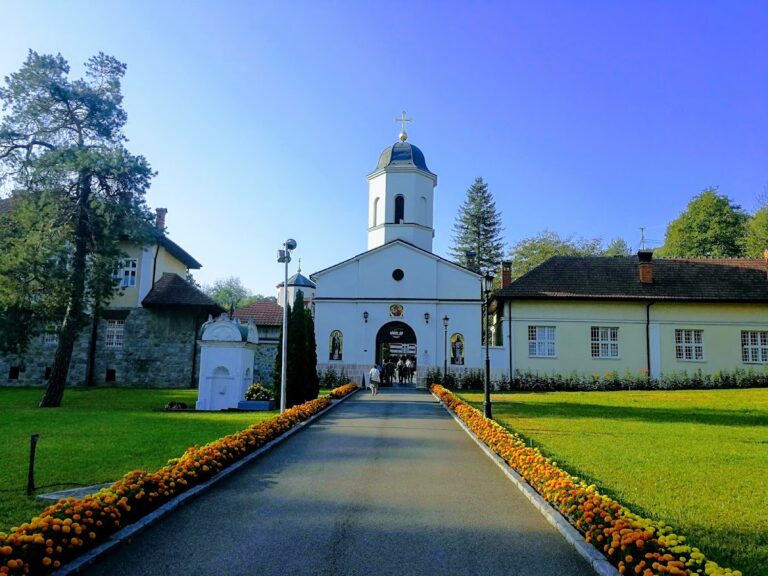
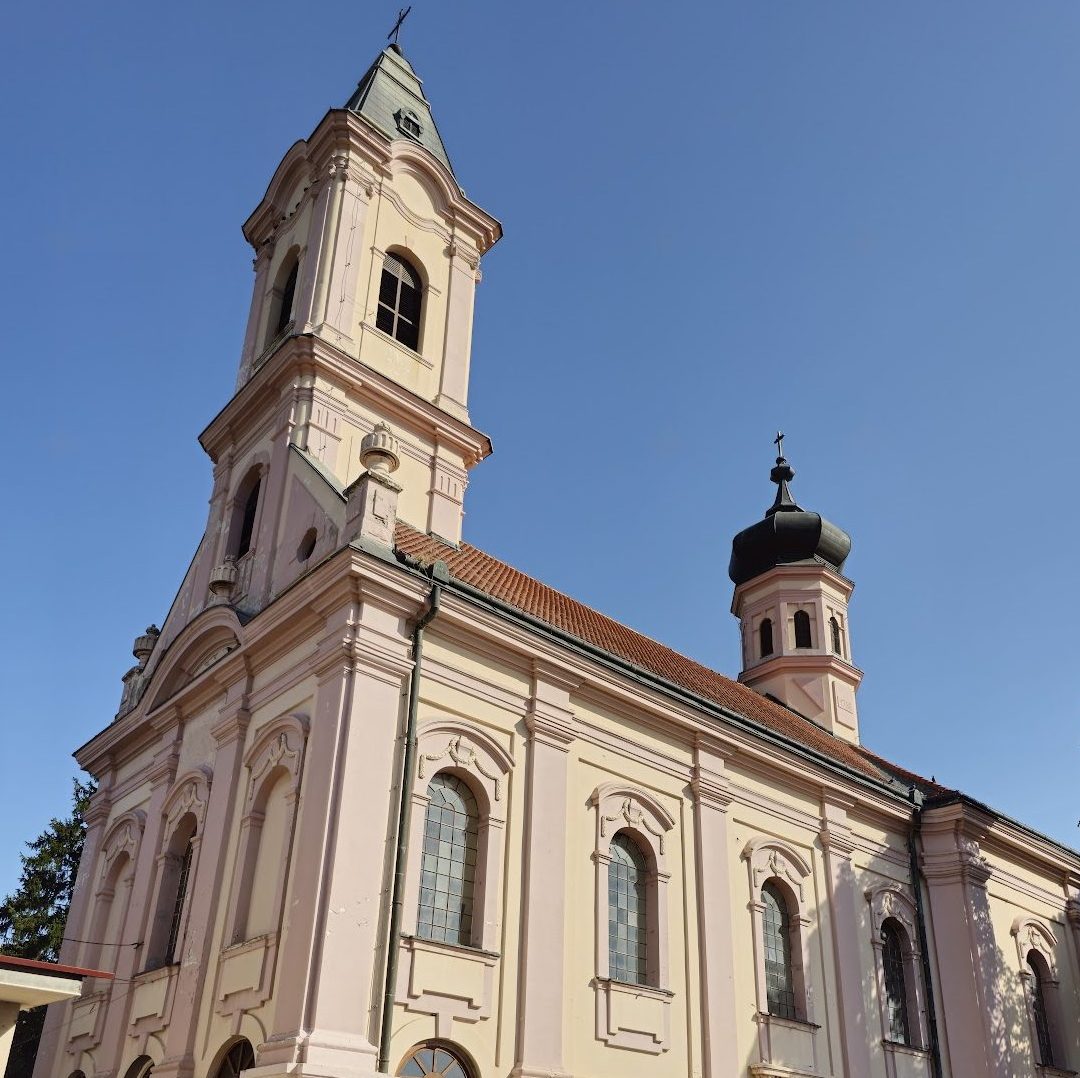
The present monastery church was built between 1793 and 1797 and consecrated during the abbacy of Vikentije Rakić, who also wrote a history of Fenek. Dedicated to Saint Martyr Paraskeva, the church is associated with the monastery’s patronal celebration of the Venerable Mother Paraskeva on 27 October. The transfer of Saint Petka’s relics is also commemorated, and a traditional gathering and fair takes place on 7 August.
Saint Petka and the Serbian uprisings
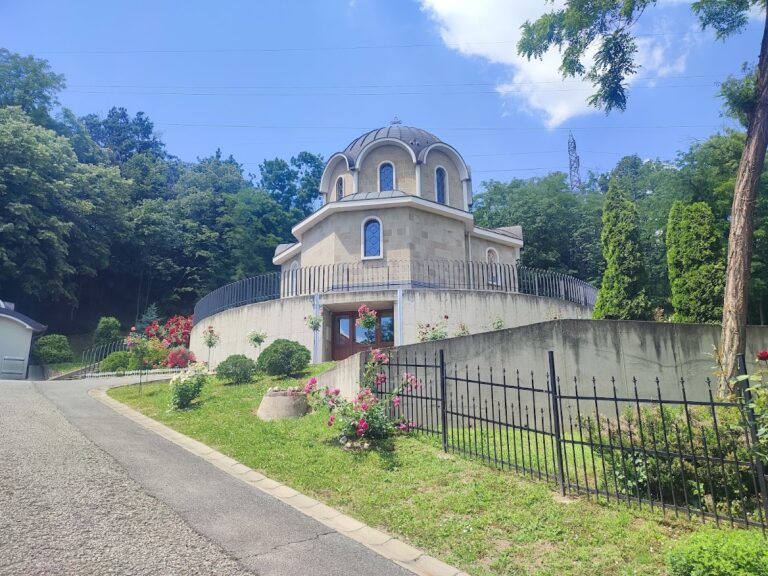
A chapel dedicated to Saint Petka was built in 1800 on the site of an earlier chapel. It stands above a well traditionally attributed to Angelina Branković. The water was believed to possess healing powers, and people came to the monastery seeking relief from illness.
Fenek became closely connected with the Serbian uprising against Ottoman rule in 1813. After the collapse of the First Serbian Uprising, Karađorđe Petrović, its leader, initially entered the quarantine facility at Zemun but chose to undergo quarantine at Fenek with his eldest son, Aleksa. Other Serbian insurgent leaders remained at the monastery until October, when they were transferred to Golubinci. Karađorđe and his son were transferred there later that month. Fenek also witnessed a meeting between Karađorđe and Archpriest Matija Nenadović.
In October and November 1813, the monks and treasury of Studenica were moved to Fenek. Studenica had been devastated by Sulejman-Pasha Skopljak in 1805 and had effectively remained abandoned. The relics of Saint Stefan Prvovenčani were placed in the Fenek church, while donations made at his shrine supported the Studenica monks. Melentije Nikšić became abbot, with Vikentije Rakić serving as deputy abbot. Under Melentije, Fenek became a center for Serbian insurgent émigrés.
After the outbreak of the Second Serbian Uprising, Austrian authorities ordered the Studenica monks to leave. They departed for Kalenić on 28 December 1815. Melentije was transferred to Beočin and soon moved to Serbia, taking the Studenica shrine and treasury with him. Some Studenica objects, including a Gospel book, remained at Fenek. Inventories of the Fenek and Studenica possessions were later destroyed during the Second World War.
Wartime destruction and reconstruction
During the First World War, Austro-Hungarian soldiers desecrated Fenek before the monastery was burned and destroyed to its foundations. Only the icon of Saint Petka was saved. Abbot Danilo Brzaković was sentenced to hanging by a summary court, but the sentence was abandoned and he was sent to Zagreb. The monastery library was completely destroyed in the war, a loss described in accounts by Archibald Reiss.
In 1937, the monastery estate contained about 1,000 cadastral yokes of cultivated land. Pilgrims, including sick people who travelled from distant places, continued to attend the monastery feast in the hope of healing.
During the Second World War, Fenek was situated in territory controlled by the Independent State of Croatia. Its immovable property was transferred to that state’s Colonization Institute, and the monastery was almost completely devastated in 1942.
Fenek was reconstructed in 1991 and is described as fully restored. Until 2006, three elderly nuns lived there. After the death of Sister Agripina, Mother Paraskeva moved to Grgeteg and Abbess Magdalina to Radovašnica. In mid-2006, following a decision by Bishops Vasilije of Srem and Artemije of Raška and Prizren, male monastics arrived from Sopoćani and Dečani. Restoration of the residential buildings was then in progress.
Fenek and its protected surroundings contain archaeological sites from several periods. These include the medieval Fenek Monastery, the late-medieval Monastery Prnjavor, a settlement associated with a monastery and its estate, and Monastery Fields, which dates from the Neolithic period. The monastery is recognized as a cultural monument.
Remains
The monastery complex is organized around the church, with the Saint Petka chapel immediately beside it, residential buildings, and an economic area. The church dominates the complex. Most of the residential buildings date from the late eighteenth and early nineteenth centuries, while the complex also preserves the setting of the chapel, the monastery’s working areas, and archaeological remains from earlier periods.
Church and devotional buildings
Monastery church
Completed in 1797, the church is a single-nave Baroque building. Its bell tower rises above the western section, and a small dome is set over the transept, the crosswise part of the church plan. The iconostasis, the screen of icons separating the sanctuary from the main body of the church, dates from 1798 and was carved by Aksentije Marković, a woodcarver from Novi Sad. Petar Radosavljević of Pančevo painted its icons in 1818, giving them characteristic Classicist features.
The church once had wall frescoes painted in 1859 by the Zemun painter Dimitrije Petrović. Those paintings have not survived. The church also housed the relics of Saint Stefan Prvovenčani during the period when the Studenica monks and treasury were kept at Fenek after 1813.
Saint Petka chapel
The Saint Petka chapel stands directly beside the church. Built in 1800, it replaced an earlier chapel and was erected above the traditional well associated with Angelina Branković. The well and its water formed part of the devotional life of the monastery, where visitors sought healing. The chapel remains one of the principal elements of the complex.
Residential and economic complex
Residential buildings
The residential buildings were constructed mainly in the late eighteenth and early nineteenth centuries. Archival records indicate that earlier residences stood on the site, but they were gradually demolished and their materials were used in the construction of later buildings. These residences formed the setting for the monastery’s community, library, and associated settlement.
The residential complex once contained a substantial library regarded as one of the most important libraries associated with the monasteries of Fruška Gora. Its books and other holdings were completely lost during the First World War, when the monastery was destroyed.
Economic area
The economic area formed part of the monastery complex alongside the church and residences. Earlier property records refer to vineyards, gardens, meadows, fields, woodland, a lake beside the monastery, and other named holdings connected with the estate. These lands and resources supported Fenek’s monastic community and helped define the extent of its property.
Golden Cross and archaeological surroundings
Golden Cross boundary stone
The Golden Cross stands beside the road between Jakovo and Boljevci, approximately 400 metres beyond the turn toward Fenek. Maria Theresa granted Fenek a privilege securing its estate on 20 January 1743. The property was then surveyed and bounded, and the stone was erected in 1747 through the efforts of Nikola Marković.
The monument’s name comes from a tradition that Serbs fleeing during eighteenth-century wars and migrations hurried toward the boundary stone because Fenek’s property offered safety. In that tradition, the Golden Cross became associated with salvation.
Archaeological sites
The protected surroundings contain the archaeological site identified as the medieval Fenek Monastery, as well as the late-medieval Monastery Prnjavor and Monastery Fields from the Neolithic period. Together, these sites place the surviving monastery within a landscape containing remains from several phases of human settlement and religious history.
Nearby sites