Czapski-Palais: A Neo-Renaissance Palace and Numismatic Museum in Kraków


Site at a Glance
- Rating
- 4.7
- Popularity
- Very Low
- Country
- Poland
- Primary era
- Modern
- Eras represented
- Modern
- Civilizations
- Habsburg
- Site type
- Domestic
- Remains
- Palace
On this page12 sections
History
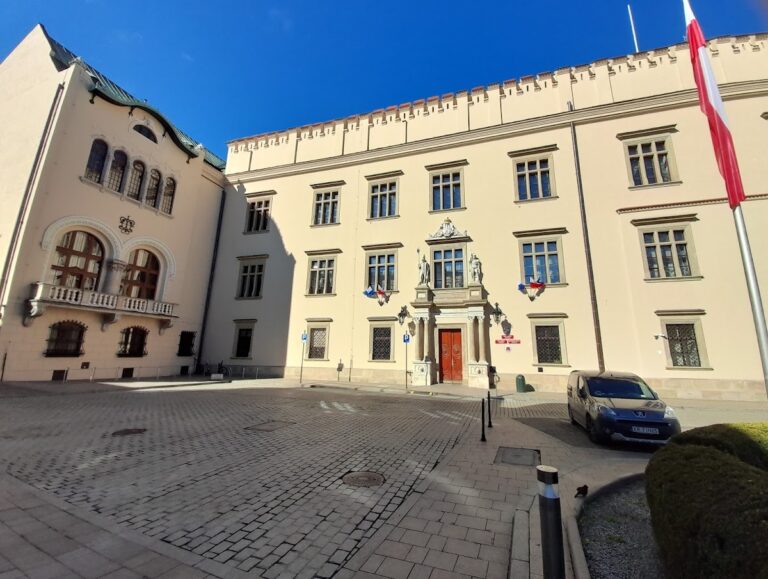
Czapski-Palais is a nineteenth-century Neo-Renaissance palace in Kraków, Poland, designed by Antoni Siedek and completed in 1884. Neo-Renaissance architecture revives Renaissance forms and decoration. The building began as the residence of Hubert Antoni Krasiński, a Polish physician and social activist, and later became a museum devoted to Polish numismatics and related collections.
Krasiński residence
Hubert Antoni Krasiński moved to Kraków from his estate in Ukraine and began building the palace in 1883. Designed by Antoni Siedek, the residence was completed the following year. Krasiński lived there until his death in 1890, after which the building passed into a new phase of ownership and use.
Hutten-Czapski collection
Emeryk Hutten-Czapski acquired the palace in 1894. A Polish collector known for his numismatic holdings, he brought his collection and library from his estate at Stańków. Numismatics is the study and collection of coins, medals, and related forms of currency.
Hutten-Czapski commissioned Tadeusz Stryjeński to add a separate pavilion for these materials. Completed in 1896, the pavilion provided dedicated space for the collection and library. In 1903, the numismatic collection, which contained more than 11,000 coins, medals, orders, banknotes, and prints, was donated to Kraków. On 18 July 1904, it became a branch of the National Museum in Kraków, establishing the Emeryk Hutten-Czapski Museum.
Renovation and present institutional role
Renovation work carried out between 2002 and 2009 included the palace, courtyard, garden, and lapidarium. A lapidarium is a display of stone architectural fragments, sculptures, and other stone objects. Following the general renovation, the National Museum in Kraków opened the European Centre of Polish Numismatics at the site on 28 June 2013.
Czapski-Palais is protected as a monument in the Lesser Poland Voivodeship register under number A-106, where it was entered on 10 June 1968. The National Museum in Kraków owns the building, which houses the Czapski Museum as a branch of that institution.
Remains
Palace and museum pavilion
The Neo-Renaissance palace
The main palace is a nineteenth-century Neo-Renaissance building designed by Antoni Siedek. Its original residential function was transformed through its association with the Hutten-Czapski collection and the National Museum in Kraków. The building forms the principal architectural element of the complex and remains in museum use.
The separate museum wing
Tadeusz Stryjeński’s pavilion was attached to the existing palace as a separate museum wing. It had its own entrance and a separate gate opening onto the street. The exhibition rooms were fitted with museum furnishings, including glazed display cases and cabinets, and the wing housed Hutten-Czapski’s numismatic collection and library.
The European Centre of Polish Numismatics presents Polish coins, medals, and banknotes alongside old prints and manuscripts. The collections continue the pavilion’s purpose as a specialized exhibition and study space.
Courtyard, garden, and sculpture
Courtyard, garden, and lapidarium
The palace complex includes a courtyard and garden, both of which formed part of the renovation work. The grounds also contain a lapidarium, bringing stone architectural fragments, sculptures, and other stone objects into the physical setting of the museum.
Sculptures of the collections and garden
A sculpture of the Chimera by Henryk Kunzek stands watch over the collections. At the entrance to the garden is a sculpture of Morpheus by Teofila Certowicz. Both works are part of the site’s sculptural features and contribute to the arrangement of the museum grounds.
Inscription above the pavilion entrance
Above the pavilion entrance is the Latin inscription Monumentis Patriae naufragio ereptis, meaning “To national mementoes rescued from the storm of history.” The wording expresses the commemorative purpose associated with the collection housed in the museum wing.