Altenstein: A Medieval Spur Castle in Germany


Site at a Glance
- Rating
- 4.8
- Popularity
- Low
- Country
- Germany
- Primary era
- Medieval
- External website
- Open
- Eras represented
- Medieval, Early Modern
- Civilizations
- Holy Roman Empire
- Site type
- Military
- Remains
- Castle
On this page11 sections
History
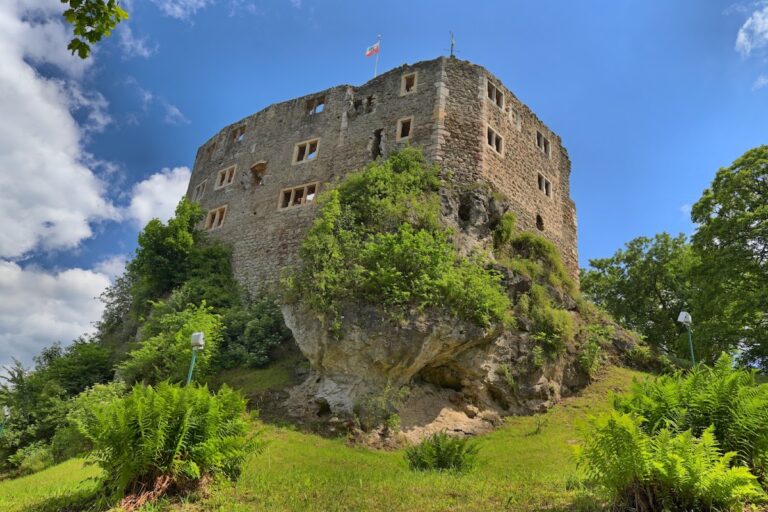
Altenstein is a medieval spur castle in Germany, near Schweina and Bad Liebenstein in the Thuringian Forest. Built as a stone castle during the Middle Ages, it stood at the edge of the Breitungen March and beside the beginning of the Schweina Road, an old route across the forest. These positions gave the site strategic importance and made it one of the earliest stone-built castle complexes in the central Werra valley.
Foundation and early lords
Around 1120, Fulda Abbey, a major medieval Benedictine monastery and ecclesiastical lord in the German lands, granted Altenstein to the old Franconian knightly family von Stein, also known as de Lapide. The castle’s position on a projecting ridge, or spur, used the surrounding slopes to strengthen its defenses.
A tradition holds that a Frankish fortification stood on the site during the Christianization of Thuringia by Kilian and Boniface. In the twelfth century, however, the Altenstein family surrendered the castle to the rising Frankensteiner family. The circumstances of this transfer are unknown.
During the thirteenth century, the Ludowinger dynasty, the medieval ruling house of Thuringia, compelled the construction of a second castle opposite Altenstein at Bonifacius Rock. This counter-castle was called the New Stein and Markgrafenstein. The older castle’s name first appears in 1225 as de antiquo lapide, referring to Altenstein and its associated burgraviate, later popularly known as the Dornhecken Office. The name Altenstein remained in use, while Neuenstein, the name of the opposing castle, was used only rarely.
Thuringian rule and sixteenth-century conflicts
Through the Frankensteiner family, Altenstein came into the possession of the Landgraves of Thuringia in 1346. These rulers also held Neuenstein. The castle retained its historical importance into the sixteenth century, when Martin Luther passed Altenstein on 4 May 1521 while travelling home from the Diet of Worms, the imperial assembly before which he appeared that year. By then the site was already known as Altenstein Castle, although it apparently still retained the character of a medieval fortress.
During the German Peasants’ War, the widespread uprising of 1524 and 1525 in the Holy Roman Empire, insurgents seized and destroyed Markgrafenstein. Altenstein was not attacked. The lords of Wenckheim had apparently sided with the peasants as a feint, a position that may have helped protect the castle during the uprising.
Altenstein suffered a different fate during the Second Margrave War, a conflict in the German states from 1552 to 1555. On 4 May 1554, a marauding mercenary force serving the Margrave of Ansbach plundered and devastated the castle. By this stage its medieval defenses had become militarily obsolete. Reconstruction began three years later on a more modest scale and in the Renaissance style.
Fire and the palace
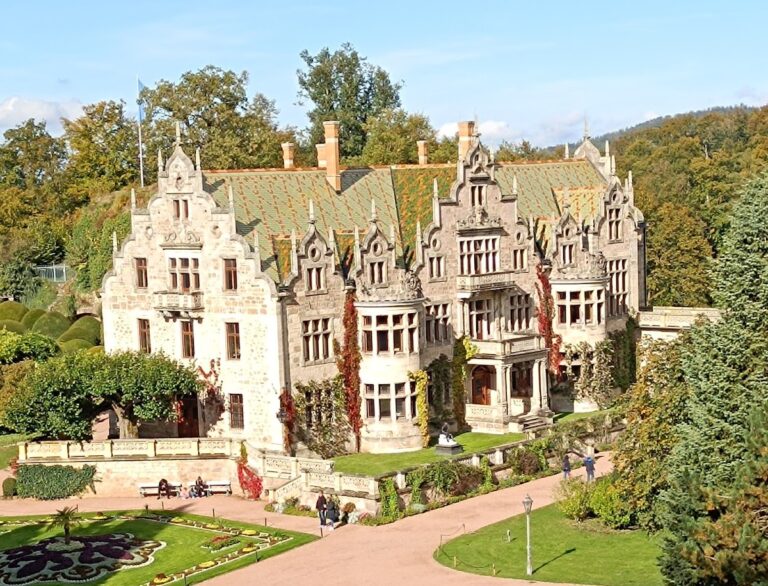
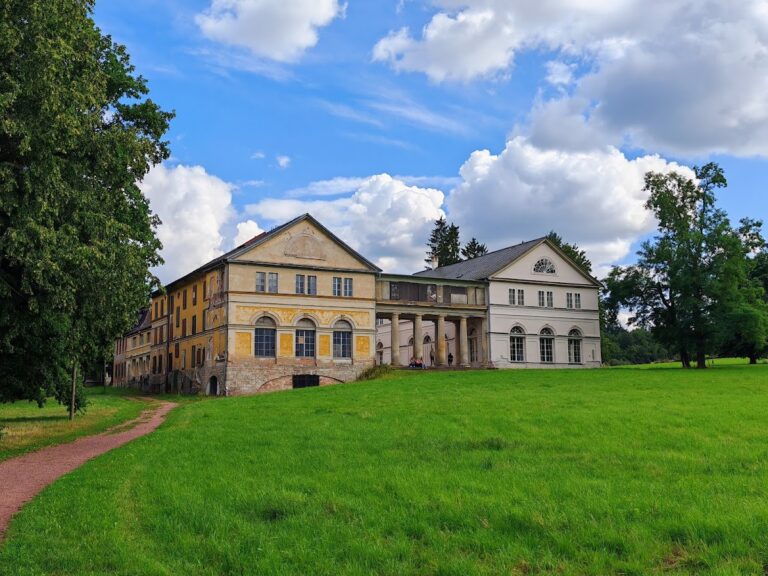
In 1680, the Altenstein Office passed to the dukes of Saxe-Meiningen as part of the Wenckheim inheritance. Altenstein burned down after an arson attack on 27 March 1733. From 1736, the dukes commissioned the construction of the new Altenstein Palace, which incorporated the later history of the site and replaced the burned castle complex as its principal building.
Remains
Castle structures beneath the palace
Tower and cellar remains
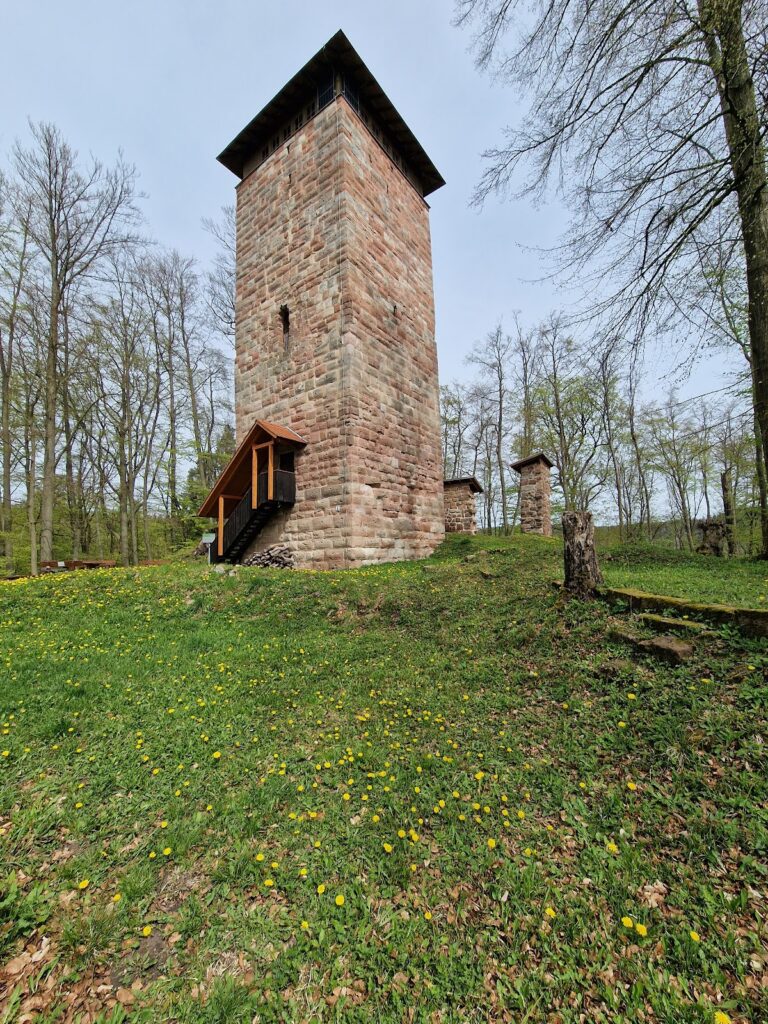
Altenstein occupied a spur at approximately 450 metres above sea level. Its medieval remains lie beneath the present palace and in the surrounding park. A fragment of the castle tower survives together with cellar structures and other building remains incorporated into the later landscape. The medieval complex was rebuilt after the 1554 destruction in a more modest Renaissance form, and the palace begun in 1736 now stands above parts of this earlier fabric.
Water storage
A cistern, a reservoir for collecting or storing water, lies in the cellar area. Archaeological work connected with the castle cellars excavated it to a depth of 7 metres. The last object recovered from its filling was a bottle dating to around 1900. This find indicates that the cistern was filled during the twentieth century, rather than dating the construction of the reservoir itself.
Outer bailey and terrace archaeology
Terrace and former outer bailey
The castle included an outer bailey, the outer part of a castle complex where service and economic installations were usually located. Its former area now forms part of the terrace. Excavations there recovered charred grains and pottery. These finds have been associated with a possible grain-drying installation serving the brewery, although that identification remains a supposition.
Northern building remains
Further excavation beneath the removed eastern balustrades took place in 2000. Work north of the terrace in 2004 and 2005 revealed building structures and evidence of successive use phases from the thirteenth through the fifteenth centuries. Together with the tower fragment and cellar structures, these remains preserve parts of the medieval castle beneath the palace and park.
Nearby sites