Tirana Castle: A Byzantine-Era Fortress in Albania
Site at a Glance
- Rating
- 4.4
- Popularity
- Medium
- Country
- Albania
- Primary era
- Early Modern
- External website
- Open
- Eras represented
- Classical, Medieval, Early Modern, Modern
- Civilizations
- Byzantine, Ottoman
- Site type
- Military
- Remains
- Castle
On this page9 sections
History
Tirana Castle is a historic fortress in Tirana, Albania, probably established under Byzantine rule during the Early Byzantine period between the fourth and sixth centuries. Its position at the crossing of the city’s principal east-west and north-south roads made it the historic heart of Tirana. The fortress is also known as the Fortress of Justinian, reflecting a possible connection with Justinian I, the sixth-century Byzantine emperor whose reign included extensive fortification and rebuilding.
Byzantine origins
The castle’s history extends to before 1300, although its earliest development remains uncertain. It is thought to have originated as an Early Byzantine fortification, possibly among the defensive works built or rebuilt during Justinian’s rule. The traditional association with the emperor accounts for the name Fortress of Justinian.
Ottoman-era rebuilding and conflict
During Ottoman rule, Ahmet Pasha Bargjini constructed a new castle on the ruins of the earlier fortress in the late eighteenth century. The Toptani family of Krujë took control in 1798, beginning a prolonged struggle between the Toptanis and the Bargjinis in which the castle changed hands several times.
In 1817, the Toptanis besieged the castle and the town for five months. The fighting devastated both, but the Toptanis eventually prevailed. They partly rebuilt the castle and arranged marriages with the Bargjini family in an attempt to establish peace. In 1832, Reşid Mehmed Pasha, the Ottoman grand vizier, ordered the castle demolished. A grand vizier was the Ottoman sultan’s chief minister and highest-ranking political official.
Protection and later use
The surviving fortification was designated an Albanian first-category Monument of Culture on 10 June 1973, a state heritage-protection status for sites of recognized cultural significance. Newly uncovered sections of the castle walls received the same status on 15 May 2008. Restoration of the remaining fortification has continued for tourism-related purposes. The former fortress precinct is now partly occupied by residences and a bazaar-like shopping center, while a traditional bazaar opened within it in December 2018.
Remains
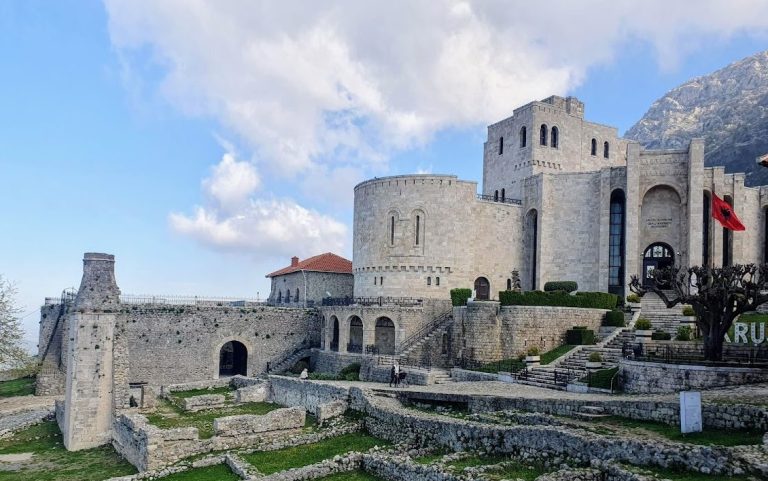
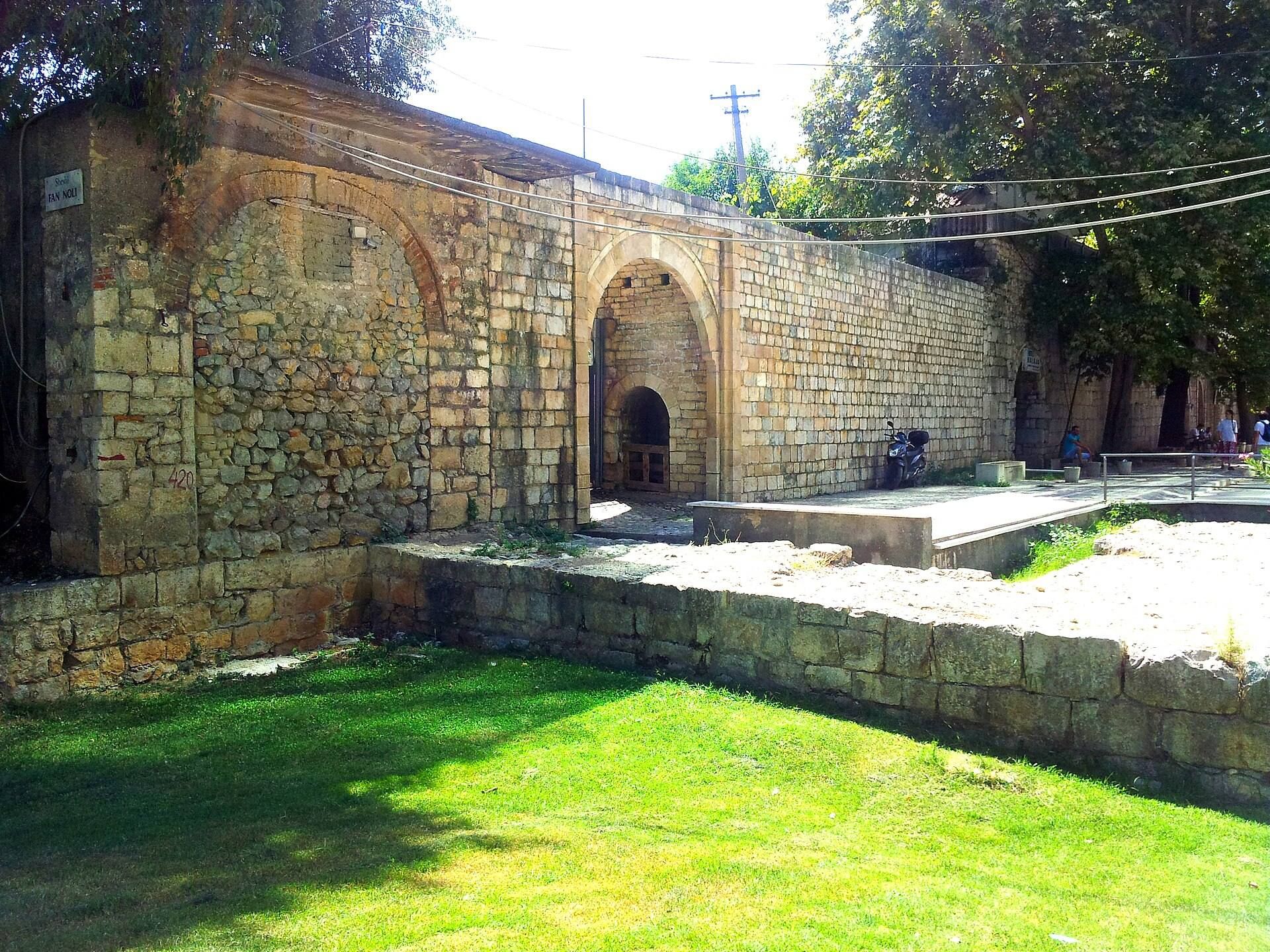
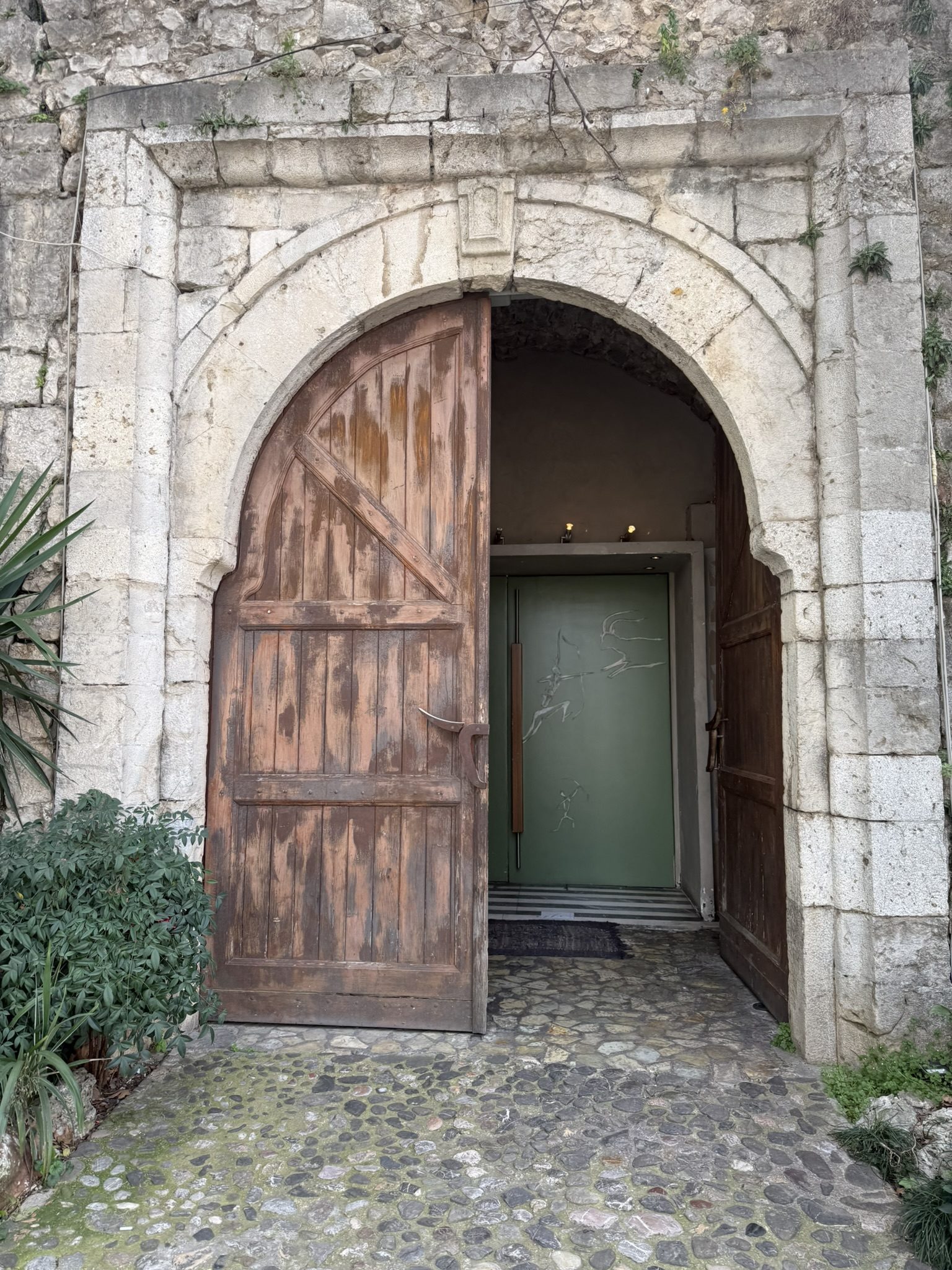
The castle probably had a rectangular layout, strengthened by rounded towers at the corners and square towers set into its walls. The surviving fortification rises approximately 6 metres and forms part of a dense urban precinct that also contains restaurants, hotels, cultural institutions, residences, and bazaar-style commercial premises.
Fortification remains
Northern curtain wall and towers
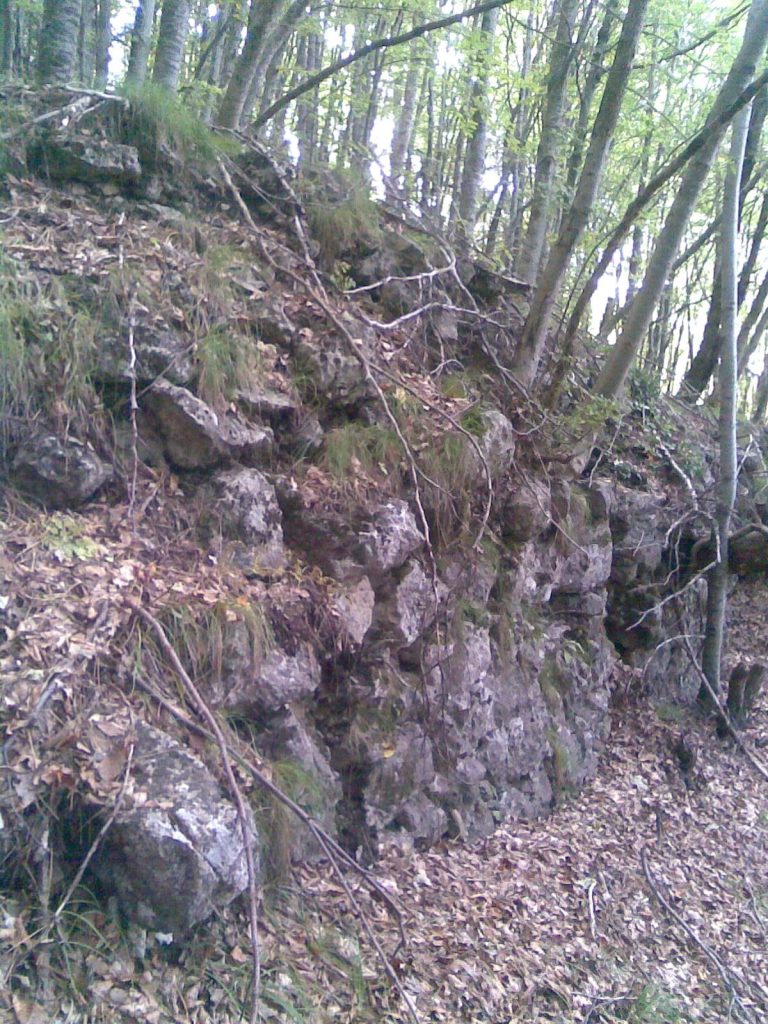
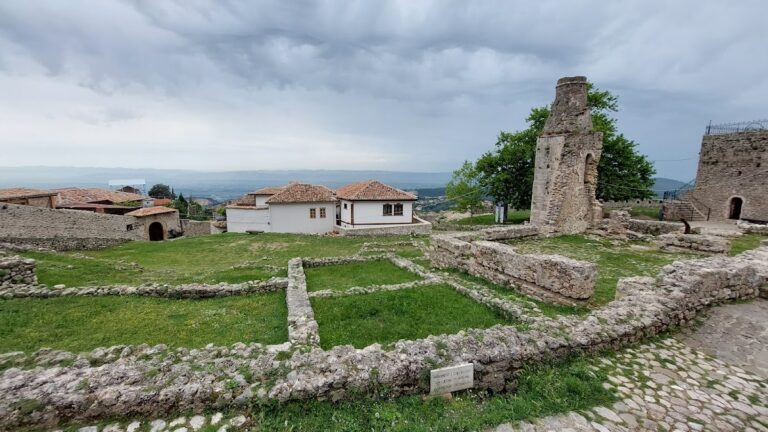
The principal remains above ground include a section of the northern curtain wall, a continuous defensive wall linking fortified points, together with the foundations of the northeast corner tower and a projecting wall tower. Three towers are known in the present fortification. Vines cover the surviving wall, while the foundations preserve evidence of the enclosure’s former corner structure.
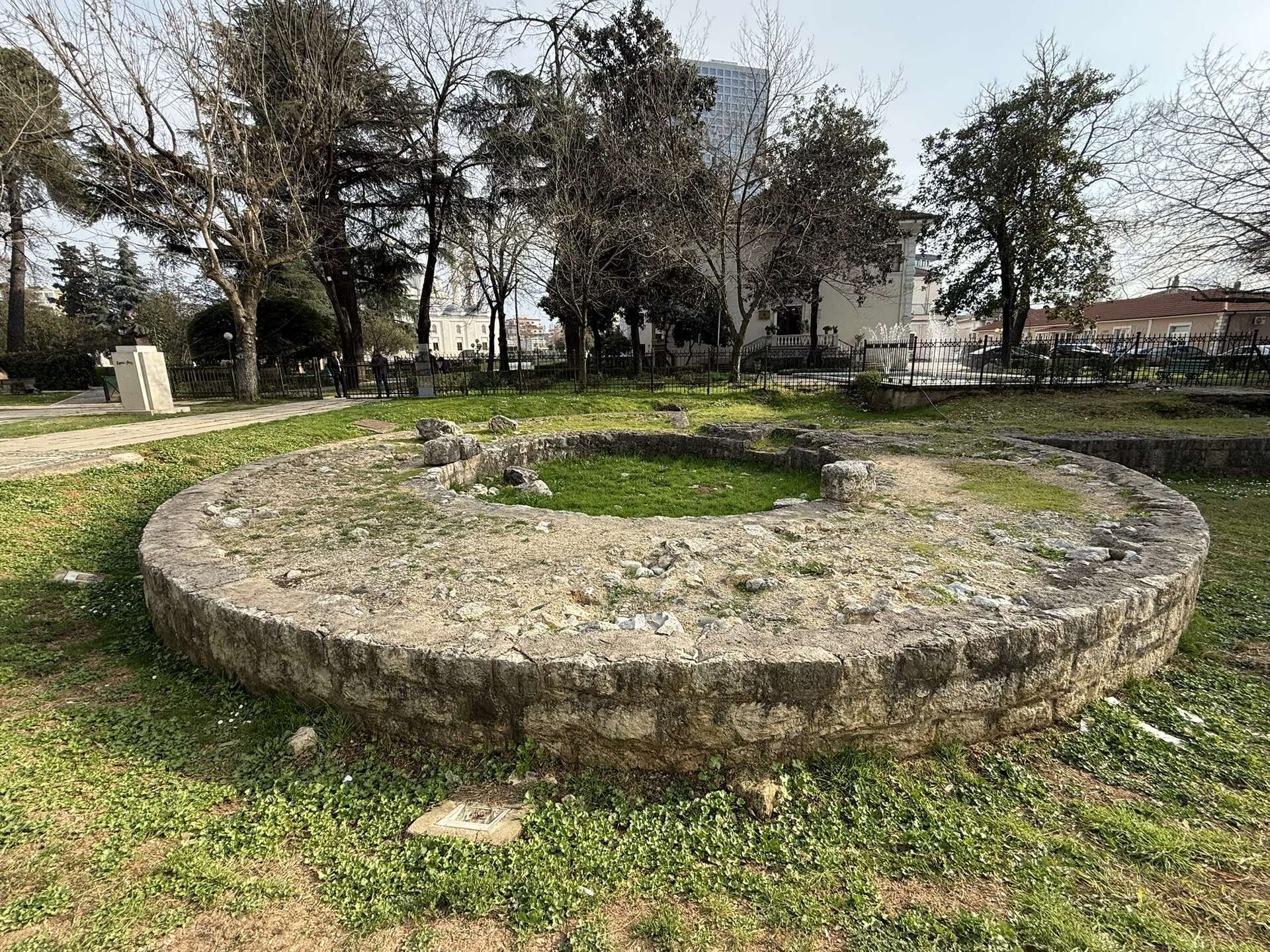
Uncovered wall foundations
Sections of the castle’s wall foundations uncovered in recent work have been incorporated into the pedestrianized Murat Toptani Street. Their integration into the modern street preserves part of the fortress footprint within the contemporary city and connects the surviving archaeological fabric with the former fortified precinct.
Urban precinct
The former enclosed area has been adapted to a mixture of modern and commercial uses. The traditional bazaar established there in December 2018 contains shops selling handicrafts and restaurants serving traditional cuisine. Near the Albanian Parliament, in the vicinity of the castle, a mosaic commemorating the centenary of Albanian independence was also unveiled.