Castello Scammacca: A Gothic-Style Villa in Acireale


Site at a Glance
- Rating
- 4.3
- Popularity
- Very Low
- Country
- Italy
- Primary era
- Modern
- Eras represented
- Modern
- Civilizations
- Italian
- Site type
- Domestic
- Remains
- Castle
On this page8 sections
History
Castello Scammacca, also called Castello Pennisi di Floristella, is a nineteenth-century villa-like palace in Acireale, Italy, built in an intentionally anachronistic Gothic style as a holiday residence. Baron Agostino Pennisi di Floristella commissioned the building, which was designed by the Sicilian architect Giuseppe Patricolo and generally complete by 1882. Its name recalls the Scammacca barons, former owners of the vineyard property on which the palace stands.
Construction and Pennisi ownership
The palace formed the principal residence within a large rural estate. Its final wing contained a private chapel, completed at the end of 1893. The chapel was initially without frescoes, but between 1905 and 1907 the Sicilian painter Giuseppe Sciuti decorated its walls with representations of eight saints chosen in connection with members of the Pennisi family.
German occupation during the Second World War
Around 1939, the property became a German residence, probably through a lease whose payment arrangements remain uncertain. It accommodated German military figures and officials, including Field Marshal Erwin Rommel and Foreign Minister Joachim von Ribbentrop, and hosted performances and concerts. After the Luftwaffe, the German air force during the Nazi period and the Second World War, arrived in the area in 1941, the estate became a command headquarters, an aerial radio-control base, and a military workshop.
The workshop operated in a wine-storage building in the rural part of the estate, which was adapted for German aircraft maintenance and repair. British aircraft and naval forces repeatedly bombarded the area, apparently because of the workshop. The attacks caused little damage to the castle and workshop, partly because the workshop’s location was unknown and it was well camouflaged. Shortly before British troops arrived, the castle was evacuated. The workshop and an underground depot were then set on fire, while local residents entered the palace, looted its remaining contents, and partly vandalized the structure. Despite these events, the building remained in generally good condition.
Later proposals and cultural associations
Baron Agostino Pennisi Statella later proposed turning the castle into a cultural center for exhibitions and events, including presentations connected with his numismatic collection, a group of coins, medals, and related historical objects. The collection is now preserved in Syracuse. The castle has also served as a filming location for The Godfather Part III, A Beautiful November, and Malizia. The privately owned property remains in Acireale, between Via dell’Agrumicoltura and Via San Girolamo.
Remains
Palace and garden
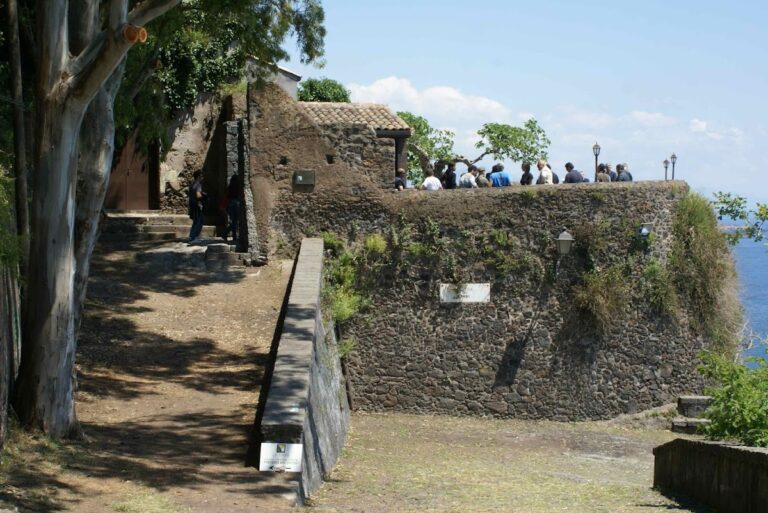
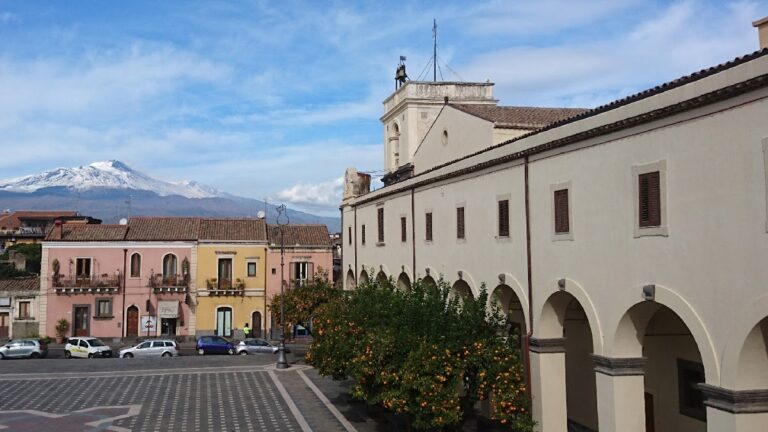
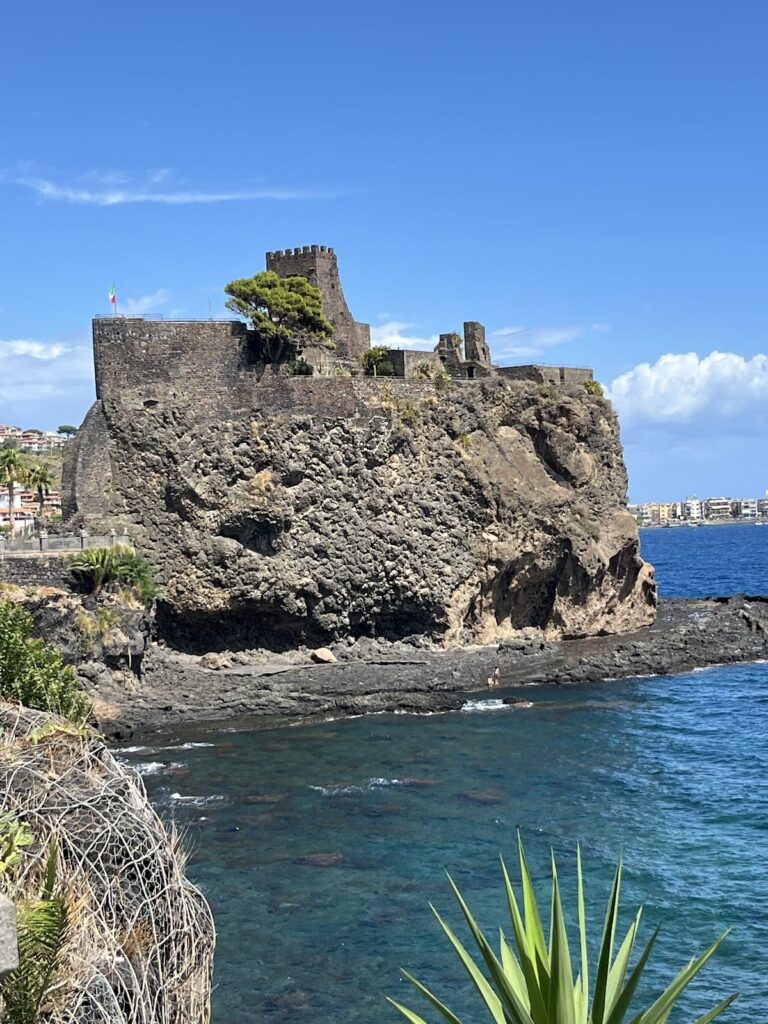
Castello Scammacca is a three-storey palace with approximately 4,000 square metres of floor area. Its Sicilian eclecticism combines a villa plan with medieval Gothic references, including crenellated rooflines, pointed arches, paired windows on the first floor, and a south tower. A three-arched portico forms the entrance, approached from a large garden in front of the building. Terraces provide views of Mount Etna. A section visible from the inner courtyard uses construction methods and materials different from those of the main facade.
The palace stands within a large estate that formerly included a vineyard and a wine-storage building. The garden was once densely planted with trees and flowers and is now less carefully maintained. The castle itself survived the wartime bombardments, evacuation, and subsequent looting with its structure substantially intact.
Private chapel
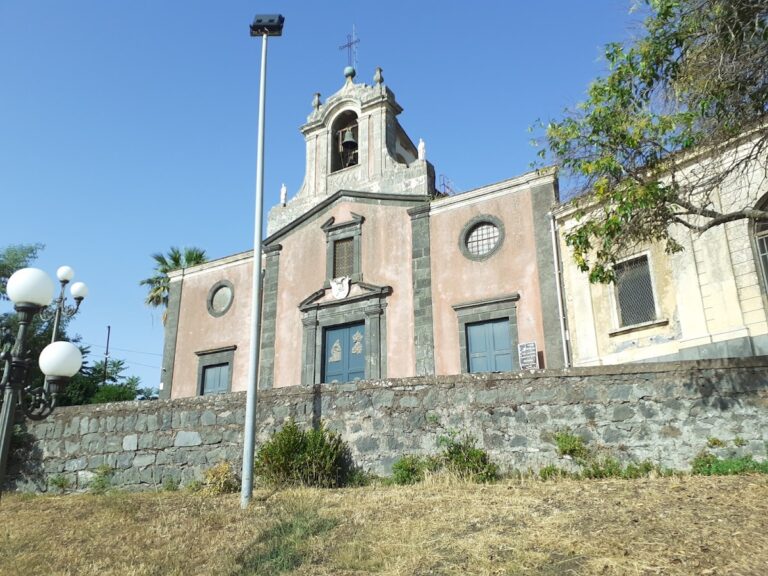
The private chapel occupies the final wing of the palace. Completed in 1893, it contains frescoes by Giuseppe Sciuti made between 1905 and 1907. These wall paintings, executed on plaster, depict eight saints associated with members of the Pennisi family.
Estate workshop and underground passage
The rural wine-storage building was converted during the Second World War into an aircraft-maintenance and repair workshop and was later burned. An underground depot included a passage connecting the estate with former Scammacca holdings on the opposite side of the Messina-Catania railway. Together, these surviving estate features relate the palace to the wartime military functions imposed on the property.
Nearby sites