El Jem Museum: A Roman Archaeological Museum in Tunisia


Site at a Glance
- Rating
- 4.7
- Popularity
- Medium
- Country
- Tunisia
- Primary era
- Classical
- Eras represented
- Classical
- Civilizations
- Roman
- Site type
- Domestic
- Remains
- House
On this page11 sections
History
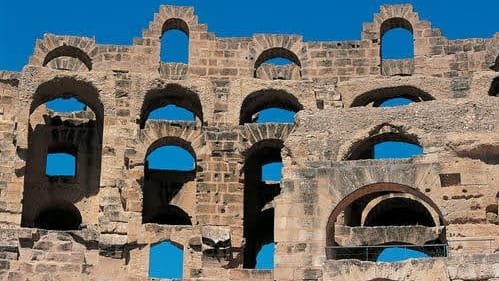
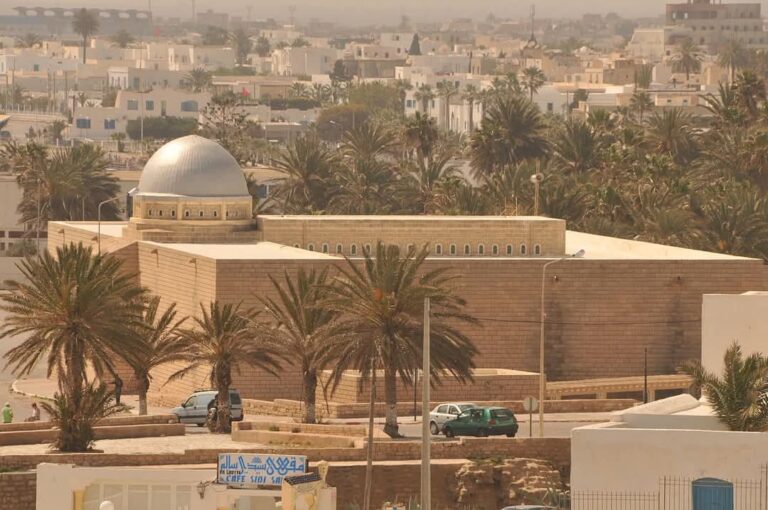
El Jem Museum is an archaeological museum in Tunisia devoted to the Roman city of Thysdrus, also known as Tisdra. It was founded and officially opened in 1970, and its collections place particular emphasis on Roman mosaics from the second through fifth centuries. The museum stands near the successive amphitheatres of ancient Thysdrus, including the latest amphitheatre, which is the largest and best-preserved of the group and is inscribed as a UNESCO World Heritage Site.
The museum and Thysdrus
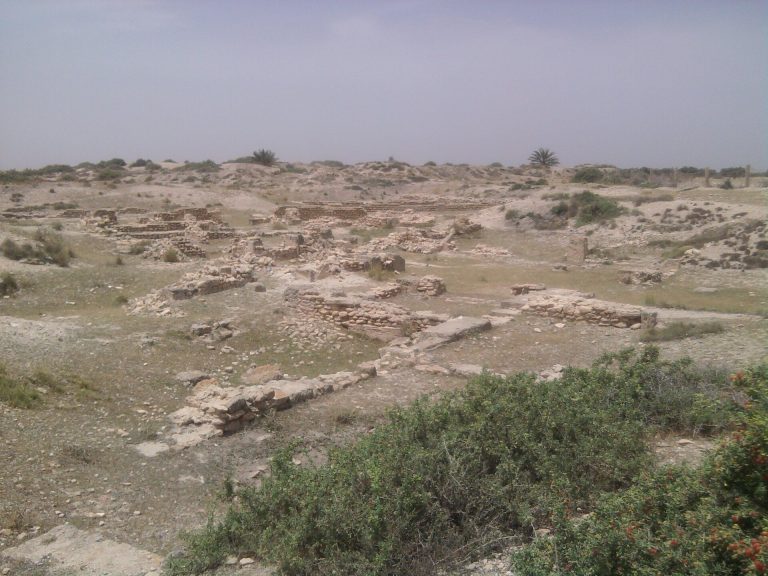
A substantial proportion of the museum’s objects came from excavations in El Jem. Other discoveries from the ancient city are held at the archaeological museum of Sousse and especially at the Bardo National Museum. The museum grounds extend the archaeological presentation beyond the galleries, incorporating a park with several Roman villas and other remains.
The museum underwent renovation and maintenance in 2002. Its grounds also preserve the setting for the reconstructed Africa Villa, a high-status Roman residence brought to light in the 1990s during an attempted illicit construction project. Built around AD 170, the building was probably a domus, meaning a substantial urban house associated with an affluent household, rather than a rural villa. Its sumptuous floors made the discovery especially important for understanding elite Roman domestic architecture and mosaic decoration at Thysdrus.
Africa Villa and its interpretation
For safety and preservation, Africa Villa was reconstructed near the museum. Tunisia’s National Heritage Institute directed the work, particularly under the site curator Hédi Slim and Jean-Claude Golvin, a French architect and archaeologist known for reconstructions of ancient monuments. The reconstruction retained the original plan, while the principal parts and their mosaics were transferred and the smaller rooms were represented schematically.
Explanatory panels accompanying the reconstruction address construction techniques, the work and social position of the mosaicist, and related aspects of the site. Mohamed Yacoub, a Tunisian art historian whose work includes Tunisian mosaics, dates the two principal Africa Villa mosaics to AD 150–170. He associates them with a classicizing and simplifying artistic phase at the end of the reign of Antoninus Pius, who ruled from AD 138 to 161, or during the reign of Marcus Aurelius, who ruled from AD 161 to 180.
Remains
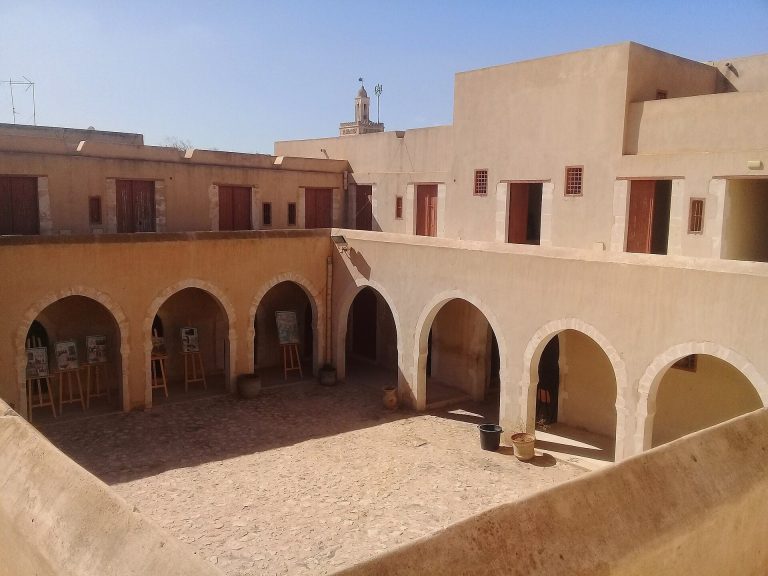
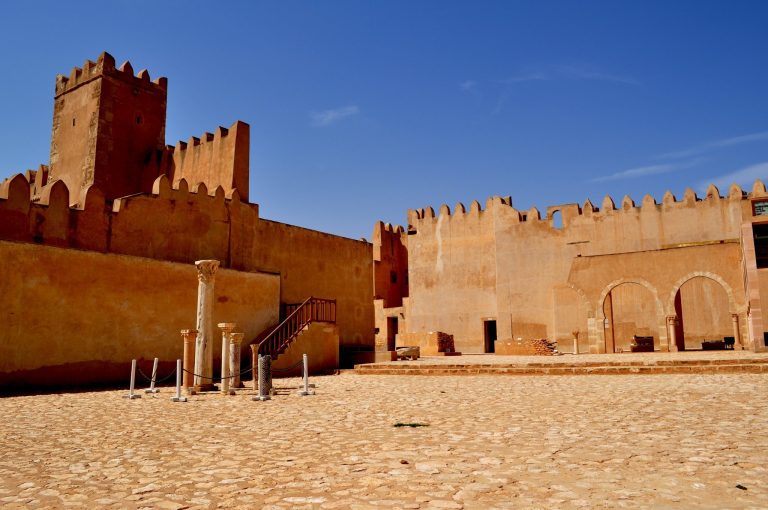
The museum complex combines exhibition spaces, a courtyard, and an archaeological park containing Roman villas. Its principal physical and artistic remains are mosaic pavements, ranging from geometric designs to scenes with people, animals, hunting, and wild nature. The park also preserves the Peacock Villa and presents the full-scale reconstruction of Africa Villa with selected original mosaics.
Roman villas and archaeological park
Peacock Villa
The Peacock Villa is a luxurious aristocratic residence in the archaeological park. Its mosaic pavements remain preserved in place, allowing the decorative floors to be understood as part of the residence rather than only as detached museum objects.
Africa Villa
Africa Villa has been rebuilt at full scale beside the museum. The transferred principal sections retain the building’s original plan and incorporate its principal mosaics, while suggested forms indicate the smaller rooms. This arrangement presents the floors within the architectural setting for which they were made.
Mosaic pavements
Animal and nature scenes
The collection includes mosaics with geometric decoration, figurative compositions, wild animals, hunting, and other scenes of wild nature. Two pavements excavated at the House of the Dionysian Procession show a tiger attacking two onagers and lions devouring a wild boar. Their animals are rendered in rich colours and subtle gradations, although the relationship between the figures and the surrounding decoration is awkward.
Africa and the Seasons
Africa and the Seasons is a square pavement measuring 1.60 metres on each side. It occupied the centre of the reception hall and dates to the second half of the second century, with Yacoub placing it between AD 150 and 170 alongside the mosaic of Rome. The composition presents Africa, a Roman personification or goddess associated with the African land, wealth, and fertility, as a dispenser of abundance. She wears an elephant hide above her head, while busts representing the four seasons surround her.
Africa faces left within an octagon whose corners contain roses. The arrangement is described as rare among African mosaics. Its imagery combines an allegorical figure of the continent with the seasonal cycle, linking the decoration to ideas of fertility and prosperity.
Rome and the Provinces
Rome and the Provinces is an approximately square pavement about 3.50 metres on each side. It decorated a room measuring 6 by 4.50 metres, probably a bedroom adjoining the reception room that contained Africa and the Seasons. Rome sits on accumulated weapons, holding a globe in her right hand and a long spear in her left.
Among the surrounding allegories, Egypt holds a sistrum, a handheld metal rattle used especially in the worship of the Egyptian goddess Isis. Asia has a turreted hairstyle, and Africa again appears as the goddess wearing an elephant hide. The other figures have been interpreted in more than one way. They have been identified either as Spain and Sicily, with Sicily represented by Diana wearing a triskelion, a three-part rotational emblem symbolizing the island’s three projecting points, or as cities such as Alexandria, Carthage, and Antioch.