Ribat of Monastir: A Fortified Islamic Institution in Tunisia
Site at a Glance
- Country
- Tunisia
- Primary era
- Medieval
- Eras represented
- Medieval, Early Modern, Modern
- Civilizations
- Abbasid, Aghlabid, Fatimid, Hafsid, Ottoman
- Site type
- Military
- Remains
- Fort
On this page9 sections
History
Foundation and expansion
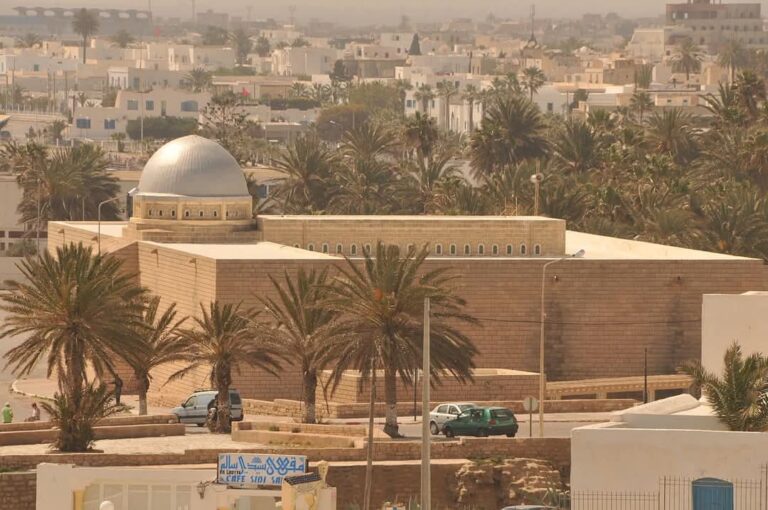
The Ribat of Monastir, a fortified Islamic institution that combined defense with religious life, stands in Monastir, Tunisia. Harthama ibn A’yan, an Abbasid general and governor of Ifriqiya, founded it in 796. Ifriqiya was a historical North African region centered on present-day Tunisia, while the Abbasids were a caliphal dynasty that ruled much of the medieval Islamic world. The ribat is regarded as the oldest and most important of its kind in the Maghreb, or western North Africa, and is a prominent landmark of Monastir.
The complex grew under successive dynasties that ruled parts of Ifriqiya. The Aghlabids enlarged it to the north in the ninth century. Around 966, the Fatimids extended it on the south, a project attributed to Abu al-Qasim ibn Tammam. Work during the Hafsid era, around 1424, increased its area to 4,200 square metres.
Fortress and religious community
In the tenth century, the Arab geographer and traveler Ibn Hawqal described the ribat as the largest in Ifriqiya. A century later, the geographer and historian Al-Bakri characterized it as a tall, strongly built fortress. He also wrote that a sheikh remained in its upper mosque and directed the community.
Later defenses and modern history
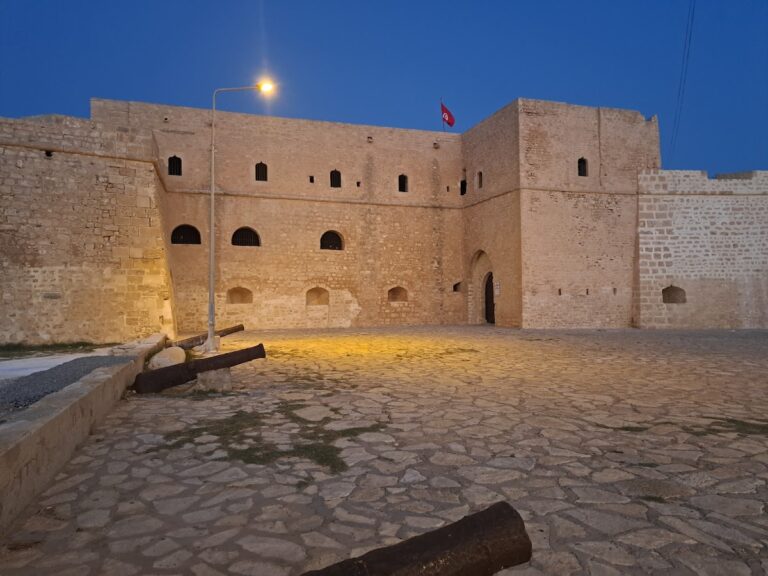
The Hafsids strengthened the ribat against invasion. Watchtowers were added between the eleventh and thirteenth centuries, with further towers built from the seventeenth through the nineteenth centuries. Works in the seventeenth and eighteenth centuries added many supports, towers, and projecting fortifications, including polygonal and circular bastions, to accommodate artillery. Hussein II Bey, a ruler of Ottoman North Africa from 1824 to 1835, restored the complex and added towers and bastions.
Earthquakes on 18 and 19 October 2013, measuring 4.0 and 3.6 on the Richter scale, damaged upper portions of the perimeter wall. Tunisia has protected the ribat as a classified historic monument since 1912. An Islamic arts museum opened inside it on 5 August 1958.
Remains
Plan and defenses
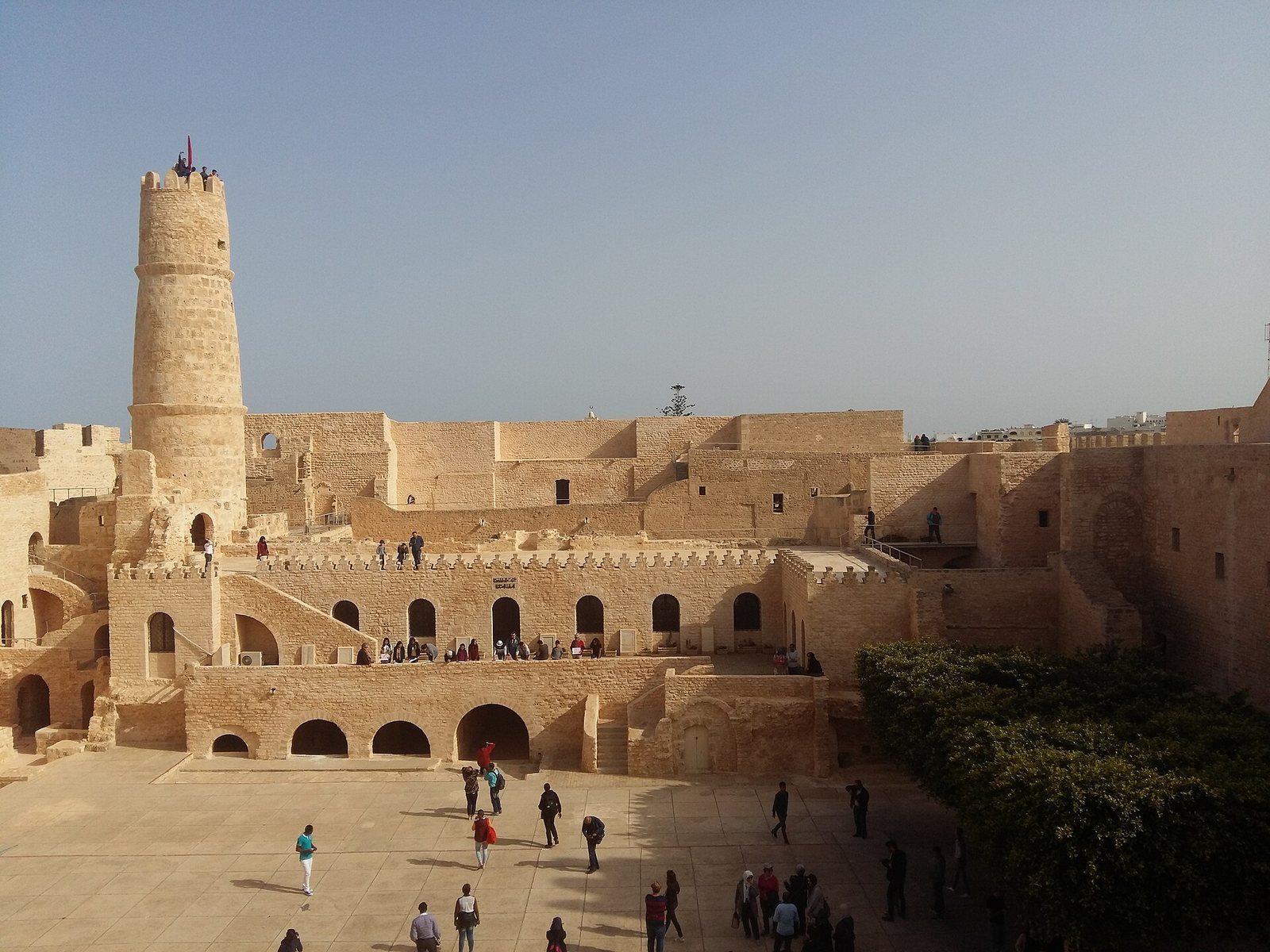
Beside the Mediterranean Sea, the complex brings together structures shaped by successive alterations. Its original core had a regular four-sided plan, massive façades, and cylindrical corner towers, including a watchtower at the southeast corner. The later layout comprised four buildings and two inner courtyards, with galleries around a courtyard opening onto several rooms. Surviving parts of the early complex include the southern wing and entrance porch, the southwest tower, and the southeast watchtower, whose parapet has alternating raised and lowered sections. The main entrance is set at one of the towers. Supports, towers, and polygonal and circular bastions form part of the defenses; a cannon and an opening in a tower wall are also among the features of the complex.
Prayer spaces and living quarters
The complex contains two mosques, and small rooms provided space for fighters to carry out military duties, pray, and meditate. The surviving early section includes an upper-floor prayer hall and a designated section for women. A tenth-century pavilion, separated from an earlier façade by a small courtyard, contains an upper-floor oratory, or small prayer room. Its tunnel-like vaulted ceiling covers seven longitudinal divisions set perpendicular to the qibla wall, which indicates the direction of prayer toward Mecca, and two structural sections between supports. Cross-shaped supports carry semicircular and shallow arches.
Watchtower and signaling
A spiral staircase of about 100 steps leads up the watchtower. Its position allowed visual signals to be exchanged at night with towers at neighboring ribats.
Museum and collections
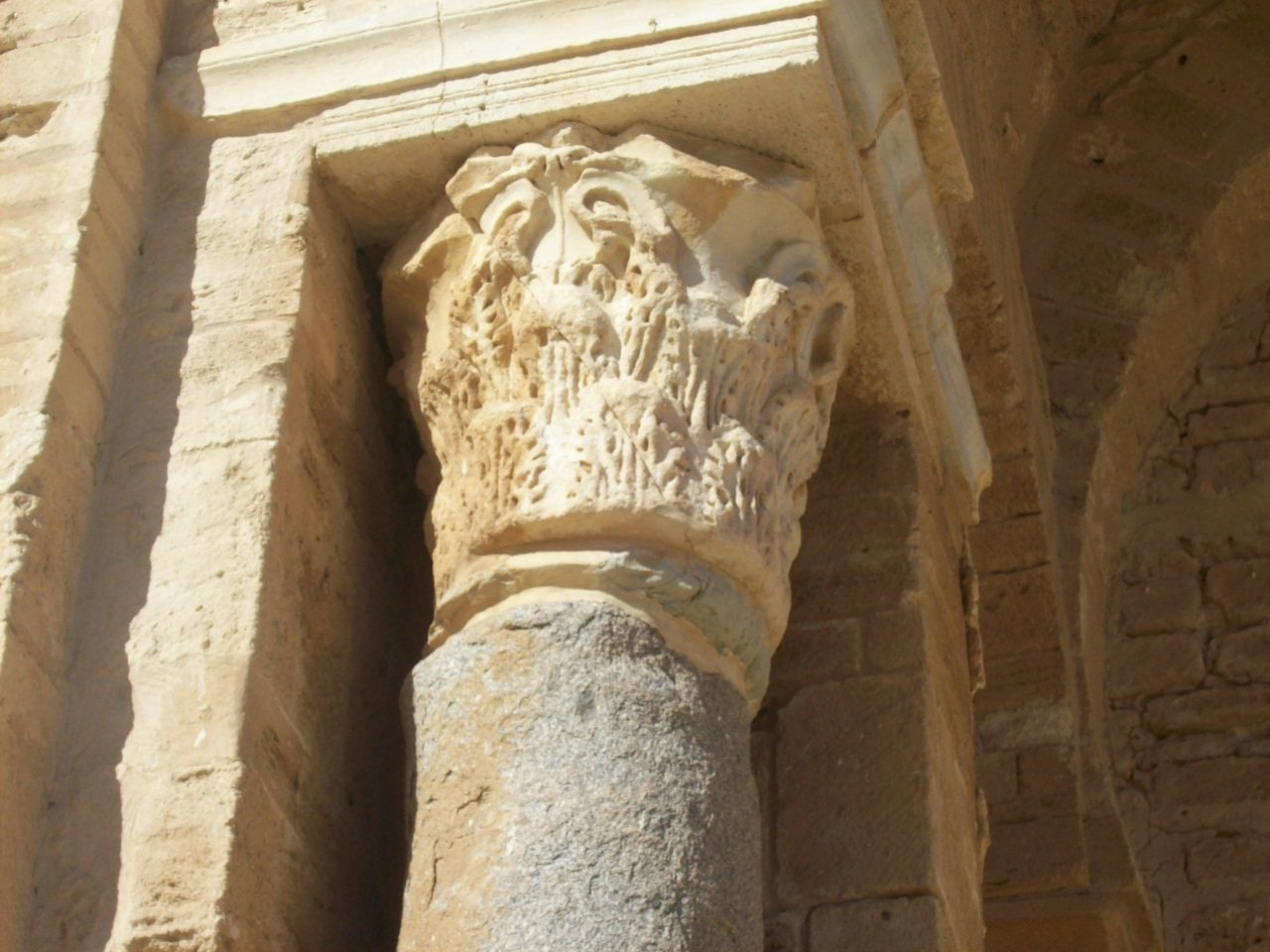
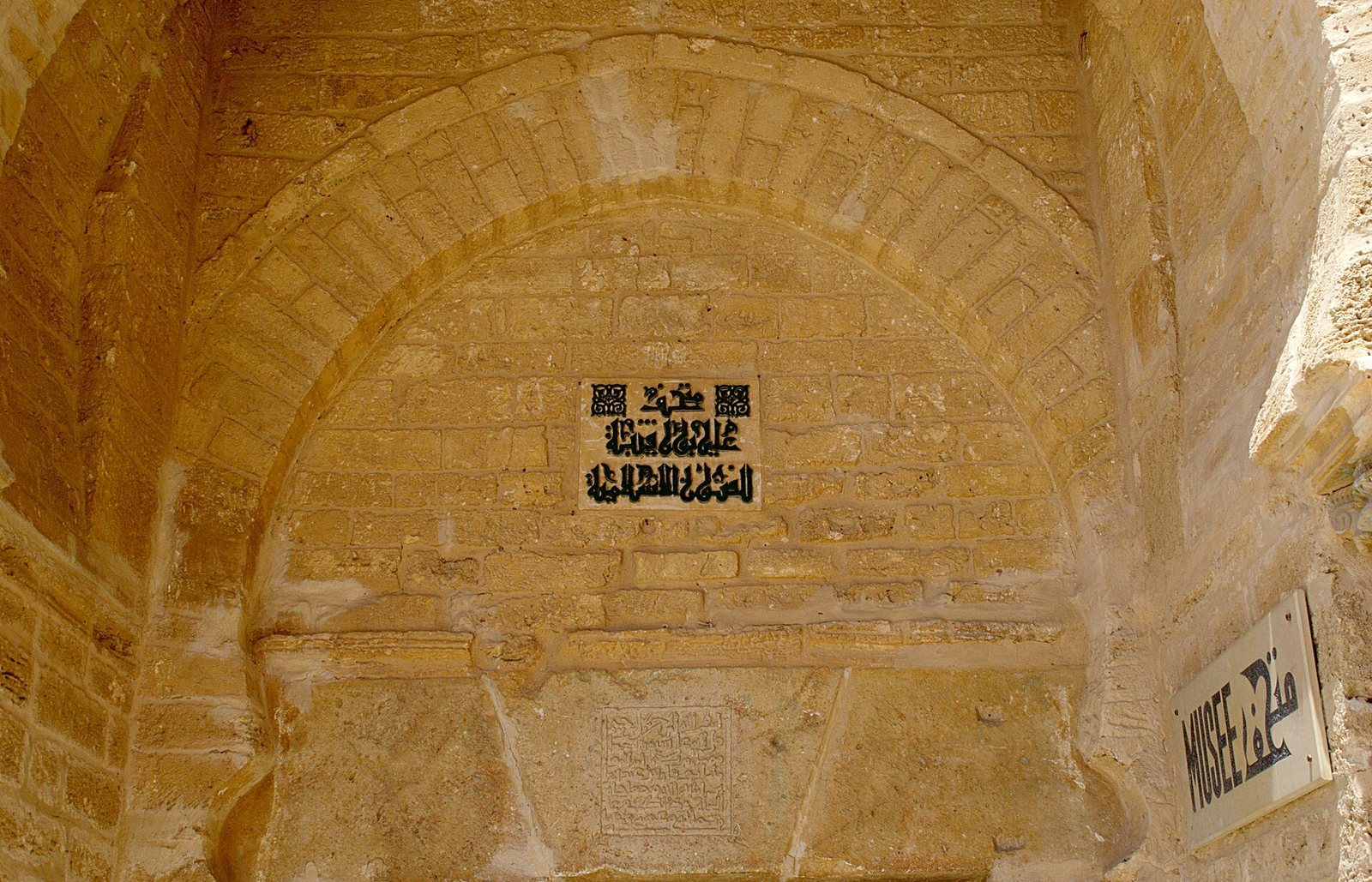
The museum occupies the upper floor of the southern wing. Its holdings include carved wooden fragments from the Great Mosque of Kairouan, marble grave markers, ceramics with a metallic-looking glaze, handwritten Quran leaves, glassware, and gold and silver coins. Other objects include inscribed grave markers, ceramic tiles, and pottery decorated with birds. The larger mosque houses ritual objects and traditional crafts from the medieval period. At an entrance, a horseshoe-shaped arch rests on reused antique columns with two reused column tops.