Fort VI in Kaliningrad: A Fortress of Königsberg’s Inner Defensive Ring


Site at a Glance
- Rating
- 3.9
- Popularity
- Very Low
- Country
- Russia
- Primary era
- Modern
- Eras represented
- Modern
- Civilizations
- German
- Site type
- Military
- Remains
- Fort
On this page6 sections
History
Construction and defensive role
Fort VI in Kaliningrad, Russia, was built in 1875 as part of Königsberg’s inner defensive ring. Also known as Queen Louise Fort and Königin Luise bei Juditten, it protected the railway and highway routes leading to Pillau, the city now known as Baltiysk. Queen Louise was Prussia’s queen from 1797 to 1810 and later became an important figure in German historical memory.
The defensive ring began to take shape around Königsberg in the mid-nineteenth century. Locals informally called it the “Night Featherbed.” Its purpose was to halt an enemy on the distant approaches to the city rather than allow an attack to reach the urban centre. The system contained twelve numbered fortresses and five auxiliary forts identified by letters. The numbered forts generally held garrisons of about 200 to 300 men and were named after celebrated figures from German history.
Modernization and the 1945 assault
After Fort VI was completed, the Königsberg fort system was repeatedly modernized and strengthened as artillery and battlefield tactics changed. Its final improvements took place during the 1930s and 1940s.
On 8 April 1945, during the Second World War, fighting took place northwest of Königsberg. The battery commanded by Guards Senior Lieutenant Alexander Kosmodemyansky, a Soviet artillery officer, crossed a minefield under heavy defensive fire and became the first battery to enter Queen Louise Fort. Its powerful bombardment caused substantial damage and compelled the fort’s garrison to surrender.
Fort VI is designated an object of cultural heritage of regional significance in the Russian Federation.
Remains
Fortifications and layout
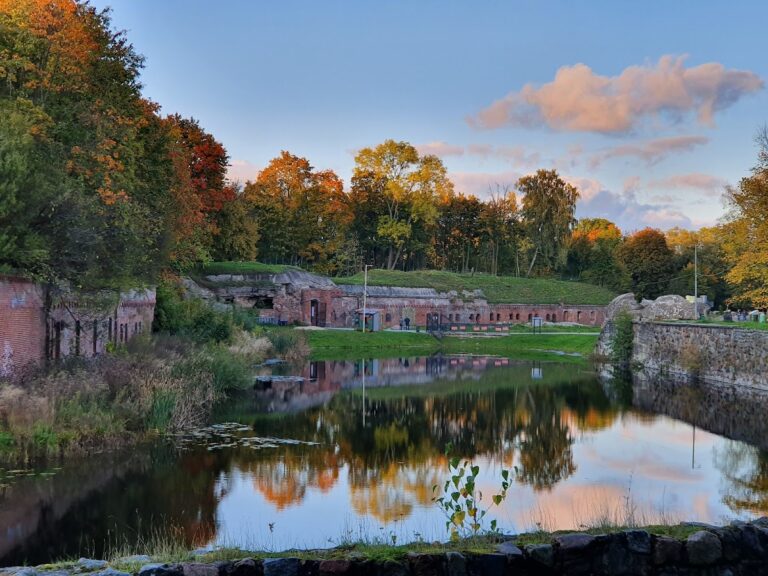
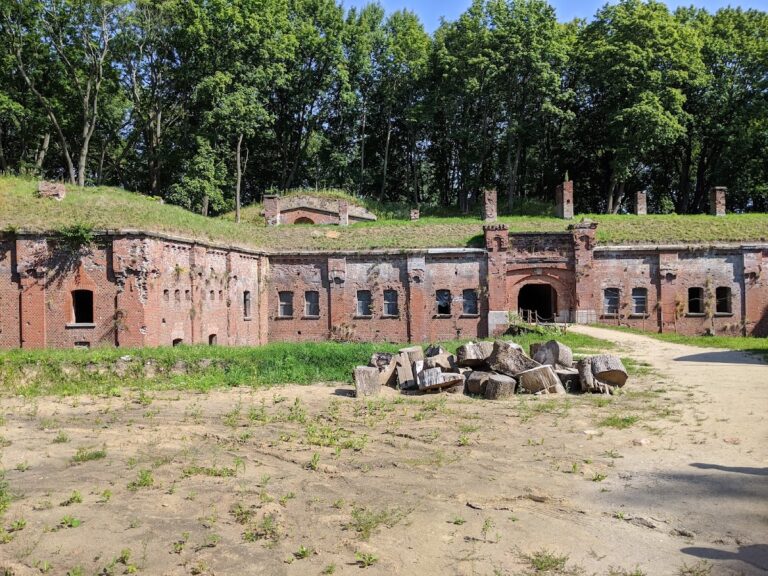
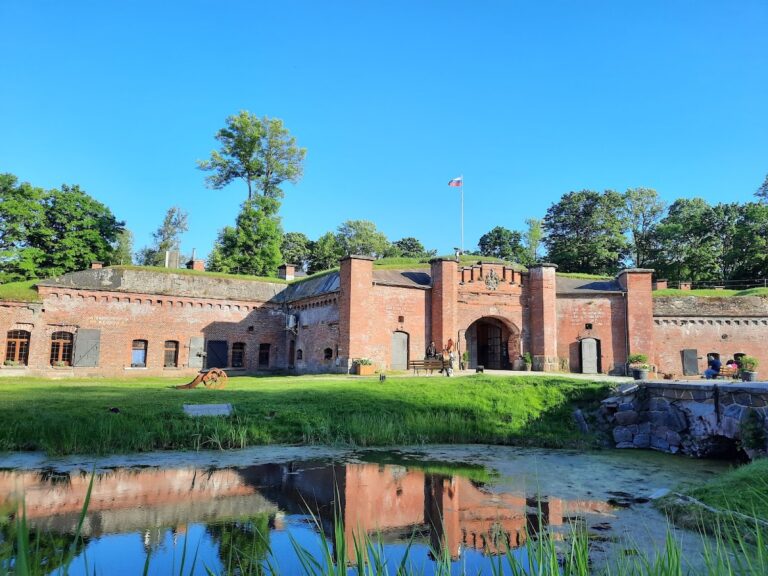
Fort VI was a small fortress enclosed by a dry moat, a defensive ditch without standing water. Its defensive arrangement included ravelins, outworks positioned beyond the main defensive wall, together with escarps, the inner slopes of the ditch, and counterscarps, its outer slopes. These elements formed part of a system intended to withstand attacks for several months.
Surviving structures and battle damage
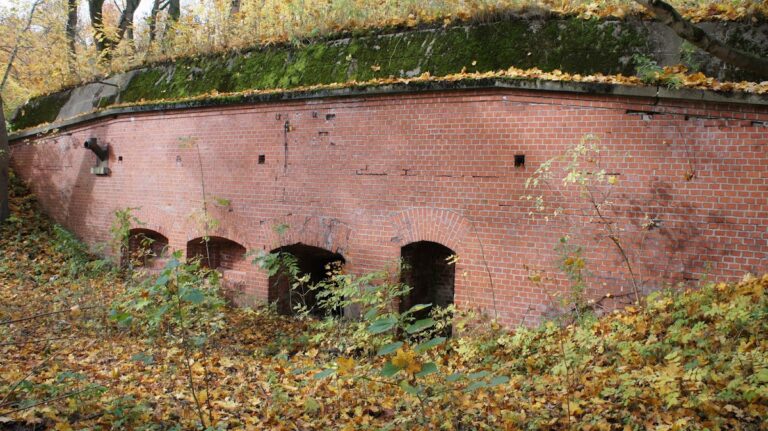
The surviving fabric includes the rear side of the fort, tunnel passages, part of the encircling gallery, and a fragment of the exterior. Traces of the destruction inflicted during the 1945 assault remain visible in the fort’s physical remains.