Fort du Randouillet: A Vauban Fortification Above Briançon


Site at a Glance
- Rating
- 4.6
- Popularity
- Very Low
- Country
- France
- Primary era
- Early Modern
- External website
- Open
- Eras represented
- Early Modern, Modern
- Civilizations
- French
- Site type
- Military
- Remains
- Fort
On this page9 sections
History
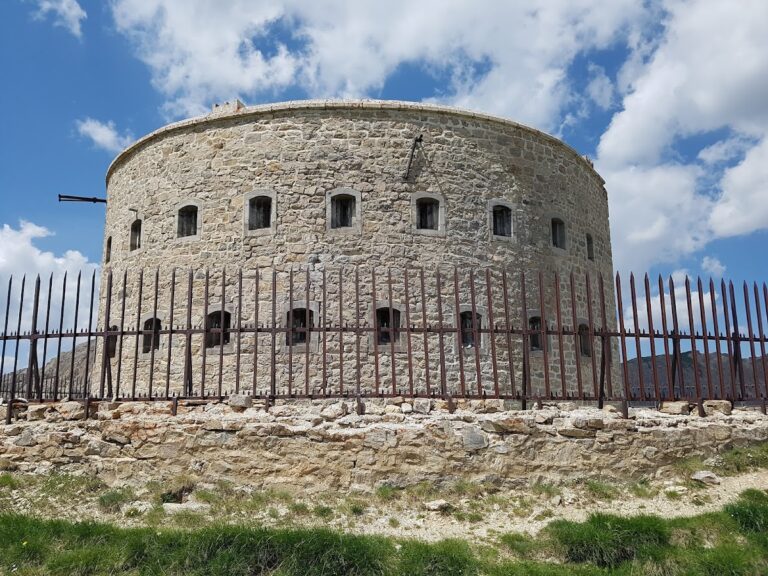
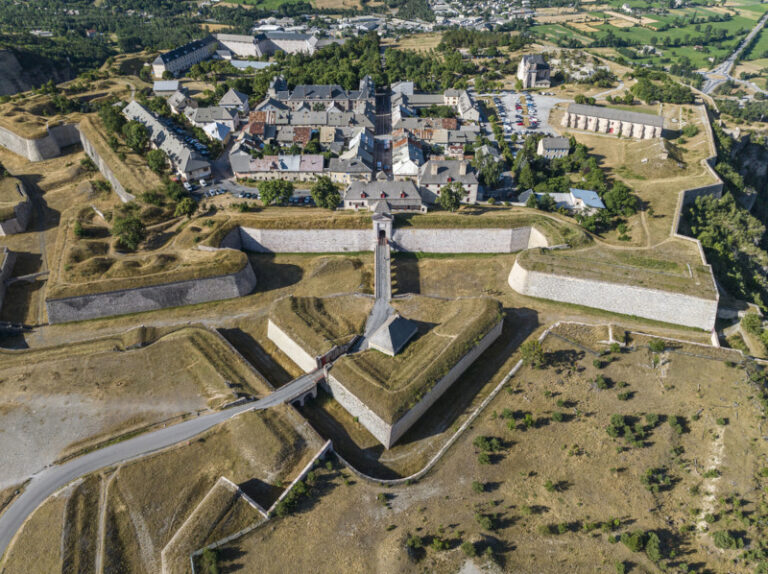
Fort du Randouillet is a French fortification above Briançon, France, built on Randouillet Hill as part of the defensive system shaped by the military engineer and Marshal of France Sébastien Le Prestre de Vauban. Developed between 1724 and 1734 and placed in service in 1734, it guarded movement along the Durance and helped protect Briançon’s mountain approaches.
Vauban’s plans and the temporary fort
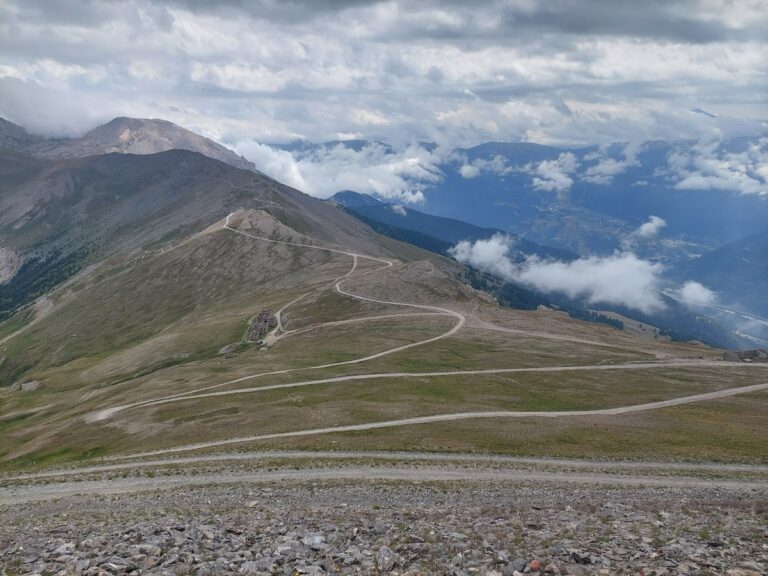
Vauban first visited Briançon in 1692 and judged that the Trois-Têtes plateau could not be effectively defended without fortifying Randouillet Hill, which rises about 300 meters above it. During a second visit in 1700, he prepared a plan for fortifications around Briançon that included the future site of Fort du Randouillet.
In 1709, the military engineer Rémy Tardif followed Vauban’s plans and drawings to build a temporary dry-stone fortification on the hill. It was intended for the troops of James FitzJames, Duke of Berwick, Marshal of France. The work had been delayed by shortages of personnel and money during the War of the Spanish Succession.
Permanent construction and defensive role
The 1713 Treaty of Utrecht made Briançon a frontier town adjoining the Kingdom of Sicily, increasing the need for permanent defenses. Projects for parts of the fort were prepared in 1718 and 1722. Construction proceeded in stages before a final plan was adopted in 1724, after which the large-scale permanent fort was completed between 1724 and 1734.
Fort du Randouillet was intended to obstruct troop movements along the left bank of the Durance, meaning the bank on the left when facing downstream, and to observe the Cervières Valley. Alongside Fort des Têtes and the military work called Communication Y, it formed a defensive system controlling passage on that side of the river. It also helped prevent an attack on Fort des Têtes from the Infernet mountain.
Military service and later recognition
Until 1940, the fort did not take part in combat. It served mainly as a barracks and as a store for ammunition and weapons. After the beginning of the Second World War, it became part of the fortified sector of Dauphiné, which opposed the invading Italian forces. Italian attempts to capture it were repelled. After France’s defeat and capitulation, Briançon and its fortifications entered the Italian occupation zone, but Fort du Randouillet saw no further combat. Its strategic military function ended in 1970.
After the war, ownership passed to the commune of Briançon. The fort was registered as a French historic monument in 1989, and its façades and roofs were classified that year. On 7 July 2008, it became part of the UNESCO World Heritage property Fortifications of Vauban, a group of fortifications designed or influenced by Vauban’s methods. The site now functions as a museum.
Remains
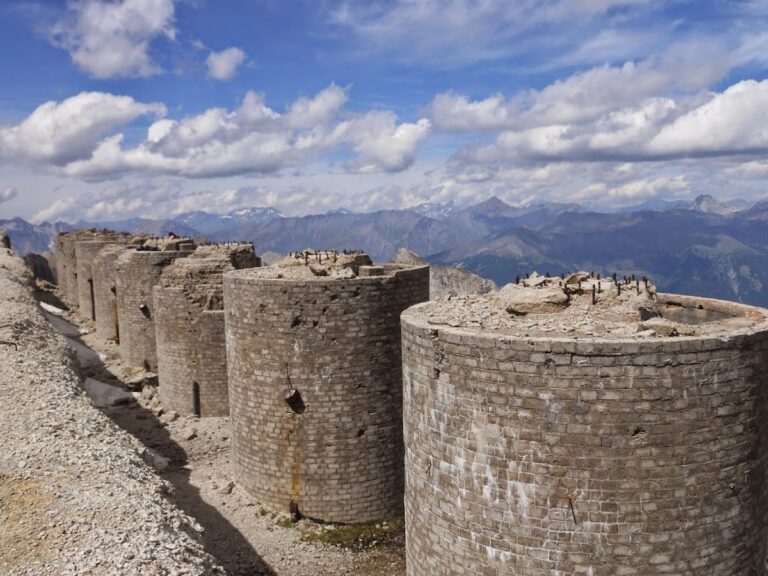
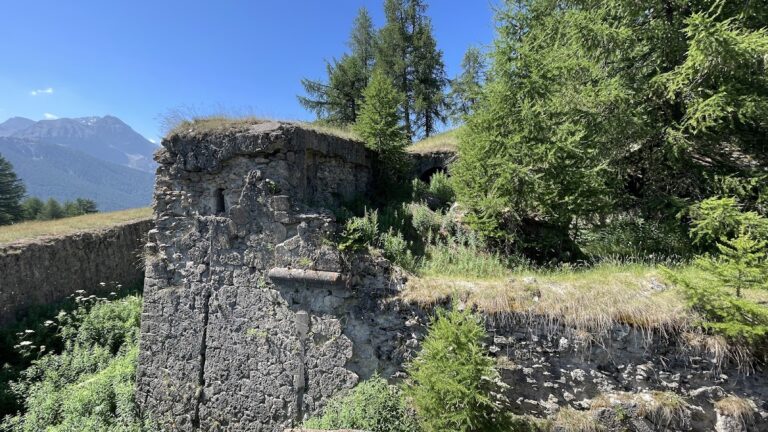
Fort du Randouillet stands at approximately 1,604 meters above sea level on the summit of Randouillet Hill, overlooking Fort des Têtes. Its irregular polygonal plan has five bastions at the angles. The fort is arranged on two level platforms, with the upper platform devoted to the citadel and principal defenses and the lower one occupied by barracks and a guardhouse.
Citadel and artillery defenses
Artillery batteries
The citadel contained three artillery batteries. A main battery occupied the center, while two terrace batteries stood on its flanks. The central battery was rebuilt in 1833 according to the casemate system associated with François-Nicolas-Benoît Haxo. A casemate is a protected chamber designed to house artillery or shelter troops and equipment within a fortification.
Stores and garrison facilities
The citadel also included ammunition stores and powder magazines. Its lower part provided accommodation for the garrison, together with stores and other service facilities.
Lower platform and military connections
The lower platform contains three barracks buildings and a guardhouse. Fort du Randouillet was linked to Fort des Têtes by Communication Y, a military work that formed part of the wider defensive arrangement. In the modern period, a military cableway also connected the fort with Briançon.
Nearby sites