Fort du Moulin: A French Coastal Fortress on Port-Cros


Site at a Glance
- Rating
- 4.4
- Popularity
- Very Low
- Country
- France
- Primary era
- Early Modern
- External website
- Open
- Eras represented
- Early Modern
- Civilizations
- French
- Site type
- Military
- Remains
- Fort
On this page10 sections
History
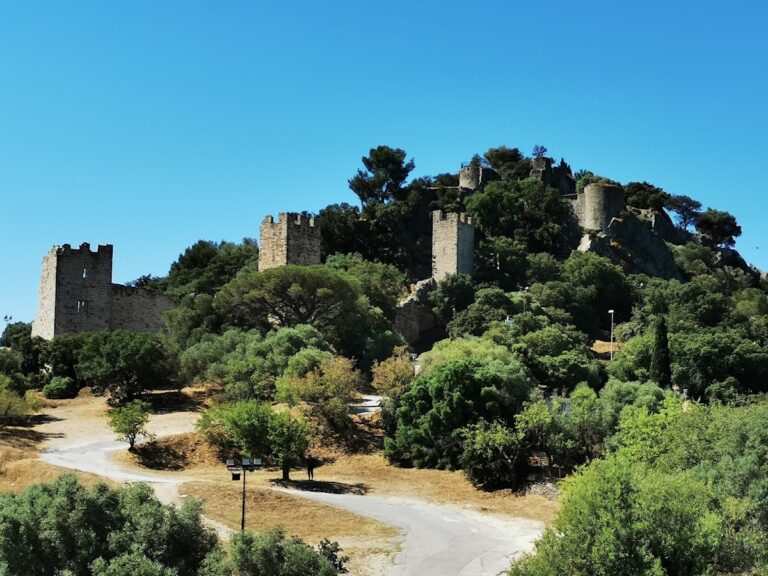
Fort du Moulin is a sixteenth-century French military work on Port-Cros island in France, built at the initiative of François I to combat Mediterranean piracy. Also called the Château de Port-Cros, it takes its name from a windmill that once stood below the fort. The work formed part of the island’s coastal defenses and later became both a military post and a residential base for its garrison.
Sixteenth-century foundation and royal defenses
François I, king of France from 1515 to 1547, ordered the fort’s construction during a period when Mediterranean piracy threatened shipping and coastal settlements. Its position on Port-Cros gave it a role in defending the island and nearby waters. The fort was later incorporated into a coordinated defensive system that included Forts de l’Estissac, de l’Éminence, and Port-Man.
Remodelling under Louis XIII
In 1635, during the reign of Louis XIII, Cardinal Richelieu remodelled Fort du Moulin. Richelieu was the king’s chief minister and directed measures that strengthened and centralized the French monarchy. The alterations gave the fort a more residential character while retaining its military purpose.
During this phase, the fort was permanently occupied. It accommodated the commander and soldiers, stored artillery and provisions, and included a bakery for the garrison. Its combined residential, storage, and defensive functions made it a continuing base within the island’s fortification network.
Combat, destruction, and renewed military use
Fort du Moulin was involved in the combat of the king’s flûte La Baleine, a sailing ship used by the French monarchy for transport and supply, against British vessels in 1710. On 4 August, the fort’s commander, Louis de Beaussie, burned the ship at the foot of Fort du Moulin rather than surrender it after the British pursuit.
British forces captured and blew up the fort in 1793. The explosion destroyed the central building and the northwestern front of the enclosure. After the fort was retaken, several buildings were repaired, and a coastal battery, a fortified artillery position for defending a shoreline or anchorage, was installed at the foot of the work.
In 1814, the lower battery carried two 36-pounder guns, two 24-pounder guns, three 18-pounder guns, and one 12-pounder mortar. Its garrison comprised fifteen artillerymen and twenty-five infantrymen. The fall of the Empire around 1815 brought the fort’s suspension from active use.
Nineteenth-century alteration and modern conservation
In 1841, following a proposal from the Joint Coastal Armament Commission, the lower battery received three 30-pounder howitzers, three 22-pounder howitzers, and one 32-pounder mortar. The building was restored in 1863, but the lower battery was decommissioned in 1885 in favor of Fort de l’Éminence.
Fort du Moulin was protected as a historic monument in 1954 and is the only work on Port-Cros with that classification. The State owns the fort, while part of it is granted to a private individual. In 1988, the building was definitively assigned to Port-Cros National Park. A major restoration carried out from 2016 to 2021 followed the fort’s architectural character and traditional construction techniques.
Remains
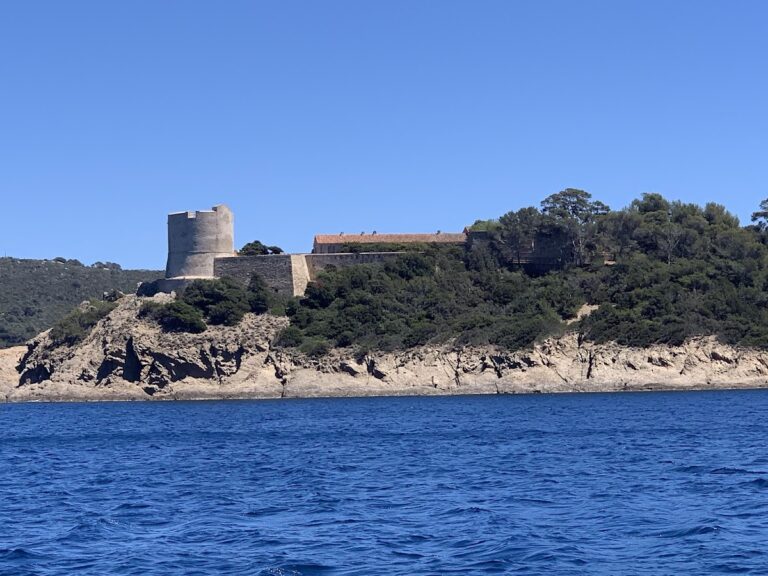
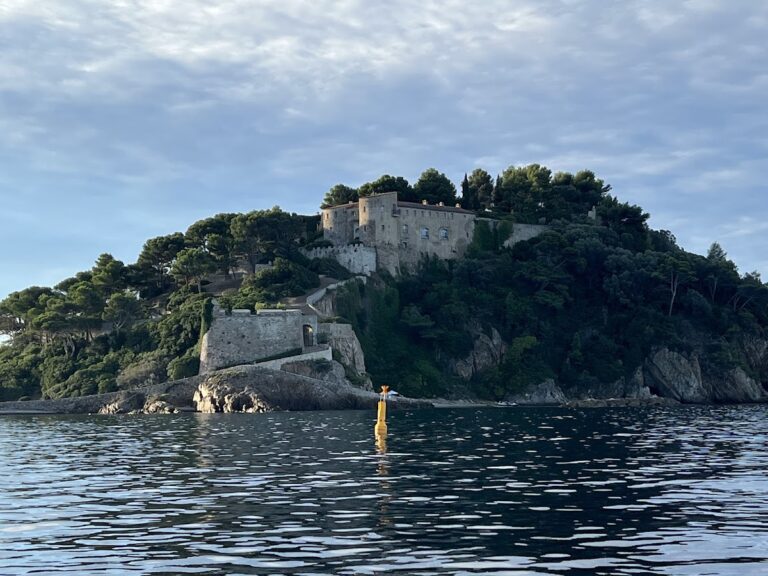
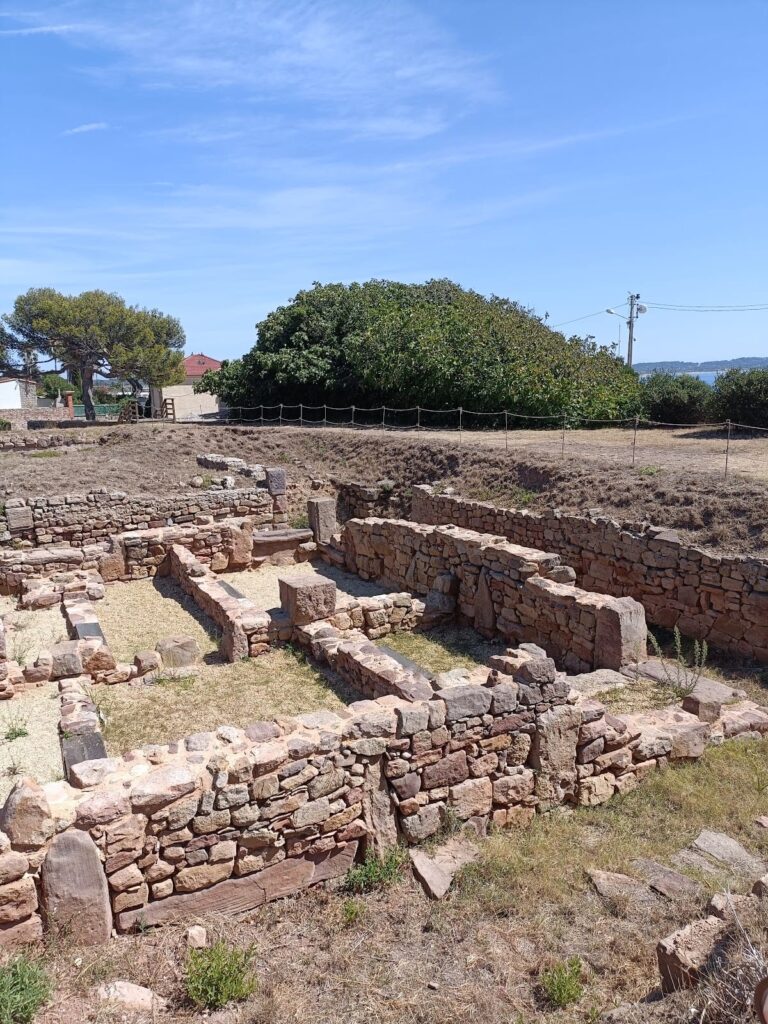
Fort du Moulin occupies a position on Port-Cros island and consists of a military enclosure, internal buildings, and a lower battery at its foot. The 1793 explosion shaped the surviving layout by destroying the central building and the northwestern section of the enclosure, while several other buildings were repaired afterward. The restoration used stone gathered on Port-Cros and applied a flush render to the facades, consolidating the structure while retaining its traditional appearance.
Enclosure and masonry
Cut-schist walls
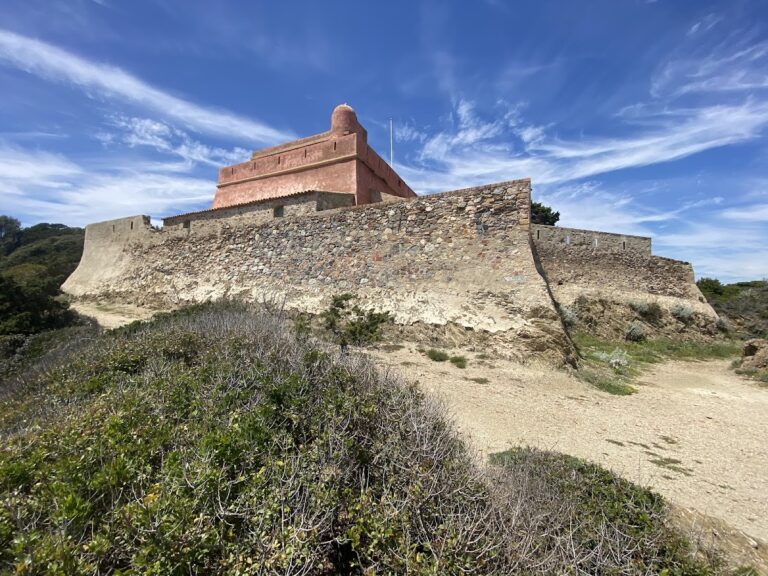
The outer enclosure is built from schist, a stone abundant on the island, using a cut-schist technique in which thin pieces are laid as regular masonry units. The wall corners are reinforced with harder stone bonded into the structure. A very thick render covers the enclosure, helping cushion the impact of cannonballs. During the 2016–2021 restoration, locally collected stone and a slightly more covering flush render were used to strengthen the facades.
Lower battery and surviving buildings
Coastal battery
The lower battery stands at the foot of the fort and formed the artillery position added after the 1793 destruction. It was successively equipped with heavy guns, howitzers, and a mortar, and its nineteenth-century armament was later retired in favor of Fort de l’Éminence. The enclosure and the buildings that survived or were repaired remain physically connected to this lower defensive work.
Nearby sites