Petit-Geroldseck Castle: A Ruined Hill Castle in France


Site at a Glance
- Rating
- 4.1
- Popularity
- Very Low
- Country
- France
- Primary era
- Medieval
- External website
- Open
- Eras represented
- Medieval
- Civilizations
- Holy Roman Empire
- Site type
- Military
- Remains
- Castle
On this page8 sections
History
Petit-Geroldseck Castle is a ruined hill castle in Haegen, France, dated to the thirteenth century and closely associated with Grand-Geroldseck, which stands about 500 metres to the north. A separate foundation tradition places its establishment in the ninth century and attributes it to Gerold, Duke of Swabia, describing the castle as built opposite its neighboring stronghold.
Medieval foundations and feudal ties
During the twelfth century, Petit-Geroldseck and Grand-Geroldseck were fiefs of the Bishopric of Metz. A fief was a territorial right held from a superior lord in return for allegiance or service. After the male line of the original holders became extinct, possession passed to the von Wangen family.
Later lordship
In 1417, Count Palatine Friedrich I received Petit-Geroldseck as a fief from the Bishop of Strasbourg. In the same year, he plundered Grand-Geroldseck, linking the two castles through a conflict that affected their neighboring lordships.
From 1667 to 1671, Hermann Egon von Fürstenberg held both castles as fiefs of Maursmünster Abbey, a Benedictine monastery at Marmoutier in Alsace. Petit-Geroldseck later became a ruin. Its remains have been protected as a French historic monument since December 1898.
Remains
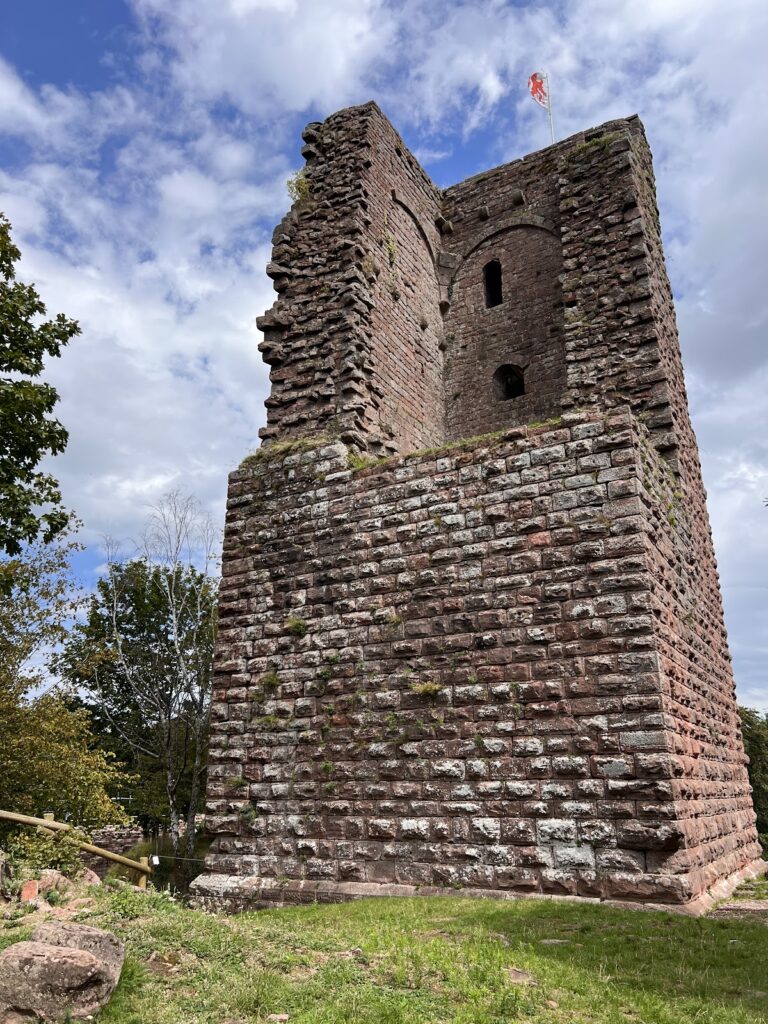
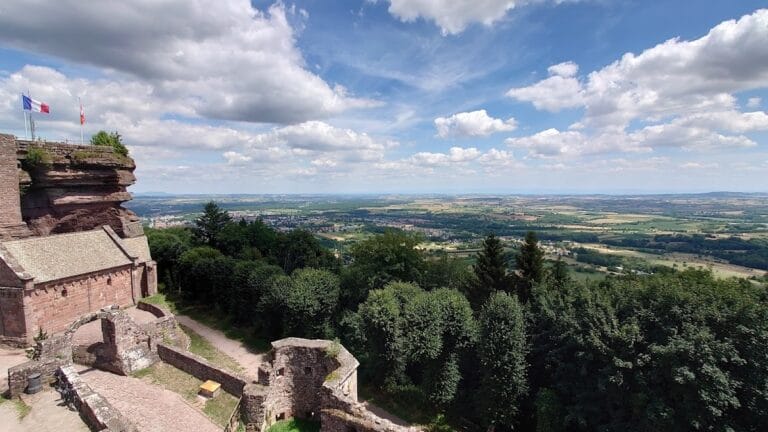
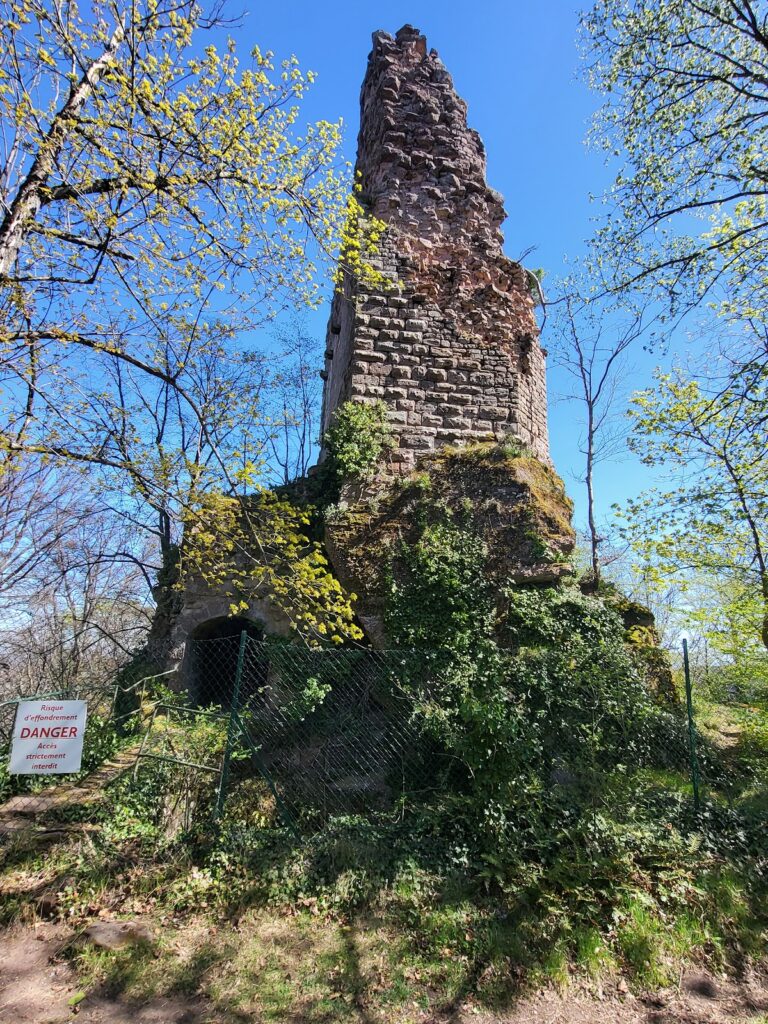
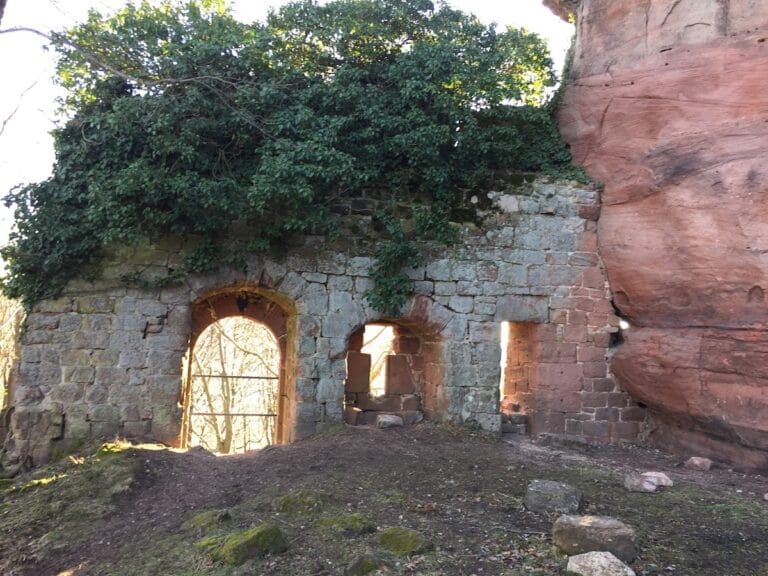
Petit-Geroldseck survives as a hilltop castle complex whose principal remains include the lower bailey, the keep, and parts of the lordly residential building. The ruins open eastward toward the hills of the Alsatian plain, preserving the basic relationship between the fortified and residential parts of the site.
Fortified and residential remains
Lower bailey
The lower bailey was the enclosed outer part of the castle. Its surviving remains form part of the lower area of the ruined complex and help define the castle’s arrangement below the principal fortified tower.
Keep
The keep, the castle’s principal fortified tower, remains in surviving or partial form. It represents the strongest vertical element of the hill castle and stands among the ruins alongside the lower bailey and residential remains.
Lordly residence
Remnants of the corps de logis, the main residential building, survive within the castle. This building formed the lordly living range and is preserved today only in ruined remains.
Nearby sites